
Self-Employment & Small Business
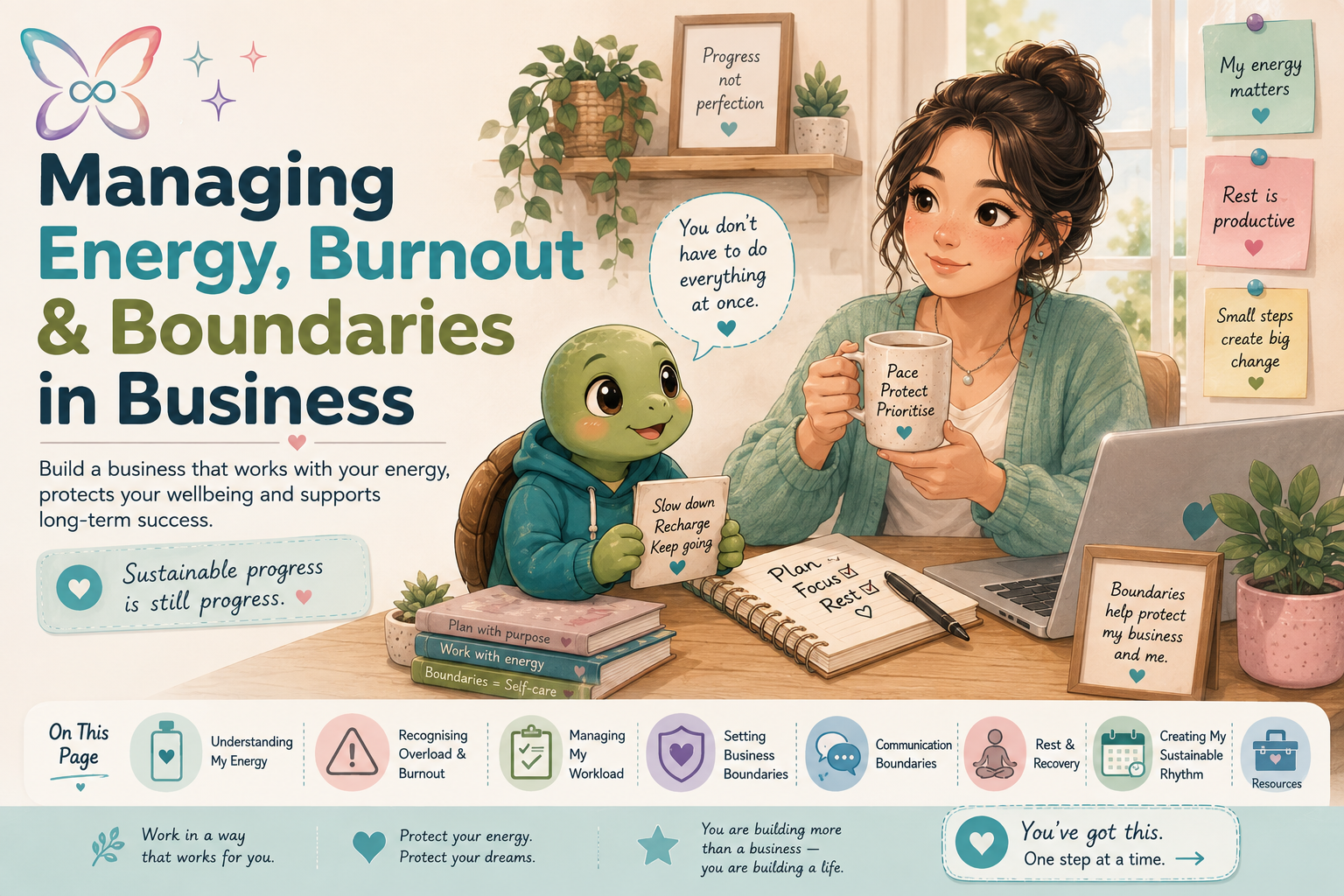
Managing Energy, Burnout & Boundaries in Business
Running a business can offer freedom and flexibility, but it can also make it difficult to know when work should stop. This page explores practical ways to protect your energy, recognise overload and create boundaries that help make self-employment more sustainable.
Running a Business Takes Energy
Self-employment involves more than completing the work people see. There can also be planning, emails, administration, finances, decision-making, marketing, customer communication and the mental load of remembering what needs to happen next.
For neurodivergent people, fluctuating attention, sensory demands, executive-function load, masking and switching between different kinds of tasks can add another layer of effort. A sustainable business does not require you to work at the same pace every day.
Toby Turtle's Pacing Reminder
You do not have to do everything at once. A slower, repeatable pace can be more useful than pushing hard until you have nothing left.
Understanding Your Energy
Your capacity can change from day to day. Instead of planning only around available hours, consider the kind and amount of energy a task requires.
High-Energy Tasks
Meetings, presentations, difficult conversations, networking, complex decisions or work requiring sustained concentration.
Medium-Energy Tasks
Routine client work, planning, editing, scheduling, standard administration or familiar business tasks.
Lower-Energy Tasks
Simple filing, checking lists, organising documents, preparing templates or other tasks that feel manageable when capacity is reduced.
Recognising Overload and Burnout Warning Signs
Burnout can build gradually. Learning your own early warning signs may help you make changes before you reach the point where continuing becomes extremely difficult.
Possible Signs to Notice
- Tasks that are normally manageable suddenly feel much harder.
- You are working longer but accomplishing less.
- Small decisions feel unusually exhausting.
- You are becoming more irritable, overwhelmed or withdrawn.
- Rest no longer feels refreshing enough.
- You are avoiding messages, clients or business tasks.
- Your routines, meals, sleep or personal care are becoming harder to maintain.
Questions Worth Asking
- Have I been working beyond my usual capacity?
- Am I leaving enough recovery time after demanding work?
- Which tasks are draining me most?
- What can be postponed, simplified, delegated or removed?
- Do I need practical help rather than another productivity technique?
Persistent exhaustion or significant changes in your wellbeing can have many causes. This page is general educational support, not medical advice. Consider appropriate professional support if you are concerned about your health or ability to function.
Building Boundaries Around Your Business
When you are the person running the business, work can easily spread into evenings, weekends, meals and rest time. Boundaries create a clearer point between what belongs to work and what belongs to the rest of your life.
Time Boundaries
Choose normal working hours, communication hours and days when you are unavailable. You can still make exceptions without turning the exception into the rule.
Communication Boundaries
Decide which channels clients should use, how quickly you normally reply and what counts as genuinely urgent.
Workload Boundaries
Set a realistic limit for concurrent clients, projects, appointments or orders rather than accepting work based only on whether there is space in the calendar.
Creating a Sustainable Working Rhythm
A sustainable rhythm gives demanding work somewhere to sit without filling every available space.
Build in Buffers
Avoid booking every hour. Leave room for tasks that run over, decompression after meetings, unexpected admin and transitions between different kinds of work.
Group Similar Tasks
Batching emails, invoices, calls or content tasks may reduce the energy cost of repeatedly switching between unrelated activities.
Protect Focus Time
Create periods where notifications, calls and meetings are limited so you can work without constant interruption.
Plan Recovery Too
If a task predictably takes a lot out of you, include recovery time in the plan instead of treating it as an unexpected consequence.
When Energy Is Low
Low-energy days do not always need to become lost days. A flexible business plan can include a reduced-capacity version of work.
Must Do
Identify the genuinely time-sensitive responsibilities that cannot reasonably move.
Could Do
Choose one or two easier tasks if they are manageable and useful.
Can Wait
Move non-urgent work rather than forcing everything through reduced capacity.
Communication and Client Boundaries
Clear expectations can protect both you and your clients. People are less likely to expect constant availability when your normal process is explained early.
Clarify Expectations
- Usual response time
- Working and contact hours
- How revisions or extra work are handled
- Preferred communication method
- What happens if deadlines need to change
Example Boundary Language
“Thanks for your message. My usual response time is within two business days.”
“I am not available for business messages during weekends, but I will respond when I return.”
“That request is outside the current project scope. I can provide a separate quote if you would like to add it.”
For more on this area, visit Working With Clients: Communication & Expectations when that page is published.
Rest Is Part of the Work
Rest does not have to be earned by reaching exhaustion. Short breaks, quieter days, annual leave, reduced workloads and periods without business notifications can all be part of keeping work sustainable.
Micro-Rest
Brief pauses between tasks, stretching, water, sensory regulation or stepping away from the screen.
Daily Recovery
A clear end to the workday, transition routine and time when the business is no longer demanding attention.
Longer Recovery
Days off, holidays, reduced-capacity periods and genuine time away from client responsibilities.
Getting Support Before Things Become Too Much
You do not need to wait until everything is unmanageable before seeking help. Support can be practical, professional, administrative, financial or emotional.
Practical Support
Bookkeeping, virtual assistance, templates, automation, scheduling systems or help with tasks that repeatedly consume disproportionate energy.
Business Advice
A mentor, business adviser, accountant, industry organisation or trusted peer may help you work through decisions you have been carrying alone.
See also Getting Help, Advice & Business Support when the companion page is available.
My Business Energy Check-In
Use these questions as a quick reflection before planning the next few days.
- What is my energy like today: low, medium or high?
- Which business tasks are using the most energy right now?
- What genuinely needs my attention first?
- What could be simplified, moved, delegated or dropped?
- Have I allowed enough time between demanding tasks?
- Is there a boundary I need to communicate?
- What recovery or rest do I need to plan?
- Would asking for support make this easier?
Resources & Downloads
This area can connect the topic page to the Aspie Answers Resources & Downloads Library as matching worksheets, planners and toolkits are published.
Business Energy Check-In
A future printable for noticing capacity, demands and recovery needs.
Browse ResourcesLow-Energy Business Planner
A future planning tool for identifying essential, optional and movable tasks.
Browse ResourcesBoundary Builder
A future worksheet for working hours, client communication and workload limits.
Browse ResourcesProduction note: replace these general library links with the final individual download URLs once the matching resources are published. Do not create dead links merely to fill the section.
Related Work & Employment Support
Time Management for Small Business
Build a working structure that fits your actual time and capacity.
Explore this topicBusiness Organisation
Create systems that reduce the amount you need to remember and hold in your head.
Explore this topicBusiness Confidence & Imposter Feelings
Explore confidence, comparison and self-doubt while developing your business.
Explore this topic