
Official Aspie Answers Companion
Meet Buzzy Brain
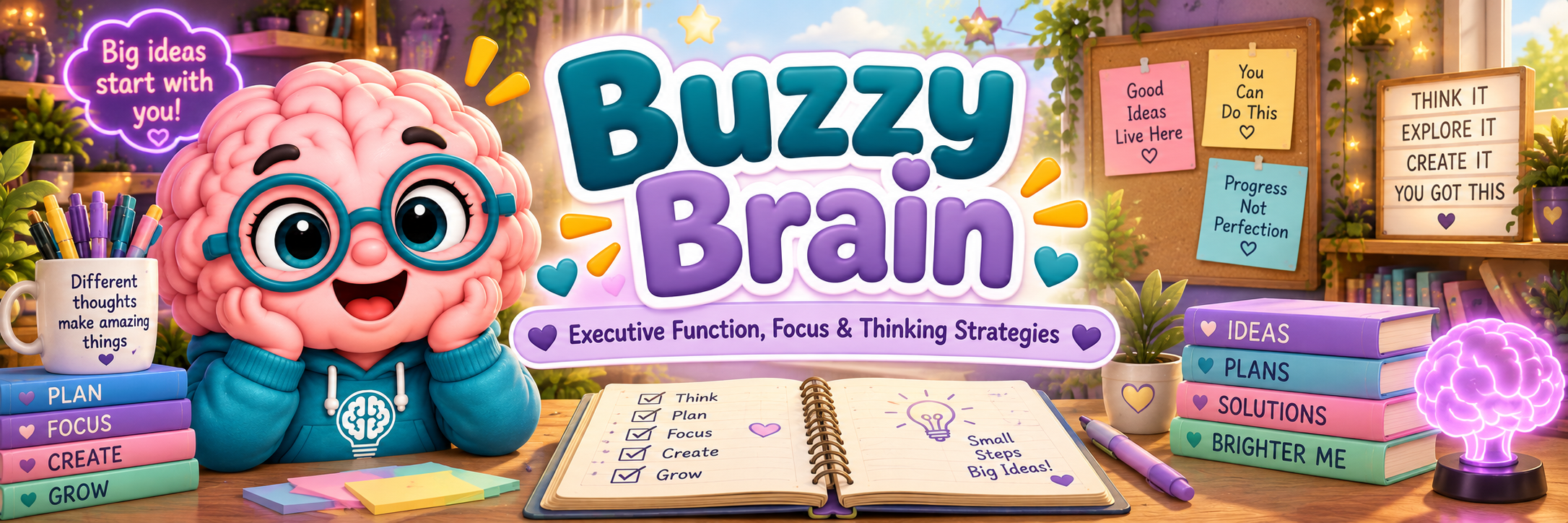
Buzzy Brain is the Aspie Answers Companion for executive function, focus and working memory. Buzzy Brain helps make busy thoughts easier to sort, gives ideas somewhere safe to land, and supports one-thought-at-a-time thinking when everything feels like it is happening at once.
The aim is not to make a busy brain quiet or “perfect”. It is to create enough space, structure and kindness for thinking, remembering, choosing and returning to what matters.
Official profile
Buzzy Brain at a glance
Buzzy Brain supports the parts of everyday life that rely on holding information in mind, finding a starting point, returning attention and keeping useful thoughts visible.

How Buzzy Brain helps
Give busy thoughts somewhere to go
Buzzy Brain is most useful when thinking needs more space, memory needs backup, or attention needs a gentler way back.
Sort the thought swarm
Separate ideas, worries, reminders and tasks so they are easier to understand instead of competing all at once.
Return to one thing
Choose one useful focus for now, while giving other thoughts a safe place to wait.
Support working memory
Move information out of your head and into notes, reminders, visual prompts or another external support.
Capture ideas quickly
Write down a spark before it disappears, without needing to solve or organise the whole idea immediately.
Find your way back
If attention moves away, use a visible cue or short next step to return without treating distraction as failure.
Make room for brain breaks
Focus can work better when rest, movement, sensory support and pauses are part of the plan.
When to reach for Buzzy Brain
Choose Buzzy Brain when your thoughts need more space
“My thoughts are racing.”
Name one thought, then decide whether it needs attention now, later or not at all.
“I keep losing what I was doing.”
Leave a visible cue for the next step so returning does not depend on memory alone.
“I have too many ideas at once.”
Capture the ideas first. Sorting and choosing can happen afterwards.
“I know it matters, but I cannot focus.”
Make the focus smaller, reduce competing inputs and choose a short starting window.
“I forgot what I needed to remember.”
Use external memory: notes, reminders, checklists, alarms or support from another person.
“My brain needs a break.”
Pause on purpose. A break can support focus rather than interrupt it.
The Buzzy Brain reset
Try a six-step thought reset
Use this when ideas, tasks or thoughts start competing for attention.
- Name the thought.Use a few words so you know what is asking for attention.
- Choose one thought for now.You do not have to solve everything at the same time.
- Put the others somewhere safe.Use a note, list, planner or “thought parking” space so they do not have to stay in working memory.
- Make the current step visible.Write down exactly what you are returning to.
- Take a brain break if needed.Rest, move, regulate or reduce input before trying again.
- Return gently.Use your visible cue to come back without judging how long it took.
Inside the Idea Lab
A place to think, capture, focus and reset
Buzzy Brain’s Idea Lab turns executive-function support into a welcoming environment where different thoughts can have different places to go.
Idea Wall
Capture, connect and explore ideas without needing to finish them immediately.
Focus Pod
A quieter space for one thing at a time when distractions need to reduce.
Thought Parking Station
Give later thoughts somewhere visible to wait so the current task has more room.
Curiosity Shelf
Explore questions, interests and useful information when curiosity is the way into learning.
Brain Break Corner
Rest, move, regulate and recharge before returning to thinking work.
Planning Desk
Turn ideas into a small next step, a reminder or a plan that is easier to come back to.
The Idea Lab background is intentionally allowed to show gently around the content panels. It adds Buzzy Brain’s atmosphere without competing with readability.
Companion connections
Buzzy Brain works alongside other Companions
Buzzy Brain belongs to the Executive Function Team. The other teammates add planning, preparation and time support when focus or working memory is only one part of the situation.
Executive Function teammates
Busy Bee
Planning, productivity and organisation.
Checklist Cat
Steps, routines and preparation.
Calendar Cat
Schedules, deadlines and time planning.
Useful cross-team connections
Finn Fox
Problem-solving, flexibility and independence can help when a thinking strategy needs another route.
Toby Turtle
Pacing, energy and burnout prevention can help keep focus work realistic and sustainable.
Resources & pathways
Support beyond this page
Buzzy Brain connects naturally with practical tools for executive function, focus, working memory, thought capture and flexible planning across Aspie Answers.
Executive-function tools
Visible steps, prompts and planning supports can reduce how much has to stay active in working memory.
Focus supports
Short focus windows, reduced distractions and return cues can make attention easier to re-enter.
Idea capture & thought parking
Notes, lists and visual parking spaces can protect good ideas without making every idea urgent.
Companion activities
Worksheets, activities and future interactive experiences can build on Buzzy Brain’s role when they are genuinely useful.
Buzzy Brain’s reminder
One thought at a time still counts
You do not have to hold everything in your head at once. Capture what matters, choose what is for now, park what can wait and come back gently when your attention moves.
Aspie Answers · Companion Universe