
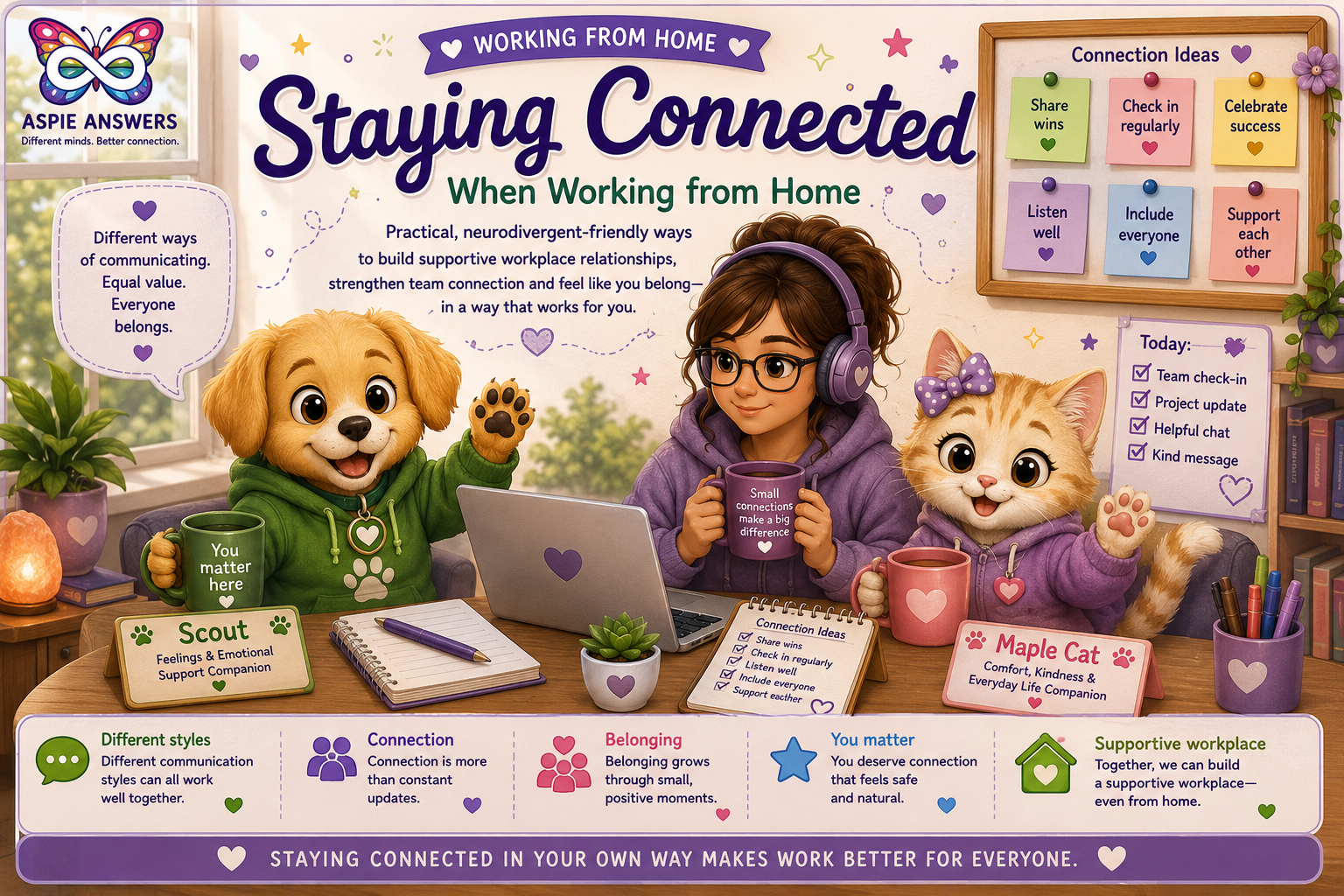
Welcome to Staying Connected
Working from home can offer flexibility and comfort, but it can also reduce the everyday moments of connection that happen naturally in a shared workplace. You may miss quick conversations, informal support, shared humour or simply the feeling of being part of a team.
Staying connected does not mean being constantly available, attending endless meetings or forcing yourself into social situations that feel draining. Connection can be quiet, practical, flexible and built in ways that suit your communication style and energy.
Build Supportive Relationships
Small, reliable interactions can help strengthen trust and make remote work feel less disconnected.
Connect in Ways That Suit You
Email, chat, planned calls, project updates or brief check-ins can all create meaningful connection.
Create a Sense of Belonging
Feeling included and remembered can matter just as much as frequent social contact.
Connection Does Not Have to Look the Same for Everyone
Some people enjoy regular social contact, while others prefer purposeful communication, smaller groups or quieter relationships. There is no single correct way to stay connected while working from home. The aim is to find forms of connection that feel supportive, respectful and sustainable.
Why Connection Can Feel Different When You Work From Home
In a shared workplace, connection often happens without much planning. You might hear a quick update, ask a small question, join a conversation or simply notice how other people are doing. Working from home removes many of those spontaneous moments, which can change how connected, informed or included you feel.
Fewer Spontaneous Moments
Small everyday interactions do not happen automatically when coworkers are no longer sharing the same physical space.
More Planned Communication
Connection may depend more on messages, scheduled calls, shared documents and deliberate check-ins.
Less Social Information
It can be harder to notice mood, team dynamics or informal changes when you mostly communicate through digital channels.
Connection May Take More Energy
Scheduling, preparing for calls or keeping up with several online channels can create extra social and executive-function demands.
Support Can Feel Less Visible
Coworkers may still care and be available, but support can feel less obvious when you cannot simply turn to someone nearby.
Belonging May Need More Intention
Feeling part of a team may come from small repeated signals of inclusion rather than physical presence.
You Might Notice Remote Connection Feels Harder If...
These experiences can be useful signals that you may need a little more connection or a different way of staying involved.
Different Does Not Automatically Mean Worse
Remote work can also make connection easier for some people by reducing social pressure, allowing more written communication and creating more control over when interaction happens. The goal is not to recreate an office online — it is to find enough connection for you to feel supported, informed and included.
Find the Kind of Connection That Works for You
Staying connected does not require one particular social style. Different people feel supported through different kinds of contact. The most useful form of connection is one that helps you feel informed, included and able to reach out without using more energy than you can realistically give.
Short Written Check-Ins
A brief message, project update or “how are you going?” can create connection without needing a longer live conversation.
One-to-One Connection
Some people feel more comfortable building workplace relationships through individual conversations rather than larger group chats.
Small Group Contact
A smaller team check-in may feel easier to follow and more natural than large social meetings.
Purposeful Connection
Talking around a shared task, project or goal can create genuine connection without needing unstructured small talk.
Low-Pressure Social Spaces
Optional chat channels or informal catch-ups can provide connection without making participation feel compulsory.
Shared Wins & Encouragement
Celebrating progress, thanking a coworker or sharing a positive update can build warmth and belonging in small ways.
Questions That Can Help You Find Your Connection Style
You do not need to answer every question. Use them to notice what feels supportive and what feels draining.
Connection Can Be Small and Still Be Meaningful
You do not need long conversations every day to build workplace relationships. A kind message, a useful update, sharing a success or checking in with one trusted person can all strengthen connection over time.
You Do Not Have to Perform Social Connection
Staying connected should not require masking, pretending to enjoy activities that exhaust you or copying somebody else's social style. Healthy workplace connection makes room for different personalities, communication preferences and energy levels.
Small Ways to Stay Connected During the Workweek
Connection does not need to be a large social event. Small, low-pressure moments can help you feel more included, supported and aware of what is happening around you without adding unnecessary social demands to the workday.
Say a Quick Hello
A short morning message or simple greeting can create a small sense of shared presence without needing a long conversation.
Send a Brief Check-In
Ask one trusted coworker how they are going or share a small update about your own day when it feels comfortable.
Share a Win
Completing a difficult task, solving a problem or reaching a small milestone can be an easy reason to connect with the team.
Say Thank You
A short message acknowledging someone's help can strengthen a working relationship without requiring lots of social interaction.
Share a Useful Update
Letting coworkers know what you are working on or what has changed can keep you connected through purposeful communication.
Join Occasionally
You do not need to attend every informal activity. Joining a casual chat or virtual catch-up sometimes may be enough for you.
Create a Gentle Connection Rhythm
If staying connected tends to disappear from your week, a few small predictable moments can help without turning connection into another demanding task.
Use Existing Moments Instead of Creating More Meetings
Connection can often be added to communication that already needs to happen. A project update can include a friendly sentence, a work message can include appreciation and a team channel can create a sense of shared space without another calendar invitation.
You Do Not Need to Be Social Every Day
Connection should support your working life rather than drain all of your energy. Some weeks you may want more contact and other weeks you may need more quiet. A flexible approach allows both.
Staying Included in the Team When You’re Remote
Working remotely can sometimes make important information, decisions or informal updates less visible. Staying included does not mean joining every conversation. It means having reliable ways to know what matters, contribute to the work and feel that your role is recognised as part of the wider team.
Keep Up With Key Updates
Identify where important team announcements, project changes and decisions are shared so you do not have to search across many places.
Ask for Written Summaries
If decisions happen during meetings or informal conversations, a short written summary can help remote team members stay informed.
Have a Reliable Contact Person
Knowing who you can ask when something is unclear can reduce the feeling of being disconnected from what is happening.
Contribute in Your Preferred Format
Written comments, shared documents and chat can be just as valuable as speaking live in a meeting.
Make Your Work Visible
Brief progress updates can help others understand what you are contributing without requiring constant online presence.
Clarify How Decisions Are Made
Knowing when and where decisions happen can make it easier to contribute before important choices are finalised.
Signs That Remote Inclusion Is Working Well
Inclusion is easier to notice when you can access the information and opportunities you need without having to fight to stay visible.
If You Feel Out of the Loop, It Is Okay to Ask
You might say: “I’ve noticed some project updates are happening outside the main channel. Could key decisions also be summarised there so I can keep up with changes while working remotely?” A practical request can improve inclusion without requiring you to attend every conversation.
Remote Workers Should Not Have to Work Harder Just to Be Remembered
Inclusion is a shared workplace responsibility. Useful systems make important information, opportunities and support accessible to people wherever they are working.
Building Supportive Relationships With Coworkers From Home
Supportive workplace relationships do not have to depend on frequent socialising. Remote relationships can grow through reliability, kindness, shared work, clear communication and small moments of mutual support over time.
Be Reliable Where You Can
Following through on agreed tasks, updates and commitments can build trust even when you rarely see coworkers face to face.
Communicate Clearly
Letting people know what you need, where a task is up to or when something has changed can make remote collaboration feel safer.
Show Appreciation
A short thank-you or acknowledgement can strengthen relationships without requiring lots of social energy.
Respect Boundaries
Supportive relationships allow people to have focus time, different communication styles and life outside of work.
Share Help in Practical Ways
Offering useful information, answering a question or helping solve a problem can build connection through shared work.
Let Relationships Develop Gradually
You do not need instant closeness. Familiarity and trust can grow through repeated small interactions over time.
Supportive Remote Relationships Might Feel Like...
Workplace connection can be meaningful without becoming deeply personal or socially intense.
You Can Build Connection Through the Work Itself
For some people, shared tasks create the most comfortable kind of workplace relationship. Collaborating on a project, solving a problem or helping each other complete something can build trust naturally without relying heavily on small talk.
Not Every Coworker Relationship Needs to Become a Friendship
A respectful, reliable and supportive professional relationship can be valuable in its own right. You are allowed to decide how much personal connection feels comfortable while still being a caring and collaborative member of the team.
When Reaching Out Feels Difficult
Sometimes you may want more connection but still find it difficult to send the first message, join a conversation or ask someone for support. Reaching out can involve uncertainty, social energy, task initiation and worries about interrupting or saying the wrong thing.
Make the Message Small
A connection attempt does not need to become a long conversation. Start with one short hello, question or update.
Use a Simple Template
Having a few familiar phrases ready can remove some of the pressure of deciding how to begin.
Give the Message a Purpose
If open-ended social contact feels difficult, reach out around a project, shared task or specific question.
Choose Someone Familiar
Starting with a coworker you already feel comfortable with may be easier than trying to connect with several people at once.
Give Yourself Time
You can draft a message, leave it for a moment and come back before sending if that helps you feel more confident.
Notice Your Social Energy
If you are already overloaded, it may be more helpful to choose a low-pressure form of contact or wait until you have more capacity.
Easy Ways to Start a Message
You can adapt these examples so they sound natural in your own voice.
Try the Smallest Useful Connection
If reaching out feels like a big social task, reduce it to the smallest useful action: send one sentence, react to an update, thank one person or ask one clear question. Small connection still counts.
Difficulty Reaching Out Does Not Mean You Do Not Care
Social initiation can be affected by anxiety, uncertainty, executive-function demands, past experiences or low energy. Needing an easier way to begin does not make your interest in other people any less genuine.
Balancing Connection With Social Energy & Boundaries
Staying connected can be helpful, but connection also uses energy. Calls, meetings, chat channels and social interaction can all add to the demands of the workday. A sustainable approach gives you enough connection to feel supported without expecting constant availability or social participation.
Notice Your Social Energy
Pay attention to which types of interaction feel supportive and which leave you drained or needing more recovery.
Choose Lower-Pressure Contact
Written messages, small groups or one-to-one conversations may offer connection with fewer social demands than large live events.
Space Out Social Demands
If possible, avoid placing several socially demanding meetings or conversations back-to-back without recovery time.
Use Quiet Time Deliberately
Periods without chat, calls or meetings can help you recover, focus and return to connection with more capacity.
Be Clear About Availability
Letting coworkers know when you are focused, away or unavailable can protect your energy without disappearing from the team.
Let Connection Be Flexible
Your preferred amount of contact may change from day to day. Connection can adapt with your workload, energy and capacity.
A Quick Social Energy Check-In
These questions can help you notice whether your current level of workplace connection feels balanced.
Try a “Minimum Helpful Connection” Plan
On lower-energy weeks, decide what small amount of contact will help you stay informed and supported — perhaps one team check-in, one message to a trusted coworker and keeping up with the main project channel. Anything beyond that can be optional if your capacity allows.
Boundaries Do Not Cancel Connection
Protecting your energy does not mean you are unfriendly or disconnected. Healthy workplace relationships can include quiet periods, delayed replies, different communication preferences and enough space for everyone to recharge.
When Connection Starts Turning Into Isolation
Quiet working time can be helpful, but sometimes remote work can shift from comfortable independence into feeling disconnected, unsupported or forgotten. Noticing that change early can make it easier to reconnect in small, manageable ways.
You Rarely Hear From Anyone
Days may pass without meaningful contact, updates or opportunities to talk with coworkers.
You Feel Out of the Loop
Important information, decisions or changes may seem to happen without you knowing until much later.
Reaching Out Feels Harder
The longer you go without contact, the more effort it can take to send a message or rejoin a conversation.
Work Starts Feeling Detached
Tasks may begin to feel disconnected from the people, team or wider purpose they are part of.
You Are Unsure Who to Ask for Help
Support may technically exist, but it can feel less accessible when you have little regular contact with others.
You Miss People More Than Expected
Even if you enjoy working alone, you may still miss shared humour, encouragement, familiarity or simply having other people nearby.
Signs You May Need a Little More Connection
These do not automatically mean something is wrong, but they can be useful signals that your current level of contact may not be enough for you right now.
Reconnect Gently Rather Than Trying to Fix Everything at Once
Start with one manageable action: message a trusted coworker, join one team check-in, ask for a project update or spend a little time in a shared work channel. Reconnection can happen gradually.
This Page Is About Connection — Managing Isolation Goes Deeper
If disconnection is becoming a bigger part of your working-from-home experience, the separate Managing Isolation page will explore loneliness, emotional wellbeing, support and practical ways to rebuild connection in more depth.
Creating a Personal Staying Connected Plan
Staying connected can be easier when you know what kind of contact helps you, who you can reach out to and what you can do when you begin feeling disconnected. Your plan does not need to be complicated. A few realistic connection points can be enough.
Choose Your People
Identify one or two coworkers, managers or team members you feel comfortable contacting when you need information, support or a little connection.
Choose Your Best Methods
Decide whether messages, email, planned calls, shared channels or another method feels easiest and most sustainable for you.
Choose a Gentle Rhythm
Think about how often you would like some form of contact without turning connection into another demanding daily obligation.
Know Your Warning Signs
Notice what tells you that quiet independence is beginning to turn into unwanted disconnection or isolation.
Keep an Easy First Step
Have one simple action ready for difficult days, such as sending a short message or checking the main team channel.
Protect Your Energy Too
Include quiet time and boundaries in your plan so connection remains supportive rather than becoming another source of overload.
Build Your Staying Connected Plan
You can think through these prompts now, write them somewhere useful or return to them when your working situation changes.
A Simple Plan Might Look Like This
My people: my team leader and one coworker I know well.
My easiest connection: written messages and short one-to-one check-ins.
My gentle rhythm: check the main team channel each workday and have one meaningful coworker interaction during the week.
If I start feeling disconnected: send one message, ask for an update or join the next useful team check-in.
Your Plan Can Change With You
Some weeks you may need more contact and reassurance. Other weeks you may need more quiet and independence. A useful connection plan is flexible enough to respond to your workload, energy, circumstances and support needs rather than expecting you to follow the same social routine all the time.
A Quick Staying Connected Check-In
Connection needs can change from week to week. A short check-in can help you notice whether you feel supported and included, whether social contact is becoming too demanding, or whether you may benefit from a little more connection.
Do I Feel Connected Enough?
Think about whether you currently feel part of the team and know who you can contact when you need information, help or support.
Is Connection Using Too Much Energy?
Notice whether calls, meetings or social expectations are taking more energy than you can realistically sustain.
Do I Need More Quiet?
Sometimes the supportive change is not adding more contact but protecting enough space to recover and focus.
Do I Need a Small Reconnection?
If you feel distant or out of the loop, one manageable interaction may be enough to begin rebuilding connection.
Questions to Ask Yourself
Choose whichever questions feel useful for your current workweek.
Choose One Small Connection Action
Send one message, thank one coworker, check the team channel, join one useful conversation or arrange a short check-in with someone you trust. A small action can be enough — connection does not need to become another large task.
You Can Need Both Connection and Space
Wanting supportive workplace relationships does not mean wanting constant interaction. You can value connection while also needing quiet, boundaries, processing time and independence. Both needs can exist together.
Related Working From Home Support & Resources
Staying connected is only one part of the wider working-from-home experience. Communication, isolation, meetings, boundaries and wellbeing can all affect how supported and included remote work feels.
Remote Communication
Explore clearer ways to communicate through email, messaging, shared documents, asynchronous communication and remote teamwork.
Online Meetings & Communication
Find support for preparing for virtual meetings, managing live communication demands and making online meetings easier to navigate.
Managing Isolation
Explore loneliness, disconnection and ways to rebuild meaningful contact when remote work begins to feel too isolating.
Breaks, Energy & Pacing
Balance connection with enough recovery time so social demands do not use all of your available workday energy.
Work-Life Boundaries
Create clearer limits around communication, working hours and availability so connection does not become constant contact.
Self-Care While Working From Home
Support your wellbeing, recovery and daily needs while balancing the demands of remote work and workplace connection.
Future Staying Connected Resources
Aspie Answers can continue developing practical printable and digital tools to support connection, belonging and workplace relationships while working remotely.
Use the Support That Matches the Difficulty
If the main challenge is communication, explore Remote Communication. If the issue is loneliness or deeper disconnection, Managing Isolation may be more useful. If social contact itself is exhausting, energy, pacing and boundary support may be the better starting point.
Connection Can Be Gentle, Flexible & Real
You do not need constant contact to belong. A few supportive relationships, reliable communication and opportunities to reach out when you need them can create meaningful connection while still leaving room for quiet, independence and your own way of working.
Staying Connected When Working From Home — FAQ
There is no single right amount of workplace connection. These common questions may help you find a balance between belonging, communication, independence and your own social energy.
Do I need to socialise regularly to stay connected when working remotely?
No. Connection can come through practical teamwork, written communication, occasional check-ins, shared projects and knowing that support is available. You do not need frequent social activities to be a valued part of a team.
What if I prefer written communication?
Written communication can be an effective way to stay connected. Email, messaging, shared documents and project channels can give you more processing time while still allowing you to participate, collaborate and maintain workplace relationships.
What if video calls use too much of my energy?
Where your workplace allows it, consider whether some communication can happen through audio, messaging, email or asynchronous updates instead. You may also find it helpful to leave recovery time around particularly demanding meetings.
How often should I check in with coworkers?
There is no universal schedule. The useful amount depends on your role, workplace, communication needs and personal preferences. Aim for enough contact to stay informed, supported and able to collaborate without creating unnecessary social pressure.
What if I feel awkward reaching out after being quiet for a while?
Start small. A simple hello, work-related question, thank-you or project update can reopen communication without needing to explain the entire quiet period. Reconnection can happen gradually.
Can I enjoy working alone and still need connection?
Absolutely. Independence and connection are not opposites. You can enjoy long periods of focused work while still benefiting from supportive relationships, shared information and occasional meaningful contact.
What if I am being left out of important workplace information?
Consider raising the practical issue with your manager or team. You could ask for key decisions, changes or meeting outcomes to be recorded in a shared location so remote workers have reliable access to the information they need.
What if working from home is starting to feel lonely?
Try introducing one or two manageable points of connection rather than suddenly filling your schedule with social activity. If loneliness or disconnection is becoming a larger part of your remote-working experience, the Managing Isolation section of Aspie Answers can explore this in more depth.
Remember
Connection Does Not Have to Be Loud to Matter
Staying connected when working from home is not about becoming more social or being online all the time. It is about having enough communication, belonging and supportive relationships to know that you are still part of something — while keeping the space, independence and flexibility that can make working from home work well for you.
Take What Helps & Leave What Doesn't
You do not need to use every idea on this page. Choose the approaches that fit your communication style, workplace, energy and needs. Even one small change can make remote connection feel easier and more sustainable.