
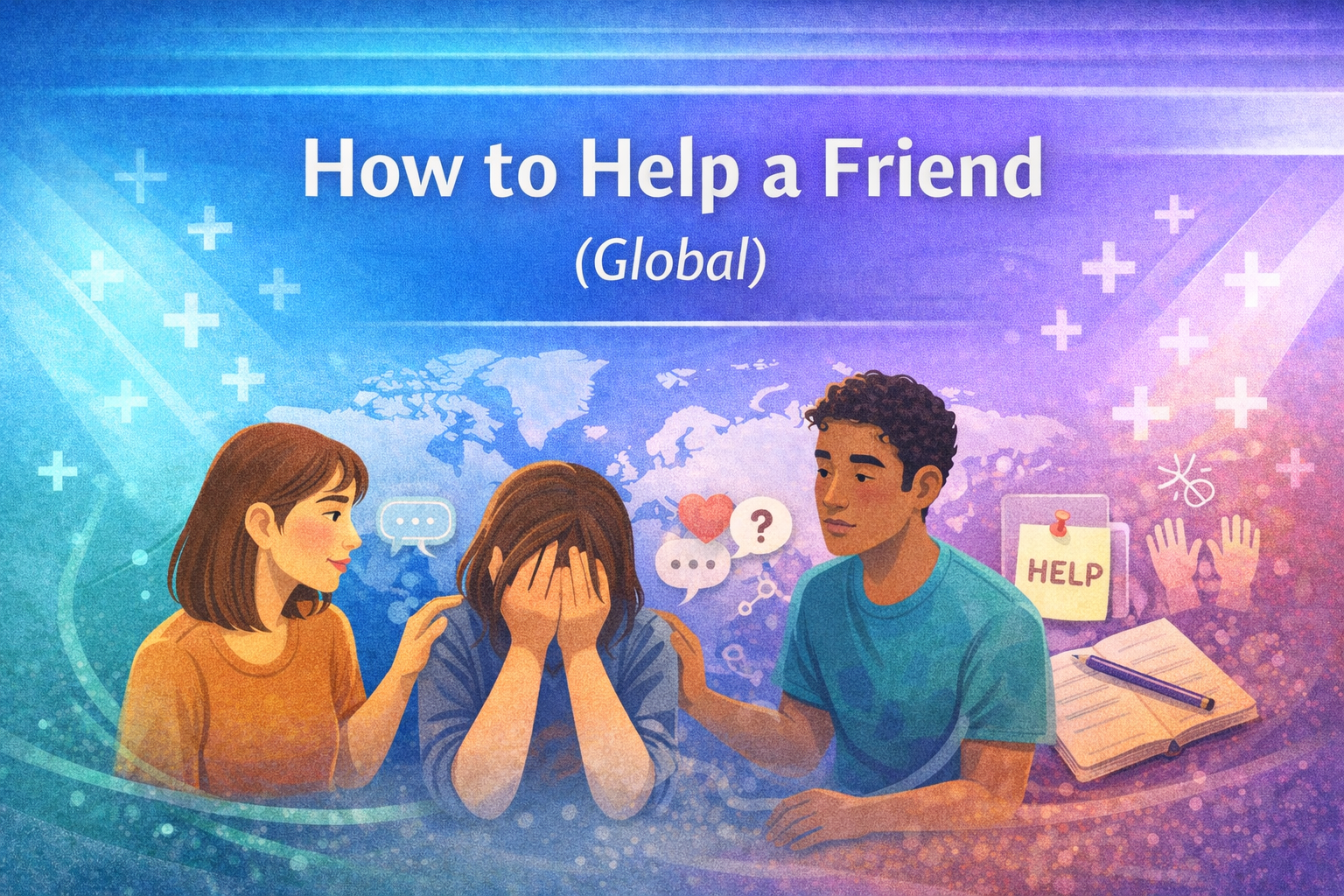
How to Help a Friend (Global)

← Back to Crisis Hub
How to Help a Friend Global

How to Help a Friend (Global)

When someone you care about is struggling, it can be hard to know what to say or do. This page offers simple guidance on how to support a friend in distress while also looking after yourself.

Content note: This page discusses distress, crisis support, safety concerns, and helping someone who may be struggling. If there is immediate danger, contact local emergency services now.
💙 Gentle reminder: You do not need to fix everything. Your role is to listen, stay calm, encourage safe support, and know when to get extra help.

Recognising When a Friend May Be Struggling

Changes you may notice

  • Withdrawal or avoiding contact
  • Changes in mood, sleep, eating, or behaviour
  • Sudden anger, panic, sadness, or shutdown

Words that may matter

  • “I can’t do this anymore”
  • “Everyone would be better without me”
  • “I feel trapped” or “I’m not safe”

Trust your concern

If something feels wrong, it is okay to gently check in. You do not need proof before offering care.

What You Can Say

Start gently

“I’ve noticed you seem different lately. I care about you. Do you want to talk?”

Validate

“That sounds really hard. I’m glad you told me.”

Offer choice

“Would you like me to listen, sit with you, help find support, or check in later?”

What to Avoid Saying

Avoid minimising

Try not to say “others have it worse,” “just stay positive,” or “you’ll be fine.”

Avoid rushing

Do not pressure them to explain everything quickly or solve everything at once.

Avoid blame

Shame can make people shut down. Stay calm, clear, and kind.

How to Offer Support

Listen first

Let them speak without jumping straight into advice.

Ask what helps

Try: “What would feel helpful right now?”

Stay connected

Offer to sit with them, message later, or help them contact support.

When to Seek More Help

Get urgent help if:

  • They may hurt themselves or someone else
  • They are in immediate danger
  • They cannot stay safe
  • They have a plan, means, or urgent risk

What you can do

  • Stay with them if safe
  • Contact emergency services
  • Call a crisis line together
  • Reach out to a trusted adult or support person

If speaking is hard

Use text/chat crisis support, write a short message, or ask someone safe to call for you.

Supporting Yourself as a Helper

You are not responsible for fixing everything

You can care deeply and still need backup.

Set boundaries

It is okay to say, “I care about you, and I think we need more support with this.”

Get support too

Talk to a trusted person, helpline, counsellor, or support service if you feel overwhelmed.

If you are concerned about immediate safety: Contact local emergency services or encourage your friend to use crisis support options available in your country. If they are at serious risk, do not leave them alone if it is safe for you to stay.

Where To Go Next

Crisis & Immediate Support

For urgent help, emergency routing, and immediate next steps.

Open page

International Helplines

Find broader crisis helplines and support pathways.

Open helplines

Text / Chat Crisis Support

For people who cannot call, cannot speak, or need written support.

Coming soon

Important Disclaimer

Aspie Answers provides education, signposting, and supportive information. This page is not a replacement for emergency services, therapy, legal advice, safeguarding, crisis assessment, or professional mental health care. In an emergency, contact local emergency services immediately.

↑ Top