Learn & Explore
Build knowledge, explore topics, understand terminology and follow ideas that interest you.
Learn & Explore
Learn • Explore • Grow • Belong
Inclusive learning, study and education pathways for different minds, ages and settings.
Use this hub to explore how people learn, practical study and learning support, neurodivergent-friendly approaches, accessible learning, resources, audiences and pathways into education, work and everyday life.
Try study, planning, neurodivergence, school, adult learning, families, educators, accessibility, resources, glossary, work or support.
Showing all Learning Hub pathways.
Learning happens in classrooms, workplaces, homes, communities, online spaces and everyday life. This hub brings together pathways for understanding, study, skill-building, accessible learning and support without assuming everyone learns in the same way.
Build knowledge, explore topics, understand terminology and follow ideas that interest you.
Learn & ExploreFind practical support for study, planning, reading, writing, focus, accessibility and different learning settings.
Learning Support PathwaysExplore the connection between neurodivergence, learning differences, strengths, barriers and support needs.
Explore the PathwayLearning may be visual, spoken, written, practical, creative, social, independent, technology-supported or a mixture. What helps can also change with interest, stress, energy, sensory load and environment.
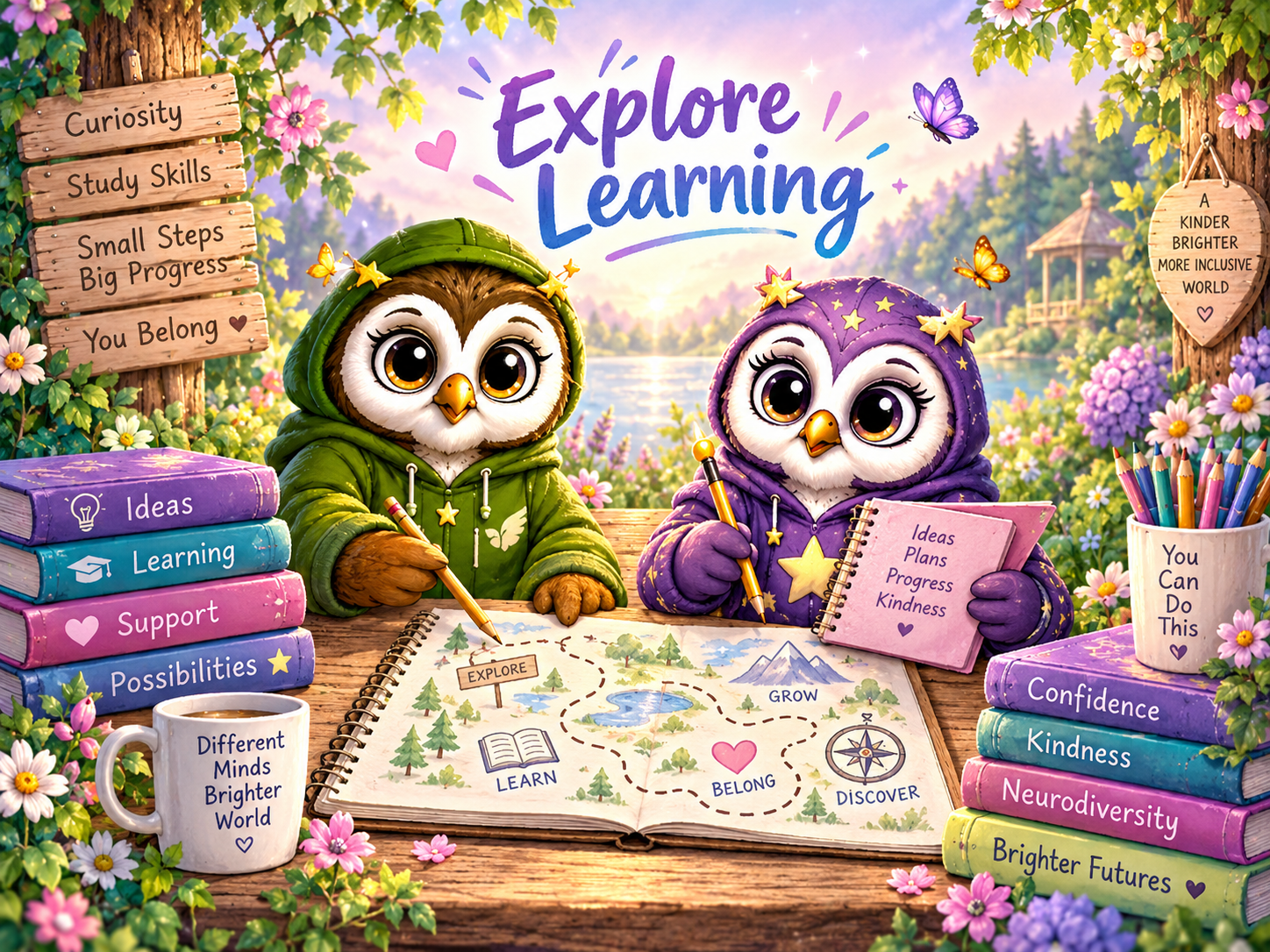
Start with the route that best matches what you need today. You can move between pathways whenever your goals or circumstances change.
Practical support for study, planning, reading, writing, focus, accessibility, school, adult learning and training.
Explore Learning SupportExplore neurodivergent learning experiences, strengths, barriers, support and different ways of processing information.
Explore Neurodivergent LearningConnect study, training, work, transitions, organisation and everyday-life demands.
Work & Study LifeDiscover articles, explainers, learning material and curated knowledge pathways across Aspie Answers.
Knowledge & Learning LibraryExplore access, reasonable adjustments, communication, participation, advocacy and rights-related pathways.
Accessibility & RightsFind practical worksheets, planners, checklists, guides, toolkits and accessible resource formats.
Browse ResourcesSupport is not only about changing the learner. Tasks, communication, environments, expectations, timing and systems can also be adapted.
Use external systems such as checklists, planners, reminders, visual schedules and step-by-step supports.
Use clearer instructions, alternative formats, speech-to-text, text-to-speech, templates or visual supports where useful.
Consider sound, lighting, movement, seating, clothing, temperature and other sensory demands in the learning environment.
Match expectations to available energy and reduce unnecessary load where possible.
Explore practical changes that can improve access, participation and opportunities to demonstrate knowledge.
Recognise strengths, progress and effort without treating difficulty, delay or needing support as failure.
People arrive here as learners, family members, educators, supporters, employers or professionals. These routes help connect learning information with the role you are in today.
Study, organisation, learning strategies, transitions, access and self-advocacy.
Explore Learning SupportSupport learning while respecting autonomy, communication, strengths and individual needs.
Parents & FamiliesInclusive learning, classroom support, accessible communication and educator-focused pathways.
Explore Educator PathwaysPractical learning support, communication, organisation, participation and confidence.
Explore Supporter PathwaysAccessible training, onboarding, skill-building and workplace learning for different needs.
Work & EmploymentUse role-based pathways to reach information relevant to the people and communities you support.
Explore by People & RolesDifferent tasks and people may benefit from different resource types. One resource can appear in several discovery pathways without needing duplicate copies.
Worksheets, planners, checklists, cue cards, reflection tools and practical supports.
Longer resources for deeper learning, reflection, skill-building and structured exploration.
Structured learning materials, activity ideas, classroom tools and educator-friendly resources.
Visual schedules, posters, diagrams and supports that can make information easier to understand or predict.
Digital tools, app-based ideas and future interactive learning experiences.
Learning resources and activities supported by relevant Aspie Answers Companions.
If you prefer to browse broadly rather than follow a guided pathway, use the sitewide reference systems below.
Browse subject areas across Aspie Answers through the sitewide Topics A–Z discovery system.
Browse Topics A–ZFind clearer explanations of words, concepts and terminology used across the website.
Browse GlossariesExplore curated educational material, explainers and learning pathways.
Open the LibraryLearning does not have to happen all at once. Taking a break, changing format or returning later can be part of learning rather than a failure to continue.
Take a short break, move, stretch, stim, get a drink, change position, reduce sensory input or switch to a smaller task.
You can bookmark a useful pathway and return when you have more capacity. Small amounts of learning can still add up over time.
Explore what helps, adapt what needs changing, and leave what does not fit. Learning can be curious, practical, supported, independent, formal, informal, slow, fast, creative or a mixture of many things.
Different minds. Better connection.