

Welcome to Youth Mental Health Day

This page gathers gentle tools and trusted links for teens, families, and educators.
- Intro, why this day matters, and how to plan it
- Self-care & self-love ideas + Calm Corner
- Therapies & treatments (CBT, art/music, pet therapy, peer support, counselling)
- Helpful apps & books for teen wellbeing
- Support groups, global organisations & quick helplines
This page discusses mental health and help-seeking. If anything feels heavy, pause, talk to someone you trust, or use a helpline below. This content is for information and support — not medical advice.
What is Youth Mental Health Day?
Youth Mental Health Day invites open conversation, practical tools, and inclusive spaces for young people. Many regions mark the day in September, often linking with World Mental Health Day in October.
Use this page to plan an accessible, stigma-free event: calm rooms, choice-based activities, and clear signposts to help.

Why Youth Mental Health Matters
Many challenges start in adolescence. Normalising help-seeking early changes outcomes.
Stigma-free spaces at school and home help young people feel heard and connected.
Multiple ways to communicate (text, chat, art, AAC) reduce barriers to care.
Timelines — On the Day, Yearly Cycle & Themes
On-the-Day Flow
Morning — Welcome & Grounding
8:30–10:00Intro talk, kindness agreements, 3-breath check-in, optional wristbands for quiet preference.
Late Morning — Choice Activities
10:00–12:00Journaling, art table, music nook (headphones), movement break (skate/walk/stretch), peer chat.
Afternoon — Skills & Supports
13:00–15:00How to ask for help, supporting friends, digital wellbeing, where to find youth helplines.
Close — Calm & Reflect
15:00–15:20Gratitude prompt, share small wins, handout with helplines & apps.
Yearly Planning Timeline
8–10 weeks before
Form youth group; pick theme; book spaces; confirm accessibility.
4–6 weeks before
Publish schedule; invite student ideas; gather supplies; identify peer leaders & adults to support.
1–2 weeks before
Post reminders; prep calm prompts; print helpline cards; final checks.
After the day
Share reflection form; celebrate contributions; keep a weekly check-in or calm space going.
Past & Future Themes
2020 — “Opening Up”
Encouraging young people to speak openly; breaking stigma. #YMHD20
2021 — “Resilience & Growth”
Online workshops, journaling, guided meditations; finding calm after lockdowns.
2022 — “Connect, Reflect, Protect”
Peer support & partnerships (e.g., Youthline, YoungMinds); youth-led panels.
2023 — “Express Yourself”
Creative self-expression through art, music, and writing; storytelling.
2024 — “Growing Together”
Teamwork, compassion, inclusion; peer mentorship and youth activism.
2025 — “Nurture Well-Being”
Self-care, self-love, and authenticity; journaling prompts & mindfulness challenges.
Ways to Get Involved
Opt-in calm rooms; choice boards (journal/art/music/movement); clear signage; helpline cards.
Keep conversations simple and regular; agree a “need a break” signal; explore text/chat supports together.
Share supportive posts with alt text/captions; highlight crisis lines; invite gentle peer encouragement.
Self-Care & Self-Love
 What is self-care?
 Small supportive actions (water, movement, music, journaling, nature, rest) to maintain your wellbeing.
 Why self-love matters
 Kind self-talk reduces shame and builds confidence. Talk to yourself like you would to a friend.
 Mindfulness
 Short, regular pauses help steady the nervous system and improve focus, sleep, and mood.
“I am learning at my own pace. I deserve care and support.”
Therapies & Treatments for Teens
Cognitive Behavioural Therapy helps identify and reframe unhelpful thoughts and build coping skills.
 Art & Music Therapy
 Creative outlets for expression and regulation — making feelings visible or audible when words are hard.
 Pet Therapy
 Time with animals can lower stress, increase oxytocin, and offer gentle companionship that supports regulation.
Learning with others who “get it” builds hope and practical skills. Many schools and orgs offer peer programs.
 Counselling (1-to-1)
 A confidential space to talk, be heard, and learn coping strategies. Ask your GP, school, or youth org for youth-trained counsellors.
Helpful Apps for Teen Wellbeing
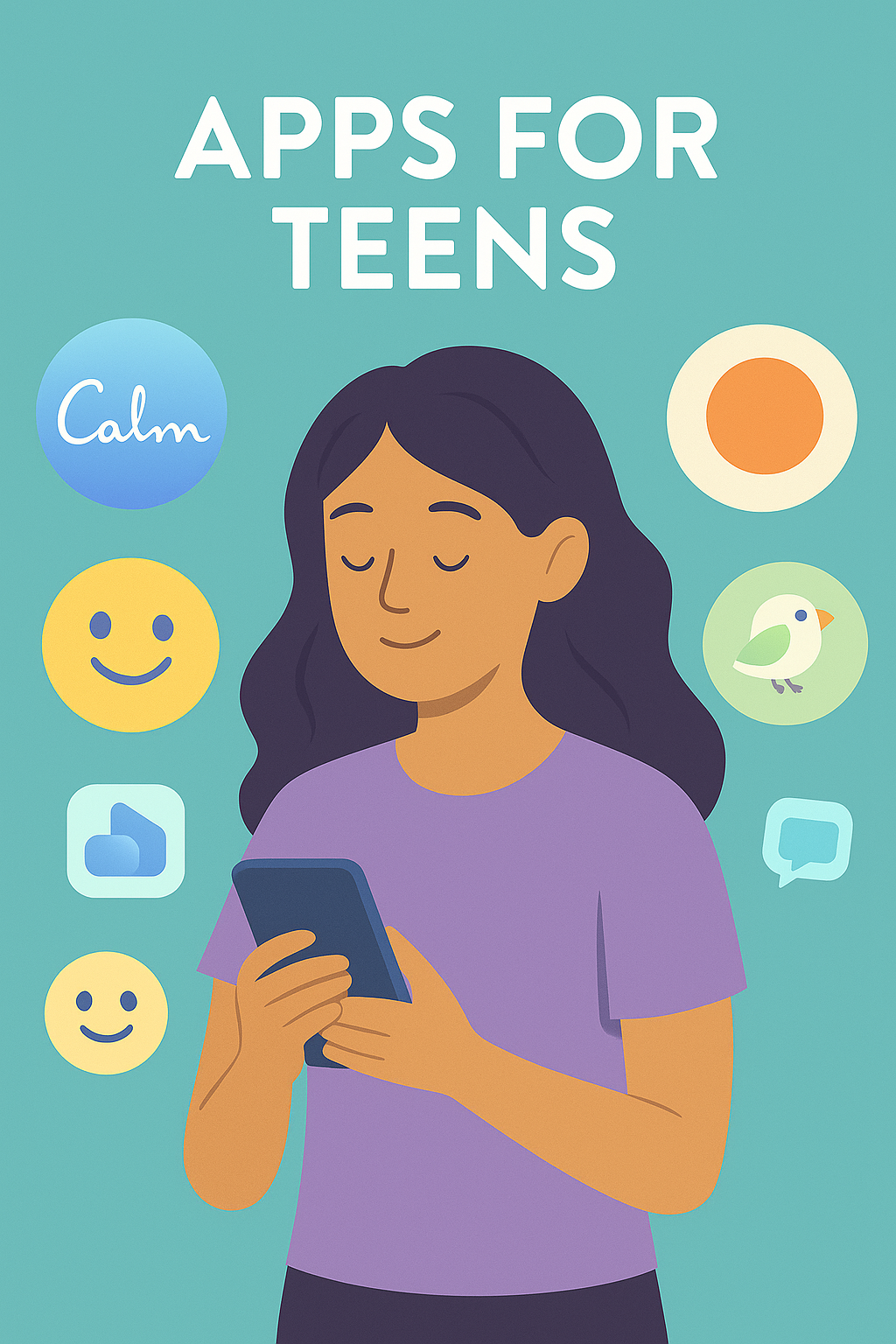
Apps can support calm, focus, and mood tracking. Try a few to see which fit your style.
| App | Purpose | Platforms |
|---|---|---|
| Calm | Mindfulness & sleep | iOS / Android |
| Headspace | Guided meditation | iOS / Android |
| Moodpath | Mood tracking & journaling | iOS / Android |
| Finch | Mental health companion | iOS / Android |
| Notion / Google Keep | Organisation & reflection | iOS / Android / Web |
Books About Mental Health for Teens
Daniel Howell
Ned Vizzini
Shaun David Hutchinson
Lisa M. Schab
Youth Support Groups & Services (Worldwide)
Online / Chat Support
- The Mix (UK)
- 7 Cups (Global)
- Youthline (NZ)
- Kids Helpline (AU)
In-Person / Organisation-Based
- Headspace (AU)
- Mind (UK Youth)
- ReachOut (Global)
- Jigsaw (Ireland)
Youth Organisations Worldwide

| Region | Organisation | Contact |
|---|---|---|
| NZ / AU | Headspace, ReachOut, Youthline | headspace.org.au / youthline.co.nz |
| UK | YoungMinds, The Mix | youngminds.org.uk / themix.org.uk |
| USA / CAN | NAMI Teens, Teen Line | nami.org / teenlineonline.org |
| Global | UNICEF, WHO Youth Mental Health | unicef.org / who.int |

Music can be a powerful self-soothing tool — pair with journaling or a short walk.
Quick Youth Helplines
- New Zealand: Youthline 0800 376 633 · Free text 234
- Australia: Kids Helpline 1800 55 1800
- UK: Childline 0800 1111 · The Mix 0808 808 4994
- USA/Canada: 988 Lifeline (text/chat available)
- Global: See full Worldwide Helplines
If you’re supporting someone: listen without judgement, thank them for telling you, and ask what would help right now (quiet space, water, text a friend, short walk). If someone is in immediate danger, call local emergency services.
“Awareness is understanding. Acceptance is love.” — Kerrin Maclean
Thank you for visiting Aspie Answers — a gentle, inclusive space to learn, connect, and grow together.
© 2025 Kerrin Maclean | Aspie Answers | www.aspieanswers.com
“Awareness is understanding. Acceptance is love.” — Kerrin Maclean
Thank you for visiting Aspie Answers — a gentle, inclusive space to learn, connect, and grow together.
© 2025 Kerrin Maclean | Aspie Answers | www.aspieanswers.com