
Need urgent help right now?
If there is immediate danger, serious injury, sudden serious illness, a threat of violence, or someone cannot stay safe, contact local emergency services. In Aotearoa New Zealand call 111; in Australia call 000; in the UK call 999 or 112; in Canada and the US call 911. Elsewhere, use the emergency number for your location.
Emotional support lines, elder-abuse advice lines and general health advice can help, but they are not a substitute for emergency response.
Older People & Older Adults — Crisis Support Worldwide
Find a calmer starting point for emotional support, safety, healthcare, grief, disability access, family and whānau support, community connection and region-specific help. Older adults deserve to be heard, respected and involved in decisions that affect their lives.
Choose a topic that fits
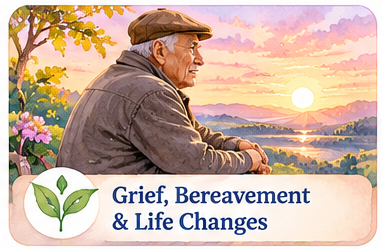
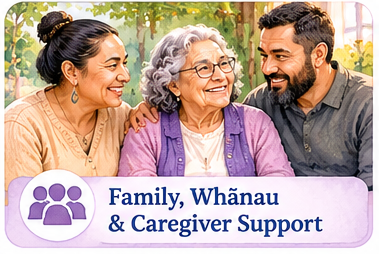
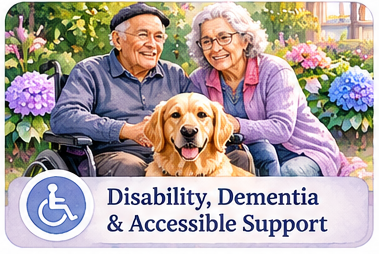
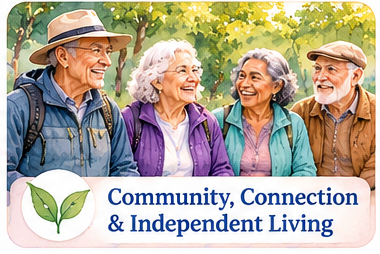
Each illustrated card is a working link to guidance below. You can also skip the images and use the support finder.

Emotional wellbeing & loneliness
You can ask for a listening ear, a check-in, or help building a comfortable routine.
It is common to want connection without a busy group setting. A phone call, a trusted person, a community worker or a gentle regular activity can be a first step.
Find relevant services in the support finderUrgent health & mental health support
Know the difference between an emergency, urgent assessment, and everyday health advice.
Sudden confusion, chest pain, severe breathing difficulty, serious injury or immediate danger call for emergency services. For non-emergency health questions, a medical service can advise on next steps.
Find relevant services in the support finderSafety, elder abuse & advocacy
Support is available for neglect, coercion, financial exploitation and unsafe care.
If you feel frightened or controlled, consider speaking privately with a trusted person or specialist advocate. Avoid confronting someone alone if that could increase risk. Your choices, dignity and privacy matter.
Find relevant services in the support finderGrief, bereavement & life changes
Loss of a person, independence, home or familiar routine can affect wellbeing.
Grief has no single timeline. A friend, whānau member, spiritual or cultural support person, grief group or healthcare professional may help you feel less alone.
Find relevant services in the support finder
Family, whānau & caregivers
Practical and emotional help matters for older adults and those supporting them.
Carers can ask for respite advice, needs assessment, care planning and emotional support. Include the older person in decisions whenever possible and respect their preferences.
Find relevant services in the support finderDisability, dementia & access needs
Ask for communication options, accessible information and support that respects autonomy.
It can help to request larger print, an interpreter, extra appointment time, a support person or a quieter setting. Cognitive or memory changes deserve a respectful assessment, not assumptions about ability.
Find relevant services in the support finderCommunity & independent living
Explore connection, transport, housing, practical help and everyday confidence.
Local age-support organisations, libraries, neighbourhood groups, disability services and community transport may offer different ways to stay connected and independent.
Find relevant services in the support finderWorldwide & regional support
Find the country-specific information that is relevant to your location.
Support hours, eligibility, emergency numbers, accessibility and languages vary between countries. Use the location hub and provider links to check what applies where you live.
Find relevant services in the support finderFind support and information
Search the verified starting points listed here. Results are filtered locally on this page; this is not a live directory of all available services. Provider opening hours and eligibility can change.
Showing all support resources.
Age Concern New Zealand — elder abuse help
24/7 elder-abuse response line: 0800 32 668 65; text 5032. For non-emergency advice and local teams.
Open official support information (new tab)Need to talk? 1737
Free call or text 1737 for trained emotional-support workers, day or night. Not an emergency dispatch service.
Open official support information (new tab)Healthline
Non-emergency nurse and health advice: 0800 611 116. If someone is in immediate danger call 111.
Open official support information (new tab)Alzheimers New Zealand
Dementia mate wareware information and local support: 0800 004 001.
Open official support information (new tab)Carers New Zealand
Information, resources and carer guidance: 0800 777 797.
Open official support information (new tab)1800 ELDERHelp
Elder-abuse advice and state/territory referrals: 1800 353 374. Not an emergency response line; for emergencies call 000.
Open official support information (new tab)Older Persons Advocacy Network (OPAN)
Free independent aged-care advocacy; information for people receiving or seeking aged care.
Open official support information (new tab)Age UK Advice Line
Free older-person advice line: 0800 678 1602, generally 8am–7pm daily; not an emergency service.
Open official support information (new tab)Hourglass — safer ageing
Specialist advice about abuse of older people: 0808 808 8141. Check current opening hours on the site.
Open official support information (new tab)Samaritans
Free listening support on 116 123, day and night; not an emergency dispatch service.
Open official support information (new tab)9-8-8 Suicide Crisis Helpline
Call or text 9-8-8 across Canada for suicide-crisis support, 24 hours a day. For immediate danger call 911.
Open official support information (new tab)Eldercare Locator
US government-supported connection to local ageing and community services. Not a crisis response service.
Open official support information (new tab)Find A Helpline
Explore helpline options by country and concern. Check location and service details before calling.
Open official support information (new tab)No resources in this list match those filters. Clear filters or use the wider Crisis Support by Location hub.

Explore a country or region
Different countries have different crisis systems. For an urgent situation, use local emergency services; for other needs, choose the relevant country or regional pathway.
These regional links lead to broader crisis resources, not necessarily older-adult specialist services.
Other Aspie Answers pathways
If a linked page does not yet cover your situation, try the main Crisis Support Hub or an official local provider.
Important information
Aspie Answers provides education and signposting, not diagnosis, treatment, legal advice, elder-abuse investigations or emergency dispatch. Services and phone numbers may change; check the provider for accessibility, language, fees, eligibility and current hours. Never rely on this page alone in an emergency.
Resource starting points include official New Zealand, Australian, UK, Canadian and US provider or government websites. Providers listed here are independent organisations and are not affiliated with Aspie Answers.