
If you are in immediate danger
If you are being threatened, harmed, exploited, trapped at work, unsafe travelling to or from work, or feel unable to stay safe, contact emergency services or move to the nearest safe place.
- New Zealand: 111
- Australia: 000
- United States / Canada: 911
- UK / Europe: 999, 112
- or your local emergency number
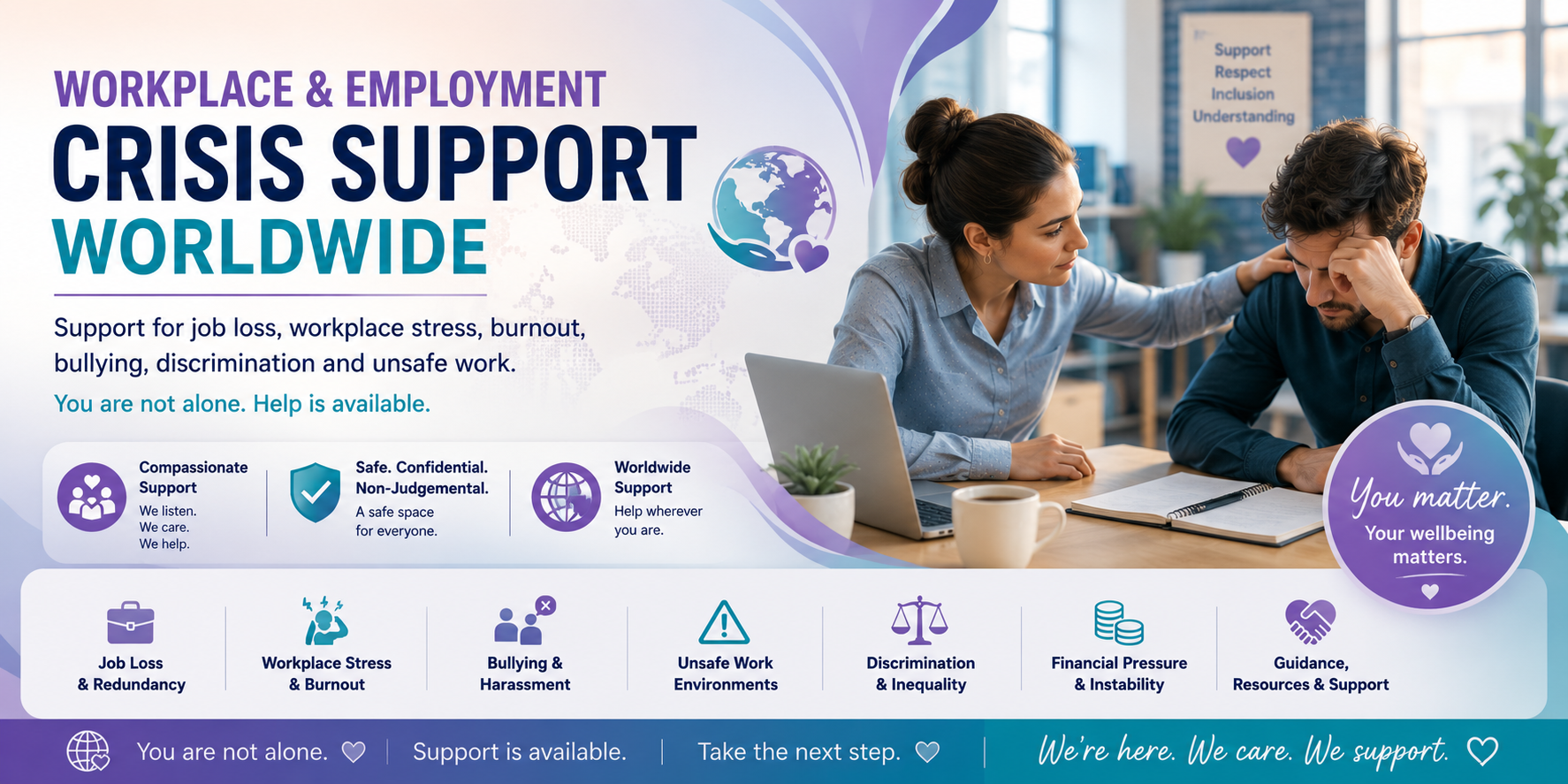
Workplace & Employment Crisis Support – Worldwide
This page is for people experiencing job loss, workplace stress, burnout, bullying, harassment, discrimination, unsafe work, financial pressure, employment instability, or work-related crisis situations.
You deserve safety, dignity, fair treatment, rest, support, and practical next steps. Work problems can affect your mental health, money, housing, family life, confidence, and sense of stability.
Quick safety steps for right now
Move toward safety
If work feels unsafe, move to a safer place if possible. Contact emergency services if there is violence, threats, stalking, harassment, or immediate danger.
Tell one trusted person
Workplace crisis can feel isolating. Tell someone trusted what is happening, especially if you feel overwhelmed, unsafe, or unable to cope.
Document what happened
If safe, keep dates, screenshots, emails, messages, payslips, contracts, incident notes, and names of witnesses or support people.
Workplace and employment crisis signs
It may include
- Job loss, redundancy, reduced hours, or income shock
- Workplace bullying, harassment, or intimidation
- Discrimination, unfair treatment, or unsafe conditions
- Burnout, panic, shutdown, or severe work stress
- Being pressured to work while unwell or unsafe
- Work conflict affecting housing, food, medication, or family stability
- Feeling trapped, hopeless, or unable to return to work safely
When it is urgent
- You are in danger at work
- Someone has threatened you
- You feel unsafe travelling to or from work
- You cannot access food, housing, medication, or basic needs after job loss
- You are having suicidal thoughts or self-harm urges
- Your health is rapidly declining because of work stress
Gentle content notice
This page discusses job loss, bullying, discrimination, burnout, unsafe work, financial pressure, workplace trauma, and crisis support. Please pause if needed.
Job loss, money pressure and practical needs
Stabilise the basics
- Food and groceries
- Rent, housing, or emergency shelter
- Medication and healthcare
- Transport and phone access
- Benefits, income support, or emergency payments
Use support early
Contact employment services, social services, legal support, unions, worker advice lines, community organisations, or crisis support before everything becomes unmanageable.
Protect your documents
Keep copies of employment agreements, termination letters, rosters, payslips, written warnings, medical notes, and messages connected to the issue.
If this is happening to you
Try this first
- Call emergency services if you are unsafe now.
- Tell one safe person what is happening.
- Write down key details while they are fresh.
- Contact an employment advice service, union, legal aid, worker support, crisis line, or social service.
- Seek medical or mental health support if work stress is affecting your safety or health.
- Focus on the safest next step, not the perfect solution.
Copy-and-send message
“I’m dealing with a workplace/employment crisis and I don’t feel okay handling it alone. Can you help me work out my next safe step or contact support?”
Helping someone else
What can help
- Listen without judgement.
- Take bullying, harassment, burnout, and job loss seriously.
- Help them document what happened.
- Help them contact employment, legal, financial, or crisis support.
- Check if they have food, shelter, medication, and safe transport.
What to avoid
- Do not say “just get another job” if they are in crisis.
- Do not minimise bullying or discrimination.
- Do not pressure them to return to unsafe work.
- Do not contact their workplace without consent unless immediate safety requires urgent help.
Helpful phrase
“I believe this is affecting you. Let’s focus on what keeps you safe and supported today.”
Evidence of progress
Small wins count
- Asking for help
- Saving key documents
- Making one phone call
- Eating or resting after stress
- Applying for support
- Setting one boundary
You are more than your job
Your worth is not measured by employment status, income, productivity, or how much you can cope with.
Support can be practical
Support may include financial help, legal advice, workplace advocacy, medical care, counselling, union support, or emergency help.
Worldwide workplace and employment support contacts
Services can change, so check official websites for the latest information. If you are in immediate danger, use emergency services first.
New Zealand / Aotearoa
- Emergency: 111
- Employment New Zealand: workplace rights and employment information
- Work and Income: financial and job support
- Community Law: legal information and local legal help
- 1737: free call/text emotional support
Australia
- Emergency: 000
- Fair Work Ombudsman: workplace rights and pay support
- Services Australia: financial and employment support
- Lifeline: 13 11 14
- Legal Aid: check your state or territory
United States
- Emergency: 911
- 988 Lifeline: call, text, or chat 988
- Department of Labor: workplace rights information
- EEOC: discrimination support and complaints
- 2-1-1: local food, housing, employment, and financial support in many areas
Canada
- Emergency: 911
- 9-8-8 Canada: call/text crisis support
- Employment and Social Development Canada: employment information
- Provincial employment standards offices
- 211 Canada: local community and financial supports
United Kingdom
- Emergency: 999 or 112
- ACAS: workplace rights, disputes, and employment advice
- Citizens Advice: employment, debt, and legal guidance
- Samaritans: 116 123
- Turn2us: benefits and financial support search
International / Global
- Find a Helpline: search by country and topic
- International Labour Organization: labour standards and worker rights information
- Local unions, legal aid, worker advice, social services, and community organisations
Accessible support options
Text or chat support
Text and webchat can help when phone calls feel too hard, unsafe, or overwhelming.
Open text/chat supportCommunication access
For AAC, typing, writing, plain language, interpreter support, or extra processing time.
Open communication accessNeurodivergent crisis support
For burnout, shutdown, rejection sensitivity, sensory overload, ADHD overwhelm, or autistic work stress.
Open ND crisis supportWhere to go next
Crisis Support by Topic
Explore all crisis topic support pathways.
Open topic supportFinancial Crisis & Hardship
For debt, poverty, benefits, food insecurity, and financial stress.
Open financial supportLegal & Personal Safety
For threats, harassment, discrimination, stalking, or safety concerns.
Open legal/safety supportAnxiety, Panic & Overwhelm
For panic, work stress, burnout, shutdown, or emotional overwhelm.
Open anxiety supportMedical & Health Crisis
For health symptoms, illness, injury, burnout-related health decline, or urgent concerns.
Open medical supportCrisis Support by Location
Find support by country or region.
Open location support