
Gentle Notice
This page offers simple self-care ideas for everyday support. It is not a replacement for medical advice, therapy, diagnosis, or crisis support.
Need immediate help?
If you are in crisis, unsafe, or need urgent support, please contact a trusted person or crisis service in your area.
Go to Crisis Support HubA simple menu for gentle self-care
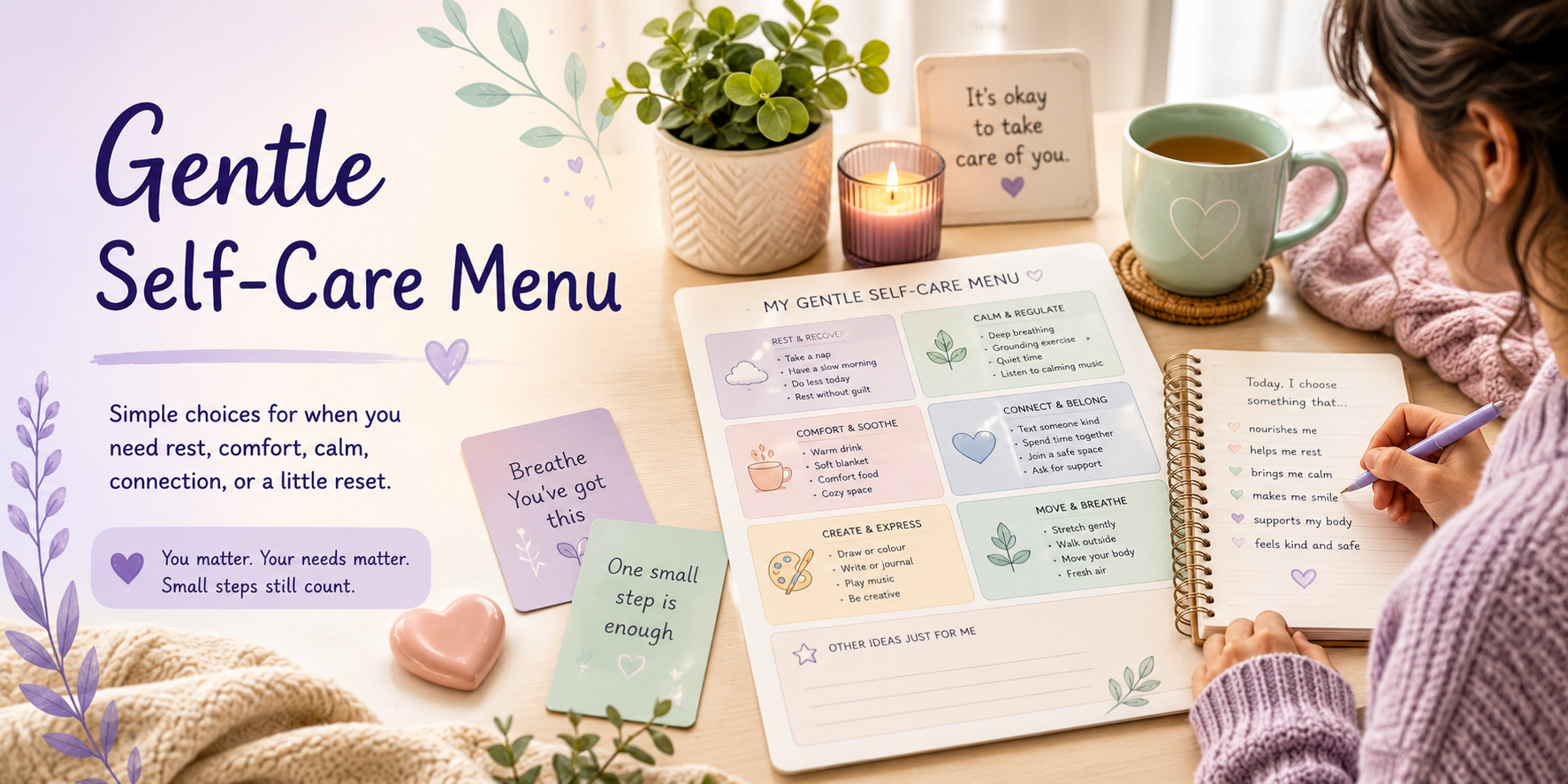
A self-care menu gives you small, realistic options to choose from when you feel tired, overwhelmed, low, stressed, or unsure what you need.
How to choose from the menu
Self-care does not need to be big
Self-care can be a drink of water, changing into comfortable clothes, sitting somewhere quieter, sending one message, taking medication as prescribed, opening a window, or choosing rest without guilt.
Use a Daily Check-InLow-capacity self-care options
If you have very little energy, choose the smallest possible support. Self-care can be tiny and still count.
Take three slow breaths, sip water, unclench your jaw, or put your feet on the floor.
Sit somewhere quieter, stretch, open a window, or write one sentence about what you need.
Use an emoji, number, colour, or simple phrase to show how you feel.
Send a simple message such as: “I’m struggling today. Can you check in with me?”
Sensory-friendly self-care
When self-care feels hard
If self-care feels impossible, start with care that removes pressure. You may need rest, support, medical help, safety planning, practical help, or someone to sit with you while you do one small thing.
Explore Calm & Regulation ToolsFind related support
Search or filter the support links below to move to the next resource that fits your needs.
Daily Mental Health Check-In
Use a daily check-in to notice feelings, needs, and support options.
Open pageRelated pages and pathways
Use these pages to keep exploring gentle, practical mental health supports.
Practical support pages
Helpful pages to use alongside this self-care menu.
Resource pathways
Explore printable tools, calming resources, and support collections.
Choose one kind thing
You do not have to do everything today. Choose one small support that feels possible, kind, and realistic for your current capacity.
Back to Mental Health Support Explore Printables & Worksheets