
Gentle Notice
These grounding and calming cards are for everyday coping, self-awareness, sensory support, and emotional regulation. They are not a replacement for medical advice, therapy, diagnosis, or crisis support.
Need immediate help?
If you are in crisis, unsafe, or need urgent support, please contact a trusted person or crisis service in your area.
Go to Crisis Support HubQuick support when words feel hard
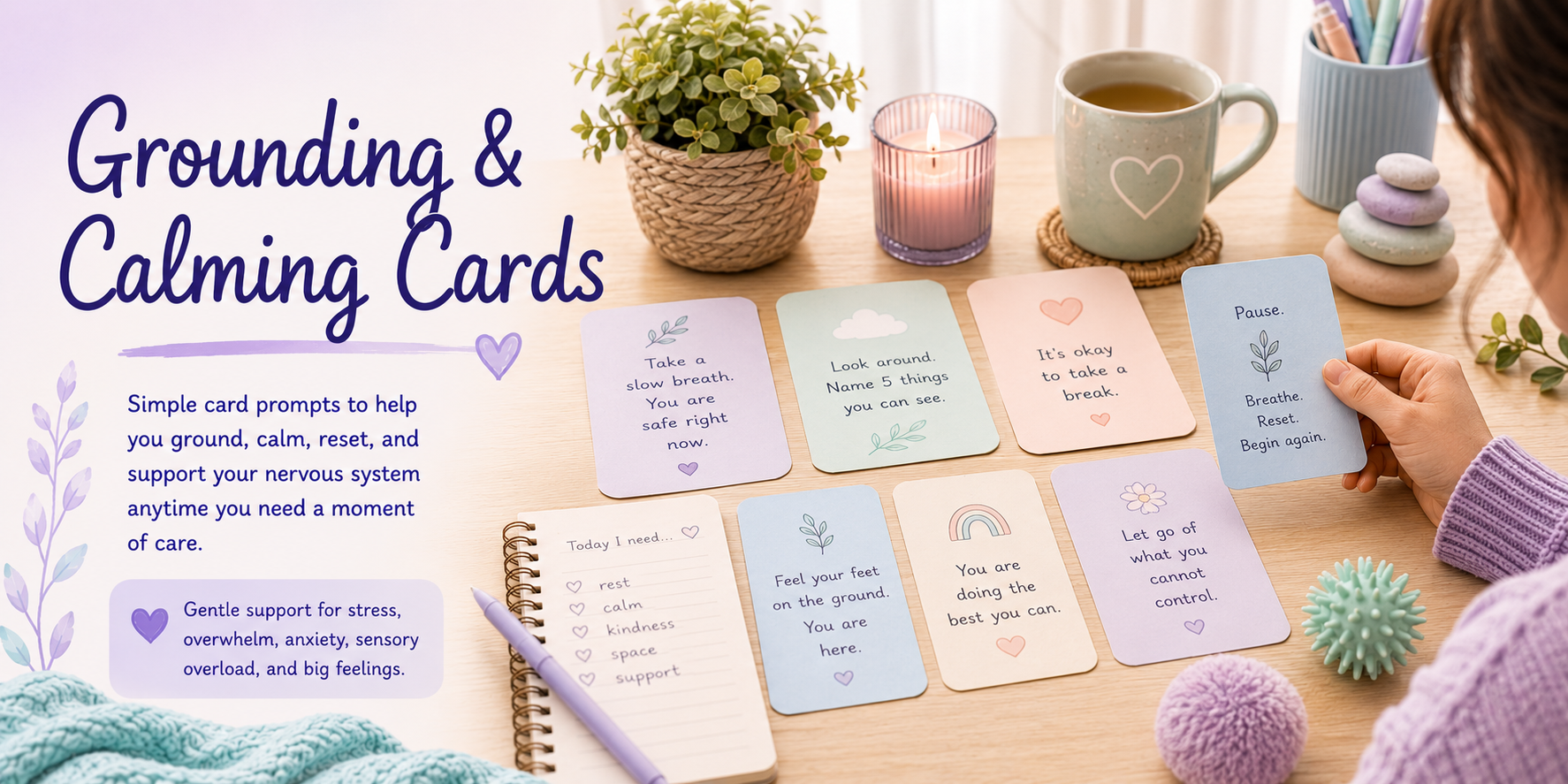
Grounding and calming cards give you simple prompts to use during stress, anxiety, overwhelm, sensory overload, emotional intensity, shutdown, or a difficult moment.
Grounding prompts
Use sensory-based prompts to come back to the present moment and notice what is around you.
Calming reminders
Use gentle reminders for breathing, pausing, resting, reducing demand, or choosing one small next step.
Regulation support
Use card prompts to support emotional regulation, sensory regulation, coping skills, and communication.
How to use grounding and calming cards
- 1 Choose one card that feels manageable.
- 2 Read it slowly or have someone read it with you.
- 3 Try the prompt for a short time.
- 4 Stop, swap, or simplify if it does not feel right.
- 5 Use the card again later if it helped.
Cards can reduce pressure
When emotions, sensory input, or stress feel too much, cards can make support easier to choose. You do not have to explain everything. You can point to a card, read a prompt, or pick one small action.
Explore Calm & Regulation ToolsTypes of cards that can help
Different cards can support different moments. Some are for calming the body, some are for communication, and some are for choosing a coping strategy.
Grounding Cards
Prompts that use sight, sound, touch, smell, taste, breath, or body awareness.
Calming Cards
Short reminders to pause, breathe, soften, rest, or take a gentle reset.
Emotional Regulation Cards
Prompts for naming feelings, noticing body signals, and choosing support.
Sensory Reset Cards
Ideas for reducing sensory load, seeking safe input, or changing the environment.
Coping Cards
Simple coping choices for stress, overwhelm, anxiety, low mood, or hard days.
Communication Cards
Cards that help someone show what they need when speaking or explaining feels hard.
Example card prompts
These examples can be used as gentle starting points for grounding, calming, emotional regulation, and sensory support.
Prompt examples
Name five things you can see, four you can feel, three you can hear, two you can smell, and one you can taste.
Breathe in gently. Breathe out slowly. Repeat a few times without forcing it.
Can you lower the light, reduce noise, change clothing, move away, or use a comfort item?
Try: “I feel ___.” “My body feels ___.” “I need ___.”
Choose one tiny action: drink water, sit down, message someone, step outside, or rest.
Try: “I am overwhelmed. I do not need fixing. I need calm, time, and less pressure.”
Sensory-friendly ways to use cards
- ✓ Keep cards somewhere easy to reach.
- ✓ Use soft colours and clear wording.
- ✓ Laminate or print on thicker paper if texture helps.
- ✓ Keep a small set in a bag, calm corner, desk, or bedside space.
- ✓ Let the person choose, point, sort, or remove cards that do not help.
Cards should feel supportive, not demanding
If a card feels too wordy, too bright, too emotional, or too hard to follow, it can be changed. The best card is one that feels usable in the moment, not one that looks perfect.
Open Gentle Self-Care MenuFind related support
Search or filter the support links below to move to the next resource that fits your needs.
Daily Mental Health Check-In
Use a daily check-in to notice feelings, needs, and support options.
Open pageRelated pages and pathways
Use these pages to keep exploring calming tools, coping supports, printable worksheets, and gentle mental health resources.
Practical support pages
Helpful pages to use alongside grounding and calming cards.
Resource pathways
Explore printable tools, calming resources, and support collections.
Keep support simple and reachable
Grounding and calming cards work best when they are easy to find, easy to understand, and gentle enough to use during real-life overwhelm.
Back to Mental Health Support Next: Coping Skills Worksheets