
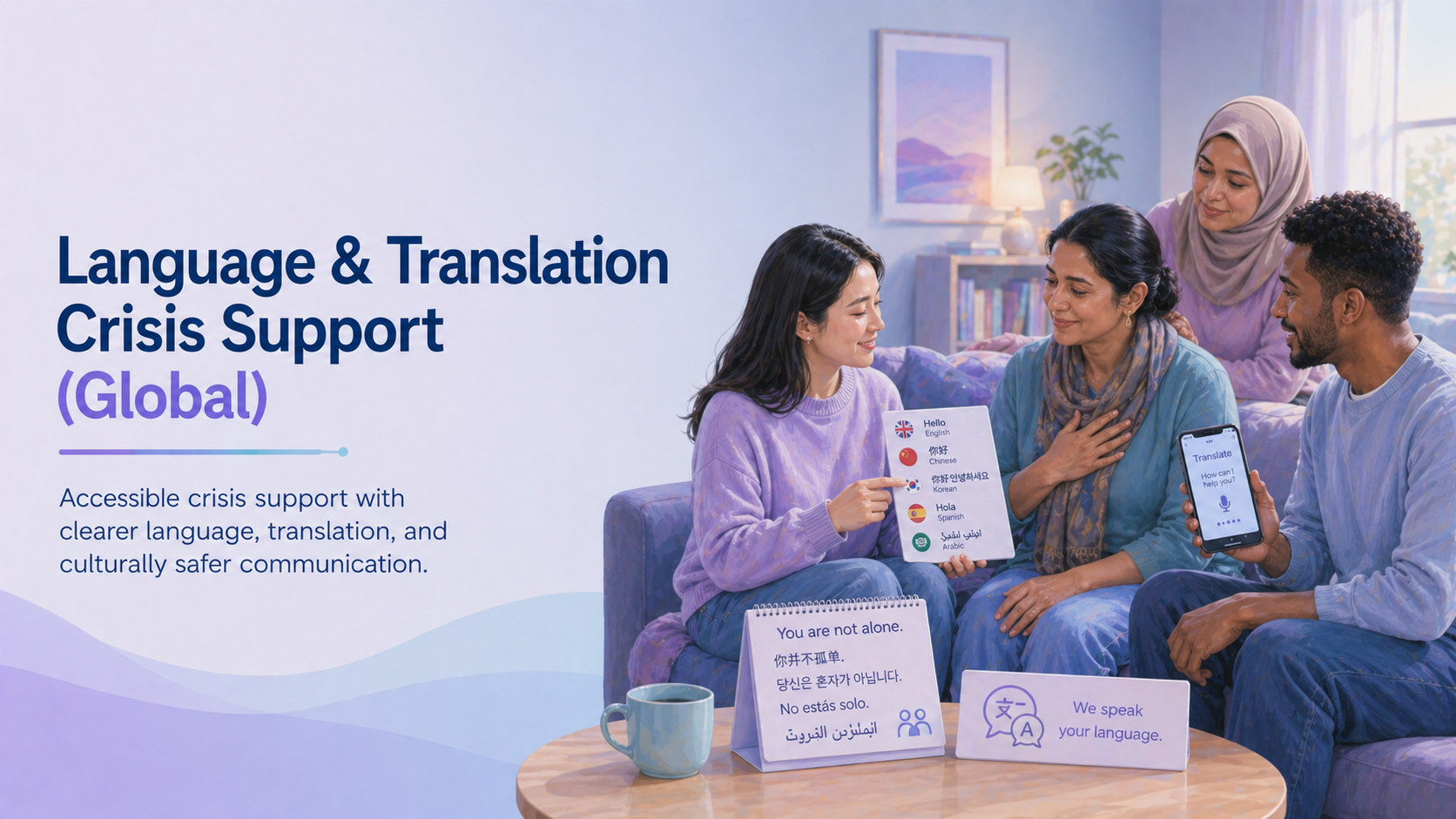
Language & Translation Crisis Support (Global)
Crisis support should be understandable, respectful, and accessible in the language or communication style a person can use best. This page is for people who may need translated information, interpreter access, multilingual support, plain language, or culturally safer communication during crisis.
It may also help families, carers, support workers, teachers, and community members support someone who is distressed but struggling to explain what is happening in English or in a service’s main language.
Quick Access Support
If language feels like a barrier right now, start with the simplest communication option available.
Ask for an interpreter
Use a short phrase such as: “I need an interpreter” or “I need help in my language.”
Use translated text
If speaking is hard, show a translated note on your phone or write down what you need.
Use a trusted person
A trusted person may help explain your needs, but they should not replace professional interpreter support when important decisions are involved.
Language Access Options During Crisis
Accessible crisis support may need to change how information is explained and understood.
Clear and Simple Words
- Short sentences
- No jargon
- One step at a time
- Repeated information if needed
Support in Your Language
- Interpreter access
- Translated resources
- Multilingual helplines
- Community-language support where available
Text, Chat, and Notes
- Text or chat support
- Phone translation apps
- Written scripts
- Translated messages shown on a phone
Translation & Interpreter Support
Translation support can make crisis care safer, clearer, and easier to trust.
Ask for Interpreter Access
In emergency, health, legal, or crisis settings, ask whether an interpreter or language service is available.
Use Translated Notes
A translated note can explain urgent needs quickly when speaking is hard or when English is not your strongest language.
Check Understanding
Ask support workers to repeat key information slowly or write down the next step in clear words.
Culturally Safer Crisis Support
Language support and cultural safety often connect. A person may need support that respects culture, family, faith, migration experiences, identity, and community context.
Respect Cultural Context
Support should avoid assumptions and should ask what matters to the person, their family, and their community context.
Understand Fear or Mistrust
Some people may feel unsafe asking for help because of stigma, discrimination, migration trauma, or past experiences with systems.
Use Safe Community Support
Where appropriate, culturally connected community services may help people feel safer and better understood.
Supporting Someone with Language or Translation Needs
Support should reduce confusion, not increase pressure.
What helps
- Ask what language they prefer
- Use short and simple sentences
- Offer written or translated information
- Ask if they want an interpreter
- Check understanding gently
- Give extra time to respond
What to avoid
- Speaking louder instead of clearer
- Using jargon or complex instructions
- Assuming they understand everything
- Making family interpret sensitive information without consent
- Ignoring cultural or faith needs
- Rushing decisions during distress
Helpful Scripts to Copy, Type, or Show
These short phrases can be copied, translated, shown on a phone, or written on paper.
When you need an interpreter
“I need an interpreter. I do not understand enough to explain this safely.”
When you need simple language
“Please use simple words and tell me one step at a time.”
When you feel unsafe
“I am not safe. I need help now. Please stay with me or help me contact crisis support.”
When you need written information
“Please write down the next step so I can understand and remember.”
When English is hard right now
“English is hard for me right now. I need help in my language.”
When you need cultural support
“I need support that understands my culture, family, faith, or community needs.”
What Support May Feel Like
Accessible language support may feel slower, clearer, and more respectful. It may include an interpreter, translated information, written steps, plain language, repeated explanations, or culturally connected support. You are allowed to ask for communication that you can understand.
Where To Go Next
Accessibility Crisis Support
Return to the wider accessibility support hub.
Open accessibility hubCulture & Community Crisis Support
For culturally safer support, community needs, and identity-aware crisis pathways.
Open culture supportText / Chat Crisis Support
For crisis support that can happen through written messages instead of phone calls.
Open text/chat supportYou Deserve to Be Understood
Language access is part of safety. If support is hard to understand, it may need to be adapted. You are allowed to ask for translation, interpreter access, plain language, written steps, and culturally safer communication.
Important Disclaimer
Aspie Answers provides education, signposting, and supportive information. This page is not a replacement for emergency care, medical advice, therapy, safeguarding, interpreter services, legal advice, cultural advocacy, or professional crisis assessment. In an emergency, contact local emergency services immediately or use accessible emergency options available in your country.