
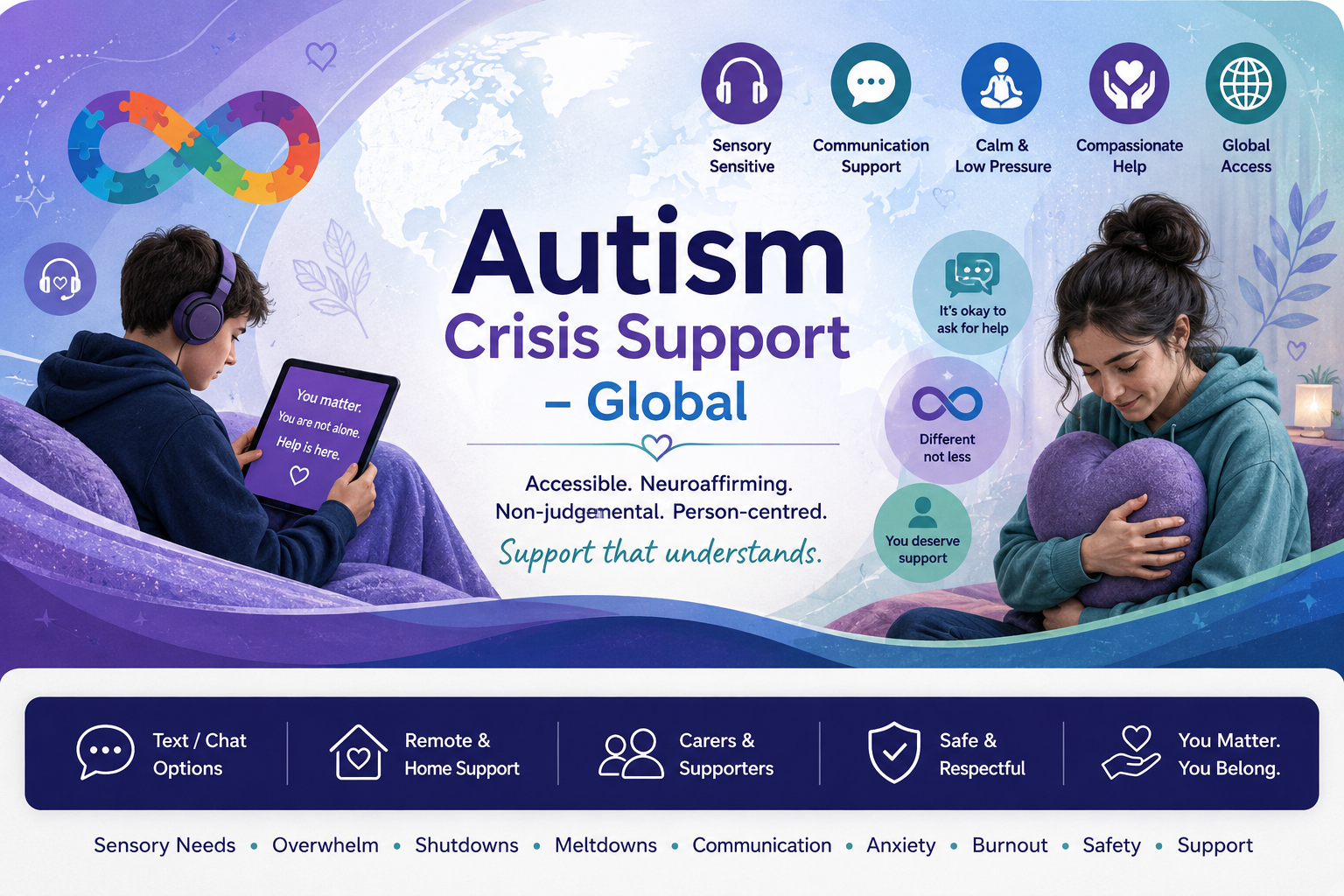
Autism Crisis Support – Global
A gentle crisis support page for autistic people, families, carers, educators, professionals, and supporters. This page focuses on low-pressure, sensory-aware, respectful support during overwhelm, shutdowns, meltdowns, burnout, panic, communication difficulties, or unsafe moments.
New Zealand: 111 · Australia: 000 · United States / Canada: 911 · UK: 999 or 112 · Europe: 112
Quick Pathways
Choose the option that best fits what is happening right now.
I need emergency help now
Use emergency services first if there is immediate danger, medical risk, violence, self-harm risk, or someone cannot stay safe.
Open emergency numbersI need sensory-safe support
Use lower sensory input, quiet space, reduced demands, fewer words, and familiar supports where possible.
Open sensory supportI cannot speak or explain
Use text, typing, writing, AAC, pointing, gestures, or a trusted support person instead of forcing speech.
Open AAC supportAutistic Crisis Signs & Sensory Overload
Autistic distress can look different for each person. Some people may shut down, melt down, mask, flee, freeze, lose speech, panic, become overwhelmed, or seem “fine” while struggling inside.
Shutdown
The person may go quiet, still, frozen, sleepy, disconnected, unable to move, or unable to respond quickly.
Meltdown
The person may cry, yell, move, panic, flee, or lose control because distress or sensory overload is too high.
Masking
The person may look calm while hiding panic, burnout, pain, sensory overwhelm, or unsafe thoughts.
Recovery time
Afterwards, the person may need quiet, rest, hydration, reassurance, and reduced demands.
Communication During Autistic Crisis
Speech, processing, body language, and decision-making can become harder during crisis. Support should match the person’s safest communication method.
Helpful communication
- Use short, clear sentences.
- Ask one question at a time.
- Offer yes/no or either/or choices.
- Allow text, writing, AAC, or pointing.
- Give processing time.
What to avoid
- Do not force eye contact.
- Do not demand quick answers.
- Do not touch without consent unless there is immediate danger.
- Do not shame, mock, crowd, or punish distress.
Simple phrase
“I need calm, space, clear choices, and time to process.”
For Family, Carers, Friends, Educators & Professionals
Autistic crisis support should be calm, respectful, low-demand, trauma-informed, and sensory-aware.
What helps
- Reduce noise, lights, crowds, and demands.
- Use calm voice and simple words.
- Offer space, quiet, and predictable choices.
- Respect communication tools and support people.
What makes it worse
- Arguing, shaming, crowding, or threatening.
- Forcing speech or eye contact.
- Removing AAC, headphones, comfort items, or safe supports.
- Calling distress “attention-seeking”.
Afterwards
Recovery may need rest, hydration, low sensory input, reduced demands, reassurance, and a gentle check-in later.
Where To Go Next
This page connects into the wider Aspie Answers crisis support structure.
Neurodivergent Crisis Support
Return to the main neurodivergent crisis support doorway.
Open ND supportSensory Overwhelm Crisis Support
For sensory overload, environmental distress, and low-demand support.
Open sensory supportShutdown & Meltdown Crisis Support
For shutdowns, meltdowns, panic, loss of speech, and overwhelm.
Open shutdown/meltdown supportCommunication Access Crisis Support
For text, AAC, non-phone, plain language, support people, and communication barriers.
Open communication accessTrauma-Informed Neurodivergent Crisis Support
For calmer, safer, consent-aware, dignity-focused support.
Open trauma-informed supportSupport & Directories Hub
For ongoing support, organisations, services, groups, and non-urgent contacts.
Open support directoriesImportant Disclaimer
Aspie Answers provides educational information, supportive guidance, and signposting only. This page is not a replacement for emergency services, medical care, therapy, safeguarding, legal advice, or professional crisis support. In an emergency, contact local emergency services immediately.