
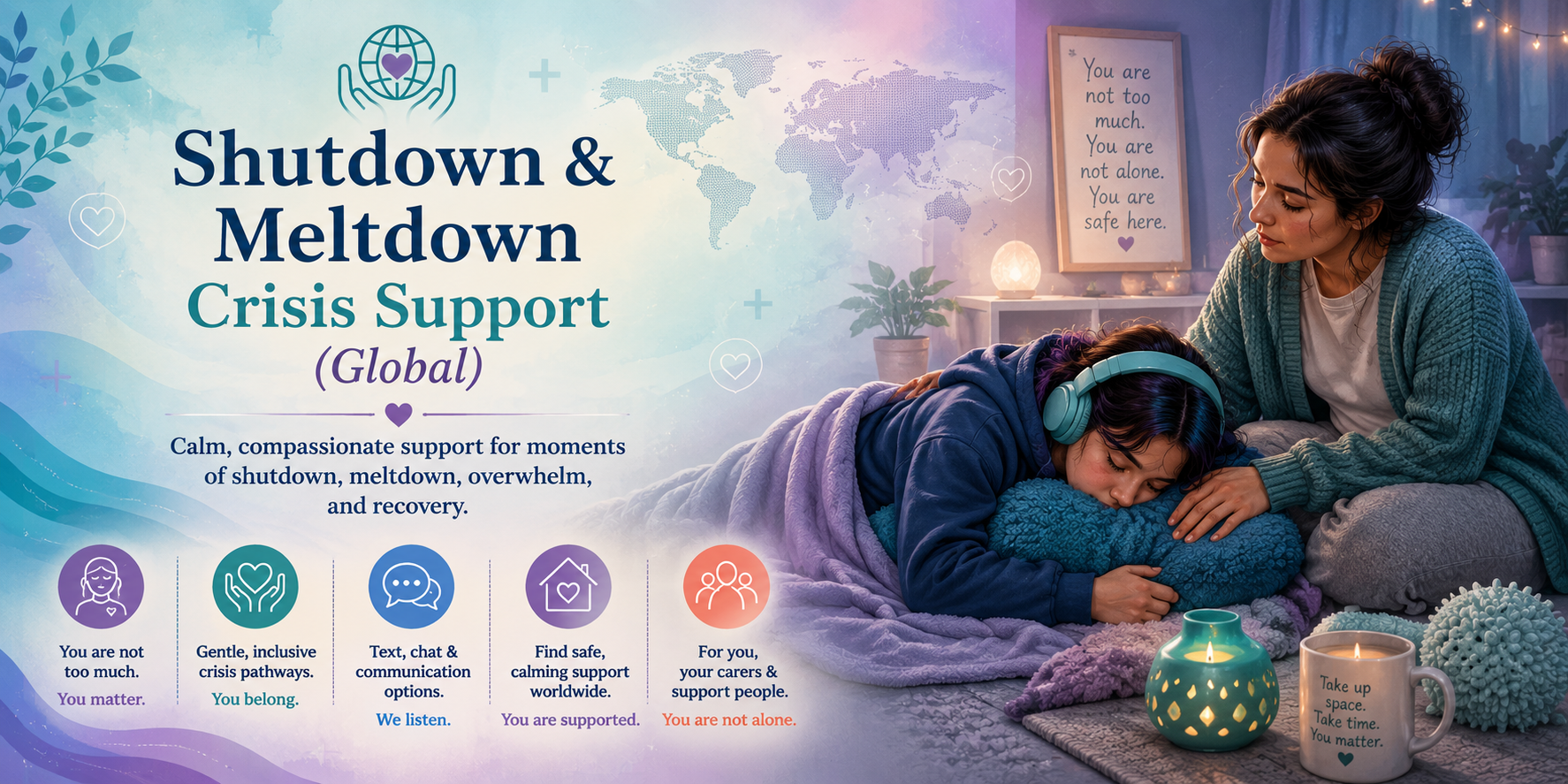
Shutdown & Meltdown Crisis Support – Global
A calm starting point for autistic, ADHD, neurodivergent, disabled, traumatised, or sensory-sensitive people who experience shutdowns, meltdowns, panic, loss of speech, overwhelm, or moments where everything feels too much.
If you need help right now
If you or someone else is in immediate danger, at risk of harm, or unable to stay safe, contact local emergency services now.
- New Zealand: 111
- Australia: 000
- United States / Canada: 911
- UK: 999 or 112
- Europe: 112
Gentle note
Shutdowns and meltdowns are distress responses, not bad behaviour. The first goal is safety, lower pressure, less sensory input, and dignity.
Quick pathways
Choose the option that fits what is happening right now.
I need emergency help now
Use emergency services first if there is immediate danger, medical risk, violence, suicide risk, or someone cannot stay safe.
Open emergency numbersI cannot speak or call
Use text, chat, online messaging, relay options, written notes, or ask a trusted person to help communicate.
Open text/chat supportI need sensory-safe support
Use accessibility and sensory-aware crisis support pathways when standard support feels too overwhelming.
Open accessibility supportSearch & filter shutdown and meltdown support
Use this section to quickly find the support pathway you need.
Shutdown support
Support for moments when someone becomes quiet, frozen, unable to speak, unable to move, or unable to respond quickly.
Meltdown support
Support for intense distress, crying, panic, anger, movement, or loss of control caused by overwhelm.
Text, chat & non-phone support
Useful if speaking is hard, phone calls feel unsafe, or written communication is easier.
Open text/chatSensory overwhelm
Shutdowns and meltdowns can be linked to sensory overload, pain, noise, crowds, lights, or too many demands.
Open sensory supportCarers, family, and support people
Supporters can help by reducing pressure, creating space, lowering sensory input, and keeping the person safe.
Open carers supportFind support by location
Use the location hub for emergency numbers, crisis helplines, and regional support pathways.
Open location hubUnderstanding shutdowns and meltdowns
Shutdowns and meltdowns can happen when someone’s nervous system is overwhelmed. They are not choices, manipulation, or attention-seeking.
Shutdown
The person may go quiet, still, frozen, sleepy, disconnected, or unable to respond.
Meltdown
The person may cry, yell, move, panic, flee, or lose control because distress is too high.
Loss of speech
Words may become hard or impossible. Written or non-verbal options may help.
Recovery time
Afterwards, the person may feel exhausted, ashamed, sore, confused, or fragile.
Respond safely
Support should reduce danger and pressure, not increase shame or escalation.
First steps
- Check immediate safety.
- Reduce noise, light, crowding, and demands.
- Use fewer words.
- Give space if safe.
Helpful support
- Offer quiet, water, comfort items, headphones, or a safe space.
- Use calm body language.
- Ask one simple question at a time.
- Let recovery happen slowly.
When urgent help is needed
If someone is unsafe, medically unwell, at risk of harm, missing, or unable to stay safe, use emergency or crisis support immediately.
Communication during shutdown or meltdown
Speech and processing can become unreliable during overload. This does not mean the person is ignoring you.
Helpful communication
- Use short sentences.
- Offer yes/no or two-choice questions.
- Use text, writing, AAC, visuals, or gestures.
- Allow silence and processing time.
What to avoid
- Do not demand eye contact.
- Do not crowd or corner the person.
- Do not shame, lecture, threaten, or punish.
- Do not ask lots of questions at once.
Simple phrase
“I cannot talk right now. I need quiet, space, and time.”
For carers, family, supporters, and professionals
Supporters can help by recognising distress early and responding with calm, low-demand support.
What helps
- Stay calm and reduce stimulation.
- Protect dignity and privacy.
- Offer space, quiet, and time.
- Support recovery afterwards without shame.
What makes it worse
- Arguing, shaming, or crowding.
- Taking coping tools away unless unsafe.
- Demanding quick answers.
- Calling it bad behaviour.
Afterwards
Recovery may need rest, hydration, quiet, reassurance, reduced demands, and a gentle check-in later when the person is ready.
Where to go next
This page links into the wider Aspie Answers crisis support structure.
Sensory Overwhelm Crisis Support
For sensory overload, environmental distress, and low-demand safety support.
Open sensory supportAutism Crisis Support
For autism-specific crisis needs, sensory distress, shutdowns, meltdowns, and communication access.
Open autism supportNeurodivergent Crisis Support
Return to the main neurodivergent crisis support doorway.
Open ND supportText / Chat Crisis Support
For low-pressure, non-phone crisis support.
Open text/chat supportAccessibility-Specific Crisis Support
For sensory, communication, disability, and access-based crisis support.
Open accessibility supportCrisis Support by Location
Find crisis support by country, region, or wider location pathway.
Open location hub