
If you are in immediate danger
If you are being threatened, harmed, detained unsafely, trafficked, exploited, left without shelter, or feel unable to stay safe, contact emergency services or move toward the nearest safe support point if possible.
- New Zealand: 111
- Australia: 000
- United States / Canada: 911
- UK / Europe: 999, 112
- or your local emergency number
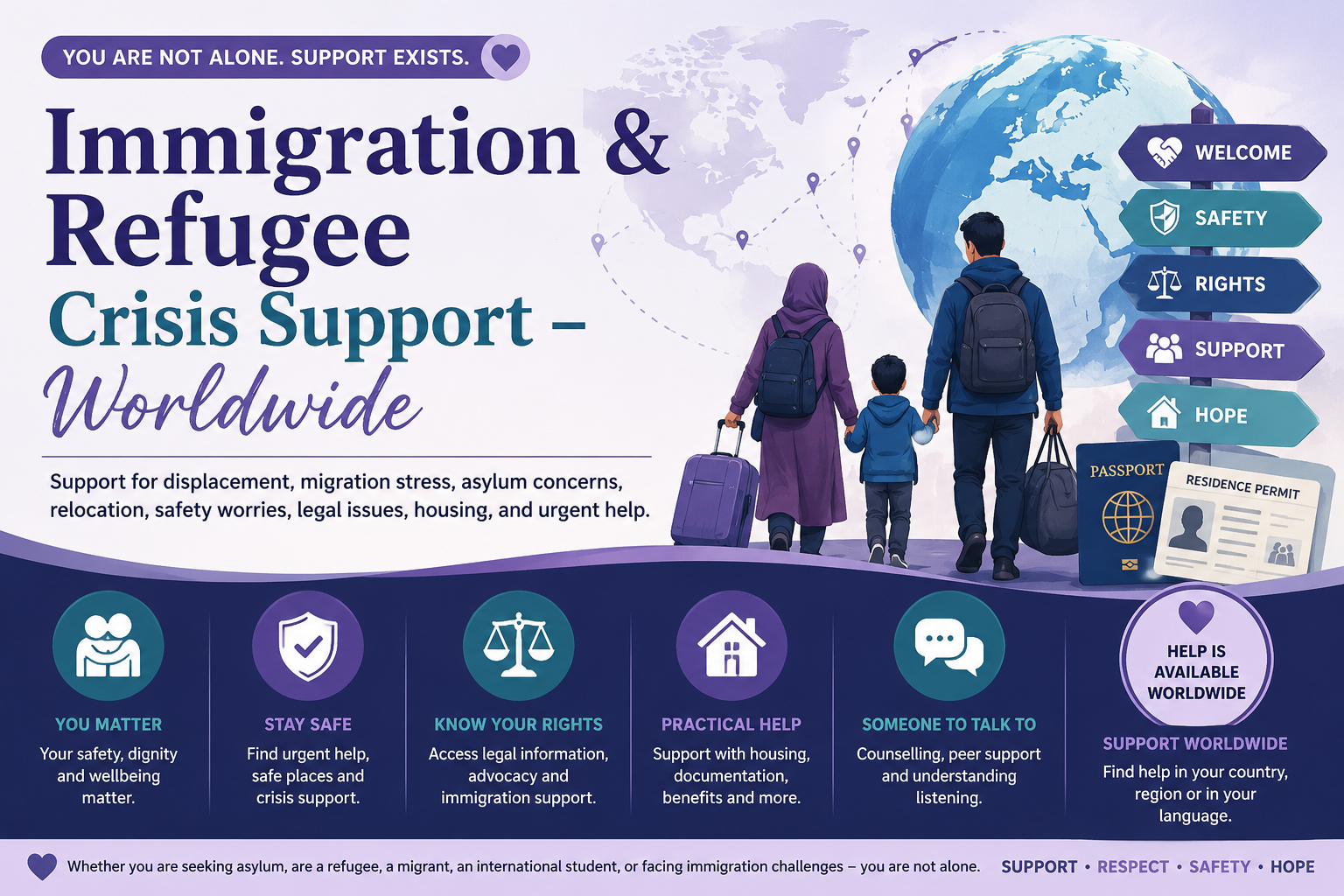
Immigration & Refugee Crisis Support – Worldwide
This page is for people experiencing displacement, migration stress, refugee experiences, asylum concerns, relocation pressure, immigration-related crisis, safety worries, legal concerns, housing insecurity, family separation, language barriers, or urgent support needs.
You deserve safety, dignity, respect, practical help, and support in a language and format that works for you. Help may include emergency services, refugee support, migrant services, legal advice, housing support, trauma support, interpreters, community organisations, and crisis lines.
Quick safety steps for right now
Move toward safety
If possible, move to a safe public place, shelter, community organisation, hospital, police station, embassy/consulate, trusted person, or recognised support service.
Ask for language support
You can ask for an interpreter, translated information, plain language, written instructions, or someone trusted to help communicate with services.
Protect key documents
If safe, keep copies of passports, visas, residence papers, ID, medical documents, school records, legal papers, and emergency contacts.
Immigration and refugee crisis signs
It may include
- Displacement, unsafe travel, or no safe place to stay
- Asylum, visa, residence, or legal uncertainty
- Family separation or fear for loved ones
- Language barriers stopping you from getting help
- Housing, food, healthcare, transport, or financial insecurity
- Trauma, panic, grief, culture shock, or isolation
- Fear of authorities, discrimination, racism, or exploitation
When it is urgent
- You are unsafe where you are
- You have nowhere safe to sleep tonight
- You are being threatened, exploited, trafficked, or controlled
- You cannot access food, medication, healthcare, or shelter
- You are at risk of harm because of legal, immigration, or family circumstances
- You feel unable to stay safe with yourself
Gentle content notice
This page discusses migration stress, displacement, asylum, refugee experiences, family separation, legal worries, safety concerns, racism, exploitation, housing insecurity, and crisis support. Please pause if needed.
Rights, documents and safer support
Keep safer copies
- Passport, visa, residence permit, or immigration documents
- Birth certificates, marriage documents, school records, medical records
- Legal letters, appointment details, case numbers, and contact details
- Emergency contacts and support service numbers
Ask before signing
If possible, do not sign legal or immigration documents you do not understand. Ask for an interpreter, legal advice, migrant support, refugee support, or advocacy help.
Safety comes first
If keeping documents puts you in danger, focus on getting to safety first. A trusted support service may help you work out what to do next.
If this is happening to you
Try this first
- Contact emergency services if you are unsafe now.
- Move toward a safe place or trusted person if you can.
- Ask for an interpreter or translated information.
- Contact a migrant, refugee, legal aid, housing, or community support service.
- Keep key documents and phone access safe where possible.
- Focus on the safest next step, not the whole situation at once.
Copy-and-send message
“I’m in an immigration/refugee-related crisis and I need help. I need support with safety, language, legal advice, housing, or urgent next steps.”
Helping someone else
What can help
- Listen without judgement.
- Ask what language or communication support they need.
- Help them contact migrant, refugee, legal, housing, or crisis support.
- Respect privacy and safety, especially around documents and immigration status.
- Help them find food, shelter, transport, healthcare, and trusted support.
What to avoid
- Do not give legal advice unless you are qualified.
- Do not pressure them to share documents or immigration status.
- Do not contact authorities or services without consent unless someone is in immediate danger.
- Do not minimise racism, trauma, fear, grief, or displacement stress.
Helpful phrase
“You deserve safety and support. We can look for help in a way that respects your language, culture, privacy, and choices.”
Evidence of progress
Small wins count
- Finding a safe place for tonight
- Asking for an interpreter
- Saving an emergency number
- Keeping one document safe
- Calling a support service
- Eating, resting, or charging your phone
You deserve dignity
Your safety and wellbeing matter, regardless of migration status, language, culture, paperwork, money, housing, or where you are in the process.
Support can be practical
Support may include shelter, legal guidance, translation, food, healthcare, trauma support, school support, transport, community help, or safety planning.
Worldwide immigration and refugee support contacts
Services can change, so check official websites for the latest information. If you are in immediate danger, use emergency services first.
New Zealand / Aotearoa
- Emergency: 111
- Immigration New Zealand: immigration and visa information
- Red Cross Refugee Support: refugee settlement support where available
- Community Law: legal information and local legal help
- Citizens Advice Bureau: local support and guidance
- 1737: free call/text emotional support
Australia
- Emergency: 000
- Department of Home Affairs: immigration information
- Refugee Council of Australia: refugee support information
- Legal Aid: check your state or territory
- Lifeline: 13 11 14
- Translating and Interpreting Service: interpreter support where available
United States
- Emergency: 911
- 988 Lifeline: call, text, or chat 988
- USCIS: immigration information
- UNHCR USA: refugee and asylum information
- 2-1-1: local housing, food, legal, and community support in many areas
Canada
- Emergency: 911
- 9-8-8 Canada: call/text crisis support
- Immigration, Refugees and Citizenship Canada: immigration/refugee information
- Settlement services: local newcomer support
- 211 Canada: community, housing, food, and support services
United Kingdom
- Emergency: 999 or 112
- GOV.UK: immigration and asylum information
- Refugee Council: refugee support pathways
- Citizens Advice: immigration, housing, benefits, and legal guidance
- Samaritans: 116 123
International / Global
- UNHCR Help: country-based refugee and asylum information
- IOM: migration and displacement support information
- Red Cross / Red Crescent: local crisis and emergency support where available
- Find a Helpline: search by country and topic
Accessible support options
Language and translation support
Ask for an interpreter, translated information, plain language, or support from someone trusted when contacting services.
Open language supportText or chat support
Text and webchat can help when speaking feels unsafe, overwhelming, or difficult in a second language.
Open text/chat supportCulturally safe support
For cultural, language, discrimination, identity, privacy, rural, digital, or access barriers to getting help.
Open accessibility supportWhere to go next
Crisis Support by Topic
Explore all crisis topic support pathways.
Open topic supportLegal & Personal Safety
For legal worries, threats, harassment, exploitation, or safety planning.
Open legal/safety supportHomelessness & Housing Crisis
For emergency shelter, unsafe housing, relocation, or no safe place to stay.
Open housing supportTrauma, PTSD & Flashbacks
For trauma responses, flashbacks, panic, dissociation, or distress after difficult experiences.
Open trauma supportFinancial Crisis & Hardship
For debt, food insecurity, benefits, poverty, relocation pressure, or financial stress.
Open financial supportCrisis Support by Location
Find support by country or region.
Open location support