
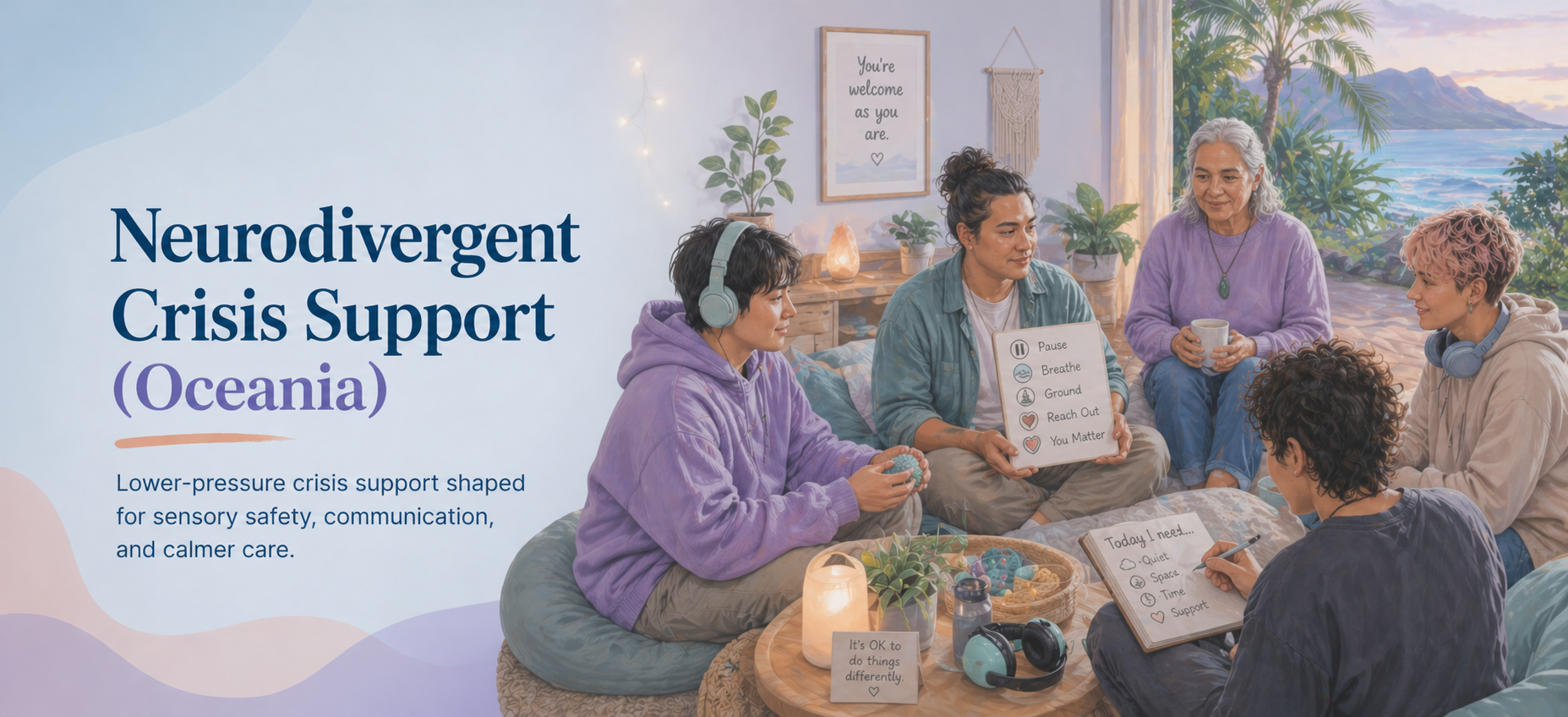
Neurodivergent Crisis Support (Oceania)
Crisis support can feel harder to access when communication, sensory overload, shutdown, burnout, overwhelm, processing differences, or support needs change how distress shows up. This page offers lower-pressure, neurodivergent-friendly crisis support across Oceania.
This page is for autistic, ADHD, AuDHD, dyslexic, dyspraxic, otherwise neurodivergent people, and those supporting them across Oceania who may need calmer, clearer, lower-pressure crisis support that feels safer to access.
What Neurodivergent-Friendly Crisis Support Can Look Like
Support often feels safer when it is clearer, calmer, more flexible, and less overwhelming to process.
Lower pressure
Support may need less urgency, less verbal pressure, fewer demands, and more processing space.
Clearer communication
Support may need fewer words, clearer steps, extra time, repetition, or written support options.
Sensory safer support
Support may need lower noise, reduced stimulation, less visual pressure, and calmer environments.
How Crisis May Show Up
Neurodivergent distress may not always look how other people expect crisis to look.
Shutdown or overload
Crisis may look like shutdown, going quiet, losing speech, sensory overload, or withdrawal.
Emotional flooding
Crisis may look like panic, overwhelm, impulsivity, emotional flooding, or fast escalation.
Mixed overwhelm
Crisis may look like shutdown and escalation happening together or in waves.
Communication difficulty
Crisis may make speaking, responding, understanding, or choosing words harder.
Collapse or exhaustion
Crisis may look like burnout, exhaustion, numbness, loss of function, or collapse.
Hidden distress
Crisis may be severe even when someone looks calm, flat, polite, or “fine.”
What Can Help
What helps
- Reducing noise, pressure, and sensory demand
- Using fewer words and clearer steps
- Allowing written, typed, or delayed responses
- Giving extra processing time
- Not forcing eye contact or speech
- Reducing demands before expecting decisions
What to avoid
- Rushing communication
- Assuming no speech = no distress
- Adding noise, pressure, or confrontation
- Forcing eye contact or verbal responses
- Reading shutdown as non-compliance
- Assuming calm presentation = safe presentation
Oceania Support & Safer Next Steps
Across Oceania, safer support may include general crisis lines, text-based support, youth support, peer support, autism-informed support, ADHD-informed support, and lower-pressure written support options where available.
Text / Chat Support
Written support can feel safer when speech, processing, or phone calls are harder.
ND-Friendly Support
Lower-pressure support may feel safer when sensory, communication, and processing needs are understood.
Safer Pacing
Slower, clearer, lower-pressure support can still be real crisis support.
Where To Go Next
Specialised & Inclusive Crisis Support
Return to the wider specialised support branch.
Open specialised supportAccessibility-Specific Crisis Support
Support adapted for communication, access, sensory, and support needs.
Open accessibility supportText / Chat Crisis Support
Lower-pressure written crisis support when speaking feels harder.
Open text/chat supportWhat Support Might Feel Like
A gentler guide to safer, calmer, lower-pressure support.
Open support guideCulture & Community Support (Oceania)
Support shaped by belonging, culture, community, and emotional safety.
Open community supportCrisis Support Main Index
Return to the wider crisis support hub.
Open crisis hubLower-Pressure Support Is Still Real Support
Crisis support does not need to be louder, faster, or more intense to be real. Safer, calmer, lower-pressure support still counts.
Important Disclaimer
Aspie Answers provides education, signposting, and supportive information. This page is not a replacement for emergency care, medical advice, therapy, safeguarding, legal advice, disability advocacy, or professional crisis assessment. In an emergency, contact local emergency services immediately or use the safest crisis pathway available where you are.