
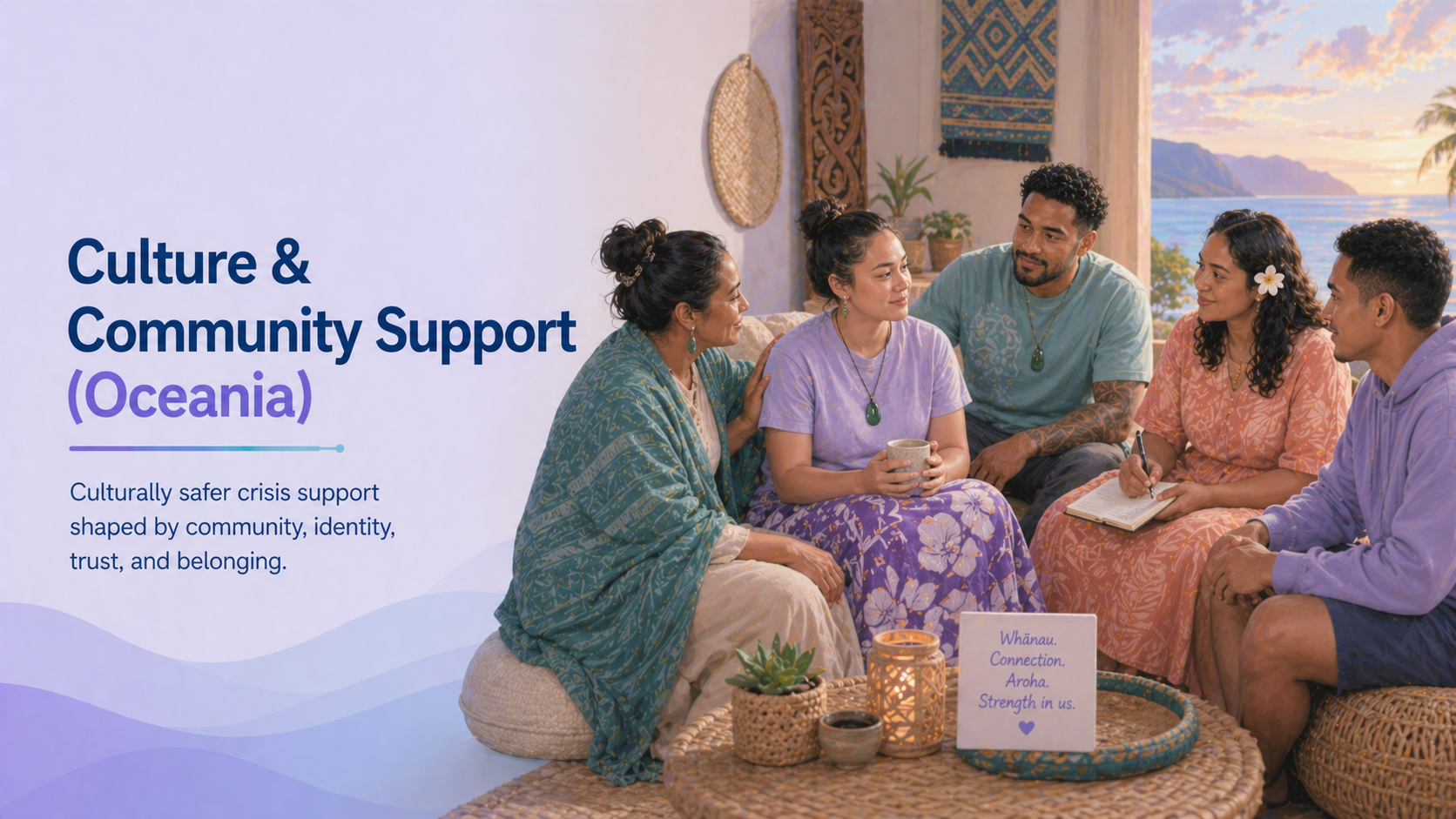
Culture & Community Support (Oceania)
Crisis support can feel safer when it understands culture, community, identity, whānau, family, belonging, language, faith, and lived experience. This page helps guide people toward culturally safer and community-led support pathways across Oceania.
This page is designed as an Oceania hub for Māori, Pasifika, Indigenous, migrant, refugee, multicultural, and community-connected support pathways. It can also help families, carers, teachers, professionals, and support people find safer ways to guide someone toward help.
Quick Pathways
Choose the pathway that feels closest. You do not need the perfect label before looking for support.
Māori support
Support shaped by whānau, whakapapa, tikanga, identity, belonging, and culturally safer care.
Pasifika support
Support that respects family, culture, faith, community, language, and Pasifika ways of wellbeing.
Migrant & refugee support
Support for people navigating crisis alongside resettlement, language, trauma, belonging, or system barriers.
Community-led support
Support connected to trusted community groups, local services, peer networks, and culturally familiar spaces.
Search Culture & Community Support
Use the search or filter to find the pathway that best fits the support need.
Māori Mental Health & Crisis Support
Pathways that may include whānau-centred support, kaupapa Māori services, cultural identity, belonging, and support that respects tikanga and lived experience.
Open Māori supportMāori Whānau, Parents & Carers Support
Support for whānau, parents, carers, and trusted adults supporting someone through distress or crisis.
Open whānau supportPacific Islands Mental Health Crisis Support
Support shaped by family, church, culture, language, respect, community, and Pasifika wellbeing approaches.
Open Pasifika supportMigrant & Refugee Support
Support for people navigating crisis alongside language barriers, migration stress, resettlement, trauma, discrimination, or unfamiliar systems.
Aboriginal & Torres Strait Islander Support
Support that recognises First Nations identity, cultural safety, community, family, Country, and lived experience.
Open Aboriginal supportFaith & Spiritual Support
Support that respects faith, spirituality, beliefs, prayer, pastoral care, chaplaincy, and spiritual safety during crisis.
Open faith supportWhy Culturally Safer Support Matters
People may avoid crisis support when services feel unsafe, unfamiliar, judgmental, culturally disconnected, or hard to trust. Culturally safer support helps reduce fear and creates more space for dignity, belonging, communication, and trust.
Trust can affect help-seeking
Past harm, discrimination, racism, stigma, or fear of systems can make it harder to reach out during crisis.
Identity and belonging matter
People may feel safer when support understands culture, language, family, community, faith, and lived experience.
Communication may need adapting
Support may need plain language, interpreters, community advocates, cultural navigators, or trusted support people.
Community Support Pathways
These pathways can sit alongside mainstream crisis support and help make support feel safer, more familiar, and more respectful.
Whānau and family-aware support
Some people may want trusted whānau, family, elders, community members, or support people involved where safe and appropriate.
Community navigators
Community navigators, advocates, peer workers, or cultural support workers can help people understand systems and options.
Language and translation support
Translation, interpreting, plain language, or first-language support can make crisis help safer and easier to use.
Faith and spiritual care
For some people, pastoral care, chaplaincy, prayer, or spiritual support may be part of feeling safe and supported.
Identity-safe pathways
Support should respect identity, culture, sexuality, gender, disability, neurodivergence, family structure, and lived experience.
Community-led services
Community-led services can help bridge the gap between crisis systems and what people actually need to feel safe.
Supporting Someone Through Culture & Community Needs
Support should begin with respect, curiosity, and consent — not assumptions.
What helps
- Ask what support feels safest
- Respect culture, identity, family, faith, and community needs
- Offer interpreters or language support when needed
- Involve trusted people only with consent and safety in mind
- Use plain, respectful language
- Recognise mistrust of systems may come from real experiences
What to avoid
- Making assumptions about culture or identity
- Tokenising cultural practices
- Ignoring family, whānau, or community context
- Using family as interpreters for sensitive topics without consent
- Dismissing faith or spiritual needs
- Treating cultural safety as optional during crisis
Helpful Scripts to Copy, Type, or Show
These phrases can help someone ask for support that feels culturally safer or easier to trust.
When culture matters
“I need support that understands my culture, family, identity, or community needs.”
When language support is needed
“I need an interpreter or someone who can explain this clearly in my language.”
When a trusted person should be included
“I would like a trusted person with me while I get support.”
When faith matters
“My faith or spiritual beliefs are important to how I feel safe and supported.”
When mainstream support feels unsafe
“I need help, but I feel scared of services. Please explain my options slowly.”
When immediate safety is urgent
“I am not safe and need urgent help. Please support me in a way that respects my identity and needs.”
Culturally Safer Support Can Work Alongside Emergency Support
In immediate danger, emergency support may still be needed. Culturally safer care can sit alongside urgent support by helping with communication, trust, advocacy, family or whānau involvement, identity safety, and clearer next steps.
Where To Go Next
These pages help connect culture, identity, community, and crisis pathways.
Faith, Cultural & Identity Support
Return to the wider identity and culture support branch.
Open identity supportCulture & Community Support (Global)
Open the broader global culture and community support page.
Open global culture supportLanguage & Translation Support
For translation, interpreter, multilingual, and plain-language support needs.
Open language supportLGBTQIA+ Crisis Support
For identity-safe support related to sexuality, gender, belonging, safety, and community.
Open LGBTQIA+ supportAccessibility Crisis Support
For communication, sensory, disability, mobility, language, and access needs.
Open accessibility supportCrisis Support Main Index
Return to the wider crisis support hub.
Open crisis hubYou Deserve Support That Respects Who You Are
Culture, identity, language, faith, family, whānau, and community can all shape what safety feels like. You deserve support that does not erase those parts of you.
Important Disclaimer
Aspie Answers provides education, signposting, and supportive information. This page is not a replacement for emergency care, medical advice, therapy, safeguarding, legal advice, cultural advocacy, interpreter services, or professional crisis assessment. In an emergency, contact local emergency services immediately or use the safest accessible emergency option available where you are.