Learning Disabilities — Support & Services
Empowering every learner through understanding, inclusion, and practical help.

About Aspie Answers: Strengths-based strategies, tech tools, and advocacy so learners can succeed with dignity.
“Different ways of learning deserve different ways of teaching.” – Kerrin Maclean

Learning disabilities (LD) are lifelong differences in how people process information. Common types include dyslexia (reading/spelling), dyscalculia (maths), dysgraphia (writing), and dyspraxia/DCD (coordination & planning). These differences are real, valid, and compatible with success when supports are in place.

Awareness reduces stigma; acceptance turns understanding into action. Believe learners’ experiences, avoid stereotypes, and offer options to show what they know.

Overview: Accessible learning removes barriers in materials, delivery, and assessment—before they exclude learners.
Practical inclusions
How it can work: Use written instructions, chunk tasks, and offer multiple ways to show learning. Build note-taking and planning supports into the routine.

Why it matters: Inclusive workplaces unlock talent and reduce errors through clarity and tools.
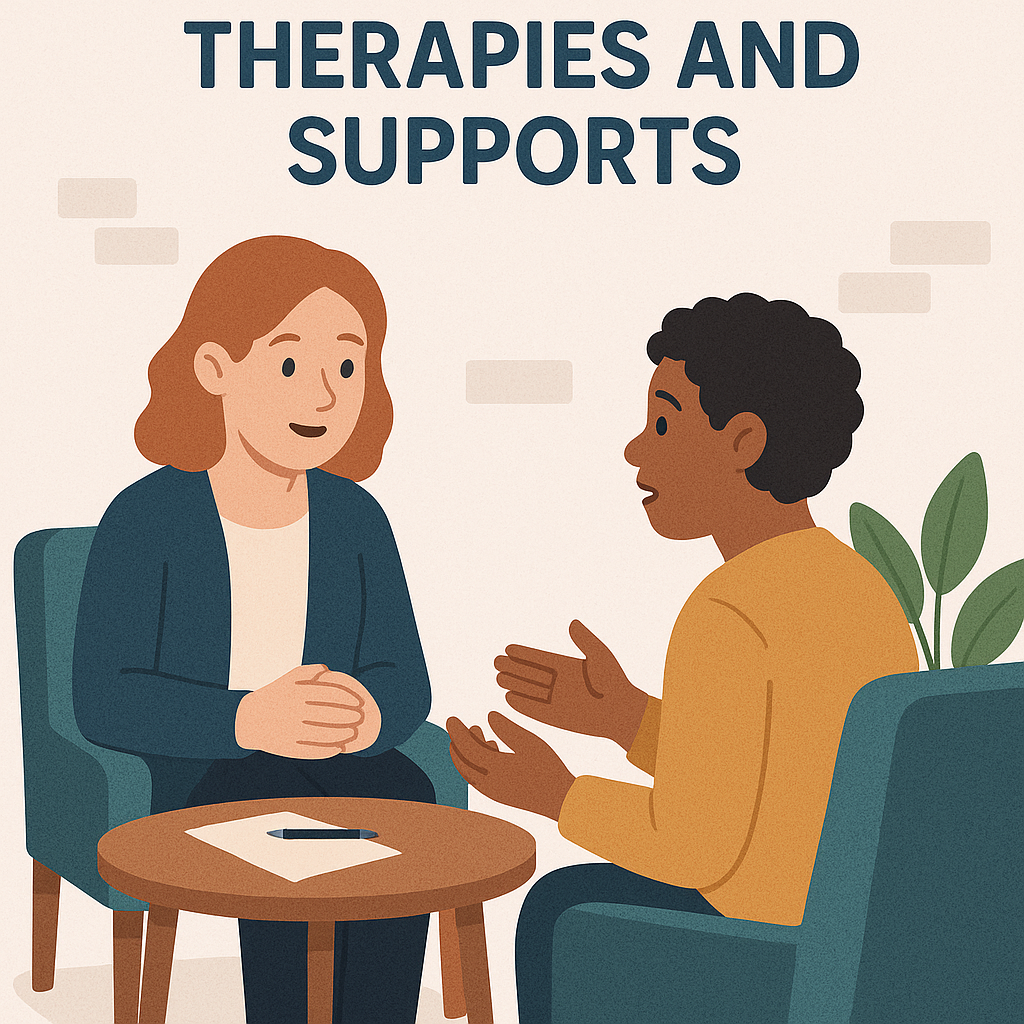
Overview: Helpful options include educational therapy, specialist tutoring, OT (for dyspraxia/DCD), and coaching for planning and study skills. Choose practitioners who prioritise strengths, reduce shame, and teach concrete strategies.
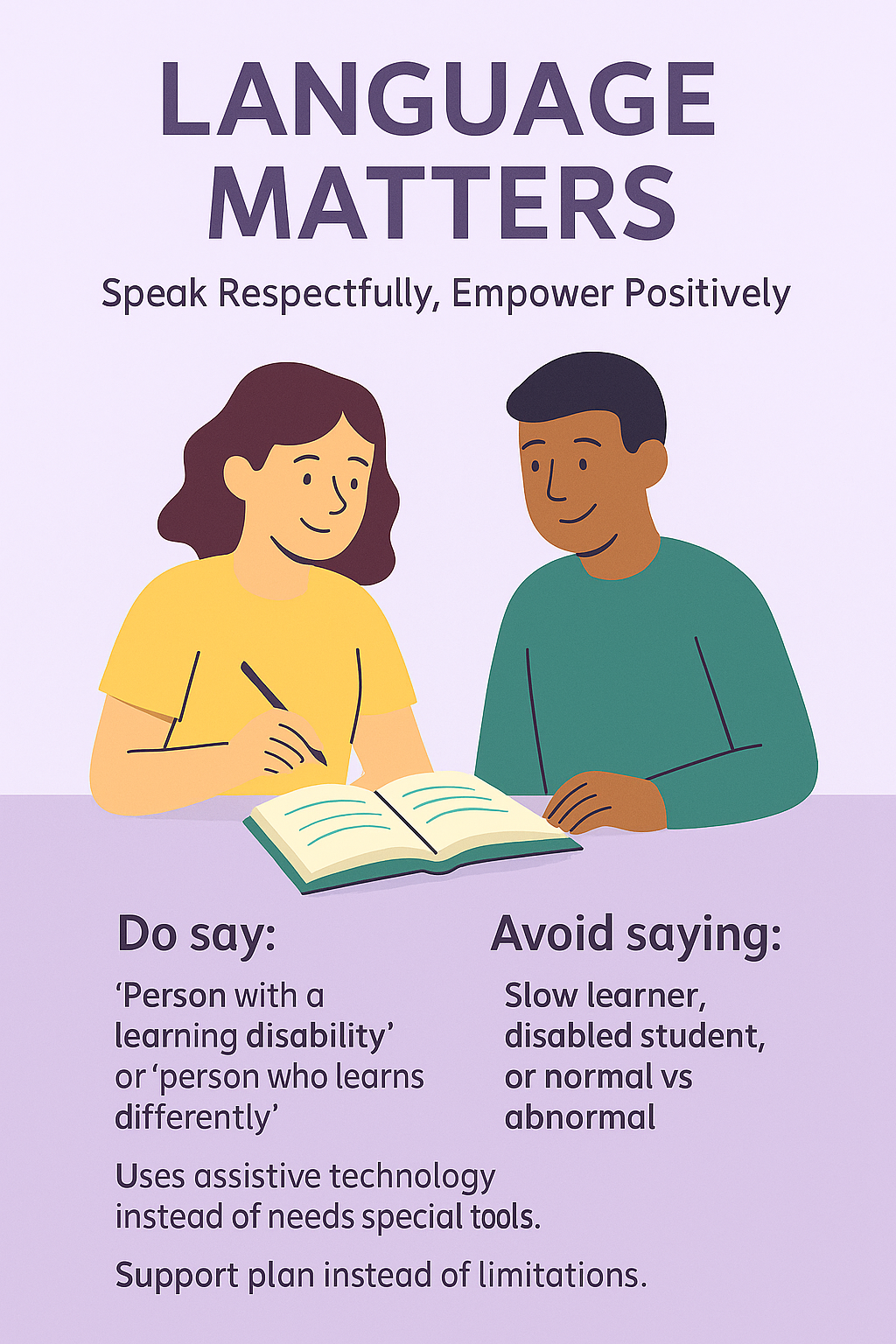
The words we choose shape perception. Respectful language empowers, uplifts, and reduces stigma.
| Instead of Saying | Try Saying | Why It Matters |
|---|---|---|
| “Suffers from a learning disability” | “Has a learning disability” | Focuses on the person, not the difficulty. |
| “Special needs” | “Access needs” or “Learning support needs” | Promotes equality and inclusion. |
| “Slow learner” | “Learns differently” | Acknowledges variation, not limitation. |

Study and work can be effortful with LD. Build rest into routines, schedule focus blocks with breaks, and plan recovery time after assessments.
What helps you reset in 5 minutes? Pick 2–3 options (breathing, stretch, brief walk, music) and keep the list visible.
“Small pauses protect big goals.”


| Region | Helpline | Contact |
|---|---|---|
| New Zealand | IHC Helpline | 0800 442 442 |
| Australia | Carer Gateway | 1800 422 737 |
| UK | Mencap Helpline | 0808 808 1111 |
| USA | NCLD Support Line | +1 888 575 7373 |
| Canada | LDA Helpline | +1 416 929 4311 |
| Global | Inclusion International | inclusion-international.org |
Thank you for supporting inclusive learning. If these resources helped, consider following for new guides, printables, and gentle reminders to keep things accessible for everyone.
Need help or want to connect about learning supports? Reach out — we’d love to hear from you. You can also download our fillable contact form and email it back.
Download Fillable Contact Form (PDF) Work tip: Provide draft-friendly time and proofreading tools before final submission.