Big feelings are information
Emotions can show that something feels unsafe, overwhelming, unfair, confusing, exciting, tiring, or too much all at once.

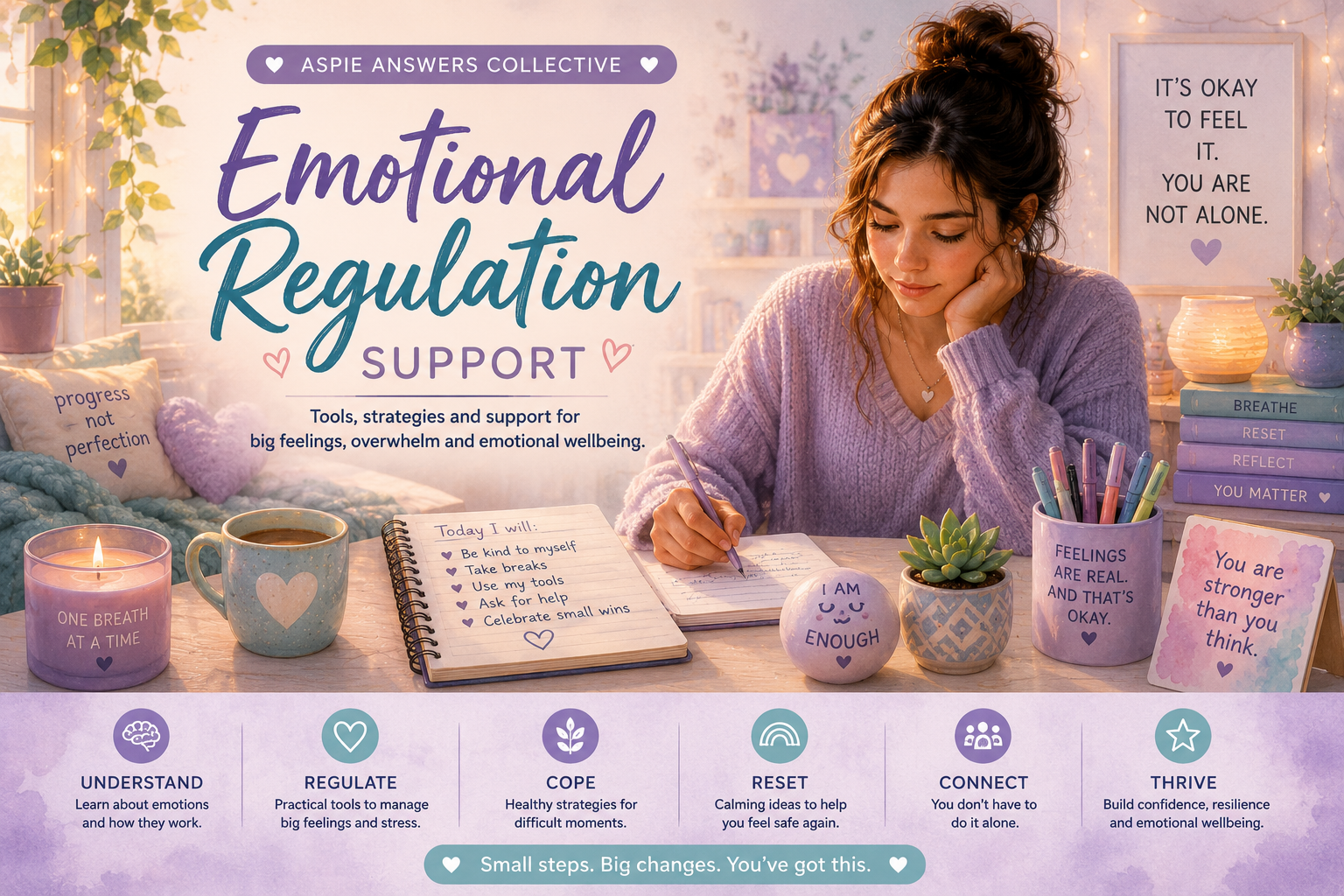
A calm, neurodivergent-friendly support page for understanding big feelings, emotional overwhelm, shutdowns, meltdowns, sensory stress, coping tools, calm plans, and gentle recovery strategies.
This page is for education and supportive guidance only. It is not a replacement for medical, mental health, crisis, or emergency support. If you or someone else may be in immediate danger, contact local emergency services or a crisis support service in your area.
Emotional regulation is not about “never feeling upset.” It is about learning what your body, brain, and nervous system need before, during, and after big feelings.
Emotions can show that something feels unsafe, overwhelming, unfair, confusing, exciting, tiring, or too much all at once.
Many people need practice, support, visual tools, routines, sensory strategies, and safe relationships to build regulation skills.
After emotional overwhelm, people often need time, quiet, reassurance, hydration, rest, low demands, and a gentle way back into the day.
Emotional regulation can be affected by stress, sensory input, tiredness, trauma, anxiety, communication needs, executive functioning, masking, and feeling misunderstood.
| Area | What it can look like | Helpful support |
|---|---|---|
| Emotional awareness | Not knowing what you feel until it becomes very intense. | Feelings charts, body maps, mood scales, check-in prompts. |
| Sensory stress | Noise, lights, smells, touch, crowds, or clutter making feelings harder to manage. | Low-stimulation spaces, headphones, breaks, sensory tools. |
| Executive functioning | Struggling to pause, plan, explain, shift tasks, or choose a coping strategy. | Visual steps, scripts, choice boards, simple routines. |
| Masking and burnout | Holding feelings in all day, then crashing, crying, snapping, or shutting down later. | Rest, reduced demands, safe expression, recovery time. |
| Communication needs | Finding it hard to explain what is wrong during stress. | Communication cards, yes/no options, text support, calm scripts. |
Big feelings can show up as tears, anger, panic, silence, restlessness, frustration, withdrawal, racing thoughts, or feeling frozen. The goal is not shame — the goal is support.
Anger can be a sign of overload, hurt, fear, unfairness, unmet needs, or too many demands.
Anxiety may make the body feel unsafe even when the person is trying very hard to cope.
Shutdown can look like silence, stillness, tiredness, disconnection, or needing to withdraw.
Coping tools work best when they are simple, easy to access, and practised before a crisis moment. Different people need different tools.
Pause, soften your shoulders, breathe out slowly, and name one thing you need next.
Notice five things you see, four you feel, three you hear, two you smell, and one you taste.
Use a 1–5 or 1–10 scale to show how intense feelings are without needing many words.
Choose from a few options: water, quiet, music, movement, weighted blanket, outside air, or journaling.
Ask: Is my body hungry, thirsty, tired, tense, too hot, too cold, or overstimulated?
Use a simple phrase like “I need a break,” “too much,” or “I need quiet now.”
Overload can happen when the nervous system has taken in more than it can process. Recovery needs compassion, not criticism.
A calm plan helps people know what to do before, during, and after emotional overwhelm. It can be used at home, school, work, therapy, or in community settings.
Notice early signs, triggers, sensory needs, tiredness, hunger, social stress, or changes in routine.
Use a short plan: reduce input, choose one coping tool, communicate needs, and focus on safety.
Recover first. Then gently review what helped, what made it harder, and what support is needed next time.
This page can connect to your existing and future emotional wellbeing resources, including mood scales, self-reflection pages, calm plans, coping cards, and regulation worksheets.
A simple visual tool for checking in with feelings, energy, stress, and support needs.
Coming SoonA choose-what-fits-you support menu for low energy, overwhelm, sadness, stress, or reset days.
Coming SoonA practical planning page for triggers, early signs, calming tools, safe people, and recovery steps.
Coming SoonA worksheet to help connect emotions with body clues, sensory needs, and communication supports.
Coming SoonA gentle glossary for understanding common emotional wellbeing and mental health words.
Coming SoonPrompt pages for noticing patterns, needs, supports, emotions, boundaries, and growth.
Coming SoonEmotional regulation support can include self-help tools, trusted people, school or workplace adjustments, therapy, peer support, crisis support, or practical everyday routines.
Start with one small support that feels realistic. This might be a feelings scale, a calm corner, a sensory break, a safe phrase, a journaling page, or a support person who understands your needs.
Focus on reducing shame, lowering demands during overwhelm, using clear communication, noticing patterns, and helping the person recover before problem-solving.