Finding Work & Career Planning
Explore strengths and interests, career possibilities, job searching, applications, CVs, cover letters, interviews, employer research and practical preparation for work.

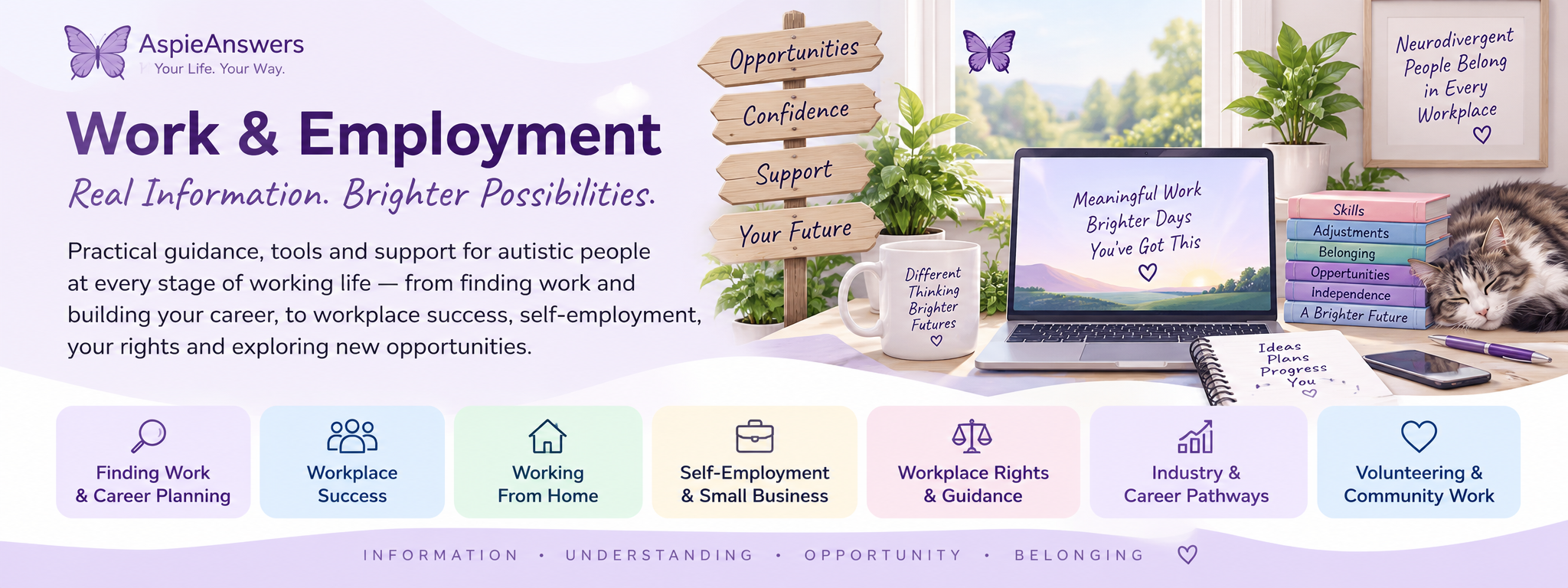
A practical, neurodivergent-friendly starting point for finding work, planning a career, navigating workplace life, understanding support and rights, exploring different ways of working, building skills and finding resources that fit your situation.
You can start with one question, one pathway or one resource. You do not need to explore the whole hub at once, and there is no single correct version of a successful working life.
Search this hub for words such as CV, interview, career, communication, burnout, remote work, rights, adjustments, volunteering or resources.
These five steps can help you find your way without needing to understand the whole Work & Employment system first.
Use these doorway pages to orient yourself, look up a term, browse by topic, find grouped resources or return to the main library.
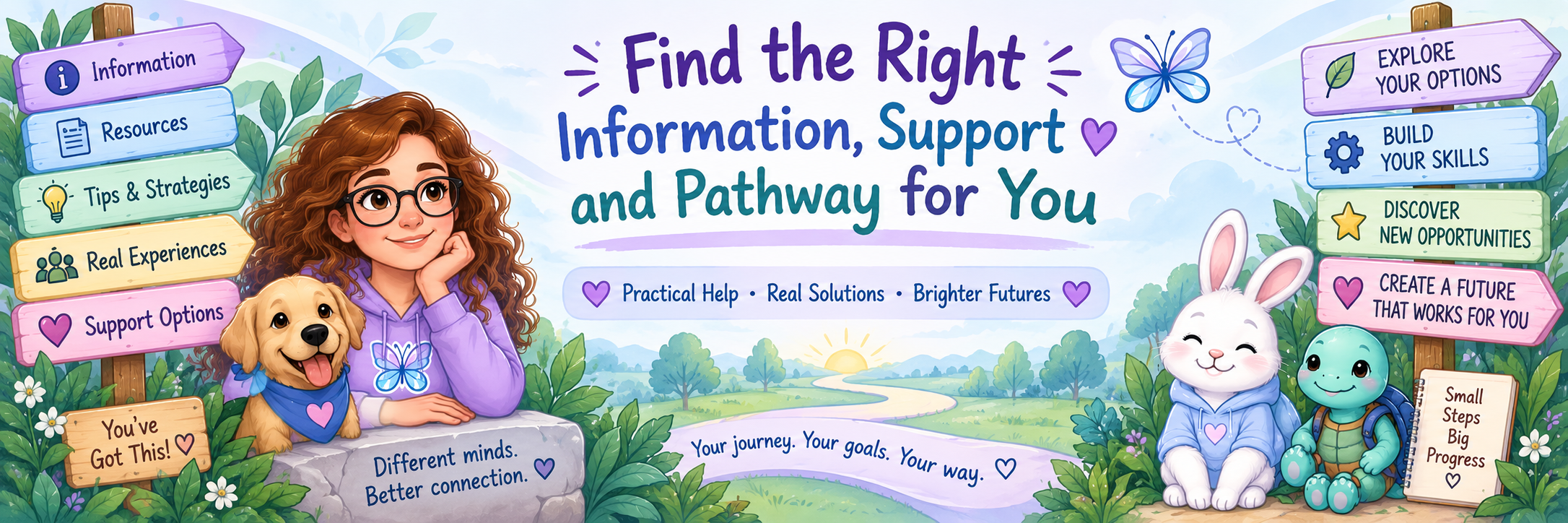
Choose the area that best matches what you need right now. Each pathway brings together related information, practical support and useful next steps.
Explore strengths and interests, career possibilities, job searching, applications, CVs, cover letters, interviews, employer research and practical preparation for work.
Find practical support for starting and navigating work, communication, organisation, executive function, routines, sensory needs, feedback, wellbeing, energy and sustainable workplace habits.
Explore home workspaces, remote and hybrid routines, communication, focus, distractions, sensory needs, breaks, energy, boundaries and work-life separation.
Explore freelancing, business ideas, clients, planning, organisation, routines, boundaries and sustainable ways of working for yourself.
Understand general workplace-rights language, accessibility, adjustments, disclosure, privacy, workplace problems, advocacy and where to find current official guidance.
Explore different industries, job types, learning routes, training possibilities and career directions while considering strengths, interests, access needs and working preferences.
Explore ways to contribute, build experience, grow confidence, participate in community life, access supported volunteering and consider volunteering as one possible pathway toward employment.
You may know what is happening without knowing the name of the topic. Choose the sentence that sounds closest to what you need.
The most helpful support varies from person to person. Sometimes a small change in communication, environment, timing or expectations can remove a significant barrier.

Work can take energy in ways that are not always visible. Breaks, recovery time, changing pace, reducing demands and choosing a more sustainable route can all be practical parts of working life.
You do not have to prove progress by doing everything at once. A plan that leaves room for rest, flexibility and recovery may be a stronger plan for you.
The same useful resource can be discovered from several pathways without duplicating the file. Use whichever doorway makes sense to you.
A deeper browseable library covering applications, interviews, workplace life, different ways of working, rights, support and audience pathways.
Use an alphabetical index when you know the topic but are not sure which branch, guide or resource contains it.
Look up employment, career, workplace, pay, rights, support, training and self-employment terminology in plain language.
Explore resource groups built around a shared goal, pathway or stage of the work journey.
Find practical tools that can support planning, applications, organisation, communication, wellbeing, learning and everyday life.
Where they genuinely improve usability, resources can be developed in accessible and audience-specific editions rather than forcing one format to suit everyone.
Planning, time, focus, problem-solving and energy can all affect working life. These Aspie Answers Companions offer different kinds of practical support along the way.
Use the Companion whose official V2.0 role fits the task in front of you — whether you are preparing, organising, solving a problem, managing executive-function demands or protecting your energy.

Helps turn larger tasks into clear steps, build practical routines and prepare for what comes next.

Supports planning, productivity and organisation by helping make tasks and goals feel clearer and more manageable.

Helps with schedules, deadlines, time planning, appointments and keeping important dates visible and easier to remember.
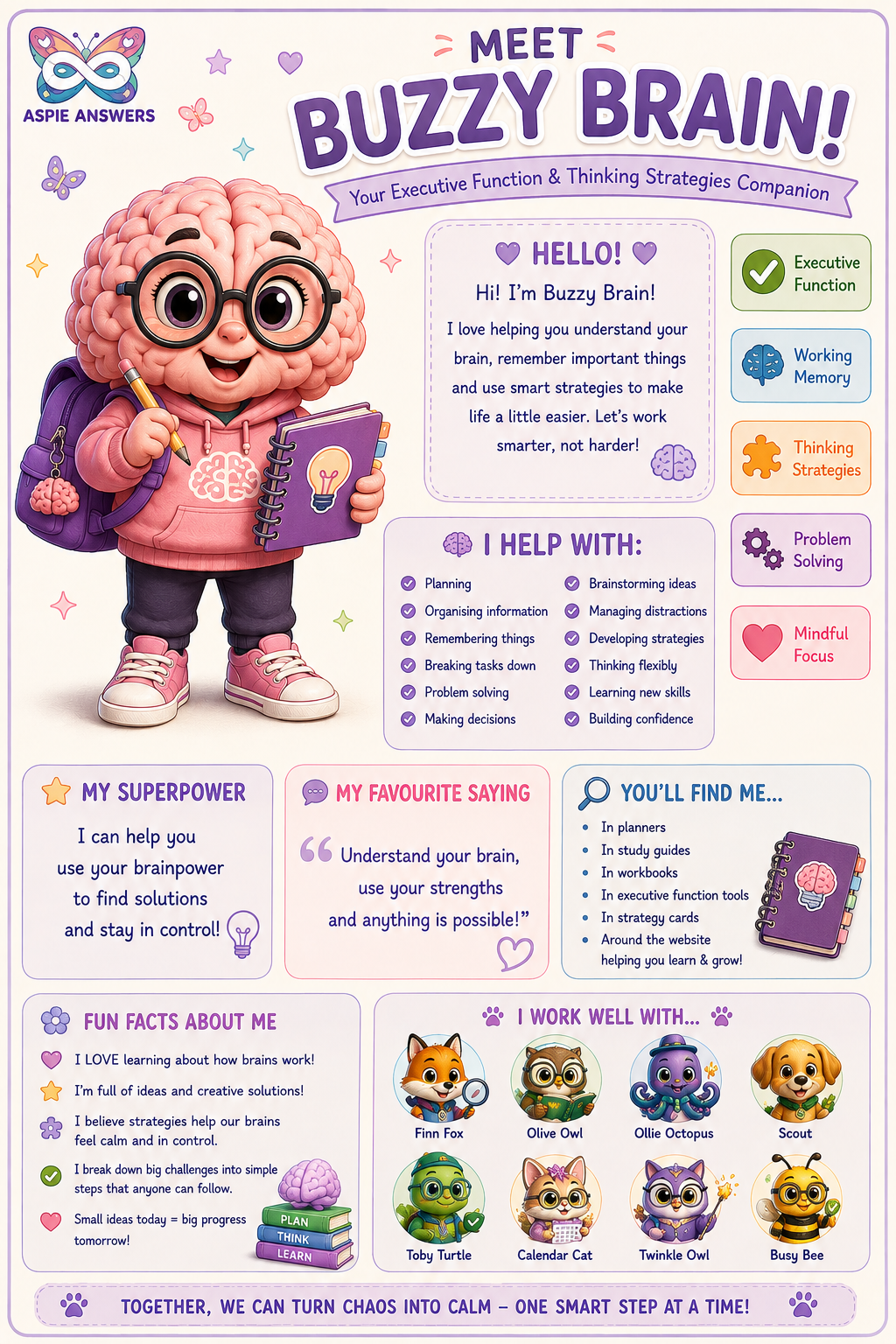
Supports executive function, focus and working memory for everyday workplace demands, including planning and task initiation.

Encourages problem-solving, flexibility and independence when something at work feels stuck, uncertain or difficult.
Supports pacing, energy awareness and burnout prevention by making room for breaks, recovery and sustainable expectations.
Employment rarely sits on its own. Planning, learning, disability access, wellbeing, executive function and everyday-life support can all affect the work journey.
Explore inclusive learning, study support, teaching tools, education pathways and practical resources.
Browse subjects across the wider website when your question overlaps several parts of life.
Explore plain-language terminology beyond employment, including neurodivergence, disability, mental health, learning and support.
Quick answers to help you use the hub with less pressure.
No. Start with the question, pathway or resource that feels most relevant. Start Here and the Work & Employment Guide can help when you want more direction.
No. It is designed with neurodivergent-friendly principles, but the information and practical tools may also be useful to families, supporters, employers, educators, professionals and people who simply prefer clearer, more structured information.
No. Different people may choose or need different combinations of paid work, part-time work, self-employment, supported employment, volunteering, training, study, career breaks or other meaningful activities.
Use the Downloads & Resources Library for individual tools and Work & Employment Collections for grouped resources. The Work & Employment Library also helps you discover tools by topic.
Use the Work & Employment Glossary & Definitions page for plain-language explanations, including NZ and international terminology where context matters.
Yes. Much of the practical planning, workplace, career and wellbeing information can be useful internationally. Employment law, benefits, tax, qualifications, visas and formal workplace rights can differ by country, so check current official guidance for your own location when those details matter.
No. Aspie Answers provides general information, practical support and navigation. When a decision depends on current law, rights, tax, benefits, qualifications, immigration rules, safety or individual circumstances, use an appropriate current official source or qualified professional.
You do not need to solve your whole future today. Choose one useful next step, try what helps, adjust what does not, and return whenever your needs, goals or circumstances change.
Different minds. Different paths. Better connection.