Comfort
Choose seating, screen height and tools that reduce physical strain.

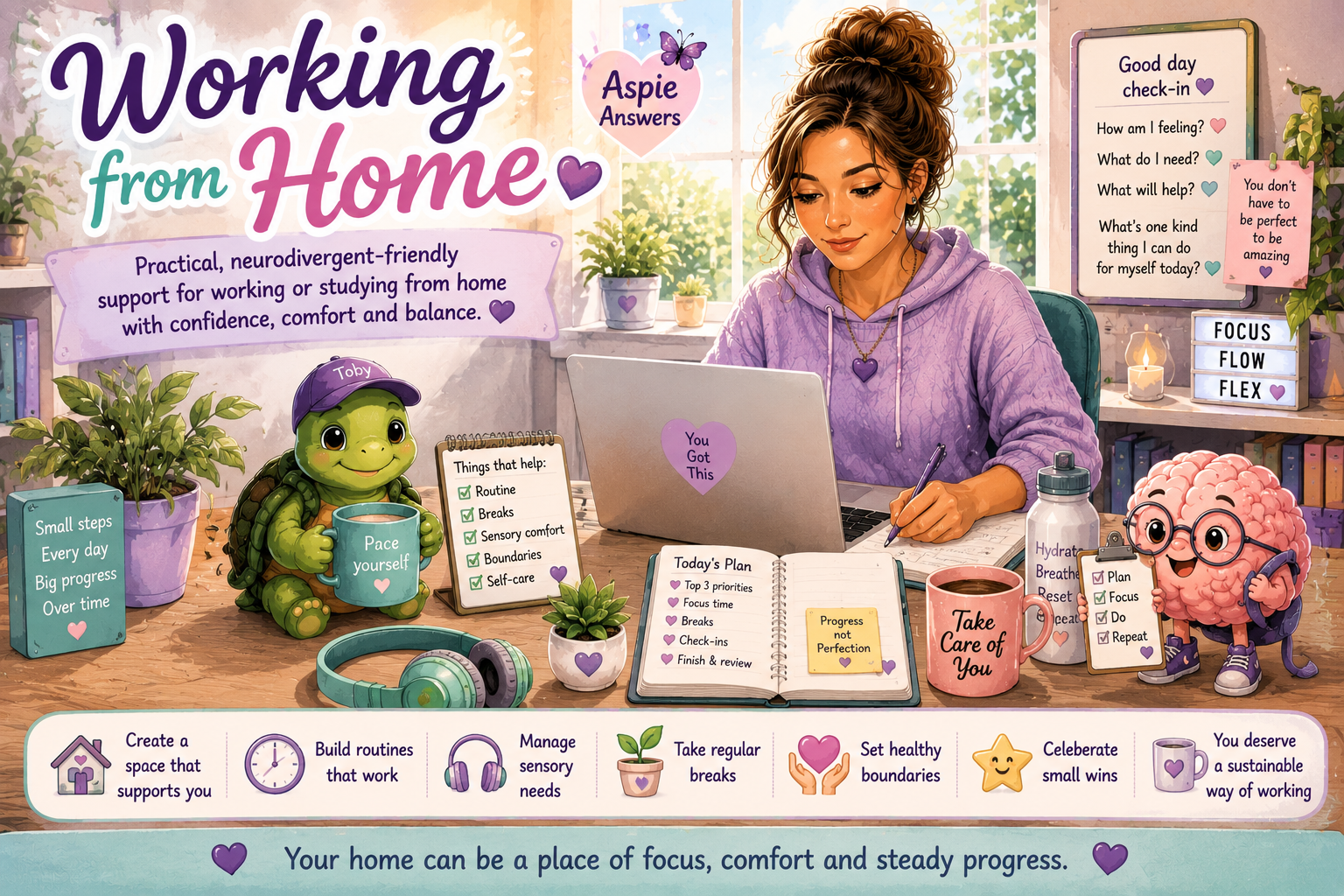
Working or studying from home can offer flexibility, comfort and greater control over your environment. It can also bring challenges with distractions, routines, task initiation, boundaries, communication and separating work from home life.
This area brings together practical, neurodivergent-friendly support for creating home routines and workspaces that feel clearer, calmer and more sustainable.
Search for home routines, productivity, study organisation, sensory comfort or wellbeing support.
Home working may remove some workplace barriers while creating new ones. Both experiences can be true at the same time.
Your workspace can be a whole room, one desk, a corner of a shared room or a portable setup. Focus on function, comfort and what helps your brain recognise that it is time to work or study.
Choose seating, screen height and tools that reduce physical strain.
Keep current tasks, priorities and reminders where you can see them.
Give important equipment and documents a clear, consistent home.
Include lighting, plants, colours or familiar items that help you settle.
Home may offer more sensory control, but household sounds, shared spaces and changing environments can still affect focus and wellbeing.
Headphones, background sound, a closed door or agreed quiet times may help.
Experiment with daylight, lamps, screen brightness and reduced glare.
Adjust clothing, airflow, heating or cooling where possible.
Keep familiar sensory items, water and movement options nearby.
Discuss noise, interruptions and privacy needs with other people at home.
Where possible, identify another place to pause and regulate away from work.
A routine can act as an external signal that helps your brain move into, through and out of the workday.
Use a small starting cue such as making a drink or opening your planner.
Notice your energy, needs, appointments and important tasks.
Select a realistic first task and two or three priorities.
Include meals, movement, sensory breaks and recovery time.
Record follow-ups, close work and use a clear end-of-day cue.
Distraction is not always a lack of effort. Focus can be affected by unclear tasks, sensory input, competing needs, interruptions and energy.
Replace a broad task with one specific action you can begin.
Work for a realistic period with a clear task and planned stopping point.
Silence non-essential alerts when you need deeper concentration.
Write unrelated ideas or tasks onto a “later” list rather than chasing them.
Use a door sign, headphones or an agreed household signal when possible.
When focus drifts, return gently to the next visible step.
Physical space may be shared, but routines and communication can still create clearer boundaries.
Being at home does not automatically make work less tiring. Mental, sensory and social demands still use energy.
Use stronger energy periods for demanding tasks where possible.
Add breaks to your plan rather than relying on remembering them later.
Include food, water, medication and movement in the workday.
Give yourself time between a meeting, focus task or home responsibility.
Try not to use every saved commute minute for more work.
Increasing exhaustion, irritability or difficulty thinking may signal a need to adjust.
Remote communication may rely more heavily on email, chat, video calls and written updates.
Share what is complete, what is in progress and what support is needed.
Keep meeting links, times and agendas in one visible place.
Write down questions or updates before calls and meetings.
Ask to respond in writing or follow up after you have processed information.
Make working hours and response expectations visible where possible.
Brief planned contact can reduce uncertainty and prevent isolation.
Choose the area that feels most useful for your home-working or home-study needs.
Build practical systems for files, tasks, equipment, routines and keeping home work easier to manage.
Explore Workplace OrganisationOrganise coursework, study spaces, supplies, schedules and home-learning tasks.
Explore Study OrganisationExplore focus, motivation, task initiation and realistic ways to make progress.
Explore ProductivityCreate supportive daily routines, reset plans and small strategies for more sustainable days.
Explore Daily Success StrategiesDifferent Aspie Answers Companions can support different parts of working and studying from home — from energy and focus to planning, routines and time management.

Toby supports pacing, energy, breaks and burnout prevention, helping work-from-home routines stay more sustainable.
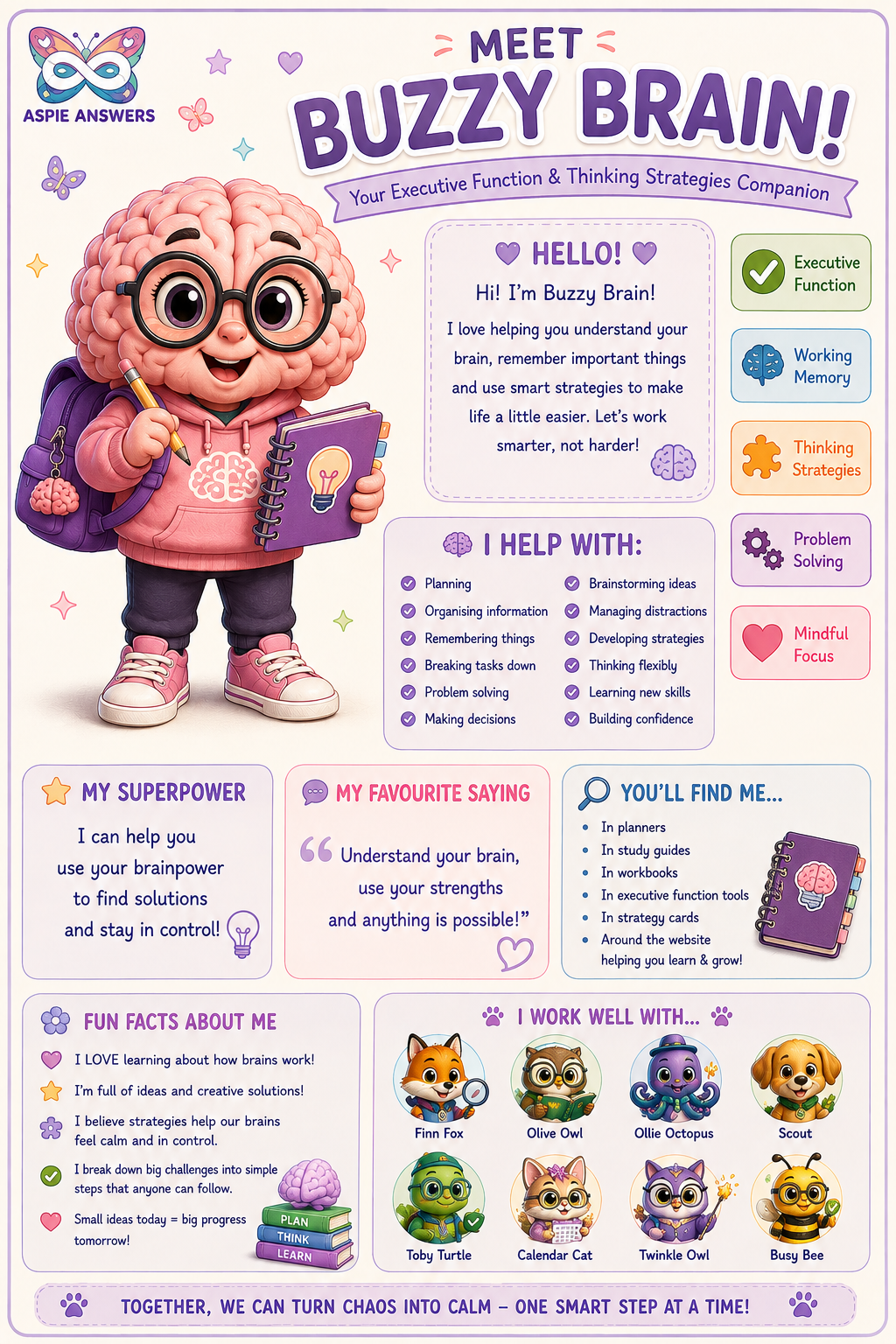
Buzzy Brain supports executive function, focus, working memory and transitions when tasks feel difficult to begin or organise.
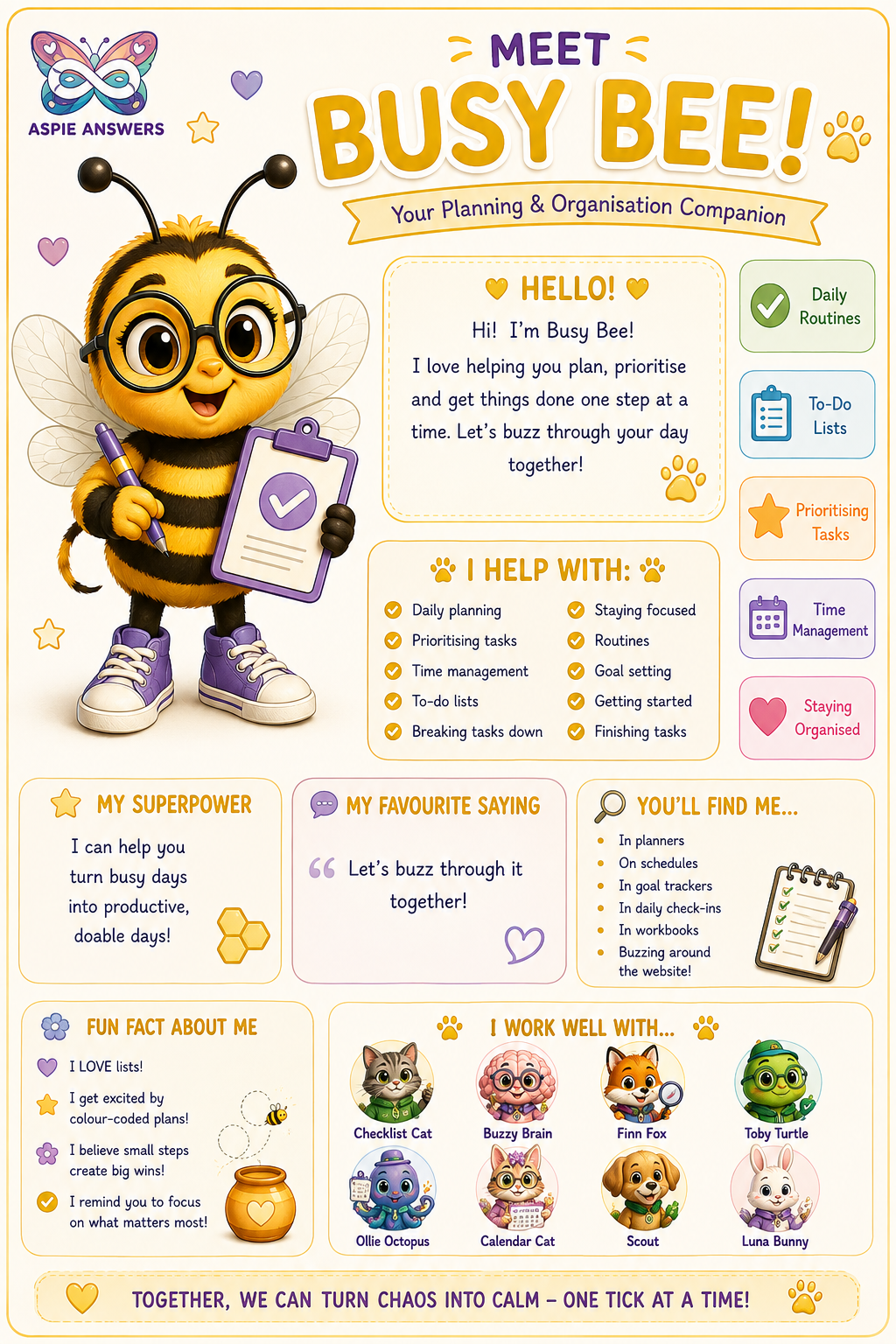
Busy Bee supports planning, productivity and organisation, helping turn larger workloads into clearer, manageable steps.

Calendar Cat supports schedules, deadlines and time planning, helping create clearer working hours, reminders and daily routines.
These resource ideas can help form a practical Working From Home Collection as the library grows.
Record your routines, strengths, sensory needs, challenges and helpful supports.
Review comfort, equipment, lighting, sound, storage and accessibility.
Create a repeatable sequence for beginning work or study.
Record unfinished work, close tasks and transition gently into home time.
Plan working hours, interruption signals, stopping points and communication.
Identify sensory barriers and practical changes that may support focus.
Prepare updates, questions, meeting points and follow-up actions.
Notice energy, stress, boundaries, breaks and recovery needs.
This collection can bring together home-working, home-study, organisation, focus, boundaries and sustainable-routine support.
Clear, practical planners, checklists and everyday home-work tools.
Guided resources using the official Companions whose roles fit the activity.
Friendly illustrated planning, sensory, focus and routine supports.
Working from home connects with study, employment, organisation and wellbeing.