
Quick navigation
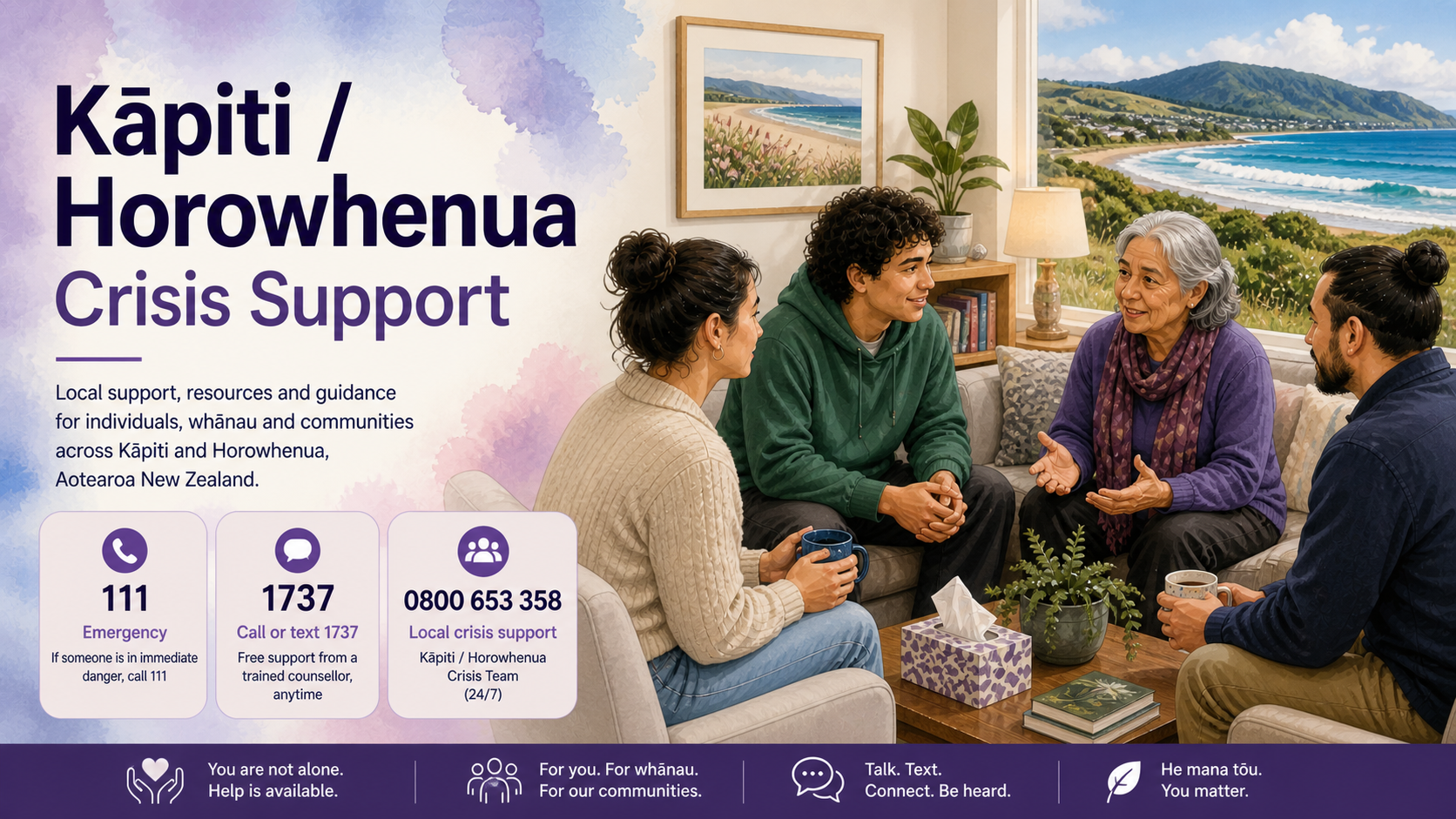
Immediate help in Kāpiti / Horowhenua
If someone may harm themselves or someone else, call 111, go to the nearest emergency department, or contact the local mental health crisis team.
Kāpiti / Horowhenua crisis support
Local urgent mental health support is available through the lower North Island crisis response pathway, including after-hours urgent assessment and support for people experiencing acute distress or immediate mental health concerns.
Key local contacts
Local urgent mental health support: 0800 653 357
1737 call or text support: 1737
Emergency: 111
Find local support by area
Kāpiti and Horowhenua sit across an important lower North Island crossover area, with local pathways grouped below for easier access.
Paraparaumu
For Paraparaumu and surrounding communities.
- Emergency: 111
- Local crisis support: 0800 653 357
- 1737 for free call or text support
Waikanae
For Waikanae and nearby communities.
- Emergency: 111
- Local crisis support: 0800 653 357
- Use GP, after-hours, or emergency department if urgent
Ōtaki
For Ōtaki and surrounding communities.
- Emergency: 111
- Local crisis support: 0800 653 357
- 1737 if speaking or texting feels easier
Levin
For Levin and nearby communities.
- Emergency: 111
- Local crisis support: 0800 653 357
- Distance and service pathways may vary locally
Foxton / Foxton Beach
For Foxton and surrounding communities.
- Emergency: 111
- Local crisis support: 0800 653 357
- 1737 for emotional support anytime
Shannon / Rural Horowhenua
For Shannon and smaller rural communities.
- Emergency: 111
- Local crisis support: 0800 653 357
- Use local urgent health or emergency pathways if needed
Lower-pressure support options
Some people need quieter options before they can make a phone call. Lower-pressure support can include texting 1737, asking someone to stay nearby, writing down what is happening, or asking a trusted person to help explain the situation.
Call or text 1737
Useful when someone needs to talk or text with a trained support person.
Ask someone to stay nearby
A trusted person can reduce pressure, help with transport, or support the call.
Write down key details
Helpful notes include location, immediate risks, medication, support people, and what feels hard right now.
Support for different needs
Some people need crisis support that is identity-safe, neurodivergent-friendly, culturally safe, youth-friendly, disability-accessible, or whānau-aware.
Youth & teens
Use simple language, reduce pressure, offer choices, and involve safe adults where appropriate.
Parents, carers & whānau
Supporters may need guidance too when someone they care about is unsafe or overwhelmed.
Neurodivergent people
Lower stimulation, clear choices, written options, and extra processing time can make support safer.
Māori & kaupapa support
Cultural safety, whānau involvement, and trusted community connections can be important parts of support.
LGBTQIA+ support
Identity-safe support matters when crisis is linked to safety, belonging, gender, sexuality, or rejection.
Rural access support
Transport, distance, and local service availability may affect how someone gets help.
What to do next
When someone is distressed, the next step does not need to be perfect. Start with safety, reduce immediate risks, stay connected, and contact the most appropriate support.
1. Check immediate safety
If there is danger now, call 111 or go to the nearest emergency department.
2. Contact crisis support
Use local crisis support, 1737, or emergency services depending on urgency.
3. Plan follow-up
After the immediate crisis, consider GP follow-up, community support, peer support, whānau support, or practical support.