🌱 Start Here: Work & Employment
A gentle first step into finding work, career planning and the wider hub.
Open Start Here →
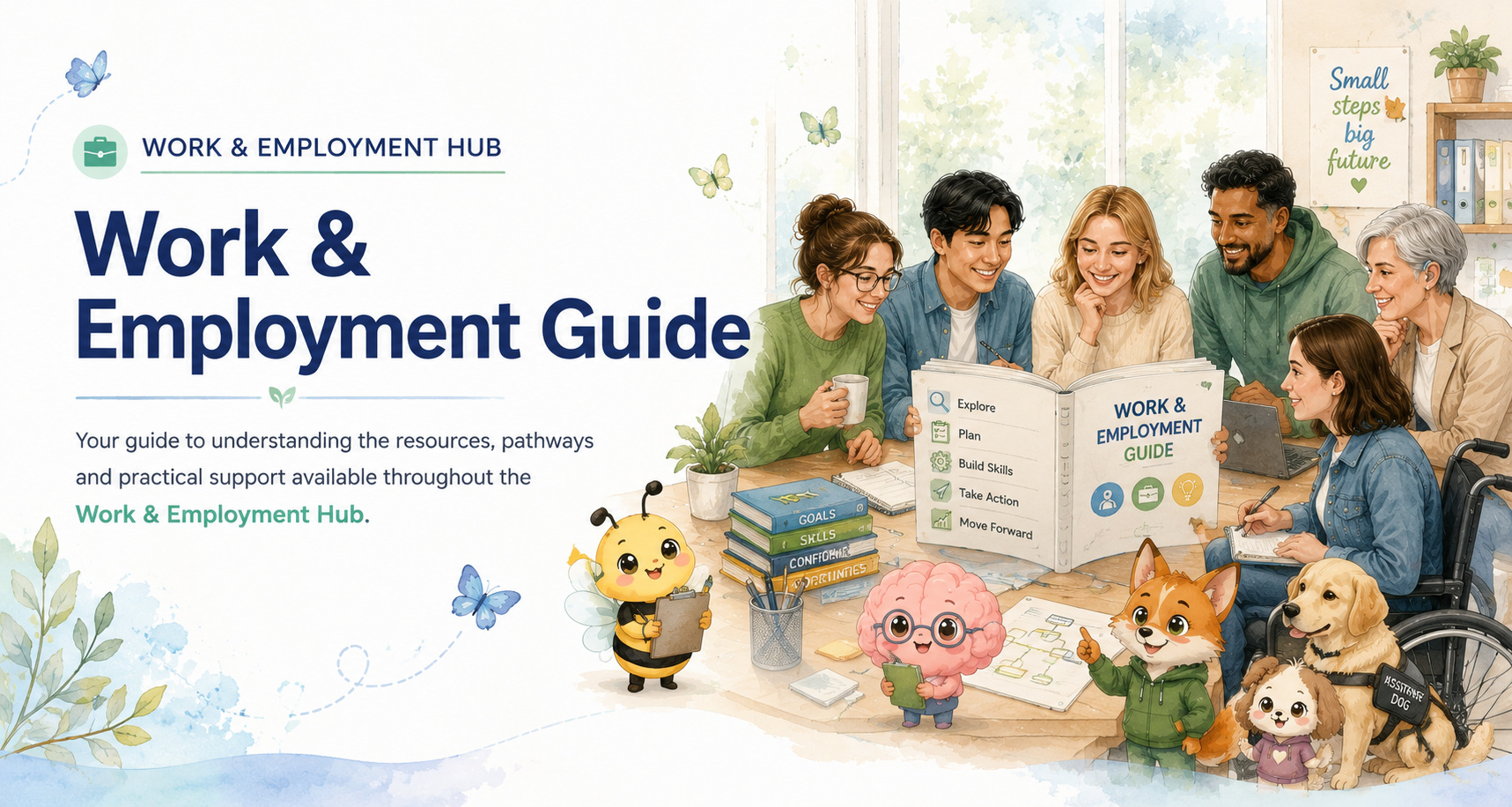
Use this guide to understand how the Work & Employment Hub fits together, choose a pathway that matches what you need, and find information, resources and support without having to explore everything at once.
Start wherever makes sense for you. You can begin with one current question, one practical task or one area that feels manageable. You do not need to follow the guide in order, and it is okay to pause, change direction or return when you have more energy.
You can use the guide in whatever way reduces effort and helps you get to something useful more quickly.
Use the Guide Map when you want to see how the different Work & Employment doorways connect.
Type a topic such as CV, interview, burnout, rights or working from home into the page search.
Pick the pathway or situation that feels closest to what you need right now.
You can stop after one useful step. The guide will still be here when you want to continue.
Try words such as CV, interview, working from home, workplace support, burnout, volunteering, career planning, self-employment or rights.
These doorway pages help you orient yourself, browse information, look up terminology, find grouped resources and return to the wider library.
A gentle first step into finding work, career planning and the wider hub.
Open Start Here →The page you are reading now: a big-picture map of the hub and its pathways.
Continue this guide ↓Browse practical information across applications, workplace life, support and different ways of working.
Open Library →Browse alphabetically when you know roughly what topic you need.
Browse Topics A–Z →Plain-language explanations of common work, career and workplace terminology.
Open Glossary →Explore related resources grouped around useful work and employment journeys.
Explore Collections →Find practical planners, worksheets, guides, checklists and downloadable tools.
Browse Downloads →Explore strengths, interests, options and next steps when planning your future.
Explore Career Planning →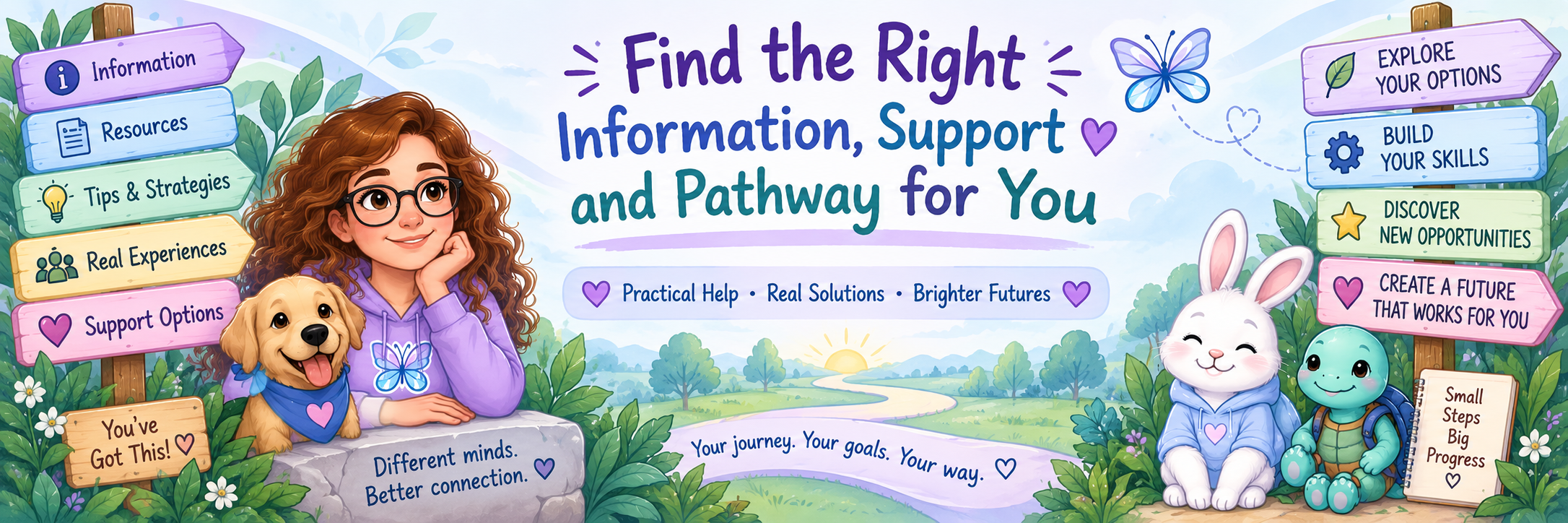
Different paths can still lead to meaningful work, growth and belonging.
Choose the area that best matches what you need right now. Each pathway brings together related information, practical support and useful next steps.
Explore strengths, career possibilities, job searching, applications, CVs, cover letters, interviews and preparing for work.
Explore Finding Work →Find practical support for starting and navigating work, communication, organisation, executive function, productivity and wellbeing.
Explore Workplace Success →Explore home workspaces, remote and hybrid routines, communication, focus, distractions, energy and work-life boundaries.
Explore Working From Home →Explore working for yourself, freelancing, business planning, organisation, systems and sustainable independent work.
Explore Self-Employment →Understand rights terminology, workplace support, adjustments, respectful treatment, advocacy and where to find current guidance.
Explore Rights & Guidance →Explore different industries, job types, training routes, qualifications and possible career directions.
Explore Career Pathways →Explore volunteering, community participation, confidence, skills, experience and possible pathways toward employment.
Explore Volunteering →You do not have to know the exact page name. Start from what is happening for you now.
Start with your strengths and interests, then move into applications, CVs and interview preparation.
Begin gently with workplace wellbeing, pacing, confidence and practical planning for a sustainable return.
Choose the challenge that is most relevant now, such as communication, organisation, stress, executive function or workplace support.
Build supportive routines, communication, focus, boundaries and a workspace that fits your needs.
Explore whether self-employment, freelancing or small business might fit your strengths, needs and circumstances.
Volunteering and community work can offer meaningful participation, learning, confidence and connections.
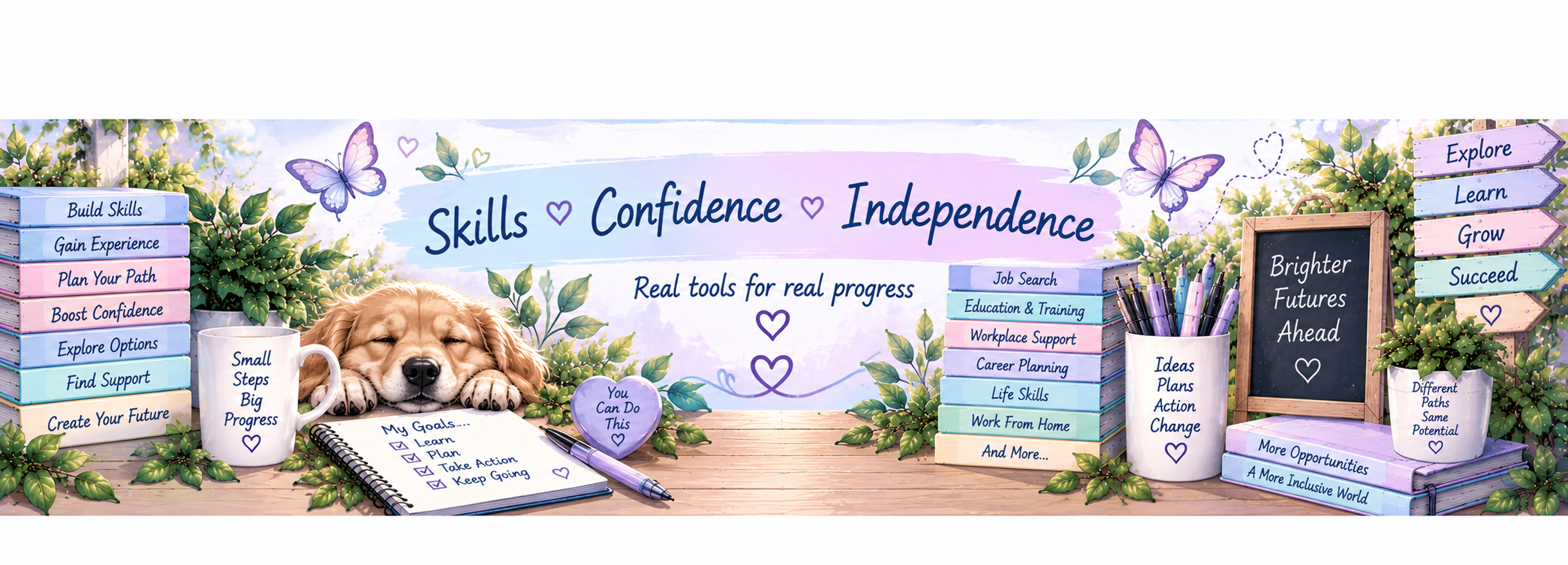
Resources can support planning, confidence, skills and practical independence.
Different resources do different jobs. Choose the format that helps with the task in front of you.
Plain-language information that explains a topic and offers practical next steps.
Pages for reflection, planning, recording ideas and working through decisions.
Step-by-step prompts that can reduce memory and organisation demands.
Tools for routines, goals, projects, appointments, job searches and workplace tasks.
Starting structures for applications, planning, communication and other practical work tasks.
Resources that can be saved, printed or used digitally where available.
Related resources grouped around a shared need, stage or journey.
Companion-led versions that add encouragement, structure and visual guidance where appropriate.
These routes move from reading into practical preparation, planning and downloadable support.
Move into applications, CVs, cover letters and practical preparation for applying.
Prepare for questions, interview-day steps, confidence, anxiety and online interviews.
Find support for organisation, communication, executive function, confidence, energy and sustainable work.
Browse practical planners, worksheets, checklists, templates and other downloadable tools.
Pick what matters most today.
Use the matching main section.
Use the Library, Topics A–Z or Glossary.
Choose a useful planner, worksheet or checklist.
Your needs and goals can change.
You do not have to work through every decision, form, conversation or change by yourself. Support can look different depending on the situation and what feels comfortable for you.
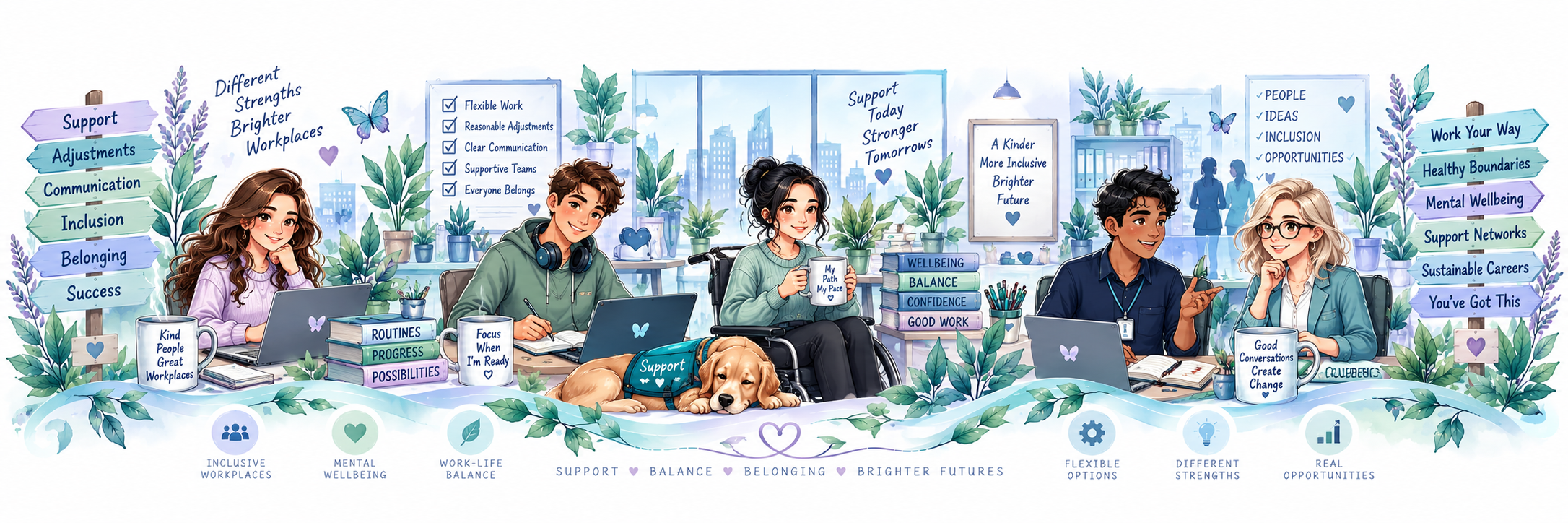
Good work support includes planning, accessibility, wellbeing and sustainable pacing.
These official V2.0 Companions support different parts of planning, organisation, problem-solving, executive function, time planning and sustainable work.

Helps turn bigger tasks into clear steps, prepare for what comes next and create practical routines that are easier to follow.
Supports manageable goals, productivity, organisation and recognising small wins without expecting everything to happen at once.

Helps with appointments, deadlines, schedules, planning ahead and keeping important dates visible.

Supports focus, task initiation, working memory and executive-function strategies for everyday workplace demands.

Encourages practical problem-solving, exploring options and finding another route when work feels stuck or difficult.

Reminds us that sustainable work includes breaks, pacing, recovery and respecting energy limits instead of pushing through everything.
You may read one section at a time, zoom the page, use a screen reader, print selected resources, type instead of handwriting, discuss prompts with someone you trust, or adapt a resource so it is more useful for your own needs.
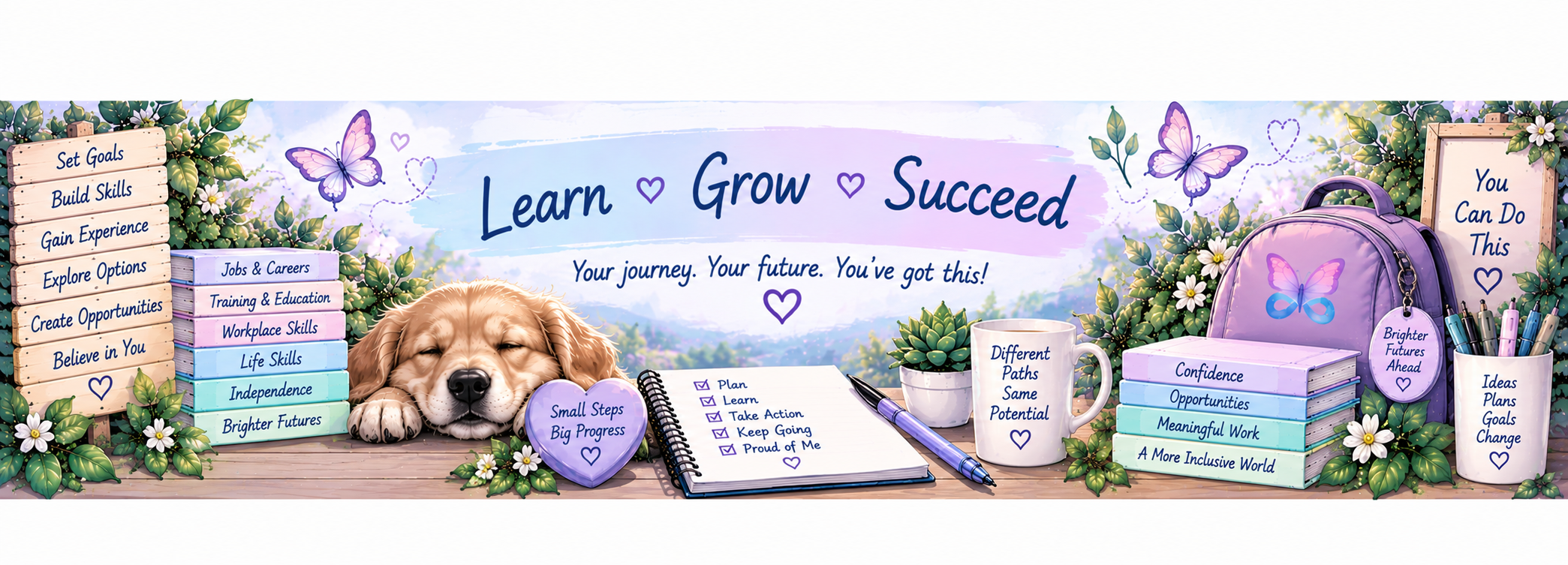
Work can connect with learning, daily life, wellbeing and wider support.
Browse practical information across the whole work journey.
Use an alphabetical route when you know roughly what you are looking for.
Look up confusing work and employment terminology in plain language.
Explore related resources grouped around a shared topic or journey.
Find practical tools that can support your next step.
Return to the main doorway whenever you want the bigger picture.
No. Use the search, guide map, seven pathways or suggested routes to go directly to what feels most relevant.
The hub is designed with neurodivergent needs in mind, but many resources may also be useful to families, supporters, employers and anyone navigating work or career decisions.
Yes. They can be used collaboratively while keeping the individual person’s goals, preferences, privacy and choices central.
No. Depending on the resource, you may be able to use it digitally, type into it, discuss the prompts or recreate the useful parts in another format.
Aspie Answers serves people in New Zealand and internationally. Employment law, benefits, tax, visas, qualifications and workplace-support rules can differ, so country-specific decisions should be checked against current official guidance.
Consider workplace wellbeing, pacing, appropriate support and professional help where needed. Aspie Answers provides general educational information and does not replace personalised medical, legal or employment advice.
You can explore one pathway, look up a term, browse the Library or try one practical resource. You do not need to do everything at once.
Aspie Answers provides general educational information and practical tools. Content is not a substitute for personalised medical, legal, financial, tax, immigration or employment advice.
Last reviewed: September 2026.