
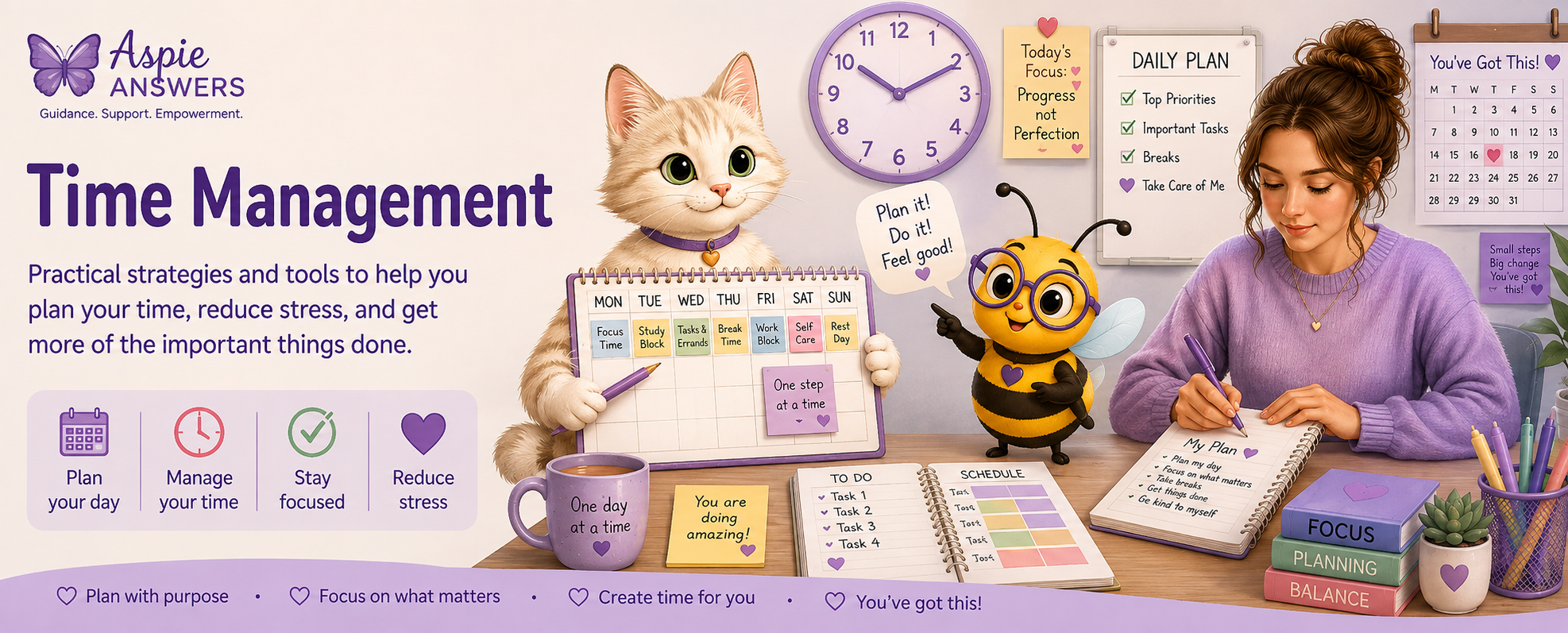
Time management can help make the day feel clearer, calmer and more manageable. It can support planning, routines, appointments, study, work, rest and everyday responsibilities.
This page brings together practical time management ideas, supportive tools, printable resources and gentle strategies to help you work with time in a way that suits your needs.
Time management is not about doing more every minute. It is about finding ways to use time that feel realistic, flexible and supportive. Some days will need more structure, while others may need more rest.
This page may be useful for anyone who finds time difficult to track, estimate, organise or balance.
Helpful for time blindness, task switching, reminders, routines and getting started.
Useful for building predictable routines, preparing for transitions and reducing uncertainty.
Supports study time, assignments, classes, deadlines, breaks and planning ahead.
Helpful for appointments, chores, meals, rest, work, family routines and daily tasks.
Search or browse time management topics below as this library continues to grow.
Break the day into flexible blocks for tasks, appointments, rest and routines.
Use regular moments in the day to support structure and reduce decision fatigue.
Set aside short periods for one task at a time with fewer distractions.
Use alarms, calendars, visual prompts or checklists to support memory and timing.
Build buffer time between activities so moving from one task to another feels easier.
Use visual timers, body doubling, short tasks, flexible plans and realistic time estimates.
Choose what needs attention first and what can wait until later.
Make space for breaks, meals, movement, quiet time and recovery.
Clocks, timers, calendars and written plans can make time easier to see and understand.
Leave extra space between tasks, appointments or transitions so your day feels less rushed.
Try managing one part of the day first, such as morning, afternoon or evening.
You do not need to control every minute. Try planning the important things first, then leave space for breaks, changes and real life.
If time feels slippery, choose one small anchor: a timer, a checklist, a reminder, or one task to start with. Small anchors can make the day feel steadier.
If time management feels overwhelming, try using one tool at a time. A single reminder or visual timer can be more helpful than a complicated system.
You do not need to organise your whole day at once. Choose one small support to begin.
Choose one alarm, calendar reminder or visual cue for something important.
Add extra time before or after one task, appointment or transition.
Choose one moment for rest, food, movement, quiet time or reset.
Looking for printable time planners, time blocking sheets, routine trackers, visual schedules and reminder tools? Time management resources will connect with the wider Downloads & Resources Hub as the library continues to grow.
Time management connects with daily planning, weekly planning, priorities, calendars, routines, executive function and reminders.
Explore more pages in the Everyday Help Hub to keep building planning skills, routines and practical support systems.
Time management resources may also become available through the Aspie Answers website, WordPress Resource Library, Payhip, Gumroad, Ko-fi, Pinterest, Amazon and other platforms as new resources are created or added.