
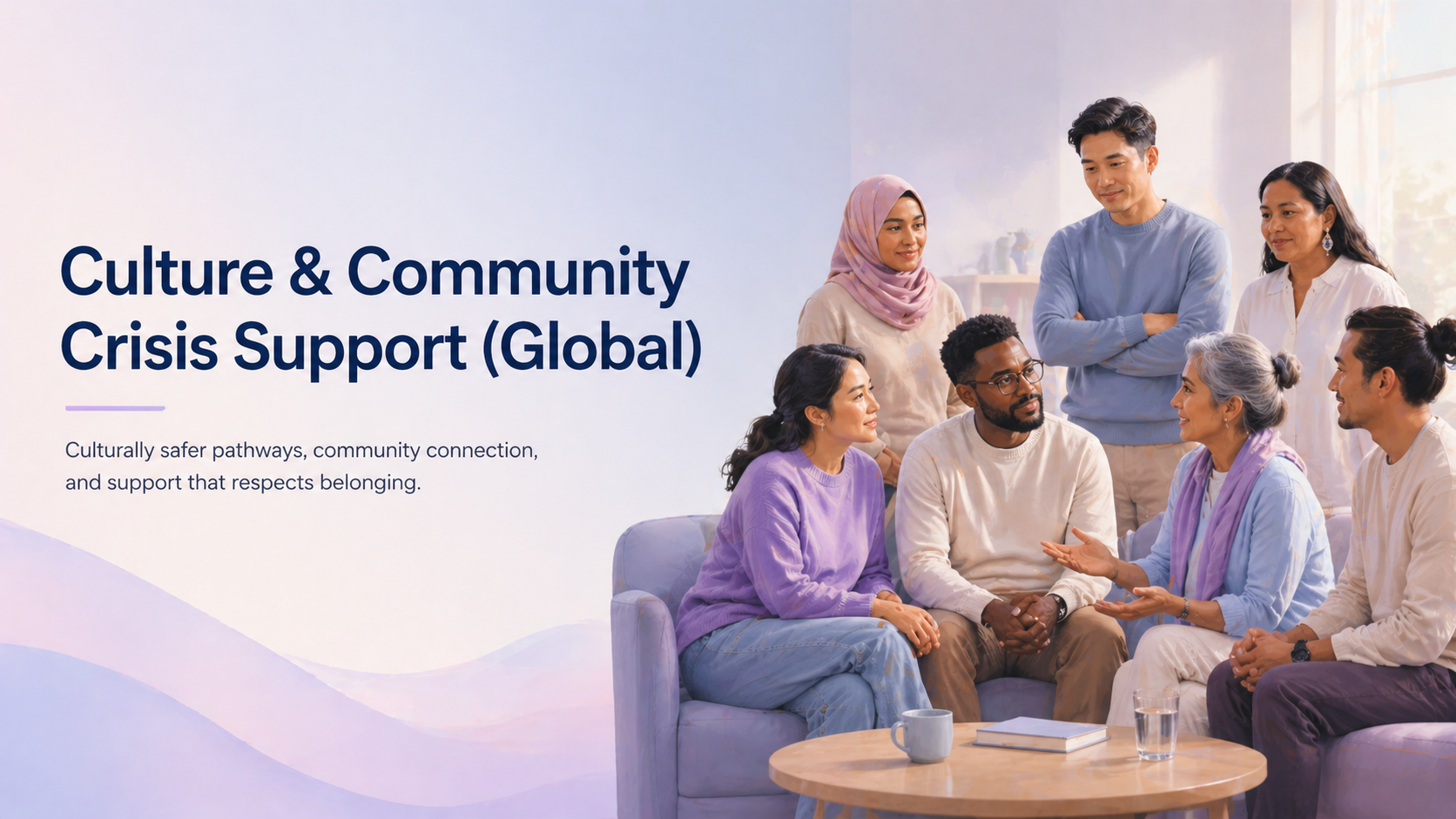
Culture & Community Crisis Support (Global)
This page helps people find crisis support pathways that respect culture, community connection, belonging, language, identity, whānau, family, heritage, and lived experience.
Culture and community can shape how people experience distress, who they trust, what support feels safe, and what healing or crisis care may need to include.
Quick Pathways
Choose the option that feels closest to what you need right now.
I need culturally safer support
For support that understands culture, heritage, values, family, identity, and community context.
I need community connection
For peer groups, trusted community spaces, cultural networks, and support that reduces isolation.
I need language-aware support
For interpreter access, first-language support, translated information, or lower-pressure communication.
I need help finding belonging
For people who feel disconnected, excluded, displaced, misunderstood, or unsupported by usual services.
Search & Filter
Search by culture, community, language, belonging, peer support, advocacy, identity, or cultural safety.
Culturally Safer Support
Support that recognises culture, values, family systems, heritage, community, belonging, and lived experience.
Add cultural support linkCommunity-Led Support
Support from community organisations, peer groups, cultural networks, lived-experience spaces, or trusted local groups.
Add community linkLanguage & Interpreter Support
Support that may include interpreters, translated resources, first-language support, or culturally safer communication.
Add language linkPeer & Belonging Support
Peer spaces and belonging-focused supports can help reduce isolation, shame, and the feeling of facing crisis alone.
Add peer support linkAdvocacy & Inclusion
Advocacy may help when people face discrimination, barriers, exclusion, system harm, or difficulty being heard.
Add advocacy linkFamily, Whānau & Collective Support
For people whose support may involve family, whānau, elders, community leaders, cultural connection, or collective care.
Add family support linkCulture & Community Support Pathways
These pathways help people think about what kind of support may feel safer or more relevant.
Cultural Identity
Support that respects heritage, whakapapa, traditions, migration stories, community values, and cultural belonging.
Community Connection
Support that recognises the role of trusted groups, peer spaces, local organisations, cultural networks, and community care.
Language & Communication
Support that avoids language barriers, provides interpreters where possible, and reduces pressure to explain crisis in a second language.
Discrimination & Exclusion
Support for people affected by racism, exclusion, stigma, cultural misunderstanding, identity-based harm, or unsafe systems.
Collective Care
Some people heal and seek help through family, whānau, elders, community leaders, cultural mentors, or collective support.
Trusted Services
Some people may feel safer with services already trusted by their community or with workers who understand cultural context.
Why Culture & Community Matter in Crisis
Crisis support can feel different depending on language, community trust, family expectations, migration history, culture, religion, identity, discrimination, and past experiences with services.
Culturally safer support does not treat culture as an “extra.” It recognises that culture, community, and belonging can be part of safety, communication, healing, and trust.
What Community-Based Support May Include
Helpful support may include:
Trusted community groups, cultural mentors, peer support, whānau or family involvement, language access, community-led services, advocacy, and support that understands lived experience.
Support should try to avoid:
Assumptions, stereotypes, cultural dismissal, forcing one-size-fits-all care, ignoring family or community context, or treating language and cultural needs as barriers rather than access needs.
Where To Go Next
These related pages help connect culture and community support with the wider crisis support structure.
You Deserve Support That Respects Belonging
If usual support feels disconnected from your culture, language, family, values, identity, or community, it is okay to look for support that better understands your context.
Important Disclaimer
Aspie Answers provides education, signposting, and supportive information. This page does not replace emergency care, crisis response, therapy, legal advice, safeguarding, cultural advocacy, or professional mental health support. If you are in immediate danger, contact local emergency services now.