
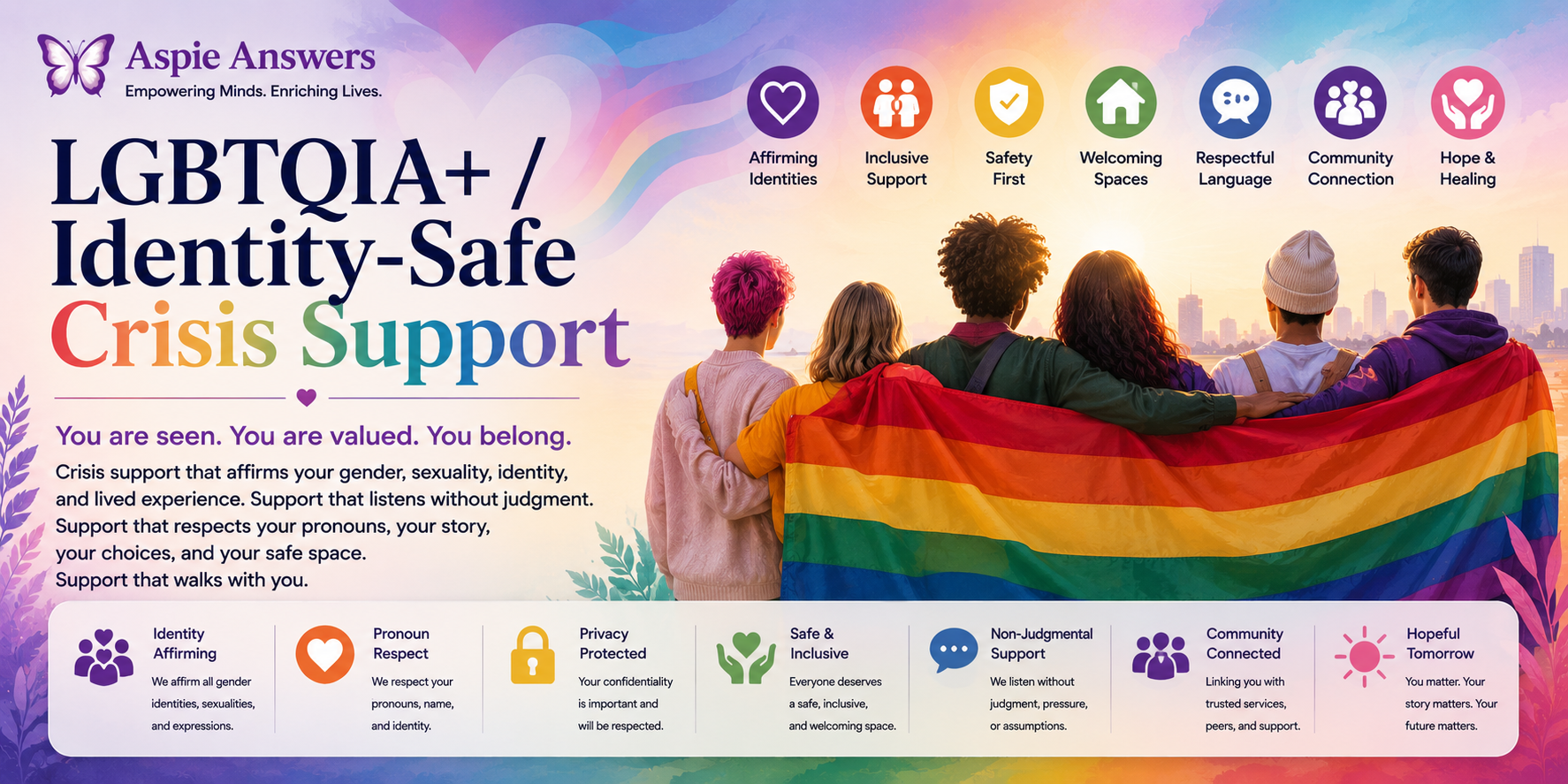
LGBTQIA+ / Identity-Safe Crisis Support
Crisis support should feel safe, respectful, and affirming. This page offers gentle guidance for LGBTQIA+, rainbow, takatāpui, queer, trans, non-binary, intersex, questioning, and identity-diverse people who may need support around distress, safety, family pressure, discrimination, isolation, identity, belonging, or crisis.
What Identity-Safe Crisis Support Means
Identity-safe crisis support means help that respects gender, sexuality, pronouns, names, bodies, relationships, culture, disability, neurodivergence, faith background, family context, privacy, and lived experience. It means people are not shamed, questioned, dismissed, or forced to explain their identity before receiving support.
Names, pronouns & identity respected
Support should use the person’s chosen name, pronouns, identity words, and relationship language wherever possible.
Safety before disclosure
People should not be pressured to come out, disclose identity, involve family, or share private details if it is not safe.
Affirming connection
Rainbow, takatāpui, queer, trans, non-binary, intersex, questioning, and identity-diverse people deserve belonging and care.
Support without judgement
Identity-safe support should not shame someone’s gender, sexuality, relationships, body, clothing, voice, history, or family situation.
Common Crisis Needs
LGBTQIA+ and identity-diverse people may experience the same crises as anyone else, but identity-related barriers can make asking for help harder or less safe.
Immediate safety concerns
This may include violence, threats, unsafe housing, family rejection, partner abuse, stalking, harassment, outing risk, or feeling unsafe at home.
Family pressure or rejection
Some people may fear being rejected, controlled, shamed, forced to hide, or pressured to change who they are.
Distress, isolation or overwhelm
Bullying, discrimination, dysphoria, minority stress, loneliness, grief, trauma, or lack of belonging can increase distress.
Fear of being outed
People may avoid support if they worry services will contact family, employers, schools, community members, or unsafe people.
Healthcare or support barriers
Some people may have had past experiences of being misgendered, dismissed, questioned, stereotyped, or treated unsafely by services.
Community and identity support
People may need affirming peer support, rainbow organisations, takatāpui support, trans support, youth support, or identity-safe crisis pathways.
Signs Support May Be Identity-Safe
Identity-safe support should be respectful, privacy-aware, non-judgemental, and willing to adapt to the person’s safety needs.
Helpful signs
- They use your chosen name and pronouns.
- They ask what feels safe before contacting family or others.
- They explain confidentiality and privacy clearly.
- They do not pressure you to disclose identity details.
- They respect partners, chosen family, culture, faith, disability, and lived experience.
- They can connect you with rainbow, takatāpui, queer, trans, youth, family violence, housing, or mental health support if needed.
Warning signs
- They dismiss or mock your identity, pronouns, name, body, or relationships.
- They pressure you to involve unsafe family or community members.
- They blame your identity for the crisis.
- They ignore outing risk or privacy concerns.
- They treat LGBTQIA+ identity as a debate instead of respecting your support needs.
- They refuse reasonable safety, communication, or accessibility needs.
Gentle Steps To Take
If you are overwhelmed, focus on the safest next step. You do not need to explain everything at once.
Check immediate safety
If there is danger, violence, medical risk, self-harm risk, unsafe housing, or threat of harm, contact emergency services or crisis support first.
Choose a safer contact method
Use phone, text, web chat, email, relay, a trusted person, or a specialist LGBTQIA+/rainbow support service depending on what feels safest.
Name your safety needs
You can say, “I need identity-safe support,” or “Please do not contact my family/community unless we discuss safety first.”
Ask about confidentiality
Ask who will see your information, whether anyone will be contacted, and how your identity, name, pronouns, or situation will be recorded.
Use support people if safe
A trusted friend, chosen family member, advocate, peer worker, rainbow organisation, youth worker, or support person may help you explain needs.
Write one next step
Write down who to contact, where to go, what to pack, what number to save, or who can help you stay safe today.
Helpful Phrases To Use
These phrases can be copied, adapted, or shown to someone if speaking feels hard.
“I need identity-safe crisis support. Please respect my name, pronouns, identity, privacy, and safety needs.”
“Please do not contact my family, school, workplace, community, or partner without talking to me about safety first.”
“I am worried about being outed, judged, misgendered, or misunderstood. I need safer support.”
“I need help finding LGBTQIA+, rainbow, takatāpui, queer, trans, non-binary, intersex, or questioning-friendly support.”
“I feel unsafe where I am and need help with a safe next step.”
If Support Has Not Felt Safe Before
Some people avoid crisis services because they have been misgendered, dismissed, judged, outed, stereotyped, shamed, or treated like their identity is the problem. If this has happened, it makes sense that reaching out again may feel hard.
If possible, try a different pathway: a rainbow or LGBTQIA+ organisation, takatāpui support, trans peer support, youth support, family violence support, housing support, text/web chat, a trusted person, or an advocate who can help explain your needs.
Where To Go Next
Identity-safe support may connect with culture, community, language, privacy, housing, family conflict, online safety, discrimination, and accessible crisis planning.
Culture & Community Crisis Support
For broader culture-aware, community-aware, language-aware, and identity-aware crisis pathways.
Open culture/community supportCulturally Safe Crisis Support
For support that respects culture, identity, language, family context, lived experience, and dignity.
Open culturally safe supportDigital Access & Privacy Crisis Support
For people worried about online safety, privacy, device access, surveillance, or unsafe browsing situations.
Open digital/privacy supportFamily Conflict & Relationship Crisis Support
For family conflict, relationship pressure, partner safety, home stress, and support when relationships feel unsafe.
Open family/relationship supportBullying, Harassment & Online Safety Crisis Support
For bullying, harassment, online abuse, identity-based harm, or digital safety concerns.
Open bullying/online safety supportAccessible Crisis Planning Tools
For simple planning tools, communication prompts, and support steps that can be adapted to different needs.
Open planning toolsYou Deserve Support That Respects Who You Are
Your identity is not a problem to be fixed. You deserve crisis support that protects your safety, respects your privacy, honours your name and pronouns, and helps you take the next safe step.
Important Disclaimer
Aspie Answers provides education, signposting, and supportive information. This page is not a replacement for emergency care, medical advice, therapy, legal advice, safeguarding procedures, domestic violence support, legal advice, identity-specific support, or professional crisis assessment. In an emergency, contact local emergency services immediately.