
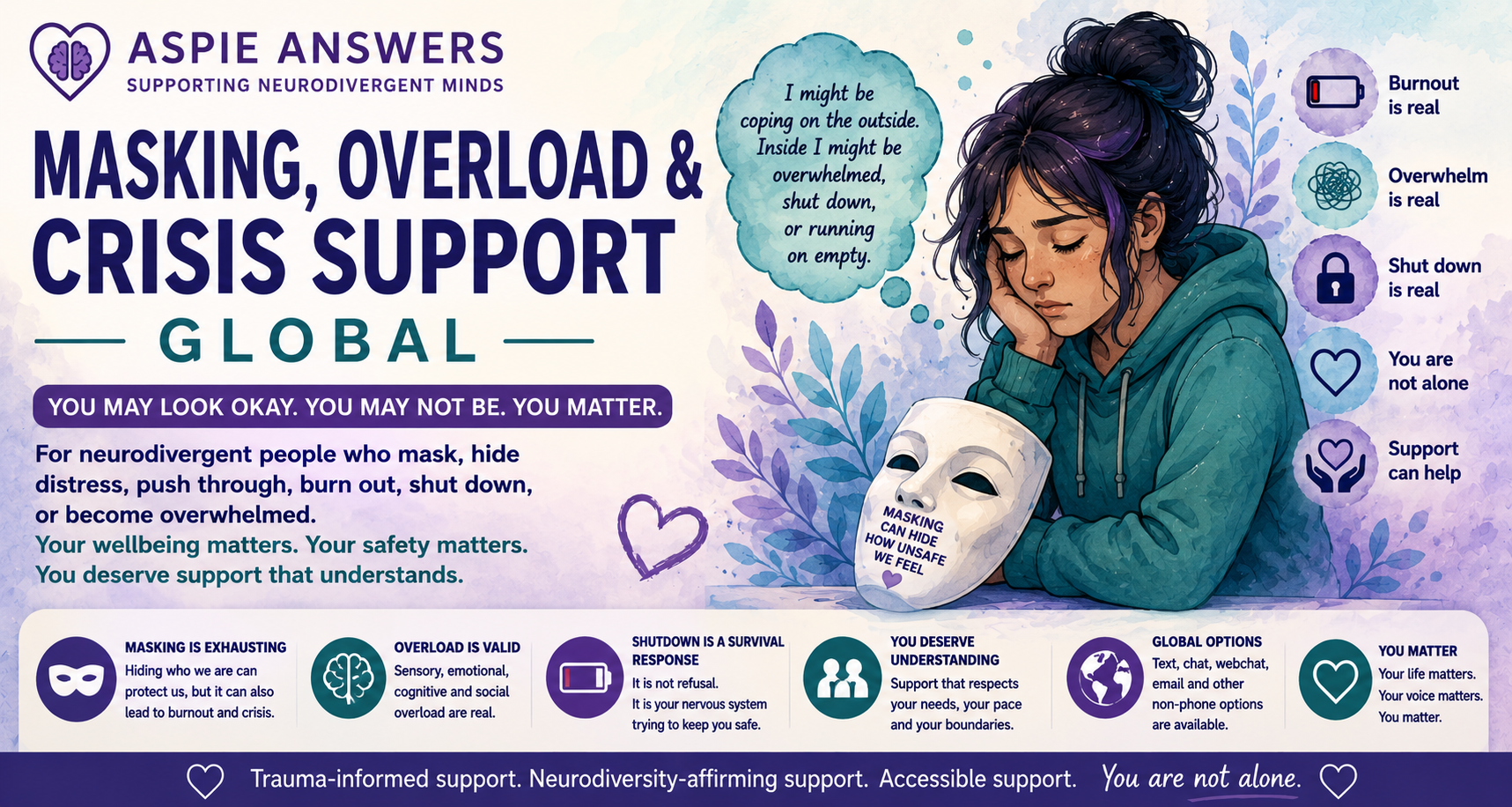
Masking, Overload & Crisis Support – Global
A gentle support page for neurodivergent, autistic, ADHD, disabled, traumatised, sensory-sensitive, or chronically overwhelmed people who may look “fine” on the outside while hiding distress, losing capacity, shutting down, burning out, or becoming unsafe.
If there is immediate danger
If you or someone else is in immediate danger, medically unsafe, at risk of serious harm, or unable to stay safe, contact local emergency services now.
- New Zealand: 111
- Australia: 000
- United States / Canada: 911
- UK: 999 or 112
- Europe: 112
Gentle content note
This page mentions crisis, masking, overload, shutdowns, burnout, self-harm risk, and feeling unsafe. Read slowly, pause when needed, and use the safest support pathway if this feels too close to home.
Gentle reminder
Masking can make someone look calm, capable, or “okay” while they are actually overwhelmed, exhausted, panicking, shut down, or unsafe. Looking okay does not mean someone is okay.
You are not too much
Needing help after holding everything together does not mean you failed. Your safety, capacity, boundaries, communication needs, and wellbeing matter.
Quick pathways
Choose the option that best fits what is happening right now.
I am not safe or may hurt myself
Use emergency services or local crisis support now. If you cannot speak, use text/chat, written notes, or ask someone trusted to help.
Open emergency numbersI look okay but I am not coping
Use low-pressure support. Text, chat, a trusted person, or a short written message may be easier than explaining everything out loud.
Open text/chat supportI am overwhelmed, shut down, or burned out
Use sensory, shutdown, meltdown, and burnout pathways if masking has led to overload or collapse.
Open burnout supportSearch & filter support pathways
Use this section to quickly find the support pathway that fits your situation.
Masking and hidden distress
Support for people who appear calm, capable, or social while hiding panic, exhaustion, shutdown, or unsafe thoughts.
Sensory, emotional, and social overload
Overload may build from noise, people, expectations, masking, conflict, pain, trauma, or too many demands.
Open sensory supportBurnout and capacity collapse
Long-term masking can lead to burnout, loss of capacity, shutdowns, withdrawal, and difficulty asking for help.
Open burnout supportCommunication gets harder
When masking drops, speech, processing, emotional regulation, or decision-making may become harder.
Open communication accessSupporters may miss the signs
Someone may need help even if they are smiling, saying “I’m fine,” working, studying, or still doing daily tasks.
Find help by location
Use the location hub to find emergency numbers, crisis helplines, and regional support pathways.
Open location hubUnderstanding masking and overload
Masking can mean hiding distress, copying expected behaviour, suppressing stims, forcing eye contact, pretending to understand, pushing through pain, hiding sensory overload, or acting “fine” to avoid judgement, rejection, punishment, or being misunderstood.
It can look calm
A person may seem composed while their body is in panic or shutdown.
It uses energy
Masking can drain emotional, sensory, cognitive, and physical capacity.
It can delay help
People may not be believed because they do not “look distressed enough”.
It can lead to crisis
Holding everything in can lead to burnout, shutdown, meltdown, or unsafe thoughts.
Simple phrase
“I may look okay, but I am not okay. I need low-pressure support and help staying safe.”
Hidden signs someone may be overloaded
These signs do not always mean crisis, but they can be clues that someone needs support, rest, space, or help before things become unsafe.
Body and sensory signs
- Headaches, nausea, shaking, pain, exhaustion
- Needing headphones, darkness, pressure, or quiet
- Feeling trapped, restless, frozen, or unable to move
- Sudden need to leave or hide
Communication signs
- Shorter replies or no replies
- Repeating “I’m fine” while seeming distressed
- Difficulty explaining needs
- Loss of speech or difficulty processing questions
Emotional and capacity signs
- Crying after holding it together
- Irritability, panic, numbness, or shutdown
- Unable to do normal tasks
- Hopelessness, isolation, or feeling unsafe
Masking and overload support by country / region
Crisis support options vary by country. Some services offer text, chat, phone, webchat, or accessible support pathways. Availability can change, so always check the official service page for current details.
New Zealand
In an emergency, call 111. For mental health support, 1737 can be called or texted within New Zealand, which may help if speaking is hard.
Australia
In an emergency, call 000. Some Australian crisis and support services offer phone, text, or online chat options depending on the service.
United States
In an emergency, call 911. The 988 Lifeline offers call, text, chat, and access options for people who need crisis support.
Canada
In an emergency, call 911. Some Canadian crisis pathways may include phone, text, or chat options depending on the service and region.
United Kingdom
In an emergency, call 999 or 112. Some UK support services offer text, webchat, or non-phone pathways for people who cannot call.
Ireland
In an emergency, call 112 or 999. Some Irish crisis services may offer text or online support options for people who find phone calls difficult.
Europe
In many European countries, 112 is the emergency number. Check your country’s local services for chat, text, phone, or accessible crisis options.
International / worldwide
If you are outside these countries, use the location hub to look for local emergency, crisis, text, chat, or accessible support options.
Open location hubIf you look okay but are not safe
You do not need to prove you are struggling. Use the clearest safe message you can: “I am not safe” or “I need help now.”
For family, carers, friends, supporters, and professionals
Do not rely only on how someone appears. A person who masks may look calm while they are at serious risk or completely overloaded.
What helps
- Believe the person when they say they are not okay.
- Ask what support feels safest.
- Offer text, writing, quiet, space, and simple choices.
- Reduce demands and sensory load.
What to avoid
- Do not say “but you seemed fine.”
- Do not force long explanations.
- Do not shame coping tools, stimming, or withdrawal.
- Do not assume risk is low because someone is articulate.
When urgent help is needed
If someone cannot stay safe, may harm themselves or someone else, is medically unsafe, missing, or in immediate danger, use emergency or crisis support immediately.
Where to go next
This page connects into the wider Aspie Answers crisis support structure.
Neurodivergent Burnout Crisis Support
For burnout, exhaustion, capacity loss, and long-term overload.
Open burnout supportSensory Overwhelm Crisis Support
For sensory overload, environmental distress, and low-demand safety support.
Open sensory supportShutdown & Meltdown Crisis Support
For shutdowns, meltdowns, loss of speech, panic, and overwhelm.
Open shutdown/meltdown supportTrauma-Informed Neurodivergent Crisis Support
For calmer, safer, consent-aware, dignity-focused support.
Open trauma-informed supportCommunication Access Crisis Support
For AAC, text, writing, Easy Read, plain language, support people, and non-phone options.
Open communication accessSupport & Directories Hub
For ongoing support, organisations, services, groups, and non-urgent contacts.
Open support directories