
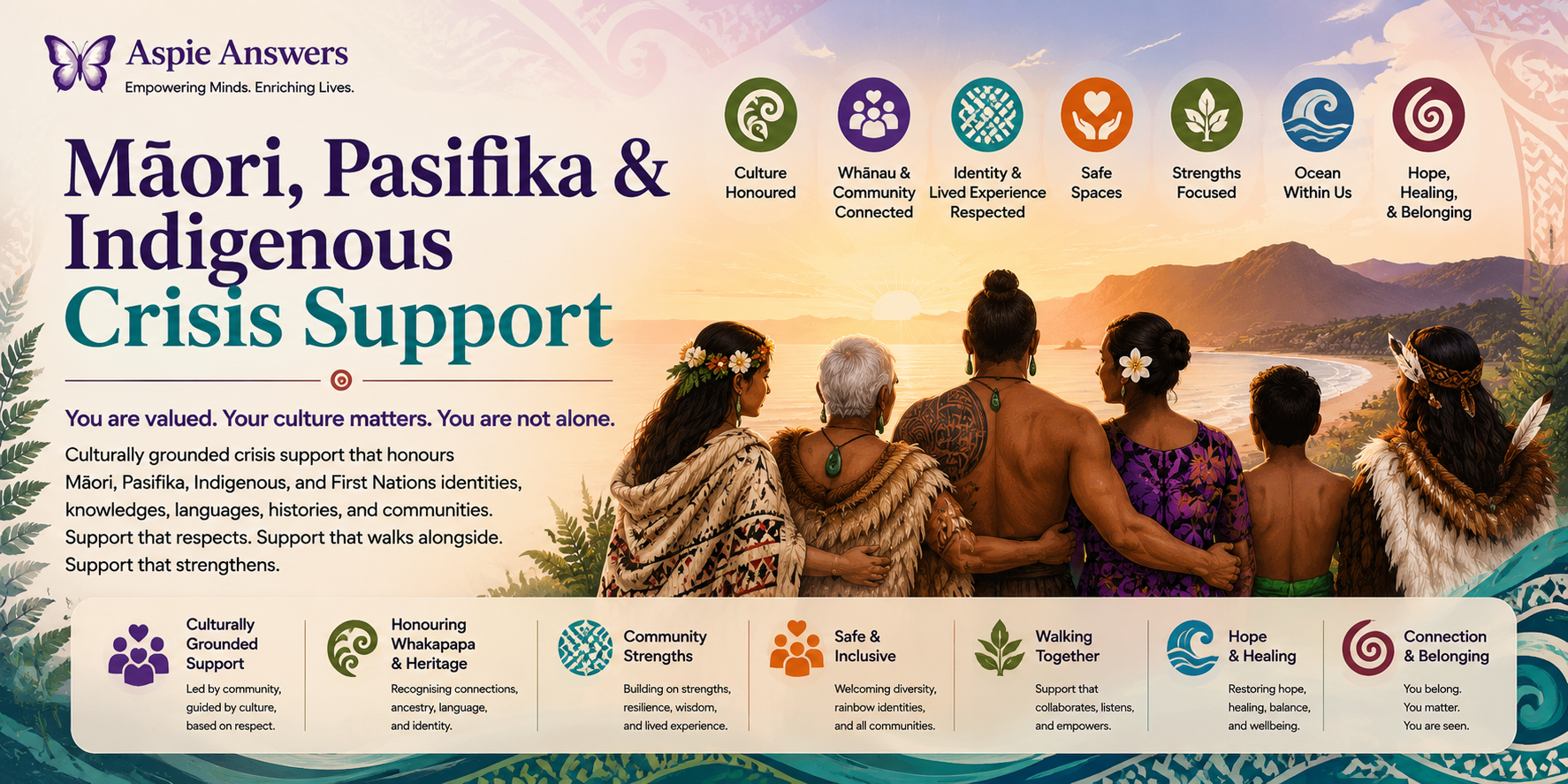
Māori, Pasifika & Indigenous Crisis Support
Crisis support should honour culture, whakapapa, ancestry, language, family, whānau, community, identity, lived experience, land, connection, and belonging. This page offers gentle guidance for Māori, Pasifika, Indigenous, First Nations, Aboriginal, Torres Strait Islander, Native, and community-connected people who may need culturally grounded support during distress or crisis.
What Māori, Pasifika & Indigenous Crisis Support Means
Māori, Pasifika and Indigenous crisis support is about more than translating mainstream services. It means recognising culture, collective identity, intergenerational experiences, community strengths, whānau or family systems, spiritual wellbeing, language, land, belonging, and the right to receive support that is respectful and grounded.
Culture honoured
Support should respect cultural identity, values, protocols, histories, language, family systems, and ways of healing.
Whānau, family & community
Some people may want family, whānau, elders, cultural workers, community leaders, or trusted support people involved safely.
Strengths-based support
Support should recognise resilience, community knowledge, cultural strengths, identity, lived experience, and protective connections.
Safe and respectful care
People should not be stereotyped, dismissed, over-explained to, shamed, or expected to educate services while in crisis.
Why This Support Matters
Many Māori, Pasifika, Indigenous and First Nations communities carry strengths, knowledge, connection, and resilience — while also facing barriers caused by colonisation, racism, discrimination, service gaps, cultural misunderstanding, poverty, rural access issues, disability barriers, and past harm from systems.
Trust may need to be rebuilt
Some people may avoid services because of previous experiences of being judged, ignored, stereotyped, over-policed, or culturally misunderstood.
Identity is part of safety
Support should not treat culture, language, family, land, spirituality, disability, or identity as separate from wellbeing.
Community can be protective
For some people, support may feel safer when it includes trusted community, whānau, family, elders, cultural workers, or peer support.
Privacy may be complicated
In smaller communities, people may worry about confidentiality, being recognised, family reactions, stigma, or community gossip.
Access barriers can stack up
Transport, cost, language, internet access, rural distance, disability needs, and service availability can all affect crisis support.
Healing may be collective
Some people may need support that understands collective grief, intergenerational trauma, family roles, community care, and cultural healing.
Support Pathways That May Help
The right pathway may depend on the person, location, culture, language, safety needs, and whether they want individual, family, whānau, community, cultural, or clinical support.
Māori, Pasifika, Indigenous or First Nations services
Where available, culturally specific services may provide more grounded support, better cultural understanding, and safer pathways.
Trusted whānau, family or community support
If safe, a trusted person may help explain needs, attend appointments, make calls, support planning, or help with practical steps.
Cultural navigators or advocates
Advocates, navigators, peer workers, social workers, or community workers may help bridge gaps between services and lived experience.
Language and interpretation support
If language is a barrier, ask for interpreter support, translated information, or a trusted support person who can help communicate safely.
Practical crisis support
Some crises need housing, food, transport, money support, medical care, legal help, immigration support, or family safety planning.
Specialist crisis pathways
Domestic violence, youth, disability, mental health, grief, addiction, LGBTQIA+, migrant, refugee, and trauma services may also be needed.
Gentle Steps To Take
If everything feels overwhelming, begin with the safest next step. You do not need to have the perfect words.
Check immediate safety
If there is urgent danger, violence, medical risk, self-harm risk, or a serious threat to safety, contact emergency services or a crisis line first.
Choose a safer pathway
Choose the option that feels safest: emergency help, crisis line, text/chat, cultural service, community support, trusted person, or advocate.
Name cultural support needs
You can say, “I need culturally safe support,” or “I need support that understands Māori, Pasifika, Indigenous, or community needs.”
Ask about privacy
If privacy matters, ask how your information will be used, who may be contacted, and whether family or community will be involved.
Bring support if safe
If helpful and safe, involve a trusted whānau member, family member, friend, advocate, elder, cultural worker, or support person.
Write down the next step
Write one clear next step: who to call, where to go, what to pack, what number to save, or who can help you stay safe tonight.
Helpful Phrases To Use
These phrases can be copied, adapted, or shown to someone if talking feels hard.
“I need crisis support that respects my culture, whānau/family, community, identity, and lived experience.”
“I would like a Māori, Pasifika, Indigenous, First Nations, cultural, or community-based support option if one is available.”
“Please explain confidentiality before contacting family, whānau, community, or other services.”
“I need an advocate, interpreter, support person, cultural worker, or trusted person to help me explain.”
“I am worried about being judged, misunderstood, or unsafe. Please help me find a safer pathway.”
If Mainstream Support Does Not Feel Safe
If a service has dismissed your culture, identity, language, family context, disability needs, or community concerns, it can make reaching out again feel harder. You may still deserve and need support — but the pathway may need to be different.
Consider asking for a different worker, a cultural liaison, an interpreter, a support person, a community navigator, a peer worker, a culturally specific service, or a specialist organisation that understands your situation more deeply.
Where To Go Next
Māori, Pasifika and Indigenous crisis support may connect with cultural safety, language access, community support, migration or refugee support, rural access, privacy, identity safety, and financial barriers.
Culture & Community Crisis Support
For broader culture-aware, community-aware, language-aware, and identity-aware crisis pathways.
Open culture/community supportCulturally Safe Crisis Support
For support that respects culture, identity, language, family context, lived experience, and dignity.
Open culturally safe supportLanguage & Translation Crisis Support
For interpreter support, translated information, and language-accessible crisis pathways.
Open language supportMigrant, Refugee & Newcomer Crisis Support
For migration stress, refugee experiences, settlement pressure, language barriers, and safety concerns.
Open migrant/refugee supportLGBTQIA+ / Identity-Safe Crisis Support
For people needing crisis support that respects gender, sexuality, identity, safety, and belonging.
Open identity-safe supportRural & Remote Crisis Access Support
For people facing distance, transport, privacy, limited services, or rural access barriers during crisis.
Open rural/remote supportYou Are Valued. Your Culture Matters.
Crisis support should not erase culture, community, language, whakapapa, ancestry, identity, family, land, faith, disability, or lived experience. Support should help people feel safer, more connected, and more able to take the next step.
Important Disclaimer
Aspie Answers provides education, signposting, and supportive information. This page is not a replacement for emergency care, medical advice, therapy, legal advice, safeguarding procedures, domestic violence support, cultural support, immigration advice, Indigenous health services, or professional crisis assessment. In an emergency, contact local emergency services immediately.