
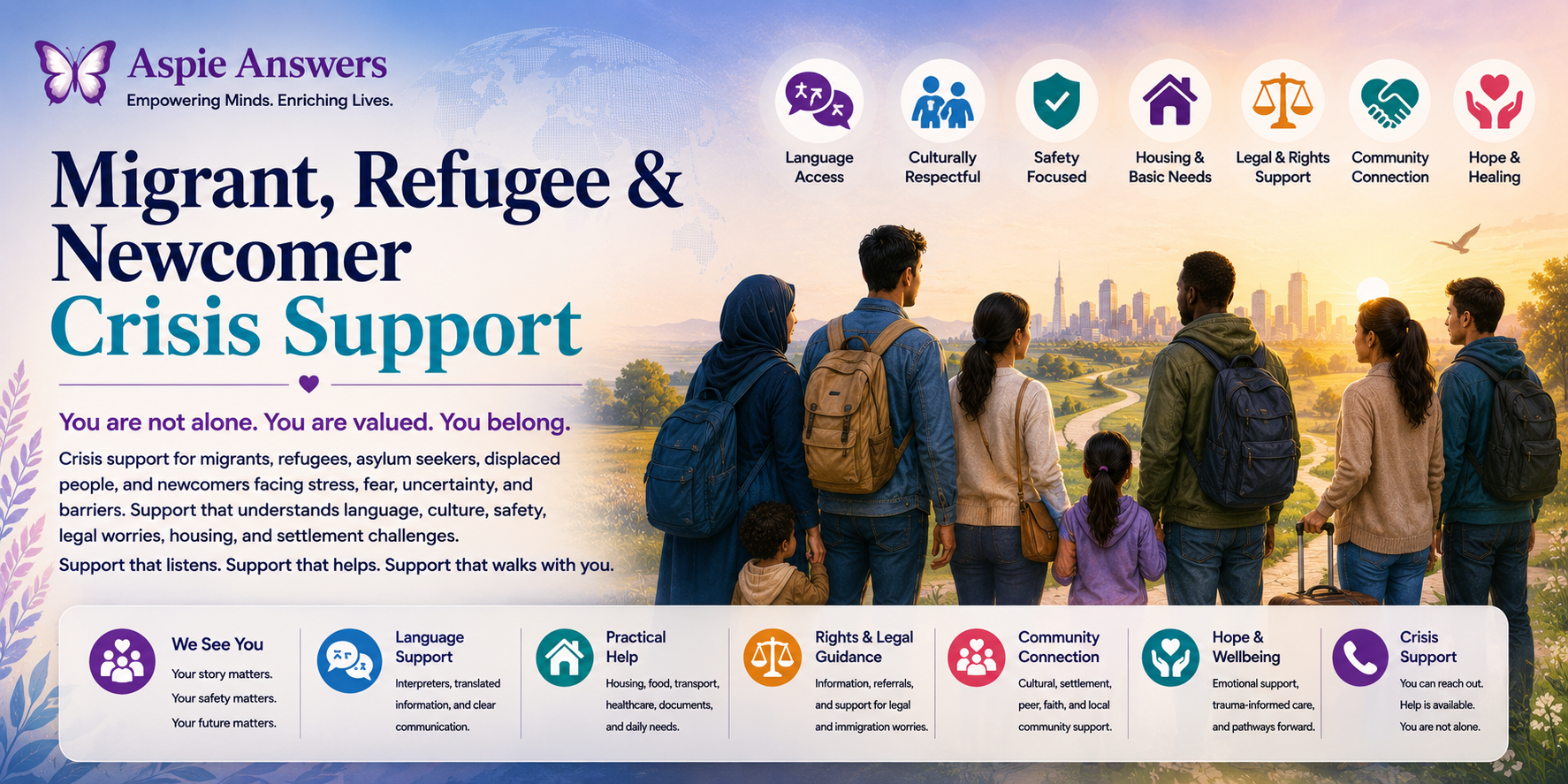
Migrant, Refugee & Newcomer Crisis Support
Moving countries, seeking safety, rebuilding life, learning new systems, or living with immigration uncertainty can become overwhelming. This page offers gentle crisis support guidance for migrants, refugees, asylum seekers, displaced people, newcomers, and families who may need help with safety, language, housing, legal worries, community connection, trauma, or practical support.
What Migrant, Refugee & Newcomer Crisis Support Means
Migrant, refugee and newcomer crisis support means help that understands safety, settlement, language, trauma, housing, family separation, legal systems, discrimination, culture shock, and practical barriers. It may involve both emotional support and real-world help.
Language access
Support may need interpreters, translated information, plain language, written steps, or someone trusted to help communicate.
Safety first
Some people may be facing danger, exploitation, family violence, unsafe housing, trafficking risk, or fear connected to authorities.
New systems
Finding housing, healthcare, work, school, transport, benefits, legal advice, and community support can feel confusing or impossible.
Connection matters
Community, cultural groups, faith groups, settlement services, peer support, and local organisations can help people feel less alone.
Common Crisis Needs
Migrants, refugees, asylum seekers, displaced people and newcomers may face layered pressures. A crisis may be emotional, practical, legal, health-related, family-related, or all of these at once.
Immediate safety concerns
This may include violence, threats, exploitation, trafficking risk, unsafe housing, harassment, stalking, or fear of being harmed.
Immigration or asylum stress
Visa delays, asylum concerns, paperwork, appointments, unclear rights, or fear of authorities can add serious stress.
Housing and basic needs
People may need help with shelter, rent, food, clothing, transport, healthcare, medication, school needs, or phone/internet access.
Family separation or pressure
Missing loved ones, family reunification stress, pressure to cope silently, or fear for family overseas can feel overwhelming.
Trauma, grief and loss
Displacement, conflict, persecution, loss, unsafe journeys, racism, uncertainty, and isolation can affect mental and physical wellbeing.
Isolation and culture shock
New language, unfamiliar systems, different expectations, loneliness, and lack of community can make crisis feel harder to manage.
Support Pathways That May Help
The best support pathway depends on the person’s safety, location, legal situation, language needs, family situation, and immediate risks.
Emergency services
If there is immediate danger, medical risk, violence, trafficking risk, or unsafe conditions, contact emergency services or go to a safe public place.
Migrant and refugee support services
Settlement, refugee, newcomer, migrant, community, or cultural organisations may help with practical steps and safer referrals.
Legal or immigration support
For immigration, asylum, rights, work, housing, or documentation concerns, use qualified legal or immigration support where possible.
Interpreter or translation support
Ask for an interpreter, translated information, or a trusted support person if language is making crisis support harder to access.
Housing, food and financial help
Some people may need emergency shelter, food banks, transport help, benefits, community funding, or healthcare navigation.
Trauma-informed and community support
Peer support, counselling, cultural support, faith-aware support, family services, youth services, and crisis lines may all help.
Gentle Steps To Take
If you are overwhelmed, focus on the safest next step. You do not need to solve everything today.
Check immediate safety
If there is danger, violence, medical risk, self-harm risk, trafficking risk, or unsafe housing, contact emergency services or crisis support first.
Ask for language support
You can ask for an interpreter, translated information, plain language, written instructions, or someone trusted to help communicate.
Protect important documents
If safe, keep copies of ID, visas, immigration letters, medical documents, school papers, emergency contacts, and support service details.
Contact a specialist service
Look for migrant, refugee, newcomer, settlement, legal, housing, family violence, health, or community support services.
Write one next step
Write down who to call, where to go, what to take, what document is needed, or who can help you stay safe today.
Use more than one pathway
You may need crisis support, legal advice, housing help, healthcare, translation support, and community connection together.
Helpful Phrases To Use
These phrases can be copied, adapted, or shown to someone if speaking feels hard.
“I need crisis support. I am a migrant/refugee/newcomer and I need help with safety, language, housing, legal worries, or settlement stress.”
“I need an interpreter or translated information so I can understand my options.”
“Please explain confidentiality before contacting family, community, immigration, police, my landlord, or my employer.”
“I feel unsafe where I am staying and need help finding a safer place.”
“I am overwhelmed and need one clear next step.”
If You Feel Lost In A New System
It can be exhausting to learn new services, rules, language, forms, transport, schools, healthcare, housing systems, work rules, and emergency pathways — especially while carrying grief, trauma, uncertainty, or family pressure.
You are allowed to ask for someone to explain things slowly, write steps down, repeat information, use plain language, provide translation, or connect you with a community navigator or support worker.
Where To Go Next
Migrant, refugee and newcomer crisis support may connect with culture, language, housing, legal safety, trauma support, identity-safe care, privacy, and financial barriers.
Culture & Community Crisis Support
For broader culture-aware, community-aware, language-aware, and identity-aware crisis pathways.
Open culture/community supportCulturally Safe Crisis Support
For support that respects culture, identity, language, family context, lived experience, and dignity.
Open culturally safe supportLanguage & Translation Crisis Support
For interpreter support, translated information, and language-accessible crisis pathways.
Open language supportImmigration & Refugee Crisis Support
For immigration-related crisis, refugee experiences, relocation, legal worries, and urgent support needs.
Open immigration/refugee supportHousing & Emergency Shelter
For unsafe housing, homelessness, emergency shelter, or urgent accommodation concerns.
Open housing supportDigital Access & Privacy Crisis Support
For people worried about online safety, privacy, device access, surveillance, or unsafe browsing situations.
Open digital/privacy supportYou Belong. Your Safety Matters.
You deserve support that sees your story, respects your language and culture, protects your dignity, and helps you find the next safe step. You do not have to carry everything alone.
Important Disclaimer
Aspie Answers provides education, signposting, and supportive information. This page is not a replacement for emergency care, medical advice, therapy, legal advice, safeguarding procedures, domestic violence support, immigration advice, refugee/asylum advice, cultural support, or professional crisis assessment. In an emergency, contact local emergency services immediately.