
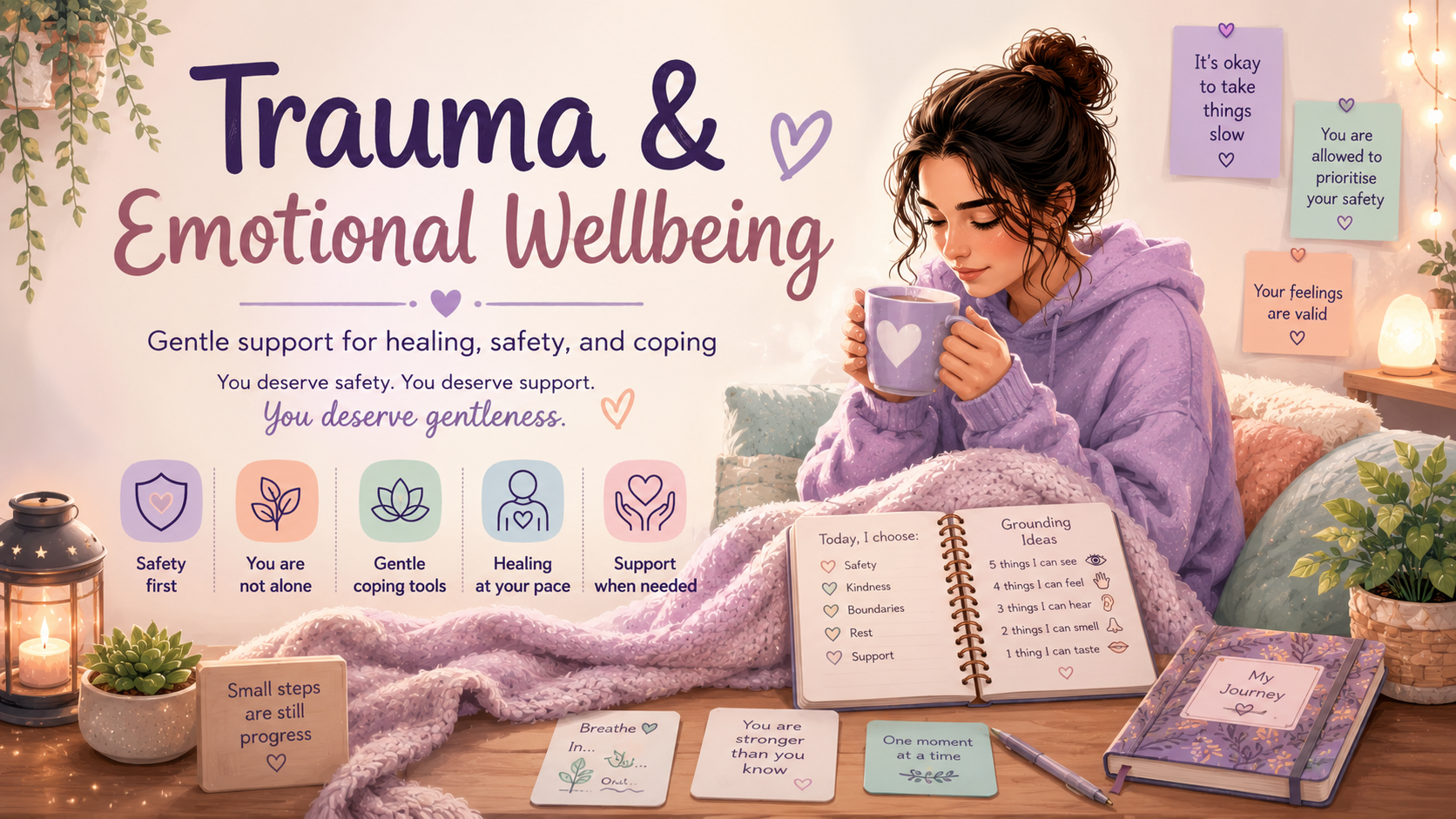
Trauma & Emotional Wellbeing Support
Gentle, practical support for safety, grounding, emotional recovery, and taking small steps when life feels heavy.
You do not have to process everything at once
Trauma and emotional overwhelm can affect the body, mind, emotions, relationships, routines, sleep, energy, and sense of safety. This page offers calm information, supportive language, and practical tools that can help someone take one small step at a time.
What trauma support can look like
Trauma support is not about forcing someone to talk before they are ready. It is about safety, choice, trust, gentle pacing, emotional regulation, and support that respects the person’s needs.
Safety first
Support begins with feeling physically, emotionally, and socially safe enough to breathe, pause, and choose the next step.
Choice matters
People should not be pressured to explain everything. Choice helps rebuild trust, control, and a sense of personal power.
Small steps count
Healing is not always a straight line. Rest, grounding, support, and tiny practical steps can all be meaningful progress.
Trauma can show up in different ways
Everyone responds differently. Some people feel anxious or alert, some feel numb or disconnected, and some move between both. These responses can be the nervous system trying to protect the person after stress, fear, loss, harm, or overwhelm.
- Feeling on edge, jumpy, tense, or easily startled.
- Feeling numb, disconnected, shut down, or far away from emotions.
- Sleep changes, nightmares, tiredness, or low energy.
- Avoiding reminders, places, people, sounds, or situations.
- Big feelings, sudden tears, anger, panic, shame, or overwhelm.
- Finding it harder to focus, trust, communicate, or feel safe.
Gentle tools for difficult moments
Grounding tools can help bring attention back to the present moment. They do not erase what happened, but they can support the body and mind when feelings become too much.
5–4–3–2–1 check-in
Name five things you can see, four you can feel, three you can hear, two you can smell, and one you can taste.
Warm drink pause
Hold a warm cup, notice the temperature, breathe slowly, and let your body know you are here in this moment.
Comfort object
Use a blanket, hoodie, soft toy, grounding stone, fidget, or familiar object to support sensory safety.
Write one sentence
Try: “Right now I need…” or “One small thing that may help is…” Keep it short and pressure-free.
Change the environment
If possible, lower noise, dim lights, move to a safer space, open a window, or step away from extra stimulation.
Reach out safely
Message a trusted person, use a crisis line if needed, or prepare a short script like: “I’m not okay. Can you stay with me?”
What to try next
When emotional wellbeing feels fragile, it can help to follow a simple pathway instead of trying to solve everything at once.
Check safety
Ask: “Am I safe right now?” If not, contact emergency services, a crisis line, or a trusted person immediately.
Lower pressure
Reduce noise, demands, conflict, bright lights, messages, or anything that is making the moment harder.
Use one tool
Choose one grounding, breathing, sensory, or comfort tool. One small support is enough to begin.
Connect with help
Reach out to a therapist, doctor, support worker, helpline, trusted friend, family member, or community support.
Related support pages
These pages help this trauma and emotional wellbeing page sit neatly inside your Mental Health Support branch.
Calm & Regulation Tools
Grounding, calming, sensory regulation, and overwhelm support tools.
Open Calm Tools →Emotional Regulation Support
Support for big feelings, emotional overwhelm, shutdowns, and coping strategies.
Open Emotional Support →Self-Care & Reset Support
Gentle reset tools for low-energy days, comfort care, and recovery.
Open Self-Care Support →Mood & Energy Support
Visual and practical support for noticing mood, energy, patterns, and needs.
Open Mood Support →Crisis & Immediate Support
For moments when someone feels unsafe, at risk, or needs urgent support.
Open Crisis Support →Mental Health Support Tools
Printable worksheets, check-ins, reflection pages, and practical support downloads.
Support Tools Coming Soon →You deserve support that feels safe
Healing does not need to be rushed. Start with safety, one grounding tool, one trusted person, or one small step. If you are in immediate danger or feel unable to stay safe, please reach out for urgent support now.