
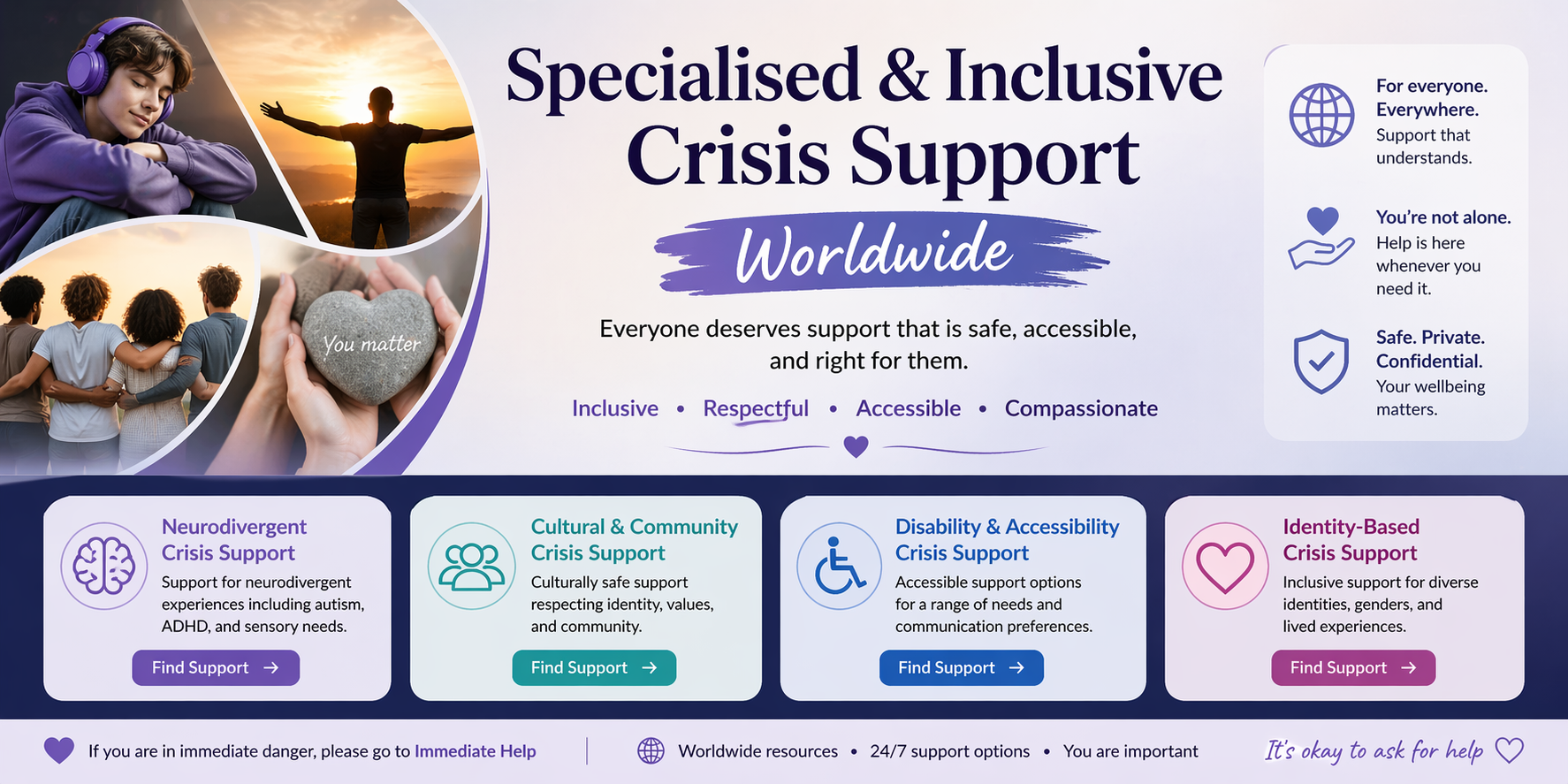
Explore crisis support pathways designed for people who may need more specific, safer, more informed, or more inclusive support. This hub helps connect people with support that better fits lived experience, identity, disability, community, health, access needs, and specialist circumstances.
Choose the pathway that feels closest to what is needed right now.
For support shaped by gender, sexuality, faith, culture, identity, or lived experience.
For crisis support that better understands disability, chronic illness, access, communication, or sensory needs.
For autism, ADHD, sensory needs, communication differences, masking, burnout, shutdown, or lower-demand support pathways.
For support shaped by culture, whānau, community, faith, language, belonging, or culturally grounded care.
Use this section to explore specialised support areas by need, identity, access, community, or lived experience.
Support pathways for autistic, ADHD, and neurodivergent people, including sensory-aware, communication-aware, and lower-demand support approaches.
Support for ADHD-related overwhelm, emotional dysregulation, impulsivity, rejection sensitivity, shutdown, burnout, or crisis moments.
Support adapted around communication, sensory needs, disability, mobility, language, chronic illness, and access barriers.
Support for invisible disabilities and access needs that may affect how someone communicates, copes, or receives crisis support.
Support for chronic illness, pain, fatigue, medical trauma, fluctuating health, invisible disability, or health-related crisis needs.
Identity-affirming support pathways for LGBTQIA+, rainbow, queer, questioning, and gender-diverse people and communities.
Culturally safer support pathways for Māori individuals, whānau, hapū, iwi, and communities navigating crisis or distress.
Culturally responsive support pathways for Pasifika individuals, Pacific peoples, families, communities, and whānau.
Culturally safer support pathways for Aboriginal communities and Australian crisis support branches.
Support based on culture, language, identity, belonging, community connection, faith, and lived experience.
Support pathways connected to faith, spirituality, chaplaincy, religious communities, and culturally respectful care.
Support that understands trauma responses, nervous system overwhelm, safety, trust, grounding, and trauma-aware crisis care.
General crisis support can be helpful, but sometimes it may miss the context that makes support feel safe, possible, or relevant. People may need support that better understands lived experience, identity, disability, trauma, health, community, culture, language, access needs, or structural barriers.
Support shaped by people who understand the reality of similar lived experiences.
Support that recognises identity, belonging, safety, and the impact of discrimination or stigma.
Support that understands access needs, communication differences, chronic health, disability barriers, and practical access.
Support that respects community, whakapapa, culture, language, values, and culturally grounded care.
Safer language, identity-aware support, lower assumptions, cultural respect, lived-experience insight, disability access, chronic illness awareness, trauma-informed care, and more relevant pathways.
Shame, stigma, retraumatisation, identity-based harm, communication barriers, cultural mismatch, dismissal, medical bias, and the pressure to explain everything from the beginning.
Start with the pathway that feels closest to your needs. You can always move sideways into audience, location, topic, accessibility, or cultural support if another page fits better.
Choose support by age, role, identity, disability, culture, or who needs help.
Open audience supportFind crisis support adapted around disability, communication, sensory needs, and access barriers.
Open accessibility supportFind support by situation, risk, topic, or type of crisis.
Open topic supportFind support based on your region, country, or local area.
Open location supportFor crisis support options that do not rely on phone calls.
Open text/chat supportBrowse broader worldwide support pathways, directories, and international support hubs.
Browse directoriesIf general support feels unsafe, inaccessible, dismissive, culturally disconnected, or too broad, it is okay to seek support that better understands your lived experience and what safety looks like for you.
Aspie Answers provides education, signposting, and supportive information. This page is not a replacement for emergency care, therapy, legal advice, safeguarding procedures, disability advocacy, medical advice, or professional crisis assessment. In an emergency, contact local emergency services immediately.