Everything feels heavy
Tasks that usually feel manageable may suddenly feel too big, too tiring, or emotionally hard to start.

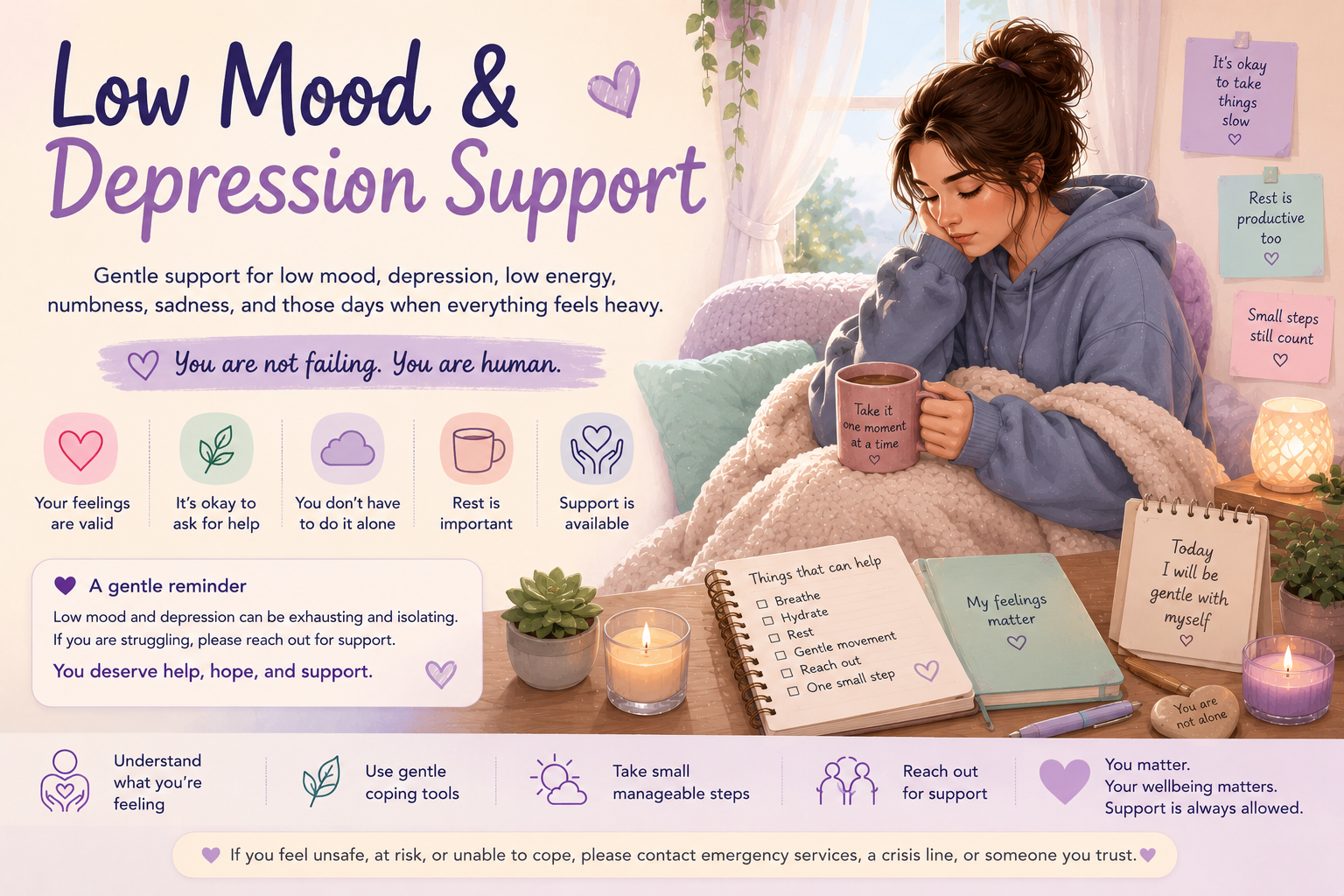
Gentle support for low mood, depression, low energy, numbness, sadness, motivation struggles, and those days when everything feels heavy.
Low mood and depression can feel heavy, isolating, flat, numb, exhausting, or difficult to explain. You are not failing. You are human, and support is allowed.
Tasks that usually feel manageable may suddenly feel too big, too tiring, or emotionally hard to start.
Some people feel sad, while others feel flat, disconnected, or unable to feel much at all.
Depression and low mood can affect sleep, appetite, focus, motivation, body energy, and daily routines.
Everyone experiences low mood differently. These signs can be clues that extra care, support, or professional help may be needed.
| Area | What it might look like | Helpful next step |
|---|---|---|
| Mood | Sadness, numbness, irritability, tearfulness, hopeless thoughts, or feeling emotionally flat. | Tell someone safe, write one sentence, or use a mood check-in. |
| Energy | Feeling exhausted, slowed down, restless, or unable to keep up with daily tasks. | Lower the demands and choose one essential task only. |
| Connection | Withdrawing, not replying, avoiding people, or feeling like a burden. | Send a short message: “I’m struggling and could use a check-in.” |
| Safety | Thoughts of not wanting to be here, self-harm, or feeling unable to stay safe. | Reach out for urgent support now: emergency services, crisis line, or a trusted person. |
On low-energy days, the goal is not to do everything. The goal is to reduce pressure and choose the smallest supportive step.
Try water, food, medication if needed, a warm drink, changing clothes, or resting in a safer space.
Clear one small surface, put rubbish in one bag, open curtains, or move dishes to one spot.
Move non-urgent tasks to another day. Today may need care, not catching up.
Low motivation is not laziness. It can be a sign that your brain and body are overloaded, drained, depressed, burnt out, or needing support.
Self-care during low mood needs to be realistic. Choose one thing that feels possible, not a full routine.
Warm drink, blanket, soft clothes, favourite safe show, low lighting, or a calming sound.
Try: “Today feels…” or “One thing I need is…” Keep it short and pressure-free.
Stretch, sit outside, walk to the mailbox, change position, or simply uncurl your body slowly.
Use headphones, quiet spaces, dim light, fewer messages, and less pressure where possible.
Text someone safe. You do not need to explain everything to deserve support.
Low mood can be exhausting. Rest is not wasted time; it can be part of recovery.
If low mood is lasting, getting heavier, affecting daily life, or making you feel unsafe, it is important to reach out. You do not need to wait until things are unbearable.
Try: “I’m having a low day and I don’t want to be alone with it. Can you check in with me?”
If you feel unsafe, at risk, or unable to cope, contact emergency services, a crisis line, a doctor, or a trusted person now.
This section can grow with low mood check-ins, self-care menus, mood scales, safety support sheets, and gentle reflection tools.
A gentle sheet for mood, energy, support needs, and one small next step.
Coming SoonA visual and numeric tool for noticing patterns and communicating support needs.
Coming SoonA choose-what-fits printable for low-energy days, comfort care, and reset support.
Coming SoonLow mood and depression can make everything feel harder, but you still deserve care, support, kindness, and help. Start with one small step and reach out if you need support.