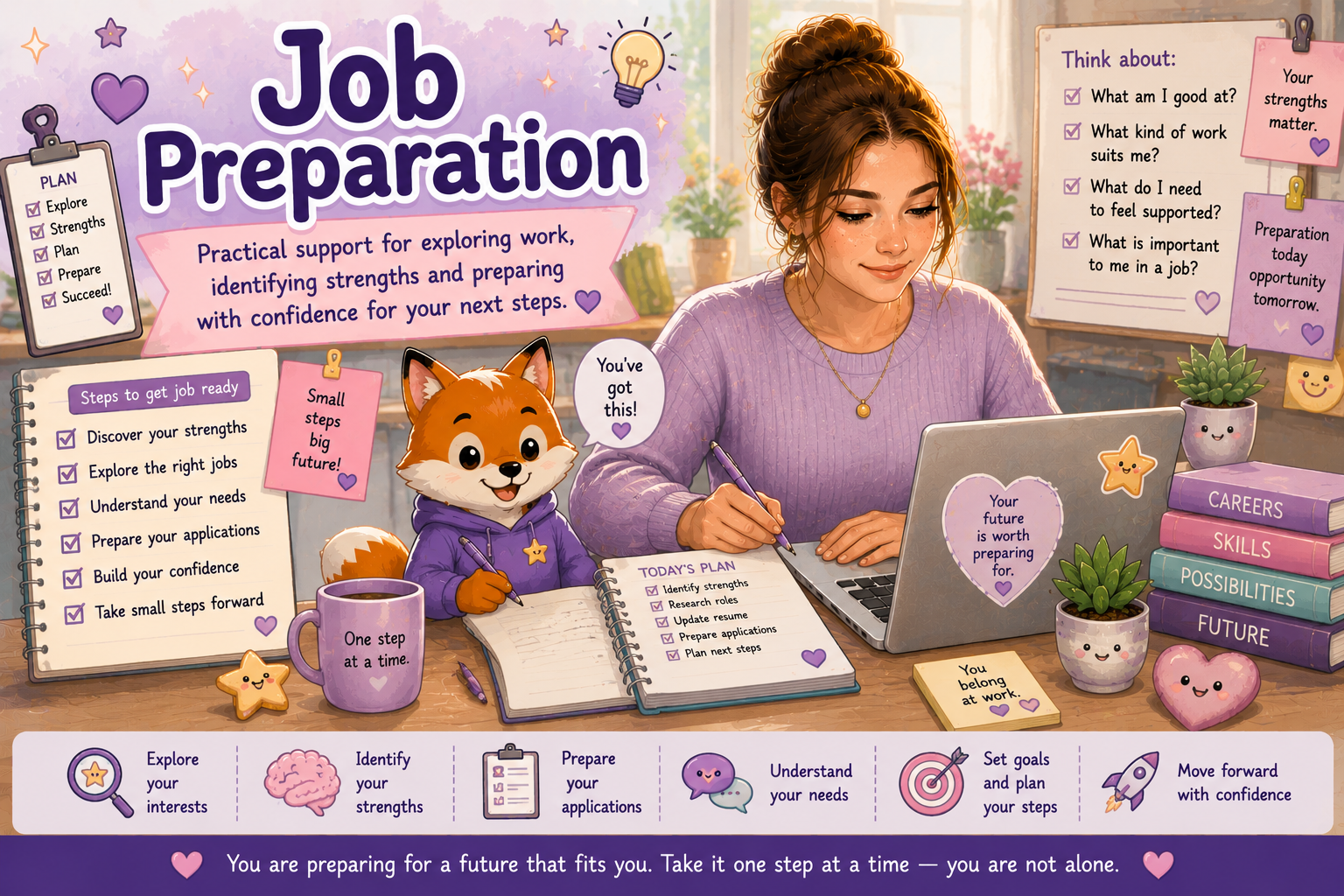
Job Preparation practical neurodivergent-friendly support for exploring work, identifying strengths and preparing for employment
💼 Work & Employment

Job Preparation

Preparing for work can involve much more than finding a vacancy and sending an application. It can also mean understanding your strengths, thinking about the environments that suit you, recognising the support you may need and taking manageable steps towards a job that fits.

🌟 Start With What You Bring

Job preparation does not have to begin with everything you find difficult. Your interests, knowledge, values, experiences and natural strengths can help you understand where you may work best.

💡

Interests

What subjects, activities or topics naturally hold your attention? Interests can sometimes point towards meaningful work pathways.

🧠

Strengths

Think about skills such as problem-solving, creativity, reliability, detailed thinking, communication, practical skills or specialist knowledge.

🌱

Experience

Paid work is not the only experience that counts. Volunteering, study, community involvement, hobbies and personal projects may all help demonstrate useful skills.

🏢 Think About the Kind of Work That Fits You

A job can look suitable on paper but still be difficult if the environment, pace or expectations do not work well for you. Thinking about work fit can be an important part of preparation.

🔇

Environment

Do you work better somewhere quiet, predictable and structured, or do you enjoy movement, variety and regular interaction?

🗓️

Structure

Consider whether clear routines, written instructions, flexible hours or advance notice of changes help you work effectively.

🤝

People & Communication

Think about how much teamwork, customer contact, meetings or independent work feels manageable and sustainable for you.

Energy

Different jobs place different demands on attention, social energy, sensory processing and physical stamina.

🎯

Meaning

Some people feel more motivated when their work connects with their values, interests or sense of purpose.

🔄

Flexibility

Flexible scheduling, remote work, part-time hours or a gradual transition may be worth considering where available.

🤝 Understanding Your Support Needs

Knowing what helps you work well can make it easier to explain your needs, consider workplace adjustments and identify practical strategies.

Questions to think about

You do not need to answer everything at once. These questions can simply help you notice what may matter.

💭 What helps me understand instructions?
🧠 What makes it easier for me to remember tasks?
🔇 Are there sensory environments I find difficult?
🗓️ How much structure or routine helps me?
💬 How do I prefer people to communicate with me?
🌱 What support helps me learn something new?

📋 Getting Ready Before You Apply

A little preparation can reduce the pressure of trying to organise everything when you suddenly find an interesting opportunity.

📄

Prepare Your CV

Keep a current record of your skills, experience, study, volunteering and achievements so it is easier to adapt your CV.

📝

Build an Experience List

Write down projects, responsibilities and examples of things you have done. These may help with applications and interviews later.

📧

Check Your Contact Details

Make sure your phone number and email address are current and that you have a manageable way to check messages.

🔍

Explore Job Types

Read different job descriptions without feeling that you must apply. This can help you learn what roles and workplaces are available.

🗂️

Create an Application System

Keep job advertisements, application dates, contact details and follow-up notes together in one place.

🤗

Identify Support

Consider whether a trusted person, employment service, mentor or support worker could help with particular stages of the process.

🦊 A Note From Finn Fox

“You do not have to know your whole career path before taking your next step.”

Finn Fox is our problem-solving and independence companion. For job preparation, Finn reminds us that exploring options, gathering information and learning more about ourselves are all useful forms of progress.

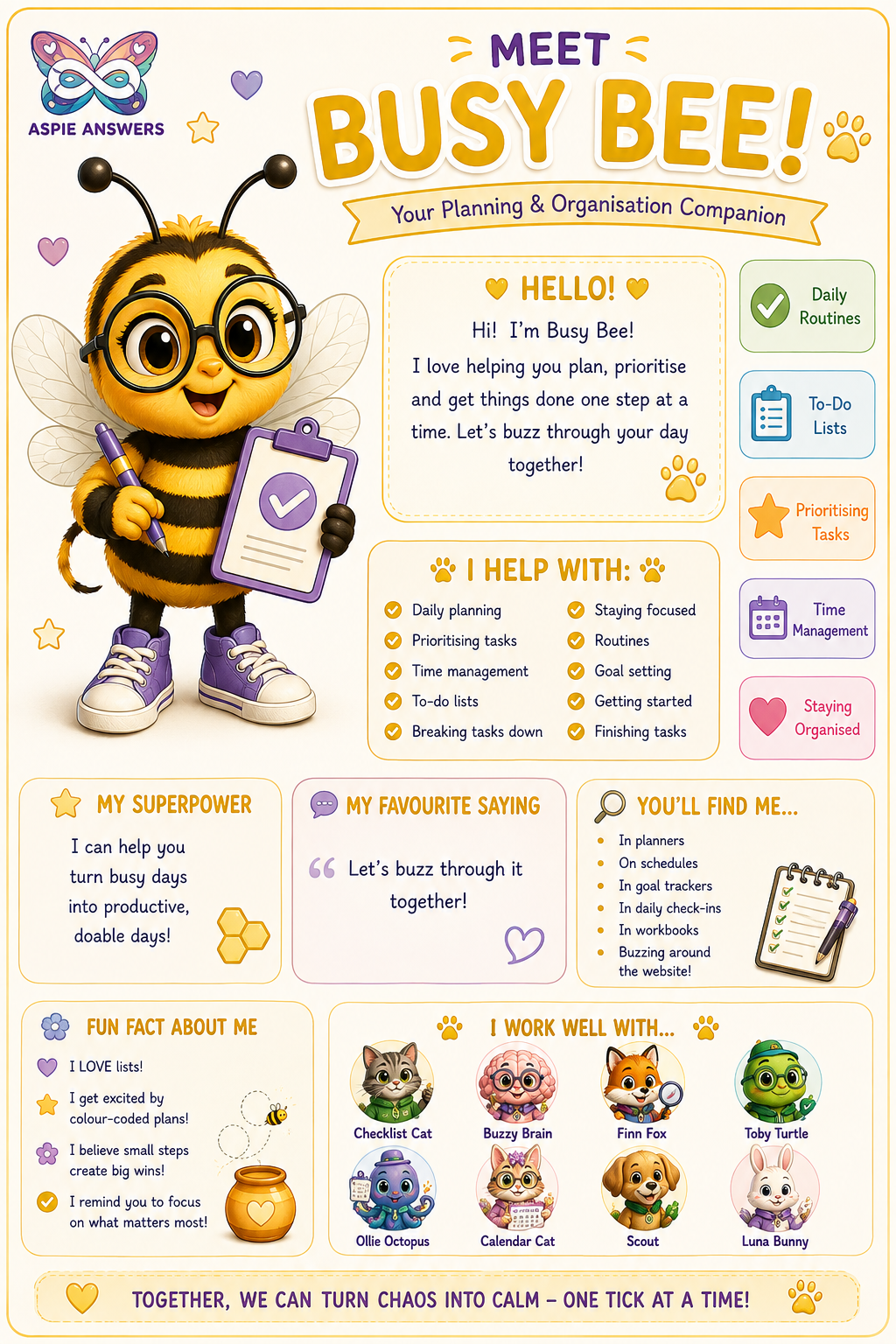
🧠 Buzzy Brain can also help with organising information and remembering steps, while 🐝 Busy Bee encourages manageable goals and small wins.

🚀 Take One Manageable Step at a Time

Job preparation can be broken into smaller stages. You do not need to complete every stage in one day.

1

Explore

Notice your interests, strengths and possible work pathways.

2

Understand

Think about your work preferences and support needs.

3

Prepare

Gather your CV, experience examples and useful information.

4

Organise

Create a simple way to track jobs, applications and next actions.

5

Move Forward

Choose one realistic next step and build from there.

🌸 A gentle reminder

Employment journeys are different for everyone. You may be preparing for your first job, returning to work, changing careers, exploring supported employment or simply learning what may suit you. This page offers general planning and self-reflection support and is not a replacement for individual employment, legal or professional advice.

🌱 Continue exploring Work & Employment

Job preparation is one part of the employment journey. Continue with interview support and workplace communication resources as this section grows.