
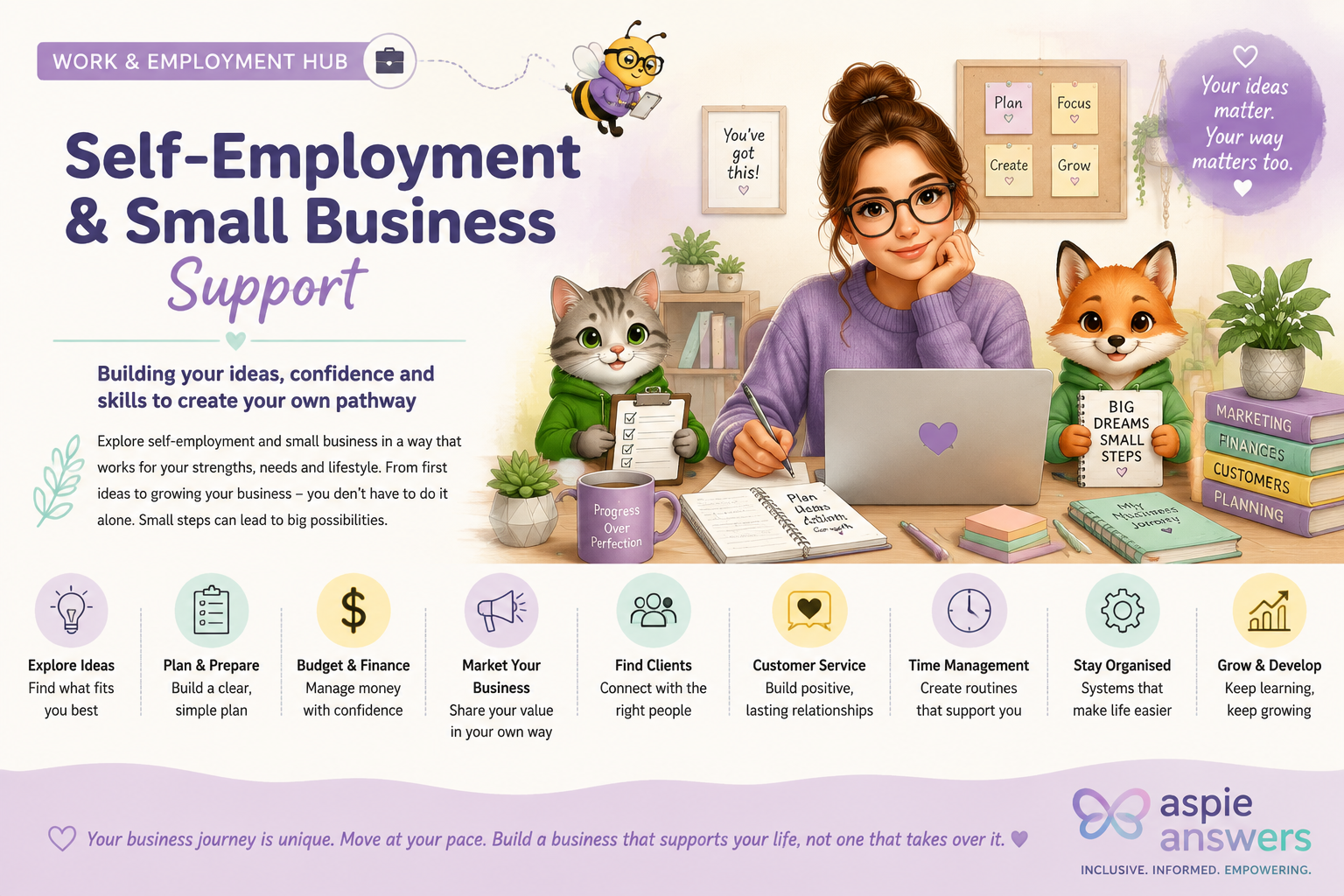
Self-Employment & Small Business Support
Starting your own business, freelancing or exploring self-employment can be an exciting journey — but it can also bring questions, uncertainty and new challenges. This space is designed to provide practical, neurodivergent-friendly support to help you explore ideas, understand what is involved and build skills at your own pace. Whether you are thinking about a small side project, creative business, freelance work or a larger business goal, you do not have to figure everything out alone.
Explore Your Ideas
Discover your strengths, interests and possibilities while thinking about what type of work or business pathway may suit you.
Build Skills Step by Step
Learn practical skills including planning, organisation, communication, finances and managing everyday business tasks.
Create a Business That Fits You
Your business should support your life, strengths and needs — not create pressure to work in a way that does not suit you.
A Different Way of Thinking About Business
Success does not look the same for everyone. For some people it may mean growing a company, while for others it may mean freelancing, creating something meaningful, earning extra income or building greater independence. The goal is finding a pathway that works for you.
Finding the right fit
Self-employment can provide flexibility, independence and the opportunity to build something around your strengths. It is not the right pathway for everyone, and that is okay. Exploring your goals, needs, working style and support needs can help you decide what fits.
You Enjoy Creating Ideas
You like developing ideas, solving problems, creating things or finding new ways to help people.
You Like Working Your Own Way
You may prefer more control over your environment, routines, workload or how you complete tasks.
You Want to Build Something
You are interested in creating a service, product, project or business that reflects your interests.
Questions to Ask Yourself
There Is More Than One Way to Work
Self-employment does not have to mean building a large company. It could mean freelancing, running a small creative business, offering a service, working part-time for yourself or exploring an idea slowly. Your pathway can be designed around your life, needs and goals.
💛 A Gentle Reminder
You do not need a perfect business idea or a complete plan before you begin exploring. One question, one small experiment or one conversation can be enough for the next step.
From Idea to Action
Turn possibilities into manageable next steps without needing to build everything at once.
From idea to action
Starting a business can feel exciting and overwhelming at the same time. Breaking the process into smaller steps can make it easier to understand what you need, what questions to ask and what support may help along the way.
Explore Your Idea
What do you want to create, offer or share? Think about your interests, strengths and the people you want to help.
Understand Your Purpose
Consider why you want to start a business and what you hope it will provide for your life.
Create a Simple Plan
A basic plan can help you understand your goals, customers, costs and next steps.
Take Small Steps
Progress does not need to happen all at once. Small actions can build confidence and momentum.
Things to Think About When Starting
Your Business Does Not Need to Look Like Everyone Else's
A successful business can be built in many different ways. Some people grow large businesses, while others create small flexible businesses that fit around their energy, interests and lifestyle. The best pathway is the one that works for you.
Flexible ways to work
Freelancing can provide more control over your projects, clients and working rhythm. It can also bring extra demands around finding work, communication, finances and creating structure. Understanding both sides can help you decide whether it suits your goals.
What Is Freelancing?
Freelancing means offering your skills or services independently rather than working as a traditional employee.
Possible Benefits
Freelancing may offer flexibility, independence, choice of projects and the ability to create your own working style.
Possible Challenges
Freelancers often need to manage planning, finances, communication, marketing and finding new opportunities.
Questions Before Starting Freelance Work
Freelancing Can Be Built Slowly
You do not have to immediately replace a full-time income or create a large business. Some people begin with one project, one client or a small amount of freelance work while learning what works best for them.
Building the Foundations
Money, marketing and client relationships become easier to manage when you build simple systems one piece at a time.
Understanding business money
Finances can feel overwhelming when there are many new terms, decisions and responsibilities to learn. You do not need to become a financial expert overnight. Building simple systems and understanding the basics can help you feel more confident and prepared.
Know Your Income
Understand where your money comes from, how much you earn and what goals you have for your business.
Track Your Expenses
Keeping records of costs such as supplies, software, equipment and services helps you understand your business needs.
Plan Ahead
Simple budgets and planning can help prepare for quieter periods, future expenses and business growth.
Business Finance Questions to Consider
Money Skills Can Be Learned Step by Step
Learning one skill at a time — such as tracking expenses, creating a simple budget or understanding pricing — can make the process feel much more manageable.
Sharing your ideas
Marketing is about helping people understand what you offer and why it may be useful to them. It does not have to mean being loud, constantly posting online or trying to become someone you are not.
Know Your Audience
Think about who your product or service helps and what problems you can support them with.
Explain What You Do
A simple message explaining your business can help people quickly understand your work.
Build Trust Slowly
Sharing your knowledge, experiences and values can help people connect with your business.
Marketing Ideas to Explore
Marketing Does Not Mean Changing Who You Are
Many neurodivergent people bring strengths to business including creativity, problem-solving, attention to detail and specialised knowledge. The goal of marketing is not to hide who you are — it is to help the right people discover what you offer.
Building business connections
Finding clients can involve communication, networking and sharing your work with others. The goal is not to convince everyone. It is to help the right people discover how your skills, products or services may support them.
Build Relationships
Connections often grow through trust, conversations and showing people how you can help.
Explore Different Places
Clients may come from online communities, referrals, local networks, platforms or professional connections.
Show Your Strengths
Your experience, knowledge and unique approach can become part of what makes your business valuable.
Ways to Find Potential Clients
Finding Clients Takes Time
Building a client base is a process of learning, connecting, improving your message and discovering where your ideal customers are. Small steps and consistent effort can create meaningful progress over time.
Creating supportive experiences
Customer service is about helping people feel informed, respected and supported. You do not need to be constantly available or highly social. Clear communication, reliable information, realistic expectations and respectful boundaries can create a positive experience for both you and your customers.
Communicate Clearly
Explain what you offer, how the process works and what customers can expect from you.
Build Trust
Reliable communication, honesty and following through on agreed commitments can help customers feel confident working with you.
Protect Your Boundaries
Good customer service does not mean being available all the time. Clear response times and working hours can support both sides.
Helpful Customer Service Habits
Customer Service Can Be Structured
Email templates, FAQs, clear policies, booking systems and written processes can reduce communication pressure while still providing a helpful and professional experience. Good systems can support your customers and protect your own energy at the same time.
Working Sustainably
Good systems should support your time, attention and energy — not demand more than you can realistically give.
Working with your capacity
Running your own business often means managing many different tasks without someone else creating the schedule for you. The goal is not to fill every minute — it is to build a working rhythm that is realistic and sustainable.
Create Helpful Structure
Use calendars, routines or time blocks to make the day more predictable without making it overly rigid.
Choose Priorities
Identify the most important tasks so your time is not spread across too many competing demands.
Plan Around Energy
Where possible, match more demanding tasks to times when your focus and energy are stronger.
Helpful Time Management Habits
Productivity Does Not Mean Doing Everything
A sustainable business needs time for planning, admin, customer work, creativity, rest and unexpected tasks. Good time management is about using your available time and energy in ways that support both your business and your wellbeing.
Creating systems that reduce stress
Business organisation is not about making everything look perfect. It is about creating simple systems that help you find information, remember tasks, manage responsibilities and reduce the amount of mental effort required to keep your business running.
Give Things a Home
Create clear places for files, invoices, client information, notes and important documents so you spend less time searching.
Use Checklists & Templates
Repeatable checklists and templates can reduce decision fatigue and make routine tasks easier to complete.
Externalise Information
Calendars, task lists, reminders and visual systems can help reduce the pressure on memory and executive functioning.
Simple Business Systems You Might Create
Your System Should Reduce Work — Not Create More of It
If an organisation system is too complicated to maintain, simplify it. A basic folder structure, one task list or a small set of repeatable templates can often be more useful than a highly detailed system that becomes another job to manage.
Your business support team
These Companions each support a part of the self-employment journey without adding pressure to do everything at once.
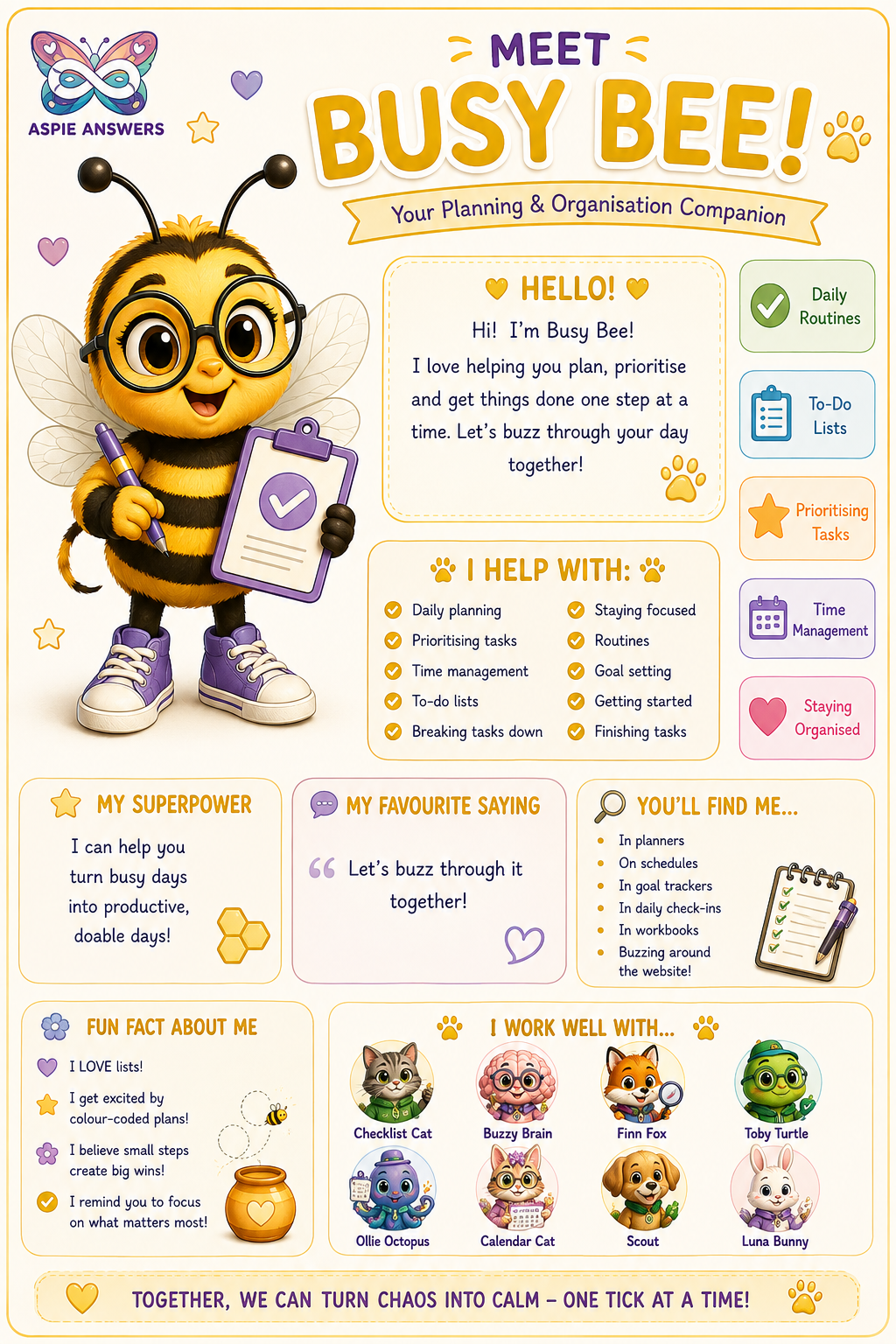
Busy Bee
Planning • Productivity • OrganisationHelps turn business ideas into priorities and manageable action.
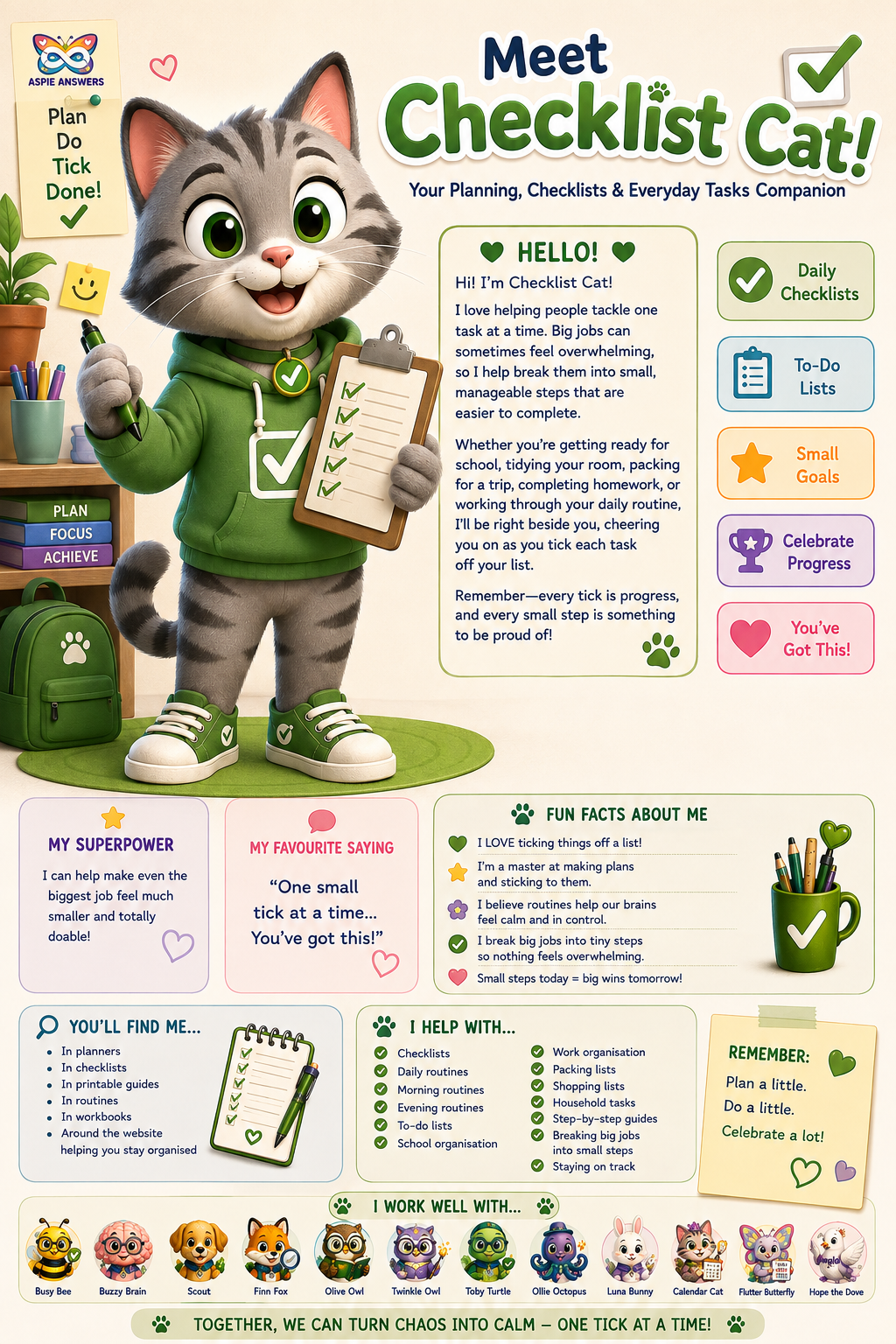
Checklist Cat
Steps • Routines • PreparationHelps break repeatable business tasks into clearer steps.

Calendar Cat
Schedules • Deadlines • Time PlanningHelps keep appointments, launches, deadlines and work periods visible.
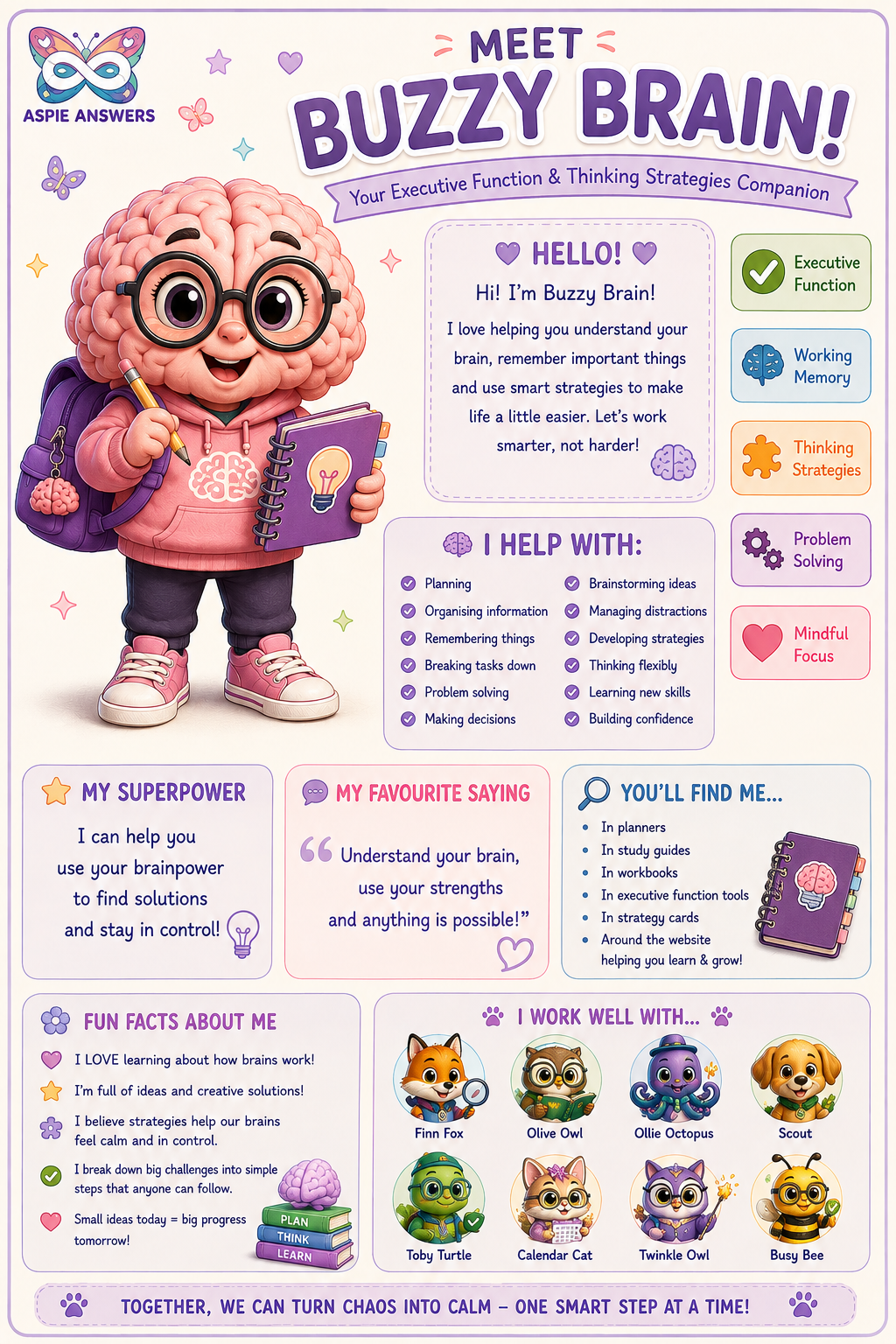
Buzzy Brain
Executive Function • Focus • Working MemoryHelps externalise information and reduce the load of holding everything in mind.

Toby Turtle
Pacing • Energy • Burnout PreventionHelps keep growth and productivity within a sustainable pace.
Growing without losing yourself
Business growth can mean earning more, finding more clients, creating new products, improving systems or simply making your business easier to manage. Growth does not have to mean becoming bigger as quickly as possible.
Grow From What Is Working
Notice which products, services or routines are working well before adding more complexity.
Review Your Progress
Look at what has changed, what has helped and where your time, money or energy may need adjusting.
Improve Your Systems
Templates, automation, better organisation and clearer processes can help a business grow without every new task relying on memory.
Ask for Help Where Useful
Growth may involve getting advice, outsourcing a task or working with people whose skills complement your own.
Protect Your Capacity
More customers or opportunities are not always helpful if the workload becomes unsustainable. Include your energy in growth decisions.
Define Success for Yourself
Your goal may be stability, flexibility, income, independence, creativity or a mixture of several things.
Questions Before You Grow Further
Growth Can Also Mean Making Things Easier
A business does not have to keep expanding to be successful. Improving a routine, reducing stress, creating steadier income or making the workload more manageable are all meaningful forms of progress.
You Are Allowed to Grow Slowly
You do not need to follow hustle culture or constantly chase the next level. A smaller business that supports your wellbeing and goals can be far more successful for you than a larger business that leaves you exhausted.
Turning ideas into next steps
You do not need to complete every part of self-employment at once. A simple action plan can turn a large idea into smaller, clearer next steps and show where more information, tools or support may help.
Clarify Your Idea
Write down what you want to offer, who it may help and why the idea matters to you.
Choose One Priority
Decide what needs attention first rather than trying to build every part of the business at once.
Break It Into Steps
Turn the priority into smaller actions that are easier to understand, start and complete.
Identify Support
Notice where advice, templates, tools, mentoring or practical help could make the process easier.
Set a Realistic Pace
Plan around your available time, energy, finances and responsibilities rather than an idealised schedule.
Review & Adjust
Check what is working, what has changed and whether your next step still makes sense.
Build Your Simple Business Action Plan
You can use these prompts as a quick planning exercise or return to them whenever your business direction changes.
A Plan Is a Guide, Not a Contract
Your priorities may change as you learn more about your business, customers, capacity and goals. Updating the plan does not mean the original plan failed. It means you are using new information to make a better decision.
One Clear Next Step Is Enough
You do not need to see the whole journey before you begin. If you know the next helpful action, you already have somewhere to start.
Tools, Support & Next Steps
Use resources that reduce mental load, make tasks clearer and help you move forward at a pace that works for you.
Helpful tools & next steps
Practical planners, checklists, templates and guided worksheets can reduce decision-making and turn bigger business goals into clearer next steps.
Business Planning Tools
Simple business planners, idea worksheets and action plans can help turn ideas into manageable steps.
Budgeting & Finance Tools
Track expenses, plan costs, explore pricing and organise the money side of self-employment.
Marketing & Client Tools
Use planning supports for marketing, customer communication, client tracking and outreach.
Time & Productivity Tools
Create realistic routines, prioritise tasks and manage business work around your available time and energy.
Business Organisation Tools
Checklists, trackers and templates can help organise projects, customers, ideas, documents and recurring tasks.
Business Resource Collections
Explore resources in different Aspie Answers formats and editions as the business library grows.
Useful Business Tools to Explore
Choose the tools that solve a real problem for you rather than trying to use everything at once.
Use Tools to Reduce Mental Load
A resource is useful when it makes a task easier to understand or remember. You do not need to use every planner, tracker or worksheet. Choose the tools that solve a real problem for you and leave the rest.
Frequently asked questions
These questions can help you think through some of the common choices and challenges involved in creating your own work pathway.
Do I need a big business idea to become self-employed?
No. Self-employment can begin with one service, one product, freelance work or a small side project. Many businesses develop gradually as the owner learns what works.
Is self-employment suitable for neurodivergent people?
It can be a good fit for some people because it may offer more control over working hours, environment, communication and routines. It can also bring executive-function, financial and organisational demands, so the right supports and systems matter.
Do I need to be confident before I start?
No. Confidence often grows through experience. Starting with smaller steps can help you learn what works before taking on larger commitments.
Do I need to work full-time in my own business?
No. Self-employment can be full-time, part-time, occasional or combined with other employment, depending on your circumstances and goals.
What if I struggle with business administration?
Templates, checklists, reminders, bookkeeping systems and professional support can reduce the load. You do not need to hold every business task in your head.
Do I have to enjoy networking or sales?
No. Written marketing, referrals, websites, portfolios and online platforms may feel more comfortable than traditional networking for some people.
How quickly should my business grow?
There is no required pace. Sustainable growth depends on your goals, capacity, finances and circumstances. Growing slowly can be a sensible business strategy.
What if my original business idea changes?
That is normal. Feedback, experience and changing circumstances may lead you to adjust what you offer. Changing direction can be part of building a stronger business.
Remember
💜 Build a Business That Supports Your Life
Self-employment is not about doing everything alone or working constantly. It is about creating a pathway that uses your strengths, supports your needs and gives you opportunities to build something meaningful in a sustainable way.
Choose Your Next Step
You do not need to build the whole business today. Explore one idea, learn one skill or choose one practical next action. Small steps can become a strong foundation over time.
Continue exploring
Build Your Pathway in a Way That Works for You
Return to the Work & Employment Hub whenever you want to explore another pathway, support area or practical resource.