
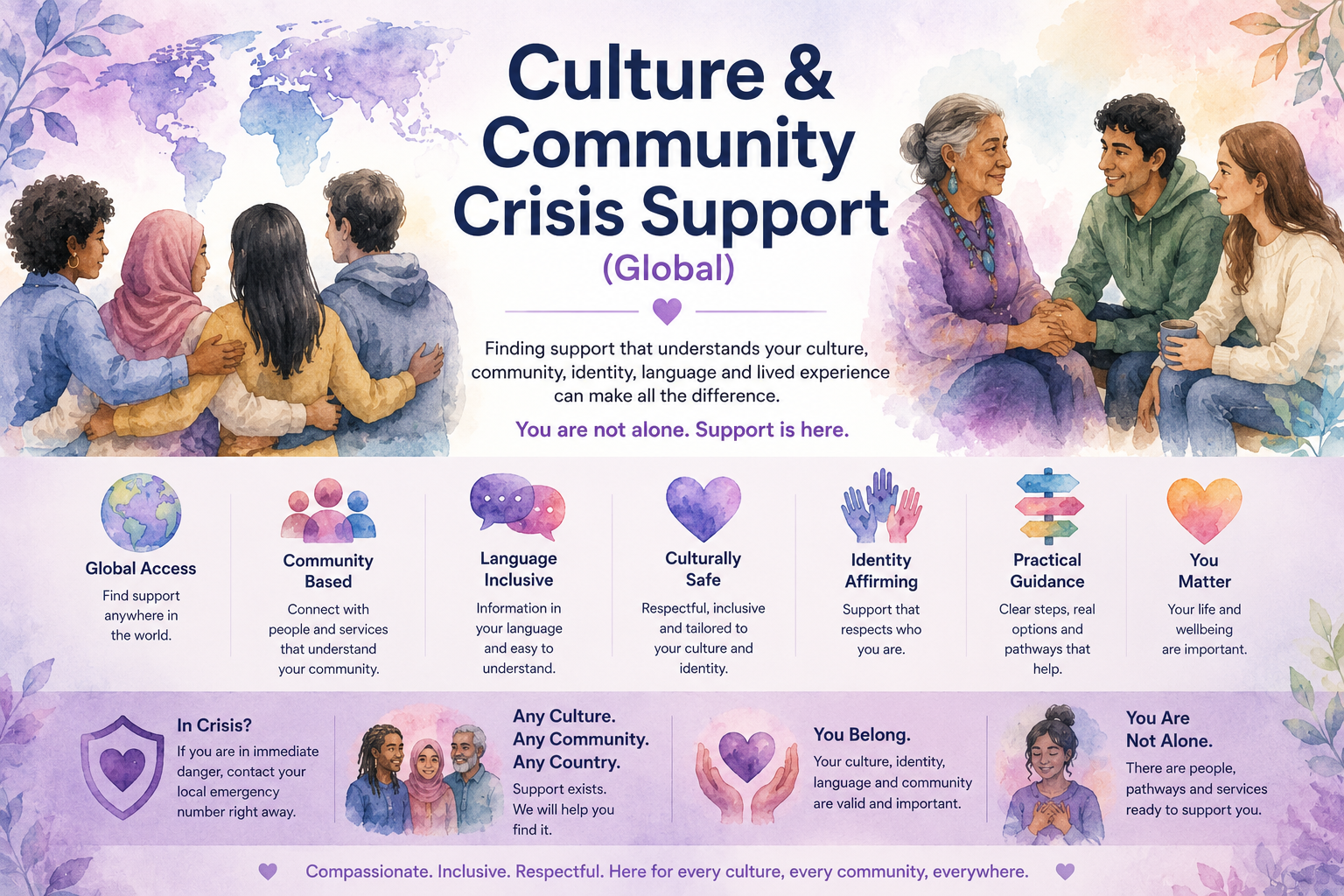
Culture & Community Crisis Support (Global)
Crisis support can feel safer, clearer, and more respectful when it understands a person’s culture, community, identity, language, family context, faith background, migration story, disability needs, and lived experience. This page helps people think through culture-aware support options and where to look when mainstream crisis pathways do not feel safe, accessible, or understood.
What Culture & Community Crisis Support Means
Culture and community crisis support means finding help that considers more than the crisis itself. It looks at the person’s background, values, communication needs, family or community situation, safety concerns, and the kind of support that feels respectful.
Respecting background
Support should recognise that culture, traditions, family roles, faith, language, and community expectations can affect how someone asks for help.
Finding trusted pathways
Some people feel safer starting with community groups, cultural services, peer networks, local leaders, or advocacy organisations.
Feeling seen
Support should not dismiss someone’s identity, disability, sexuality, gender, ethnicity, migration story, or lived experience.
Reducing barriers
Language, cost, location, transport, digital access, fear, stigma, or previous negative experiences can all make support harder to reach.
Common Barriers People May Face
People from different cultures, communities, identities, and backgrounds may face extra barriers when trying to access crisis support. These barriers are real and can affect whether someone feels safe enough to ask for help.
Language or translation barriers
It may be hard to explain distress, danger, trauma, or mental health needs in a second language or without an interpreter.
Fear of being judged or misunderstood
Some people worry that services will not understand their culture, family context, identity, disability, faith, or community pressures.
Privacy and community safety
In smaller communities, people may worry about confidentiality, gossip, family reactions, discrimination, or being recognised.
Practical access barriers
Cost, transport, rural location, no phone credit, no safe internet access, disability barriers, or lack of local services can make help harder to reach.
Previous negative experiences
People may avoid support if they have previously been dismissed, stereotyped, misgendered, culturally misunderstood, or treated unfairly.
Family or community expectations
Some people may feel pressure to stay silent, handle things privately, protect family reputation, or avoid outside services.
What To Look For In Support
A helpful service does not need to be perfect, but it should try to be respectful, safe, clear, and willing to adapt to the person’s needs.
Helpful signs
- They explain confidentiality clearly.
- They offer interpreters or language options where possible.
- They respect identity, culture, disability, faith, and lived experience.
- They do not pressure someone to share more than they are ready to share.
- They can help with practical next steps, not just emotional support.
- They understand safety planning and crisis pathways.
Warning signs
- They dismiss cultural, identity, language, disability, or community concerns.
- They shame the person for needing help.
- They pressure someone to involve family or community members when it may not be safe.
- They refuse reasonable communication support.
- They make assumptions instead of listening.
- They ignore immediate safety concerns.
Gentle Steps To Take
If everything feels too much, start with the smallest safe step. You do not need to explain your whole story at once.
Check immediate safety
If there is danger, violence, medical risk, self-harm risk, or urgent threat, contact emergency services or a crisis line first.
Choose the safest contact method
Use phone, text, web chat, email, relay, interpreter support, a trusted person, or a local service depending on what feels safest.
Use simple words if needed
You can say: “I need crisis support. I need someone who understands culture/community barriers. I need help staying safe.”
Ask for the support you need
You can ask for an interpreter, advocate, support person, identity-safe service, culturally safe service, or privacy-aware option.
Write down the next step
After contacting support, write one next step: where to go, who to contact, what to pack, what number to save, or what to do next.
Use more than one pathway
It is okay to use crisis support, cultural support, legal support, housing help, health care, and community advocacy together.
Support Options That May Help
Different people may need different types of support. These options can be used alongside local emergency services and crisis lines.
Cultural or community organisations
Community-based organisations may understand cultural context, family systems, language needs, migration stress, or identity-related safety.
Advocates or support people
An advocate, trusted person, case worker, peer supporter, social worker, or community navigator may help explain needs and ask for support.
Interpreter or translation support
If language is a barrier, ask whether the service can provide an interpreter, translated information, or another communication option.
Specialist identity-safe services
LGBTQIA+, disability, migrant, refugee, Indigenous, faith-aware, or culturally specific services may feel safer for some people.
Practical crisis support
Some crises need food, transport, shelter, money support, legal advice, medical care, immigration support, or family safety planning.
Privacy-aware options
If privacy is a concern, consider text/web chat, safe devices, trusted locations, incognito browsing, or asking services about confidentiality first.
Helpful Phrases To Use
These phrases can be copied, adapted, or shown to someone if talking feels difficult.
“I need crisis support, but I am worried about cultural or community barriers.”
“I need someone who can explain things clearly and respect my background, identity, language, and safety needs.”
“I need an interpreter, advocate, support person, or another communication option.”
“I do not feel safe involving my family/community right now. Please help me look at safe options.”
Where To Go Next
Culture and community support often connects with language access, culturally safe care, migration/refugee support, identity-safe support, rural access, privacy, and financial barriers.
Language & Translation Crisis Support
For people who need interpreter support, translated information, or language-accessible crisis pathways.
Open language supportCulturally Safe Crisis Support
For support that respects culture, identity, lived experience, family context, and safety needs.
Open culturally safe supportMāori, Pasifika & Indigenous Crisis Support
For culturally grounded, community-aware, Indigenous, Māori, Pasifika, and First Nations support pathways.
Open Indigenous supportMigrant, Refugee & Newcomer Crisis Support
For migration stress, refugee experiences, settlement pressure, language barriers, and safety concerns.
Open migrant/refugee supportLGBTQIA+ / Identity-Safe Crisis Support
For people needing crisis support that respects gender, sexuality, identity, safety, and belonging.
Open identity-safe supportDigital Access & Privacy Crisis Support
For people worried about online safety, privacy, device access, surveillance, or unsafe browsing situations.
Open digital/privacy supportYou Deserve Respectful Support
If one service does not understand your culture, community, identity, language, disability, or situation, that does not mean you are asking for too much. It may mean another pathway, advocate, interpreter, or specialist service is needed.
Important Disclaimer
Aspie Answers provides education, signposting, and supportive information. This page is not a replacement for emergency care, medical advice, therapy, legal advice, safeguarding procedures, domestic violence support, immigration advice, cultural support, or professional crisis assessment. In an emergency, contact local emergency services immediately.