
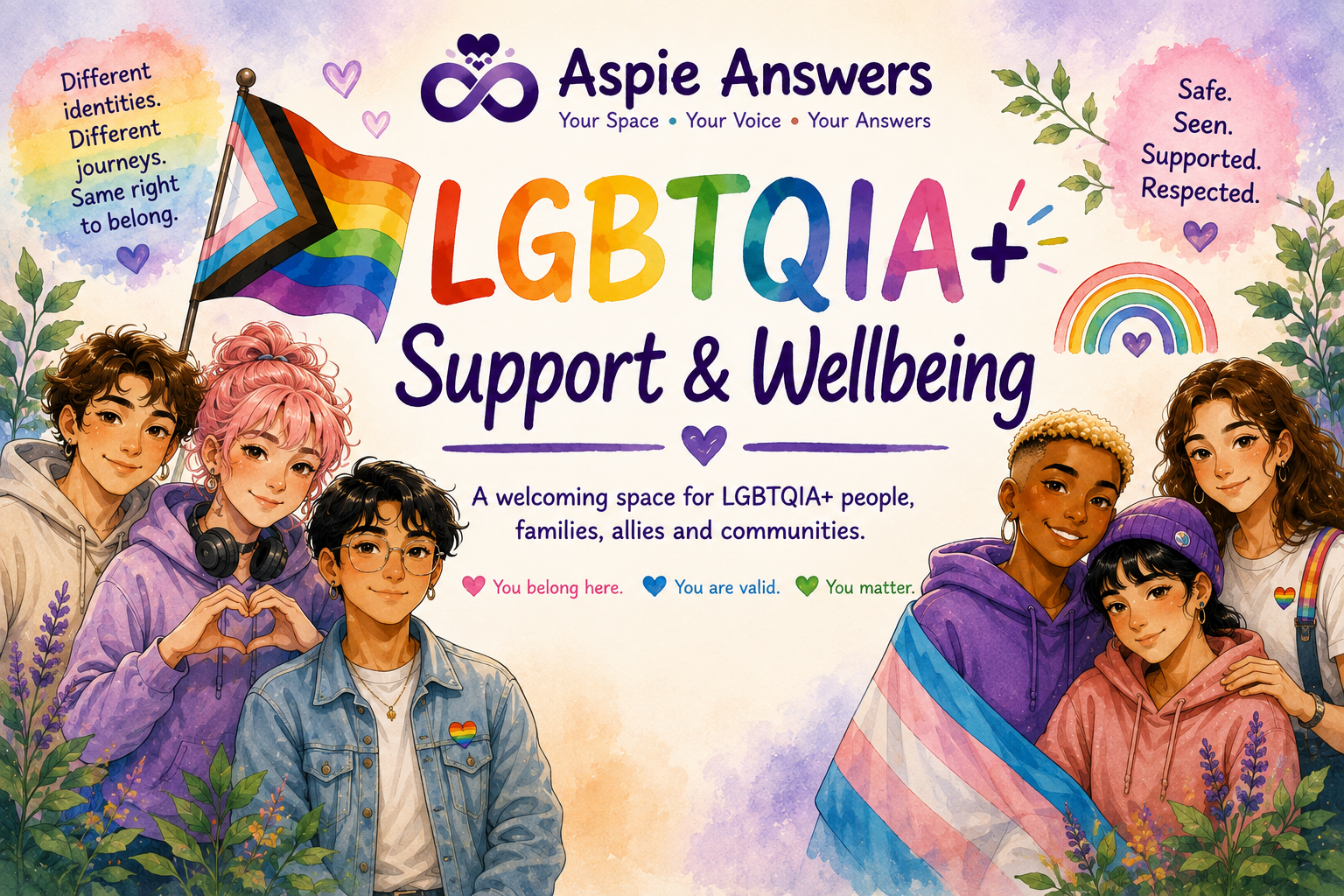
LGBTQIA+ Support & Wellbeing
A welcoming doorway to LGBTQIA+ information, support, wellbeing, relationships, community and practical resources.
Whether you are exploring for yourself, supporting someone you care about, or looking for clearer pathways to help, you can start wherever feels most useful to you.
Search this page for identity, mental health, relationships, family, neurodiversity, community, safety, support or resources.
Showing all pathways.
Try another word or browse all of the areas below.
🌈 LGBTQIA+ Support Hub
If you are not sure where to begin, the LGBTQIA+ Support Hub is the main practical support pathway within this wider Support & Wellbeing area.
From there you can explore identity, mental health, relationships, families and allies, support services, community, safety and practical resources.
Visit the LGBTQIA+ Support Hub →That's okay. Choose one area that feels relevant today. You can always come back and explore another pathway later.
🧭 Explore Support & Wellbeing Pathways
These are the areas that were intentionally moved out of the banner so the banner can stay clean while the page itself does the navigation work.
🏳️🌈 Identity & Self-Understanding
Explore identity, language, self-understanding, confidence, belonging and different LGBTQIA+ experiences.
Explore identity💜 Mental Health & Wellbeing
Find supportive information around emotional wellbeing, anxiety, low mood, stress, overwhelm, burnout and self-care.
Wellbeing pathway❤️ Relationships & Social Support
Explore relationships, friendships, communication, consent, boundaries and supportive connection.
Relationships pathway👨👩👧 Families, Friends & Allies
Guidance for parents, whānau, family members, friends and allies who want to provide respectful support.
Family & ally pathway🤝 Support, Services & Community
Find pathways toward organisations, community groups, peer support, advocacy and inclusive professional support.
Support pathway🛡️ Safety & Crisis Support
Explore safety information and pathways toward appropriate crisis or urgent support when someone needs additional help.
Safety pathway📥 Resources & Downloads
Discover practical guides, worksheets and other LGBTQIA+-inclusive resources as the Aspie Answers collection grows.
Resource pathway🧠 Neurodiversity & LGBTQIA+
Identity does not exist in isolation. This area can connect visitors with information that recognises neurodivergence alongside LGBTQIA+ experiences.
Autism & LGBTQIA+
Explore experiences where autism, identity, communication, relationships and belonging may intersect.
Growing pathwayADHD & LGBTQIA+
Explore ADHD alongside identity, wellbeing, relationships, emotional experiences and community.
Growing pathwayDifferent Communication & Support Needs
Recognise sensory needs, communication differences, accessibility and individual preferences when seeking support.
Inclusive support💞 Families, Whānau, Friends & Allies
Supportive information can help people respond with respect, understanding and care when somebody shares their identity or asks for support.
Supporting Someone You Care About
Start with listening, respecting the person's language and asking what kind of support would actually help.
Support pathwayParents & Whānau
Explore supportive information for families of LGBTQIA+ children, teenagers and adults.
Family pathwayLearning to Be an Ally
Explore inclusive language, listening, respect, advocacy and practical allyship.
Ally pathway🌍 Support, Services & Community
Different people may want professional help, community connection, peer support, advocacy, information — or a combination of these.
Finding Support Services
Explore pathways toward LGBTQIA+-inclusive support, organisations and professional services.
Directory pathwayCommunity & Belonging
Explore community groups, peer connection and spaces where people can find understanding and belonging.
Community pathwayWorldwide Pathways
As this area develops, international pathways can help visitors find relevant support based on where they live.
Growing internationally♿ Inclusion Means Recognising the Whole Person
LGBTQIA+ people may also be neurodivergent, disabled, from different cultures and faith backgrounds, living in rural communities, or experiencing different communication and accessibility needs.
People may use different words — or no label at all.
What feels supportive for one person may not suit another.
Clear, accessible and respectful communication matters.
There is no timetable someone has to follow to understand themselves.
🛡️ Safety & Crisis Support
Some topics in this area can be personal or difficult. Visitors should be able to choose what they read and when.
If someone is in immediate danger or needs urgent support, this website should not replace emergency, crisis or qualified professional assistance. Use the appropriate crisis or emergency services available in your location.
As the Aspie Answers Crisis Support area develops, relevant LGBTQIA+ crisis pathways can be connected here without duplicating the information across multiple hubs.
📚 Resources, Learning & Downloads
This area can grow alongside the wider Aspie Answers learning and resource collections.
Guides & Information
Accessible information around identity, wellbeing, relationships, inclusion and support.
Collection growingPractical Tools & Worksheets
Reflection tools, wellbeing resources, communication supports and practical printable resources.
Collection growingGlossaries & Definitions
Connect with the wider Aspie Answers glossary system for clear explanations of language and terminology.
Learning pathway🌈 Safe. Seen. Supported. Respected.
Aspie Answers aims to provide welcoming pathways where people can learn, find support and explore resources without being pressured to fit somebody else's idea of who they should be.
You belong here.