🧑 Adults
Daily life, wellbeing, relationships, work, organisation, self-advocacy and independence.

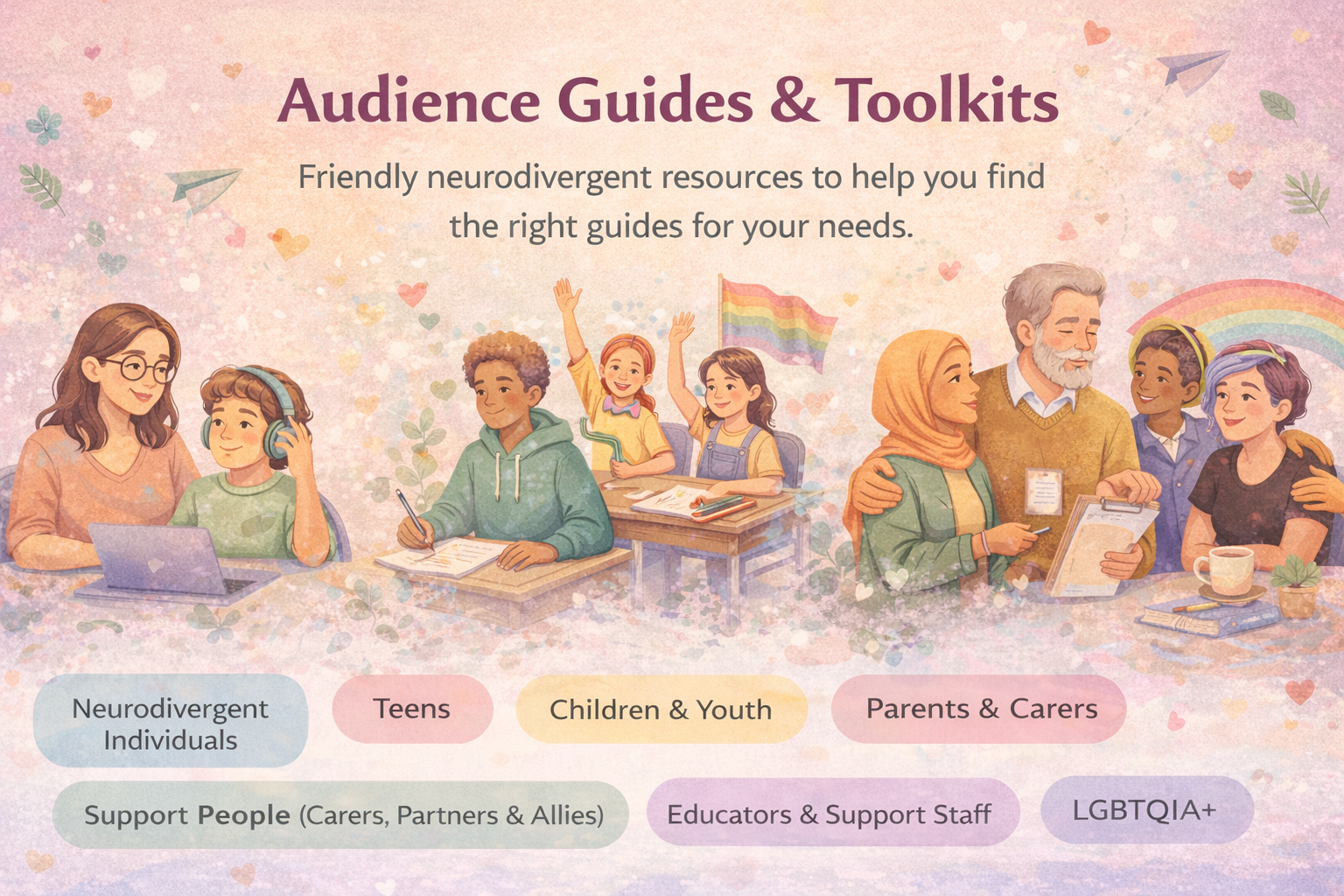
Find practical guides and toolkits organised by who they are for — so you can begin with the person, role or life stage and then choose the topic, goal or format that fits best.
Gentle note: audience labels are starting points, not boxes. You can use more than one route and choose the wording, examples and level of support that feel most useful.
Choose the audience that best matches the person using the resource or the role supporting them. The same guide can still be discovered through topics, goals, specialist hubs, collections and editions.
Daily life, wellbeing, relationships, work, organisation, self-advocacy and independence.
School, emotions, routines, identity, friendships, confidence, transitions and growing independence.
Clear, visual and age-appropriate guides for emotions, routines, learning, communication, confidence and everyday skills.
Practical guidance for understanding needs, communication, education, routines, advocacy and everyday support.
Shared guides for routines, household planning, communication, check-ins and practical life together.
Study, assignment, organisation, executive-function, transition and self-advocacy guidance.
Inclusive teaching guides, classroom supports, visual tools, planning resources and neurodivergent-friendly learning strategies.
Guides for communication, routines, goals, boundaries, independence, collaboration and person-centred support.
Accessible guides that can support appointments, communication, planning and person-centred care.
Guidance for inclusive workplaces, communication, adjustments, wellbeing and neurodivergent-friendly employment.
Guides for inclusive services, community participation, accessibility, communication and awareness.
Use formats such as Easy Read, Large Print, Low Ink, Black & White or simplified layouts when available.
Identity- and life-stage-aware guidance that may include neurodivergence, hormones, pregnancy/postpartum, late diagnosis and wellbeing.
Practical guidance around stress, wellbeing, identity, support-seeking and everyday mental-health conversations.
Identity-aware guidance around belonging, wellbeing, relationships, safety, minority stress and respectful support.
A student may also be an adult; a parent may also need an accessible format; a support worker may also be neurodivergent. Audience browsing is designed to overlap rather than force people into one category.
Start with the audience route that feels closest, then narrow by topic, goal, resource type or edition. A single guide or toolkit can appear through more than one discovery route without creating duplicate files.
Three practical ways audience guides and toolkits can be grouped across the wider Resources & Downloads system.
Clear introductions, first-step guides and plain-language explainers for people who are new to a topic.
Grounding, emotional regulation, sensory support, pacing, recovery and everyday coping guidance.
Study, employment, routines, communication, planning, independence and skill-building guides.