
Anxiety & Overwhelm
Explore anxious thoughts, worry, panic, overload and practical ways to reduce overwhelm.
Explore Anxiety & Overwhelm
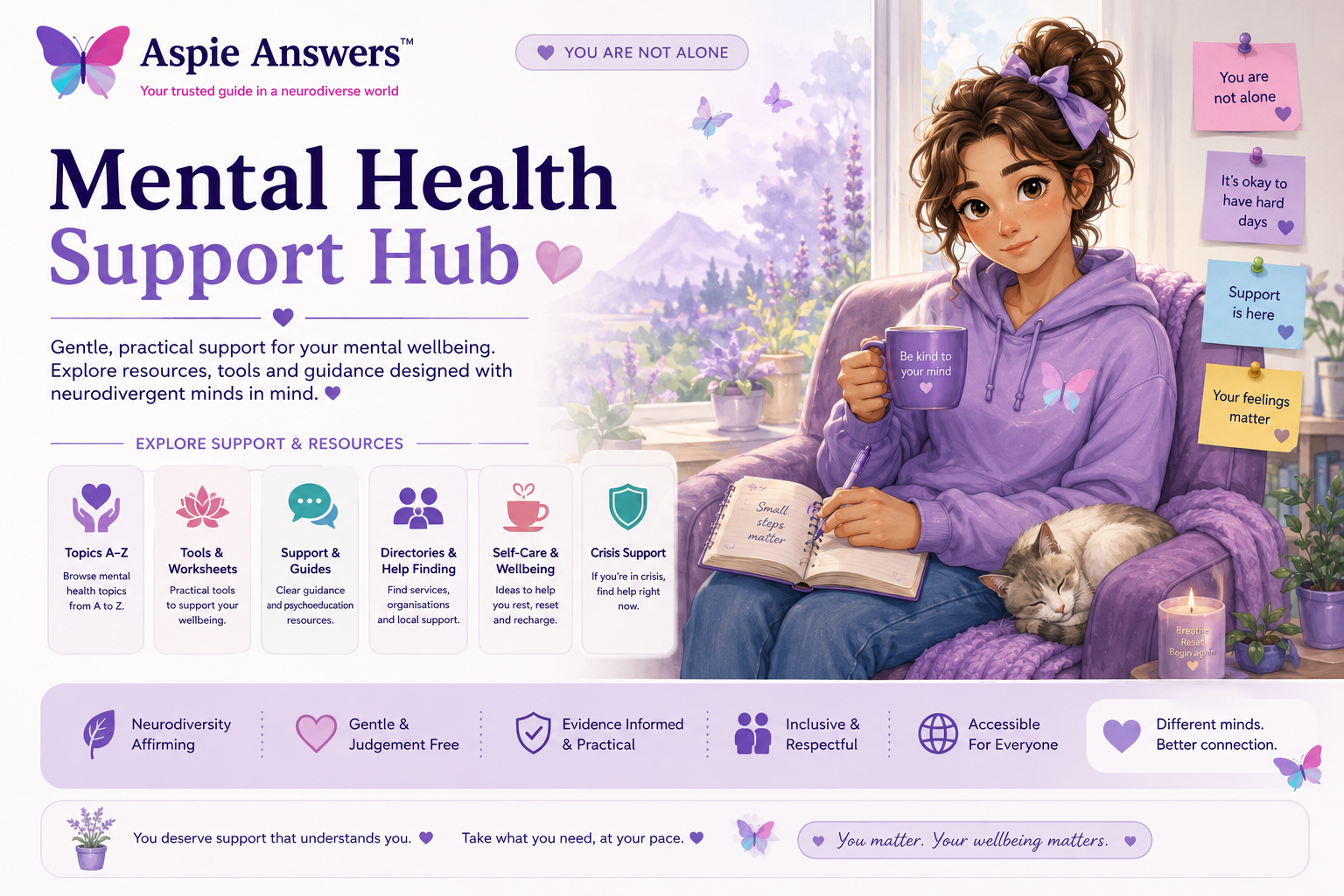
Mental Health • Wellbeing • Support • Practical Tools
A gentle starting place for practical mental-health support, everyday coping tools, emotional wellbeing resources and pathways to further help — with neurodivergent minds, accessibility and different lived experiences in mind.
If you or someone else may be in immediate danger, at risk of serious harm or experiencing an emergency, contact the emergency service appropriate to your location.
If the situation is urgent but not an immediate emergency, use the dedicated Crisis Support pathway for crisis information and next steps.
Go to the Crisis Support Main IndexMental health looks different for everyone. You do not need to read everything, try every strategy or know exactly what to call what you are experiencing before seeking support.
Use the section links, search tools and Low-Stim View to make this page easier to explore. Take what is useful, adapt ideas to suit your circumstances and leave anything that does not fit.
Aspie Answers provides educational information, practical guidance and general wellbeing support. These resources do not diagnose conditions and are not a replacement for personalised medical, psychological, psychiatric, counselling or other professional care.
This hub brings the practical side of Aspie Answers mental-health support together so you can find an appropriate next step without needing to explore everything at once.
Choose a pathway based on what feels most relevant today.
Anxiety, low mood, stress, burnout, emotions and more.
Check-ins, grounding, coping resources and worksheets.
Professional, community, directory and crisis pathways.

Search the support pathways and cards on this page without leaving the hub.
Use the wider website search if the topic you need is not part of this support hub.
You do not need to know the exact name for what you are experiencing. Choose the pathway that feels closest to what you need right now.
Explore anxious thoughts, worry, panic, overload and practical ways to reduce overwhelm.
Explore Anxiety & OverwhelmGentle information about low mood, depression, difficult days and finding appropriate support.
Explore Low Mood & DepressionUnderstand depleted energy, burnout, recovery, pacing and ways of reducing unnecessary demands.
Explore Burnout & RecoveryRecognise stress and explore practical coping strategies for everyday situations.
Stress & CopingNotice emotions, recognise escalation and explore tools that may support regulation and recovery.
Emotional RegulationGentle and realistic ideas for rest, recovery and looking after your wellbeing without turning self-care into another demand.
Self-Care & ResetThese pathways can help when you know roughly what you want to explore, while the wider Mental Health Education area provides deeper educational information.
Explore changes in mood, motivation, energy and everyday functioning.
Mood & EnergyGentle information about trauma, emotional safety, wellbeing and support.
Explore This TopicBrowse mental-health subjects alphabetically when you know the topic or phrase you want to explore.
Browse Topics A–ZThe Mental Health Education Hub covers foundations, conditions, symptoms and overlap, neurodivergence and mental health, wellbeing skills and mental-health literacy.
Mental Health Education Hub →Sometimes the most useful support is something small, practical and manageable enough to use today.
Pause and notice how you are feeling, what you may need and what could help today.
Daily Check-InA simple way to notice changes in mood and energy without needing to find the perfect words.
Mood & Energy ScaleChoose realistic self-care ideas based on your capacity and what you need today.
Gentle Self-Care MenuExplore straightforward grounding and calming ideas for moments of stress, overload or emotional intensity.
Grounding & CalmingBuild a personal collection of coping ideas that may be useful in different situations.
Coping SkillsUse gentle prompts to notice patterns, needs, strengths and things affecting your wellbeing.
Self-ReflectionPractical resources can make information easier to remember, personalise and use in everyday life.
Explore check-ins, reflection pages, grounding tools, coping resources and practical wellbeing worksheets.
Explore Tools & WorksheetsLearn how to choose, adapt and use resources without feeling as though everything must be completed.
How to Use the ResourcesMental wellbeing can be influenced by sensory environments, communication demands, executive-function load, masking, uncertainty, social expectations, burnout, meltdowns, shutdowns and many other parts of neurodivergent life.
Explore how neurodivergent experiences can interact with mental wellbeing, masking, burnout, sensory load and support needs.
Neurodivergence & Mental HealthExplore practical and affirming support for autistic people and those supporting them.
Autism SupportExplore ADHD-friendly information, strategies and practical everyday support.
ADHD SupportExplore the broader Neurodiversity pathway around different minds, human variation, identity, acceptance and inclusion.
Explore NeurodiversityExplore support for needs and disabilities that may not always be immediately visible to other people.
Hidden Disabilities SupportExplore accessible information and practical support pathways relating to learning disabilities.
Learning Disabilities SupportMental wellbeing is also connected to routines, sensory needs, planning, relationships, home life and everyday demands.
Everyday LivingDifferent people may need different environments, communication styles, pacing, tools and forms of support. Adapt strategies to the person rather than expecting the person to fit the strategy.
Different kinds of support do different jobs. Start with the doorway that best matches what you are looking for.
Find pathways for counselling, therapy, psychology, psychiatry, telehealth, low-cost options and inclusive professional support.
Find Mental Health Support ServicesExplore peer support, support groups, lived-experience communities, family and carer spaces, online communities and ways to connect.
Find Support & CommunityFind organisations, services, directories and broader support pathways when you need help beyond Aspie Answers.
Explore Support & DirectoriesYou may also find it useful to speak with a trusted family member, friend, support person, counsellor, advocate or another safe person in your life.
If immediate safety is a concern, use the dedicated Crisis Support pathway rather than waiting for a community or routine service response.
A general mental-health information hub cannot replace emergency or crisis care. Crisis Support remains a separate and clearly defined pathway within Aspie Answers.
Find urgent-support pathways and crisis information for different locations, circumstances and support needs.
Go to the Crisis Support Main IndexIf someone is in immediate danger or at risk of serious harm, contact the emergency service appropriate to their location.
Aspie Answers does not provide an emergency-response service.
Mental-health support is connected with learning, practical resources, neurodivergence and other parts of everyday life.
Explore printable resources, guides, worksheets and practical tools across Aspie Answers.
Resources LibraryLearn about mental-health foundations, topics and conditions, symptoms, overlap, literacy and wellbeing skills.
Mental Health Education HubBrowse the wider mental-health topic index when you want to explore a specific subject.
Browse Topics A–ZGlossaries can help when a mental-health, support or treatment term is unfamiliar. Aspie Answers uses a dedicated Mental Health Glossary alongside more specialist glossaries so people can find plain-language explanations without needing to search through long topic pages.
Take what you need, go at your own pace and return whenever you are ready. Sometimes one useful idea, one supportive conversation or one manageable next step is enough for today.
Support can look different. A pathway that fits still matters.
Aspie Answers provides educational information and practical support resources. It does not diagnose conditions or replace personalised professional care.
↑ Back to the Beginning