Neurodiversity Glossary & Definitions A–Z
Core terminology covering neurodiversity, neurodivergence, processing differences, identity and related experiences.
Audit existing page / connect real URL
Find clear, accessible explanations of terminology used across Aspie Answers. This master index brings subject glossaries and specialist terminology collections together while keeping each authoritative glossary connected to its relevant hub, library and deeper learning pages.
These are the major subject glossary pathways in the current master plan. Existing pages should be linked and polished first; pages marked for audit or creation remain part of the architecture without pretending they are already finished.
Core terminology covering neurodiversity, neurodivergence, processing differences, identity and related experiences.
Audit existing page / connect real URLAutism terminology, autistic experiences, communication, sensory processing, support and identity language.
Existing ecosystem — audit & linkADHD terminology including attention, executive function, hyperfocus, time perception, regulation and everyday experiences.
Existing ecosystem — audit & linkTerminology for the combined and overlapping experiences of autism and ADHD.
Planned / genuine gap if audit confirmsMental health, emotional wellbeing, common conditions, recovery, coping and support terminology.
Existing ecosystem — audit & linkNon-visible disability, access needs, fatigue, sensory experiences, participation and support language.
Core / audit older materialGlossaries can reduce the load of unfamiliar terminology. They can help people prepare for appointments, understand educational or workplace language, explore neurodivergent experiences and follow links into deeper Aspie Answers learning pages.
Terminology relating to learning disabilities, learning differences, support needs and inclusive learning.
Audit older specialist materialSchool, study, learning support, inclusive education, teaching and education-system terminology.
Core / audit and consolidateAccessibility, barriers, adjustments/accommodations, rights, inclusion and advocacy terminology.
Core / audit or create genuine gapOne consolidated glossary spanning the seven Work & Employment branches, with internal terminology categories.
Open Work & Employment GlossaryDating, friendship, communication, boundaries, consent, conflict, family and social terminology.
Audit / likely consolidated glossaryPractical terminology for routines, independence, organisation and everyday living where the content audit justifies a dedicated glossary.
Create if content depth supports itSome terminology is specialised enough to benefit from its own collection. We will recover and audit existing pages first, then create only the specialist glossaries that have enough real content and a clear visitor need.
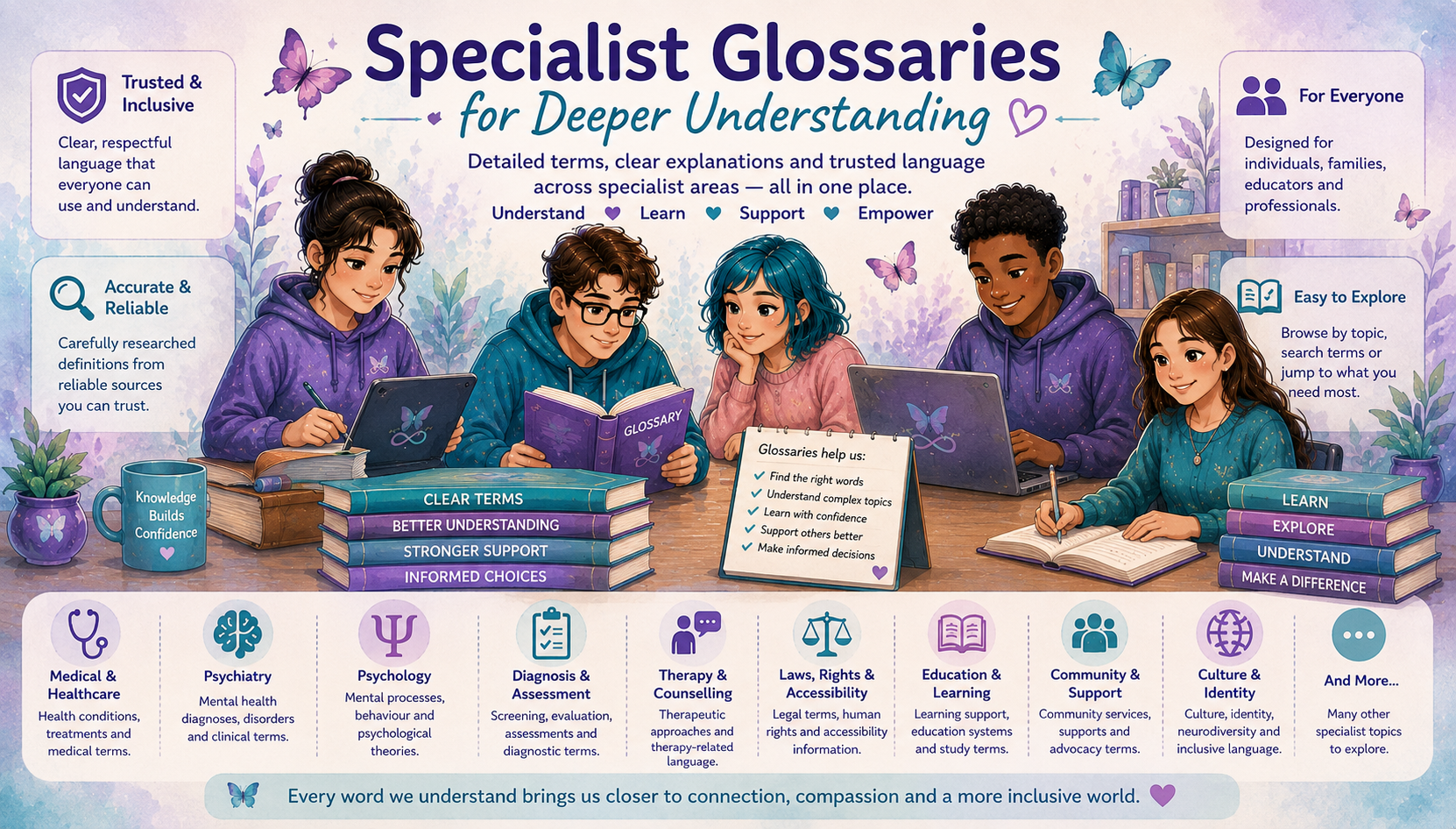
Appointments, referrals, specialists, tests, treatment and healthcare-system terminology.
Audit existing specialist materialPsychiatric services, assessments, treatment and specialist psychiatric language.
Audit existing page / create if missingPsychological concepts, assessment, support and common specialist terminology.
Audit existing page / create if missingAccessible explanations of diagnostic terminology, clearly framed as informational rather than diagnostic.
Specialist collection — audit firstReferral, screening, assessment and diagnostic-process terms explained in accessible language.
Specialist collection — audit firstCommon counselling, psychotherapy and therapeutic-support terms.
Audit existing counselling pagesPlain-language medication-related terminology with appropriate health-information boundaries.
Bank / build only if justifiedExecutive function, sensory processing, AAC/communication, masking, burnout and ND experience terms can remain nested until volume warrants standalone pages.
Banked / nested categoriesEducators, school staff, special education, learning support, school adjustments and academic terminology can initially stay consolidated.
Consolidate under Learning & EducationSome people prefer identity-first language, while others prefer person-first language. Terminology can also differ between countries, communities, cultures, organisations and individuals. Aspie Answers aims to explain language respectfully without assuming one term describes everyone.
Question: “What does this term mean?”
This master index organises authoritative subject glossaries and specialist terminology collections.
You are here: Glossaries & DefinitionsQuestion: “Where can I find information about this subject?”
Topics A–Z is a separate site-wide discovery route. Audit the existing master A–Z page before replacing or rebuilding it.
Open Topics A–Z Master IndexOne authoritative glossary can be reached from several sensible pathways. Cross-linking from a subject hub or specialist library does not mean creating duplicate copies of the same glossary.
Can link visitors directly to the Work & Employment Glossary while the authoritative page remains part of this central glossary system.
Cross-link, do not duplicateCan surface the Everyday Living glossary if the terminology/content audit confirms that a dedicated glossary is warranted.
Cross-link when liveCan link directly to the Accessibility & Rights Glossary and related definitions without creating a copy.
Cross-link when liveCan route visitors into the Learning & Education Glossary and consolidated education terminology categories.
Cross-link when liveMajor neurodivergence ecosystems can surface their own authoritative glossary pages from their relevant hubs and libraries.
One page, multiple pathwaysMental Health and future substantial subject ecosystems can connect to their relevant glossary collections as the site grows.
Expandable architecture