
ASPIE ANSWERS • PROFESSIONALS HUB
Professionals — Main
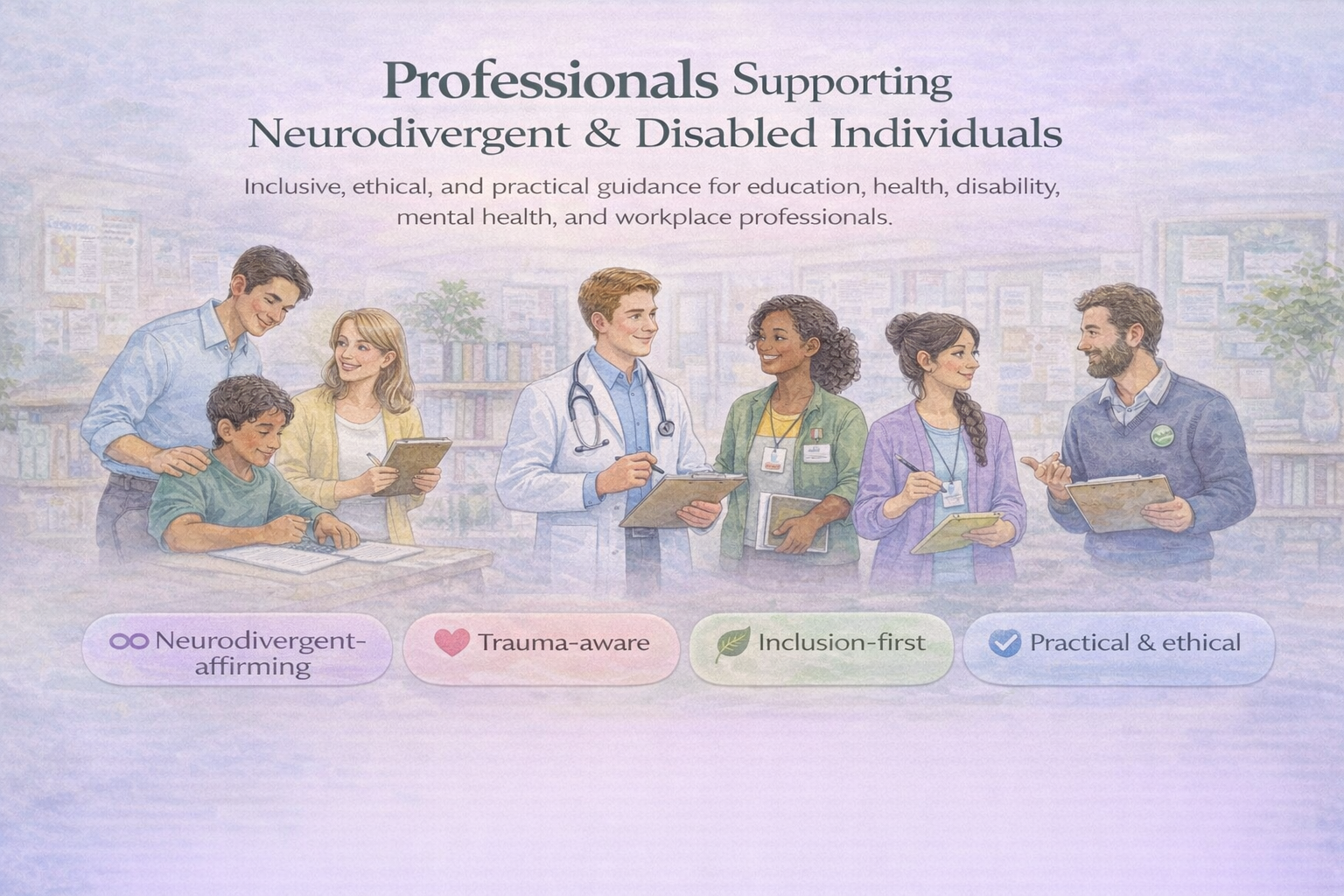
A practical, neurodivergent-friendly space for professionals supporting autistic people, ADHDers, people with learning differences, and people living with hidden disabilities — across school, work, health, and everyday life.
Who this is for
Choose the lane that fits you best — many roles overlap, and that’s okay.
Educators & learning support
Teachers, teacher aides, SENCO/Learning Support Coordinators, tutors, RTLB-type roles.
- Accessible classrooms + behaviour as communication
- Strength-based planning + sensory supports
- Family partnership + safe communication
Health, allied health & disability supports
GPs, nurses, OT, SLT, physio, disability support workers, service coordinators.
- Low-demand, consent-first support
- Access tools + pacing for fluctuating capacity
- Clear plans, not overwhelm
Mental health professionals
Counsellors, psychologists, therapists, peer support, crisis/acute support roles.
- Trauma-informed + neuro-affirming practice
- Masking, burnout, sensory overload
- Communication accommodations
Workplace / HR / employment services
Managers, HR, supported employment, job coaches, vocational services.
- Reasonable adjustments + flexible work
- Clear expectations + task prioritising
- Quiet environments + sensory supports
How to use this hub
Start with the pathway that matches your setting (school, work, health, disability support) — then return here for the next topic.
Suggested flow
- Step 1: Read the “Featured Topics” page (quick overview of what’s available).
- Step 2: Choose one setting: school / work / health / disability support.
- Step 3: Pick one small change to trial for 2 weeks.
- Step 4: Review what worked + what didn’t (no shame — adjust).
Best support principles
- Believe first
- Reduce barriers
- Offer choice
- Keep it predictable
- Consent + dignity
Professional pathways
These can be separate pages (recommended) — we can build them after the index/featured pages are done.
Quick tools
Short, practical supports you can use immediately (we can expand into downloads later).
Ask: “What would make this easier?”
Invite the person to name one barrier + one support. Keep it simple and non-judgemental.
Reduce the load
Shorter steps, fewer words, visual supports, and predictable routines reduce burnout fast.
Consent-first support
Offer options and ask permission before touching belongings, changing plans, or giving advice.
Support without spotlighting
Make accommodations normal and quietly available (not a “special case” moment).
FAQ
Quick answers — we can expand these into dedicated pages later.
What if I’m not sure what support someone needs?
How do I avoid accidentally using harmful language?
Do hidden disabilities count for accommodations?
Note: If you want, we can add a “Downloads Mini Library” section here later (checklists, scripts, printable tools).