Make this page easier to use
These options change this page only. Header HQ can later provide the same preferences across the whole website.
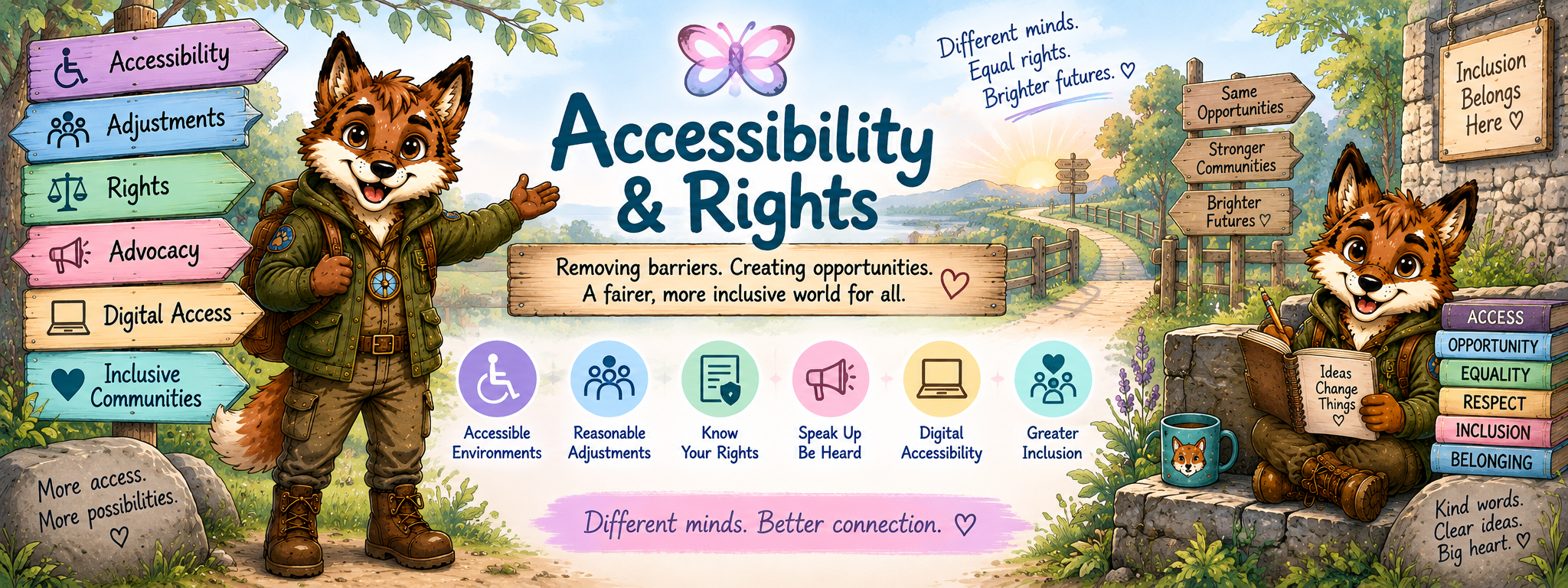
Accessibility & Rights
Accessibility is about reducing and removing barriers so people can participate, communicate, learn, work, use services and live with greater choice and dignity. This hub brings together practical information about accessibility, reasonable adjustments, self-advocacy, discrimination, digital access, regional rights pathways and resources for taking the next step.
Not sure where to begin?
The dedicated Accessibility & Rights Start Here page gives you a simpler guided route based on what is happening for you - whether you are facing a barrier, looking for an adjustment, trying to understand your rights, dealing with a problem or searching for practical support.
You do not need to understand every law, policy or accessibility term before asking for support. Start with the barrier, question or situation you are trying to solve.
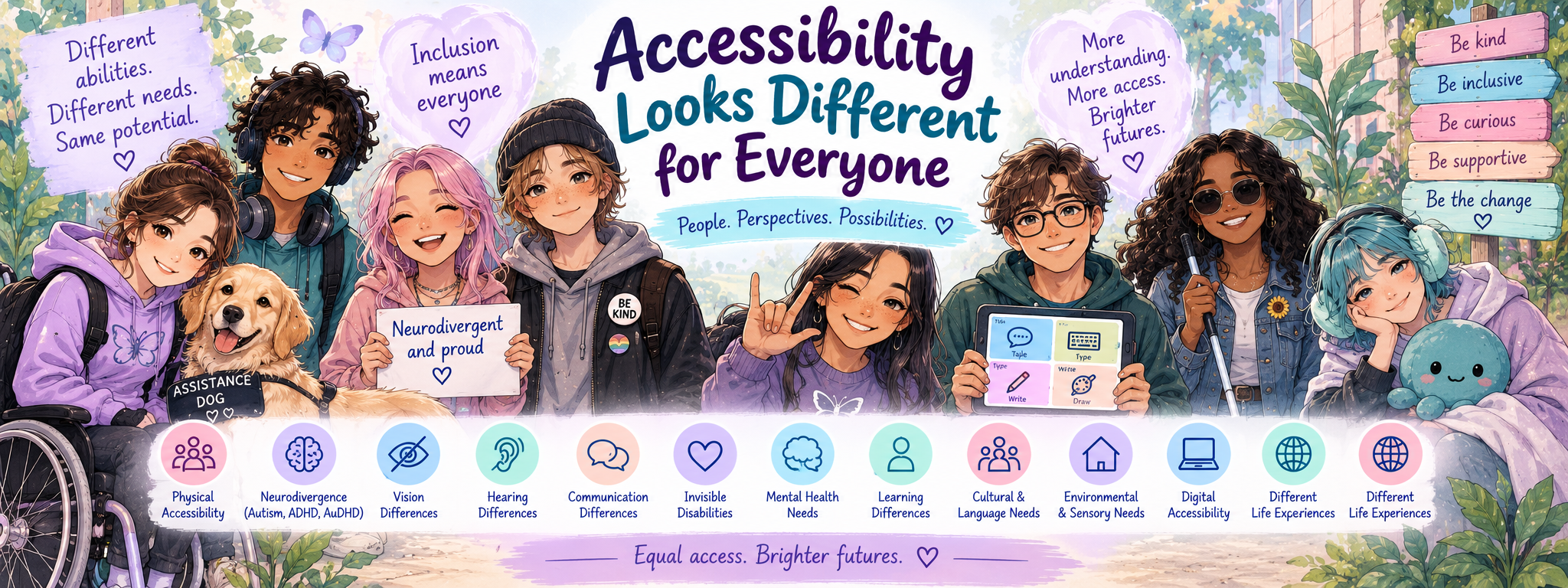
These are the main topic pathways for the Accessibility & Rights hub. Each one now has a dedicated page so you can move directly into the area that best matches your question or situation.
Understanding Accessibility
What accessibility means, how barriers show up, inclusive design, participation and why access can look different for different people.
Explore Accessibility →Neurodivergent Accessibility
Sensory, communication, executive-function, predictability, processing and other access needs that may matter for neurodivergent people.
Explore Neurodivergent Access →Reasonable Adjustments & Accommodations
Understand adjustments, prepare a request, explore practical examples and communicate what could make participation more workable.
Explore Adjustments →Rights & Self-Advocacy
Build confidence to understand options, ask questions, express needs, seek support and have your voice included in decisions.
Explore Self-Advocacy →Discrimination, Complaints & Problems
Recognise barriers or unfair treatment, document concerns, find complaint pathways and understand when specialist help may be useful.
Explore Problems & Complaints →Digital Accessibility
Accessible websites, documents, apps, captions, keyboard access, screen-reader support and reducing barriers in digital spaces.
Explore Digital Accessibility →Regional / Country Rights Pathways
Find regional and selected country pathways to rights information, advocacy, complaints organisations and local accessibility support.
Explore Regional Pathways →Downloads & Resources
Find practical guides, worksheets, checklists, templates and tools for accessibility, accommodations, self-advocacy and everyday support.
Explore Downloads & Resources →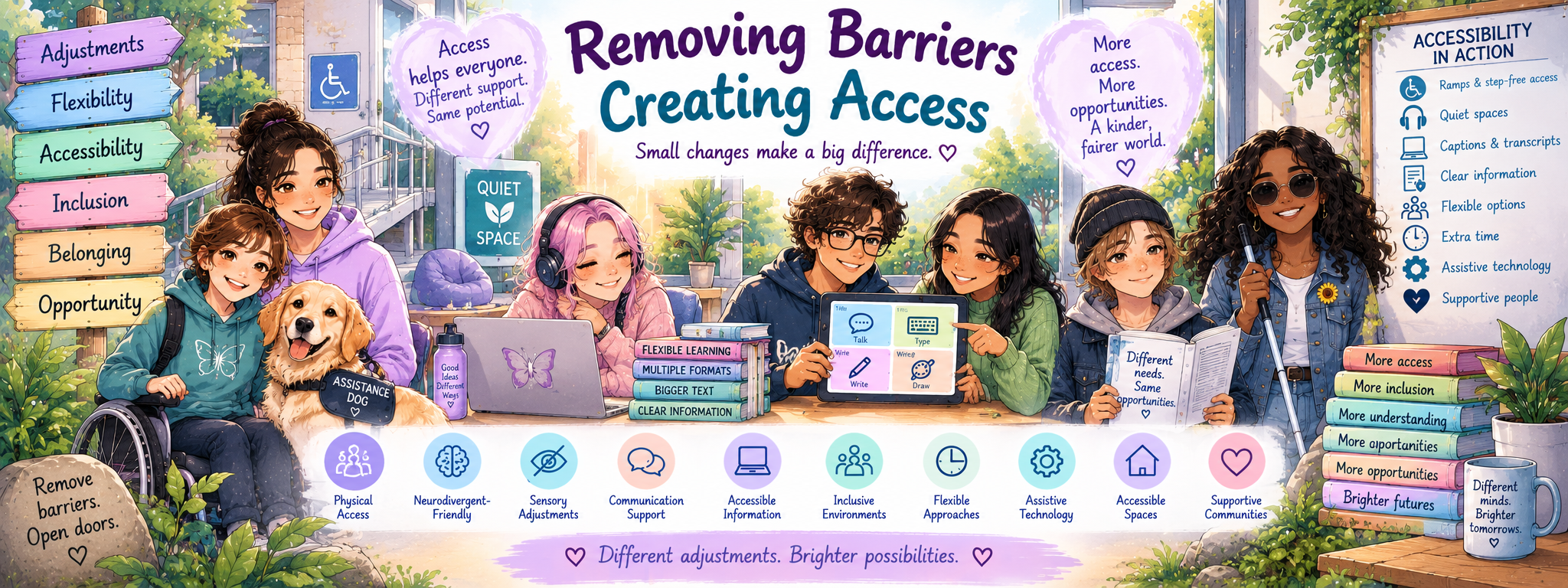
Not everyone searches in the same way. Use the route that works best for you - browse the Library, look up a term, scan topics alphabetically, explore grouped Collections or go straight to practical downloads.
📚 Accessibility & Rights Library
The organised information layer for deeper learning and discovering related accessibility and rights pathways.
Open Library →🔤 Glossaries & Definitions
Clear explanations of accessibility, rights, advocacy, accommodation and inclusion terminology.
Explore Definitions →🔎 Topics A-Z
Browse subjects alphabetically when you already know the topic or question you want to explore.
Browse Topics A-Z →🗂️ Collections
Follow grouped journeys that bring related pages and support pathways together around a common purpose.
Explore Collections →🧰 Downloads & Resources
Find practical resources and then continue into the wider Aspie Answers Downloads & Resources system where appropriate.
Find Resources →Go deeper in the Accessibility & Rights Library
The main hub helps you choose a direction. The Accessibility & Rights Library provides an organised reference layer for deeper learning, connected topics, rights information and useful pathways.
Open Accessibility & Rights Library →Choose your discovery route
The Library now connects to dedicated specialist pages for definitions, A-Z browsing, grouped collections and practical downloads.
Why Finn Fits Here
Finn Fox supports problem-solving, flexibility and independence. On Accessibility & Rights pages, that can mean considering different routes, preparing questions, identifying barriers and looking for workable alternatives - without suggesting that a person should simply adapt to an inaccessible system.