
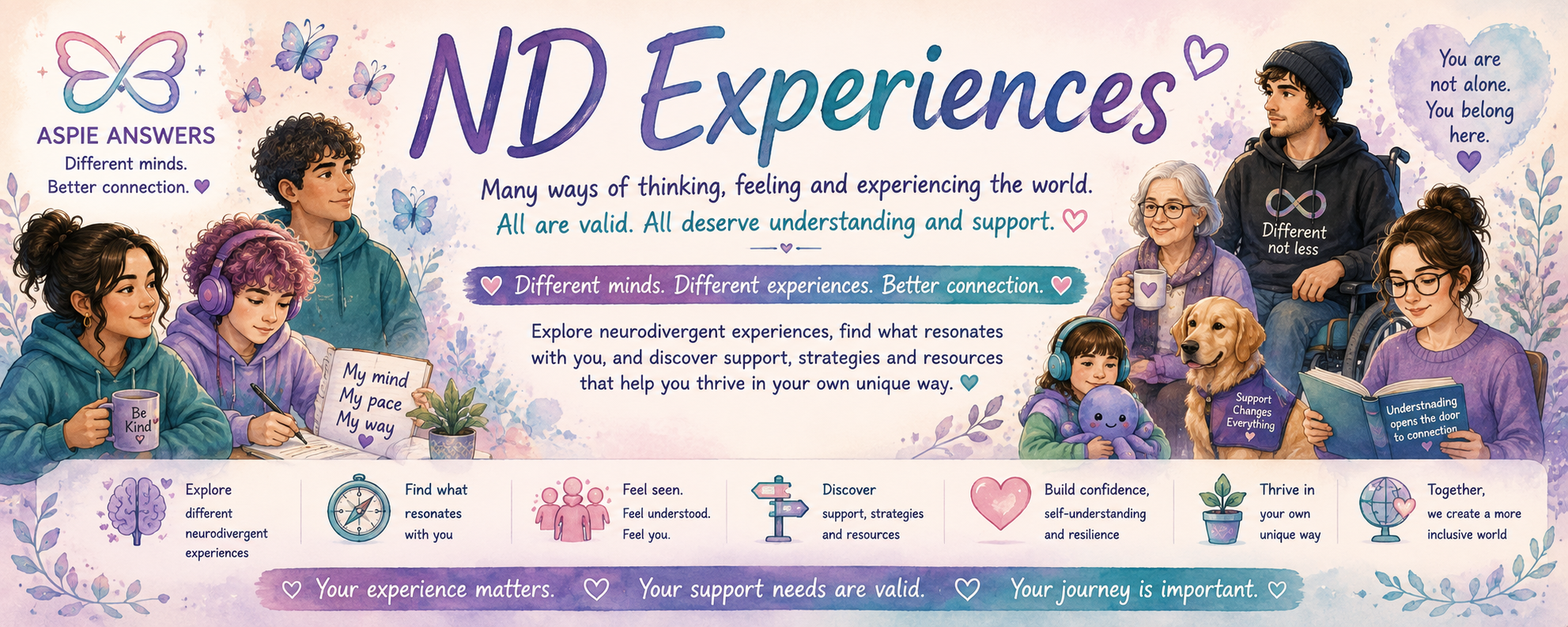
Neurodivergent Experiences
Different minds can experience the world in many different ways.
ND Experiences is a gentle doorway into neurodivergent lived experiences across Aspie Answers. You might be exploring Autism, ADHD, AuDHD, learning disabilities, sensory needs, masking, burnout, executive function, relationships, identity, learning, work or everyday life. Start with what feels closest to your experience and follow the pathway that helps.
You do not need to know exactly which label, hub or resource you need first. These pathways are starting points, not boxes you have to fit into.
AuDHD Experiences
Explore the lived experience of Autism and ADHD together, including needs that can overlap, interact or seem contradictory.
Explore AuDHD →Autism Experiences
Explore autistic ways of sensing, communicating, connecting, thinking, regulating and moving through everyday life.
Explore Autism Experiences →ADHD Experiences
Explore attention, motivation, executive function, hyperfocus, time, emotions and everyday ADHD experiences.
Explore ADHD Experiences →Learning Disability Experiences
Explore how learning, processing, memory, literacy, numeracy and coordination differences can shape everyday experiences.
Learning Disability Experiences →No two neurodivergent experiences are exactly the same
Neurodivergence can influence sensory processing, communication, attention, learning, emotions, routines, energy, relationships, identity and many other parts of life. Different people may need completely different supports even when they share the same diagnosis or description.
Learning Disability Experiences
Learning disabilities and differences can affect reading, writing, maths, processing, coordination, memory, organisation and confidence. This experience pathway should connect people into the dedicated Learning Disabilities Hub rather than duplicate that whole hub here.
Explore Learning Disabilities →Hidden & Less-Visible Disability Experiences
Not every disability, difference or support need can be seen. People may experience fluctuating capacity, fatigue, pain, sensory needs, cognitive barriers or access needs that others do not immediately notice. The full Hidden Disabilities Hub remains a separate major area because not every hidden disability is neurodivergence.
Explore Hidden Disabilities →🎧 Sensory Experiences
Sensory input can feel calming, distracting, painful, energising or overwhelming. Sensory needs can also change across environments and energy levels.
🎭 Masking & Camouflaging
Some people consciously or unconsciously hide, suppress or adapt parts of themselves to meet expectations, which can take significant energy over time.
🔋 Burnout, Energy & Recovery
Neurodivergent burnout, overload and fluctuating capacity deserve support, recovery time and practical adjustments rather than judgement.
🧠 Executive Function
Starting, sequencing, remembering, prioritising and switching tasks can be difficult even when someone understands exactly what needs to be done.
💜 Emotions & Regulation
Big feelings, shutdowns, meltdowns, emotional intensity and longer recovery needs can all be part of some neurodivergent experiences.
💬 Communication & Connection
People can communicate, process social information and build relationships in many different ways. Difference does not mean lack of care or connection.
Identity & Self-Understanding
Explore what neurodivergence can mean for identity, self-understanding, late discovery and making sense of past experiences.
Strengths, Interests & Passions
Neurodivergent experiences also include creativity, specialist knowledge, deep interests, persistence, insight and many other individual strengths.
Self-Advocacy & Support Needs
Understanding what helps can make it easier to communicate needs, ask for adjustments and make informed choices about support.
Acceptance & Belonging
Feeling understood, respected and able to be yourself can matter just as much as practical strategies or formal support.
Everyday Living
Routines, home life, appointments, food, money, travel, organisation, energy and practical independence can all intersect with neurodivergence.
Everyday Living Library →Learning & Education
Explore how attention, processing, sensory needs, communication, executive function and learning differences can affect education.
Learning & Neurodivergence →Work & Employment
Work can intersect with sensory needs, executive function, communication, disclosure, workplace adjustments, energy and career choices.
Work & Employment Library →Mental Health & Wellbeing
Neurodivergence and mental health can overlap without being the same thing. Use the dedicated mental health pathways for practical or specialist support.
Mental Health Support →Relationships & Connection
Friendships, family, partners, communication styles, boundaries, shared expectations and recovery time can all shape relationships.
Accessibility, Rights & Advocacy
When challenges are about barriers, access, rights or adjustments, the future Accessibility & Rights Library will carry the deeper rights-based material.
Accessibility & Rights →Support & Services
When you need organisations, services, community support or specialist help, move into Support & Directories rather than searching only educational pages.
Support & Directories →Tools & Resources
Explore practical worksheets, visual supports, planners, guides and other resources across the wider Aspie Answers library system.
Resources & Downloads →Neurodivergence is not limited to one age or one type of person. Experiences, responsibilities, language and support needs can change across life stages and situations.
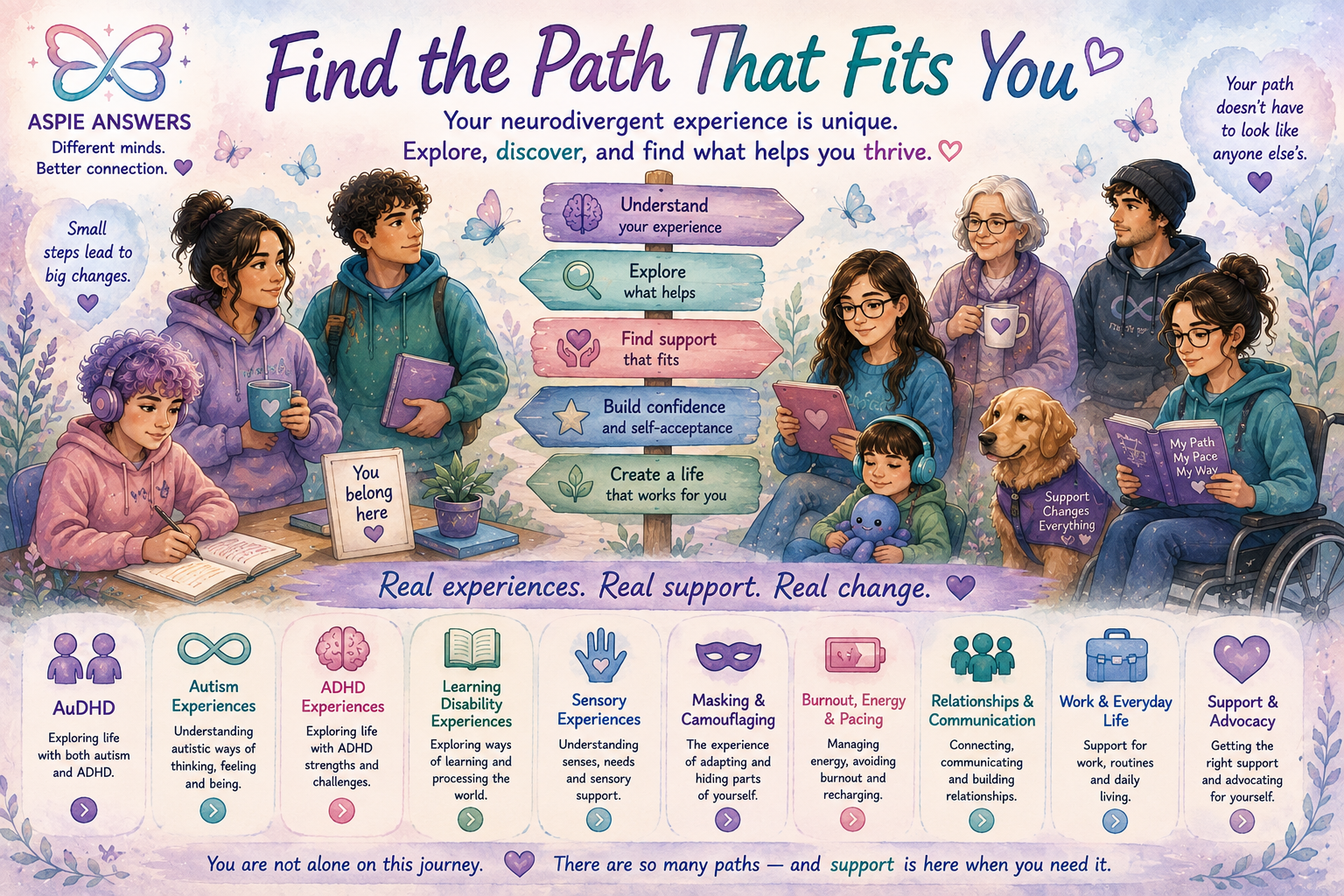
You do not have to explore everything. Choose the pathway that feels useful now, and return later if your questions, energy or circumstances change.
Looking for practical or specialist support?
Understanding your experience can be useful, but sometimes you need services, organisations, advocacy, community support or professional help. Use Support & Directories to move into those pathways.
Support & Directories →Need urgent help?
If there is immediate danger or you need urgent crisis support, use the dedicated Crisis Support area and local emergency services where appropriate.
Crisis Support — Start Here →Is ND Experiences another Neurodiversity Hub?
No. ND Experiences is a lived-experience doorway. It helps visitors find experience-based pathways, while the wider Neurodiversity, Autism, ADHD, Learning Disability and other hubs can carry deeper educational content.
Why are Learning Disabilities included here?
Learning disabilities can shape everyday neurodivergent experiences, so they deserve a visible route here. The dedicated Learning Disabilities Hub should still remain the main home for deeper information and resources.
Why are Hidden Disabilities kept separate?
Hidden or less-visible disability experiences can overlap with neurodivergence, but not every hidden disability is neurodivergence. The full Hidden Disabilities Hub therefore remains a separate major site area, with a bridge from this page rather than duplication.
Do I need a diagnosis to explore these pages?
No. These pages are educational and exploratory. People may be diagnosed, self-identifying, questioning, supporting someone else or simply learning about different experiences.
Will every experience become a separate page?
Not automatically. Existing pages should be audited first, and new pages should only be created when they have a clear purpose that is not already covered elsewhere on Aspie Answers.