
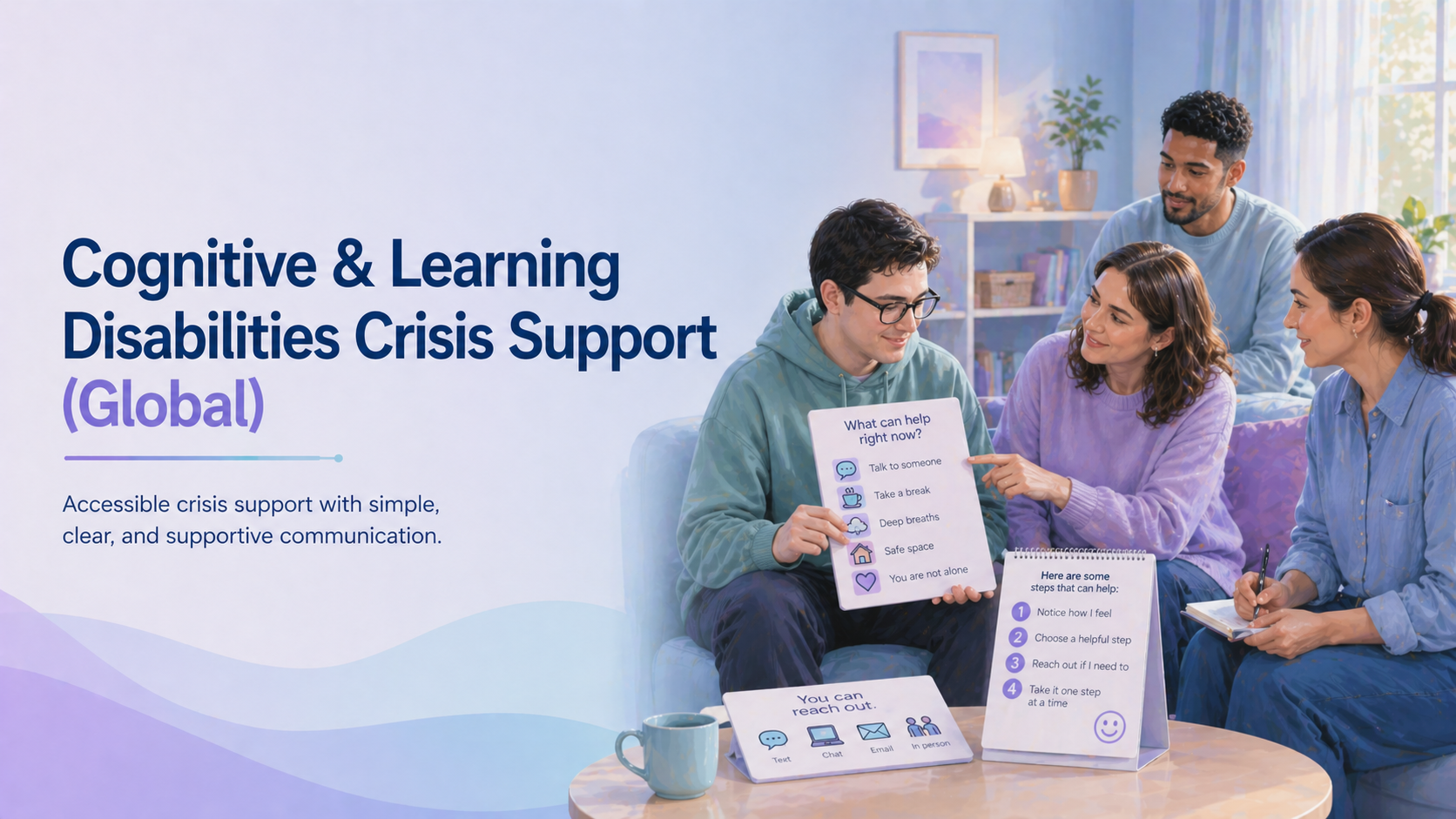
Cognitive & Learning Disabilities Crisis Support (Global)
Crisis support should be clear, simple, patient, and accessible. This page is for people with cognitive disabilities, learning disabilities, intellectual disabilities, processing differences, memory difficulties, or support needs who may need crisis support explained in a calmer and easier way.
Support may need to use plain language, visual aids, step-by-step instructions, repeated information, trusted support people, easy-read resources, or guided help options.
Quick Access Support
If everything feels confusing or too much, start with one simple next step.
Use simple words
Try: “I need help.” “I am not safe.” “Please explain slowly.” “Can someone stay with me?”
Ask for step-by-step support
Ask someone to break information into one step at a time and repeat it if needed.
Use a trusted person
A trusted person can help explain, repeat, write things down, or support decision-making.
Easy Read & Plain Language Support
In crisis, people may need information that is simple, direct, and easy to follow.
Simple Words
- Use short sentences
- Avoid confusing jargon
- Explain one idea at a time
- Repeat important information
Easy-Read Information
- Use clear headings
- Use pictures or symbols where helpful
- Use fewer words per page
- Show what to do next
Visual Prompts
- Step cards
- Choice boards
- Written notes
- Simple safety plans
Step-by-Step Crisis Support
When someone is distressed, too many choices or too much information can make things harder.
Check safety
Ask: “Are you safe right now?” If not, use emergency support or ask a safe person nearby for help.
Reduce pressure
Move to a quieter place if possible, use simple words, and slow the pace down.
Choose one support option
Pick one option: text support, call a safe person, emergency services, or a local crisis service.
Write it down
Write the next step clearly so the person does not need to remember everything.
Stay with support
If it is safe, stay with someone trusted until the immediate crisis has eased or help has arrived.
Repeat if needed
It is okay to repeat instructions, questions, and choices more than once.
Supported Decision-Making
Some people may need help understanding options, risks, and next steps during a crisis.
Offer clear choices
Try two simple choices instead of many options: “Do you want text support or do you want me to call someone safe?”
Use a trusted person
A trusted person can help explain information without taking away the person’s voice or choices.
Do not rush decisions
Give extra time, repeat information, and check understanding gently.
Supporting Someone with Cognitive or Learning Disabilities
Support should feel clear, respectful, and manageable.
What helps
- Use plain language
- Ask one question at a time
- Offer two simple choices
- Write down next steps
- Repeat information kindly
- Use visual prompts or easy-read supports
What to avoid
- Using complex language or jargon
- Rushing the person
- Giving too many options at once
- Assuming they understand without checking
- Talking over them
- Taking control without consent unless immediate safety requires urgent action
Helpful Scripts to Copy, Type, or Show
These short phrases can be shown to someone safe, typed into chat, or written on a card.
When you need simple language
“Please use simple words. I am finding it hard to understand right now.”
When you need one step
“Please tell me one step at a time. I cannot remember everything at once.”
When you need someone with you
“I need a trusted person with me to help understand and explain.”
When you feel unsafe
“I am not safe. I need help now. Please stay with me.”
When choices feel too much
“Please give me two choices only. Too many choices are overwhelming.”
When you need it written down
“Please write the next step down so I can follow it.”
What Support May Feel Like
Accessible support may feel slower, clearer, and more predictable. It may include short sentences, visual prompts, written steps, simple choices, repeated information, and a trusted person helping explain what is happening. This is not “extra” support — it is accessible support.
Where To Go Next
Text / Chat Crisis Support
For crisis support that can happen through written messages instead of phone calls.
Open text/chat supportSpeech & Communication Barriers
For non-verbal, AAC, typed, and alternative communication needs.
Open communication supportAccessibility Crisis Support
Return to the wider accessibility support hub.
Open accessibility hubYou Deserve Clear Support
Needing simple instructions, easy-read information, visual prompts, or extra time is not a problem. Crisis support should be adapted so it is easier to understand and safer to use.
Important Disclaimer
Aspie Answers provides education, signposting, and supportive information. This page is not a replacement for emergency care, medical advice, therapy, safeguarding, disability advocacy, legal advice, or professional crisis assessment. In an emergency, contact local emergency services immediately or use accessible emergency options available in your country.