

Gentle Notice
This page may mention learning struggles, school or study stress, frustration, overwhelm, confidence challenges, burnout and emotional wellbeing. Take breaks when you need them. Learning differently does not mean learning less.
Welcome to Learning Disabilities Support
The main Learning Disabilities Hub helps visitors understand and explore learning differences. This support page focuses on what may actually help - practical strategies, adjustments, accessible tools, confidence, study, work and everyday life.
Begin Small
One useful strategy, conversation, tool or adjustment can be a meaningful starting point.
Support the Person
Build support around individual strengths, needs, preferences, environments and goals.
Protect Confidence
Support should reduce unnecessary barriers without treating the learner as less capable.
Start Here - Find the Support You Need
You do not need the perfect label before you begin. Choose the route that sounds closest to what is difficult right now.
Understand My Needs
Begin with practical information about learning differently and what support can look like.
Learning Strategies
Explore reading, maths, coordination, processing, writing and executive-function support.
School, Study & Training
Explore accommodations, study tools, accessible teaching and assessment support.
Adult Life & Work
Explore work, paperwork, organisation, money, time, communication and independent living.
I Am Supporting Someone Else
Find practical guidance for families, carers, educators, support people and professionals.
Confidence or Wellbeing Is Being Affected
Explore frustration, overwhelm, self-esteem, strengths and emotional support.
Search This Support Page
Search for a word such as dyslexia, maths, handwriting, study, assessment, work, confidence, accommodations or organisation.
Understanding Support Needs
Learning Differently
Learning disabilities can affect reading, writing, numbers, memory, language, processing, movement, organisation or the way someone demonstrates what they know.
Common Misunderstandings
Learning difficulties are not laziness, poor effort or a measure of intelligence. A learner may need a different route, pace, format or support method.
Support Makes a Difference
Accessible tools, clear teaching, flexible approaches, accommodations and confidence support can make learning more manageable and sustainable.
Different Ways of Learning
Support should never focus only on difficulty. A person may learn better through visual information, discussion, practical experience, repetition, movement, technology, examples, quiet focus or a mix of approaches.
The useful question is not only "What is hard?" but also "What helps this person understand, participate and show what they know?"
Strengths & Abilities
Creativity, persistence, curiosity, visual thinking, specialist interests, practical problem-solving, humour, empathy and many other strengths can sit alongside learning difficulties.
Build confidence and access around the whole person - not only the label.
Support for Different Learning Profiles
These sections focus on practical help. The main Learning Disabilities Hub can carry the deeper explanatory information and individual topic pages.
Dyslexia & Reading Support
Accessible Reading
Text-to-speech, audiobooks, readable formatting, shorter text blocks, clear layouts and extra processing time may reduce load.
Helpful Strategies
Chunk instructions, use visual prompts, repetition and practical tools that make reading and written tasks easier to manage.
Confidence Building
Accessible materials, reduced shame and strengths-based feedback can help rebuild confidence after difficult learning experiences.
Dyscalculia & Maths Support
Number Processing
Support may be needed with number sense, maths facts, time, money, measurement, sequencing and multi-step problem solving.
Maths Anxiety
Repeated difficulty can lead to avoidance, stress and low confidence. Emotional support can be as important as the maths strategy.
Visual & Step-by-Step Support
Worked examples, calculators, manipulatives, checklists and visual models can reduce cognitive load.
Dyspraxia & Coordination Support
Movement & Planning
Coordination, handwriting, movement planning, balance, organisation and fatigue may affect learning and daily tasks.
Practical Adaptations
Typed work, visual steps, adapted equipment, movement breaks, reduced copying and extra time may help.
Daily-Life Tools
Routines, checklists, visual sequences and planning tools can support confidence and independence.
Processing & Written Expression
Auditory Processing Support
Written backup, reduced background noise, slower instructions, repetition and checking understanding may help spoken information become easier to use.
Visual Processing Support
Clear layouts, reduced visual clutter, strong spacing and alternative formats may reduce barriers when visual information is hard to interpret.
Dysgraphia & Written Expression
Typing, speech-to-text, planning templates, reduced copying and alternative ways of demonstrating knowledge may help.
Executive Functioning & Organisation
Planning & Organisation
Support can help with starting tasks, remembering steps, managing time, switching activities and finishing work.
Task Breakdown
Smaller steps, checklists, timers, visual reminders and routines can reduce overwhelm.
Memory Supports
Written instructions, visual schedules, reminder systems, repeated practice and supportive prompts can reduce memory load.
Assistive Technology & Accessible Learning Tools
Technology is not "cheating." The right tool can reduce a barrier so a learner can focus on understanding, communicating and participating.
Text-to-Speech & Audiobooks
Useful when decoding text creates a barrier to accessing the actual information.
Speech-to-Text
Can reduce the physical or written-expression load involved in getting ideas onto the page.
Typing & Digital Tools
Typing, spell support, digital organisers and templates can make tasks easier to manage.
Visual & Accessible Formats
Clear spacing, plain layouts, larger text, visual steps and alternative formats may improve access.
School, Study & Further Education
Good support removes unnecessary barriers so the learner has a fairer chance to understand, participate and demonstrate what they know.
School & Study Adjustments
Extra time, quiet spaces, accessible instructions, assistive technology, reduced copying and flexible assessment options may help.
Study Tools
Visual study plans, homework trackers, revision checklists, templates and low-pressure routines can support consistency.
Teacher & Family Collaboration
Clear communication, respectful language and shared understanding can make support more consistent.
Getting Help, Identification & Assessment
Some people know exactly what they need. Others only know that learning feels much harder than it seems to for people around them. It is okay to begin from that uncertainty.
Notice Patterns
Write down what tasks are difficult, what happens before overload, what helps and where the same patterns show up.
Talk With the Right People
Depending on age and setting, this may include educators, learning-support staff, healthcare professionals, allied professionals or specialist services.
After Identification
A label can help explain a pattern, but support still needs to be individual. Focus on useful adjustments, strengths and real-world needs.
Transitions & New Environments
Support needs can change when a learner moves between schools, into tertiary study or training, into work, or toward greater independence.
Primary to Secondary
More teachers, rooms, deadlines and independent organisation may require new supports.
School to Tertiary / Training
Help may shift toward self-advocacy, accessible course materials, study systems and assessment adjustments.
Education to Employment
Support may move toward workplace communication, clear instructions, training, planning and reasonable adjustments.
Greater Independence
Forms, budgeting, appointments, transport, planning and everyday systems may become more important.
Adults, Work & Everyday Life
Learning disabilities do not disappear after school. Support may still matter in employment, training, appointments, paperwork, money, time management, communication and independent living.
Workplace Support
Written instructions, clear priorities, accessible training and practical adjustments may reduce unnecessary barriers.
Forms & Paperwork
Plain language, support completing forms, digital tools and extra processing time can help.
Time, Money & Organisation
Visual routines, calendars, reminders, budgeting tools and step-by-step systems can support independence.
Community Participation
Appointments, transport information, service instructions and community tasks may also need accessible formats or extra support.
For Families, Carers & Support People
Helpful support protects confidence while building independence. This applies to supporting children, teens and adults.
Break Tasks Down
Use manageable steps, visual prompts and clear expectations rather than giving everything at once.
Notice Overload
Fatigue, frustration and sensory or cognitive overload can make a manageable task suddenly feel impossible.
Support Self-Advocacy
Help the person understand and explain what support works for them without taking over their voice.
For Educators & Professionals
Person-centred support combines practical accessibility with respect for the learner's strengths, preferences, dignity and goals.
Clear Communication
Give clear instructions, check understanding and offer written or visual backup where useful.
Accessible Participation
Use accessible formats, reduce avoidable cognitive load and offer flexible ways to participate or demonstrate learning.
Do Not Assume
Struggle does not equal laziness or lack of ability. Include the learner in decisions about what helps.
Olive Owl's Learning Discovery Corner
Olive Owl is a natural learning companion for this page. Her established role connects with study, learning, understanding, research, asking for help and finding the learning approach that works.
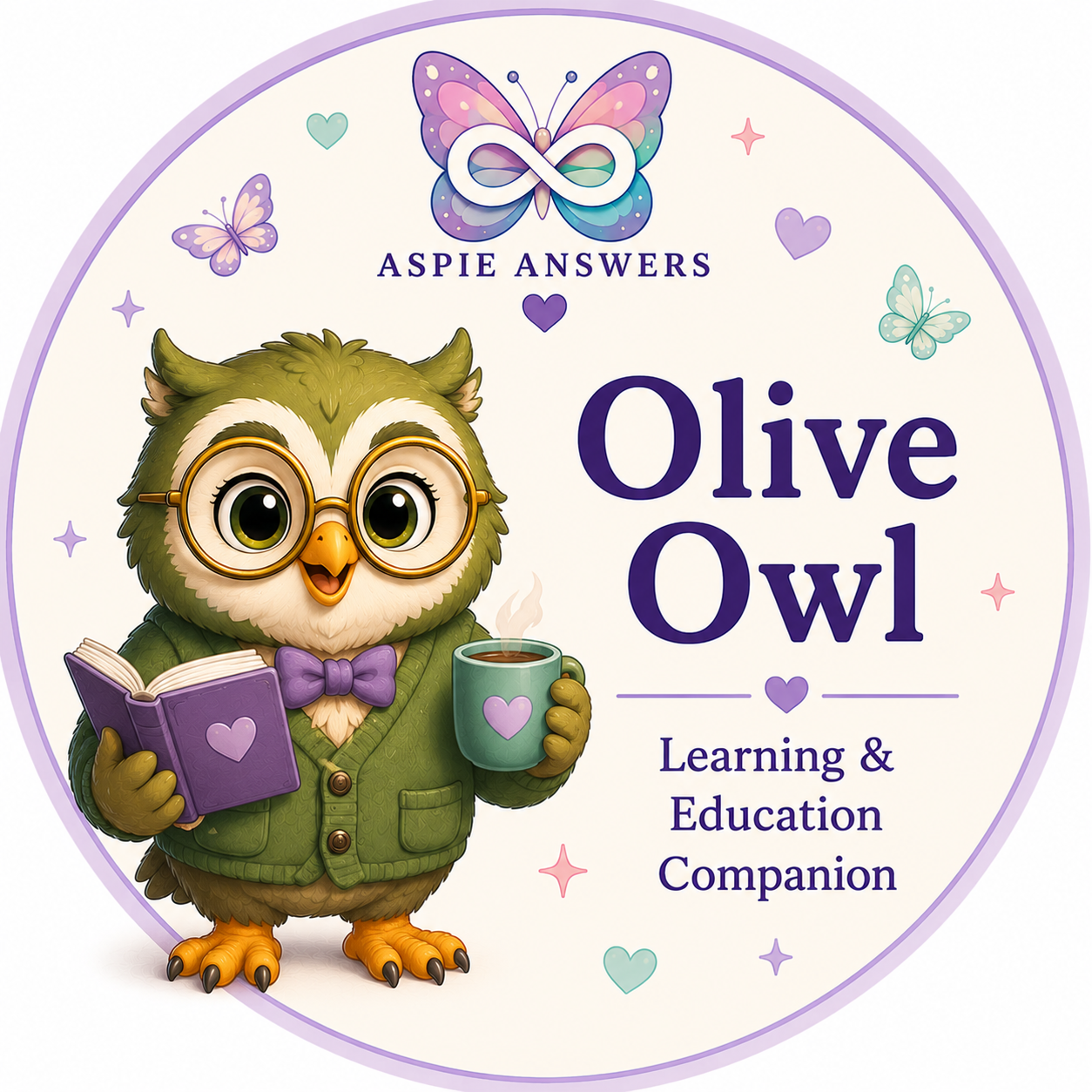
How Olive Fits Here
Olive can gently reinforce ideas such as trying different ways to learn, using tools without shame, studying in an environment that suits you, taking breaks, asking questions and recognising progress.
A Little Encouragement From Twinkle
Twinkle Owl can appear more lightly around confidence and progress. Her role here is encouragement: noticing growth, celebrating effort and reminding learners that progress does not need to look the same for everyone.
When Learning Support Overlaps With Other Needs
A person may have more than one support need. Learning disabilities can exist alongside ADHD, autism, sensory differences, executive functioning difficulties, anxiety or other wellbeing needs.
ADHD & Executive Function
Attention, working memory, task initiation, time and organisation can add another layer to learning support.
Autism & Sensory Needs
Communication, sensory processing, predictability and learning environment may affect access and participation.
Mental Health & Wellbeing
Repeated difficulty, shame, anxiety and overwhelm can affect confidence and readiness to learn.
Confidence, Frustration & Emotional Wellbeing
Learning challenges can affect how someone feels about themselves, especially after repeated misunderstanding, comparison, rushing or criticism.
Confidence & Self-Esteem
Support emotional wellbeing alongside learning skills, particularly after repeated negative experiences.
Frustration & Overwhelm
Calming tools, reduced pressure, breaks and realistic task steps may help when learning becomes too much.
Strength-Based Support
People learn best when strengths, interests, needs and pace are respected rather than forced into one style.
Communication & Self-Advocacy
Understanding what helps can make it easier to explain needs at school, in study, at work or in everyday life.
- What makes information easier for me to understand?
- What situations create unnecessary difficulty?
- What tools or adjustments have helped before?
- How do I prefer to receive instructions or feedback?
- What would I like other people to understand about how I learn?
Accessibility, Adjustments & Rights
Learning support may connect with accessible information, reasonable adjustments, inclusive education, workplace accommodations and advocacy.
Use the dedicated Accessibility & Rights Hub for deeper guidance once its final live pathway is confirmed.
Practical Tools, Printables & Resources
Use resources that genuinely reduce barriers or make everyday learning easier. More tools are not automatically better.
Learning Printables
Study planners, checklists, learning templates, confidence tools and practical supports.
Guides & Toolkits
Explore available guides, toolkits and future learning-support collections.
Support Directories
Connect with wider education, family, community and support-service pathways.
Topics A-Z, Glossary & Deeper Learning
Not everyone arrives knowing the exact name for what they need. These discovery pathways can help visitors browse by topic, term or subject.
Learning Disabilities Topics A-Z
Browse learning-disability support topics alphabetically once the dedicated A-Z pathway is confirmed.
Glossary & Definitions
Use plain-language definitions to understand terminology and connect into the wider Knowledge & Learning Library.
Knowledge & Learning Library
Move into deeper learning resources, specialist collections and related educational pathways.
I Need More Support
A practical website page cannot meet every need. Use the next pathway that best matches what is happening.
Find Services & Support
Use Support & Directories to look for education, community, family and other support pathways.
Accessibility & Rights
Use the Accessibility & Rights Hub for adjustments, advocacy, accessible participation and rights-related information.
Mental Health Support
If learning difficulties are affecting anxiety, mood, self-esteem or emotional wellbeing, explore the Mental Health Support pathways.
Related Aspie Answers Pathways
Learning-disability support often overlaps with wider education, neurodivergence, mental health, accessibility and everyday-life support.
Education Hub
Continue into wider learning, teaching and education resources.
ADHD Support
Explore executive-function, organisation and attention support where these needs overlap.
Mental Health Support
Find further help when learning difficulties are affecting anxiety, mood, confidence or wellbeing.
A Gentle Note
Aspie Answers provides general information and practical support resources. Individual learning needs vary, and this page is not a substitute for individual assessment, diagnosis, educational planning, legal advice or professional care. Use the language and support approaches that best respect the person.
Learning differently does not mean learning less. With accessible support, patience, useful tools and understanding, people can learn, participate and grow in ways that work for them.
Different, not less. ♡