Understanding your rights, recognising what you need and communicating what helps can make it easier to take part, make informed choices and ask for fair and accessible support.
Self-advocacy does not mean doing everything alone. It can include speaking, writing, using visuals or technology, asking someone you trust to support you, taking time to process information, or finding an advocate when you need one.
Gentle Information Notice: This page offers general educational information about rights and self-advocacy. Laws, terminology, complaint pathways and formal protections vary by country, region and situation and can change over time. For legal or rights-specific decisions, check current official information or seek qualified advice in your location.
Advocacy is not about having the loudest voice. It is about having meaningful ways to understand your options, communicate your needs and participate in decisions that affect you.
Learn about your rights, choices, options and the support that may be available.
Identify barriers, needs, strengths, preferences and adjustments that may help.
Share what you need in a way that works for you — verbally, in writing, visually or with support.
Ask questions, consider options and take part in decisions wherever possible.
Bring a trusted person, advocate or supporter when navigating difficult situations.
Keep useful records and ask what can happen next if a barrier is not resolved.
Rights can affect many parts of everyday life, including education, employment, healthcare, services, housing, community participation, communication and access to information.
Knowing that a barrier exists is often an important first step. You may be able to ask questions, request an adjustment, seek accessible information, involve a support person or find an advocacy service.
You do not need to know every law or policy before asking for help. Sometimes self-advocacy begins with a simple question: “What are my options here?”
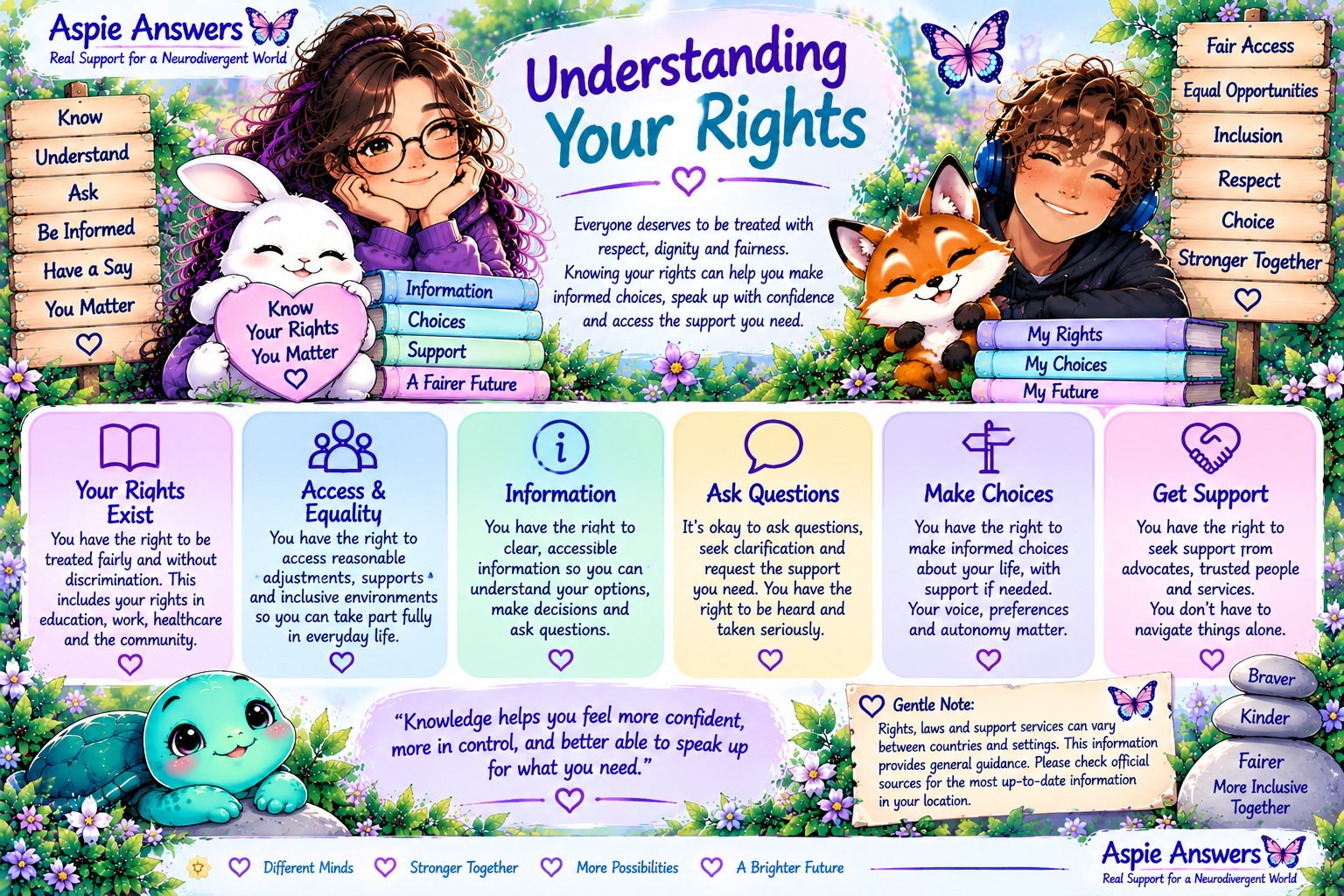
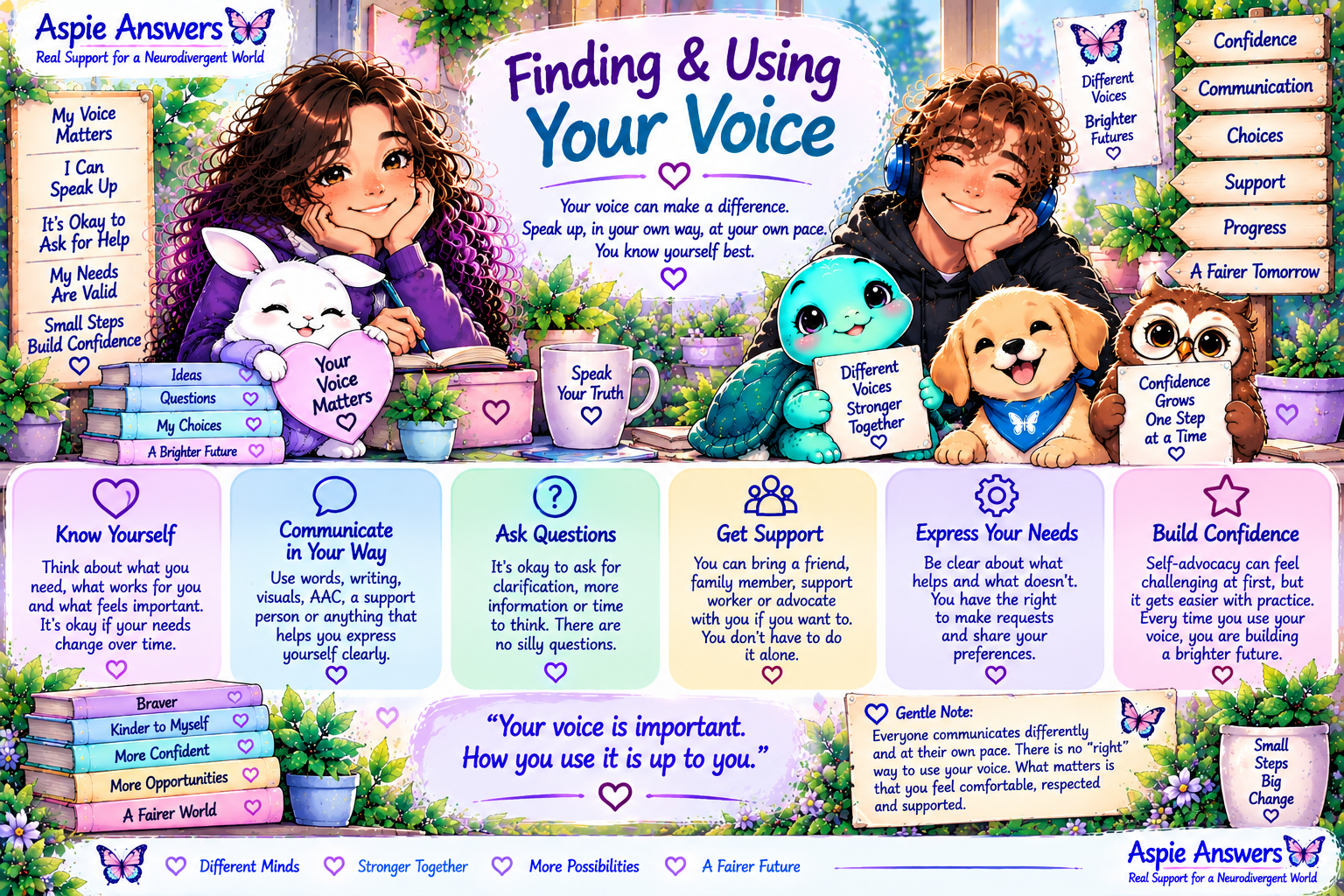
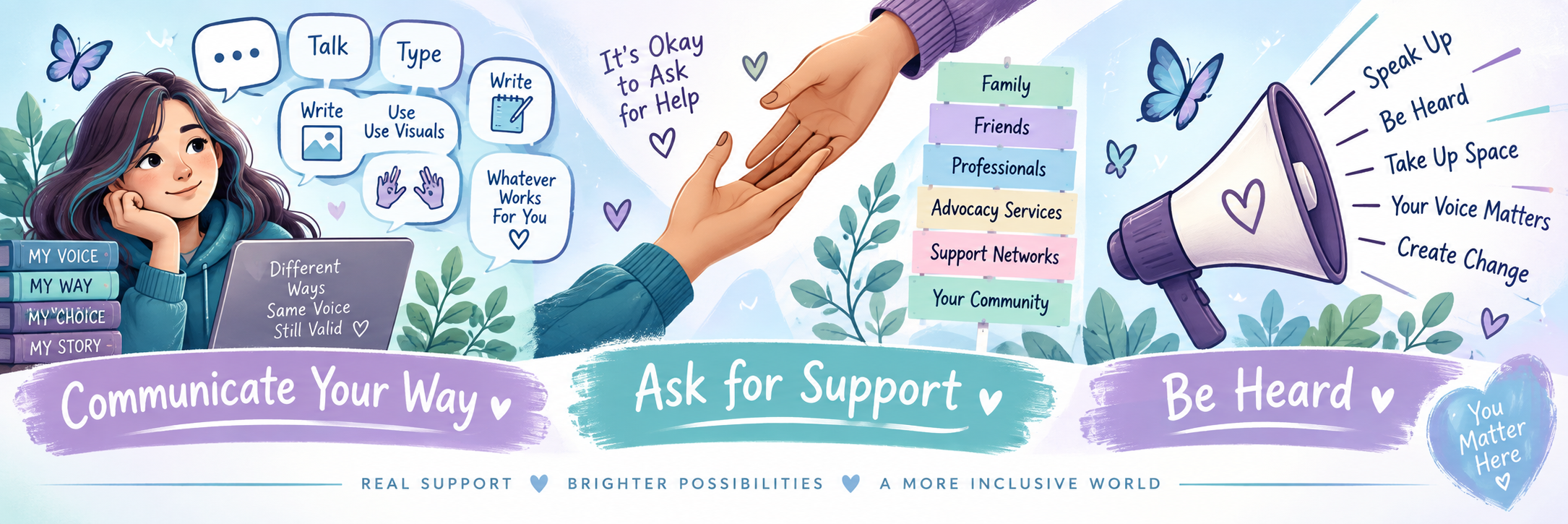
Some people feel comfortable explaining what they need in conversation. Others communicate more clearly through email, written notes, forms, visual supports, communication devices or with another person present.
Communication differences do not make someone's needs less important. Having extra processing time, needing information in writing or asking someone to help communicate can all be valid parts of self-advocacy.
Advocacy is not limited to formal complaints, meetings or legal situations. It can happen whenever you communicate what helps you participate, understand, feel safe or access something more fairly.
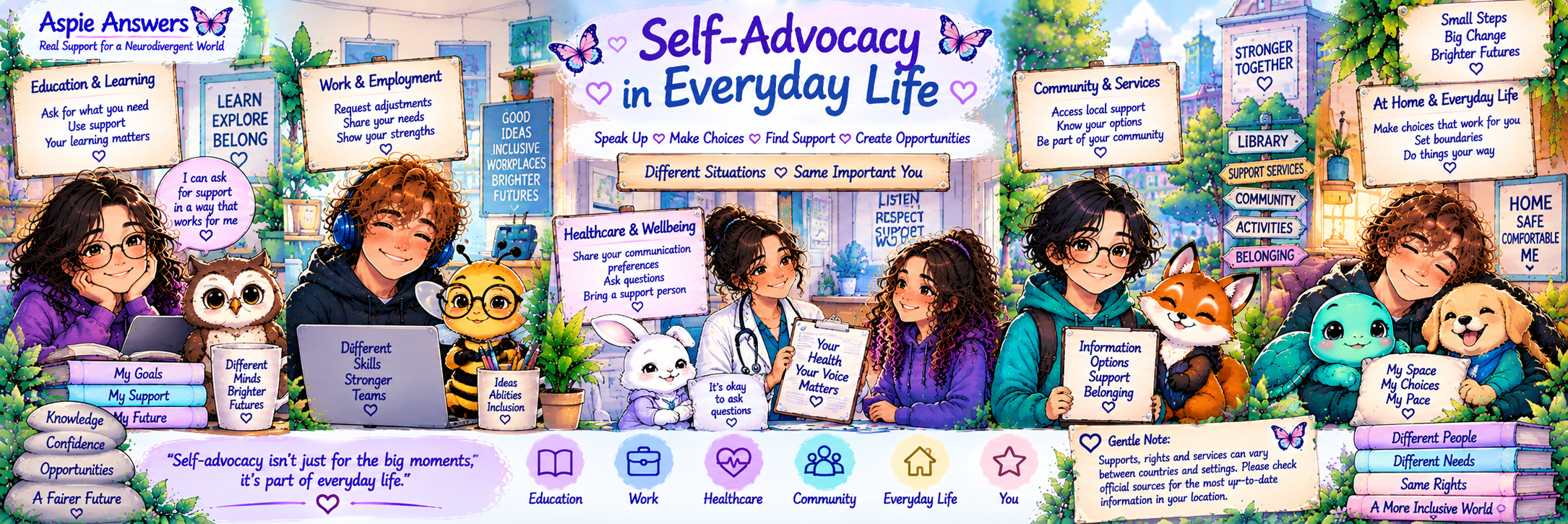
Asking for clearer instructions, accessible materials, extra processing time or another way to demonstrate learning.
Discussing communication preferences, sensory barriers, instructions, flexibility or workplace adjustments.
Asking questions, requesting information in a clearer format, bringing a support person or asking for time to process choices.
Communicating boundaries, sensory needs, routines, rest needs or ways that others can support you.
Asking about accessibility, quieter options, communication methods or practical support.
Requesting accessible formats, alternatives to phone calls or clearer information about processes and choices.
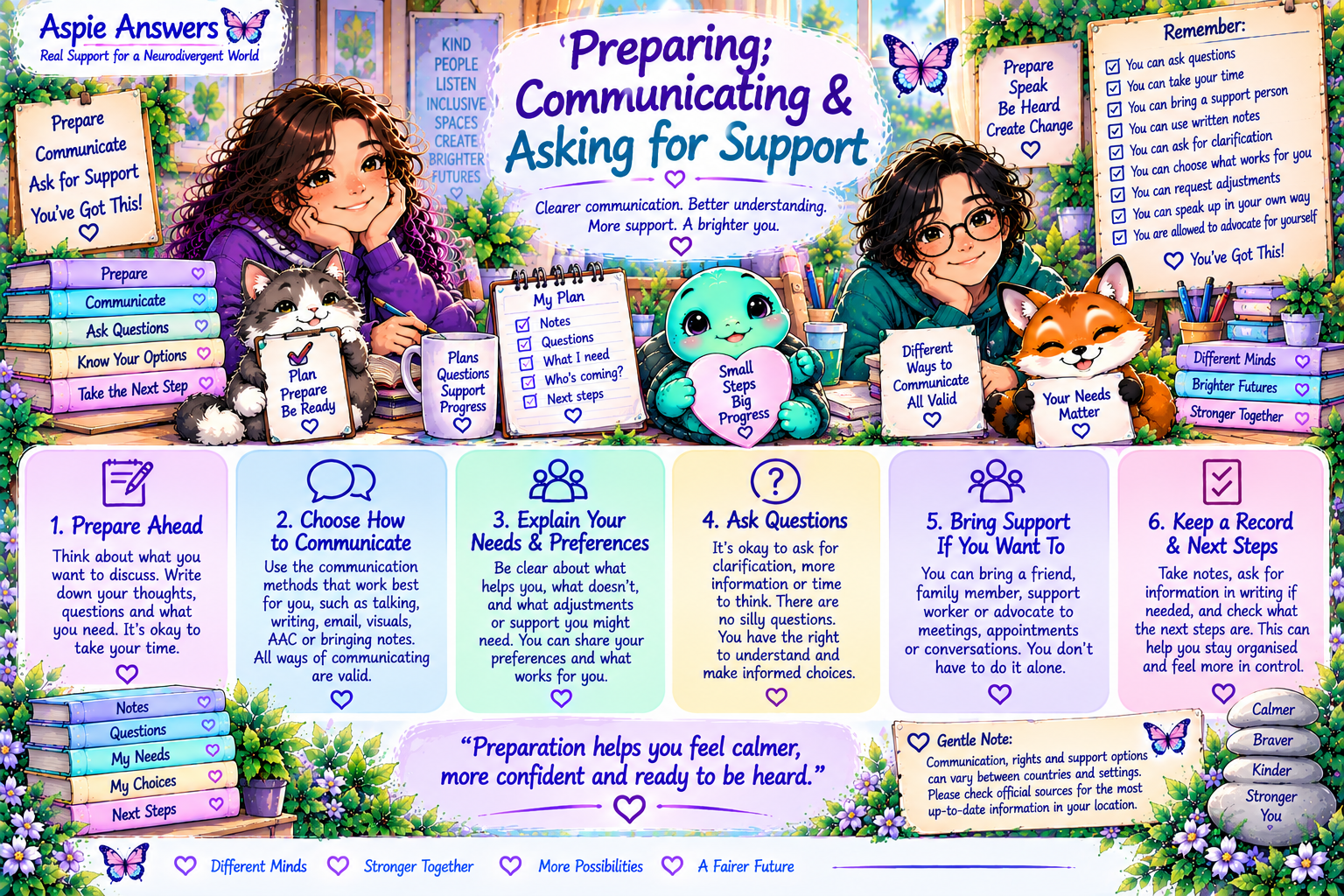
Difficult conversations can become even harder when you are overloaded, anxious, tired or trying to remember several important points at once. Preparing beforehand can reduce some of that pressure.
You may not always know exactly what to request. Asking questions can help you understand the situation before deciding what to do next.
“Could you explain that another way?”
“What other options are available?”
“Is there another way I can access or complete this?”
“Can I have some time to think about this before I respond?”
“Could you send that information to me in writing?”
“Can I bring someone with me to help me understand or communicate?”
Sometimes a request is misunderstood, ignored, refused or not acted on. That can be frustrating and exhausting, particularly when you have already spent significant energy explaining what you need.
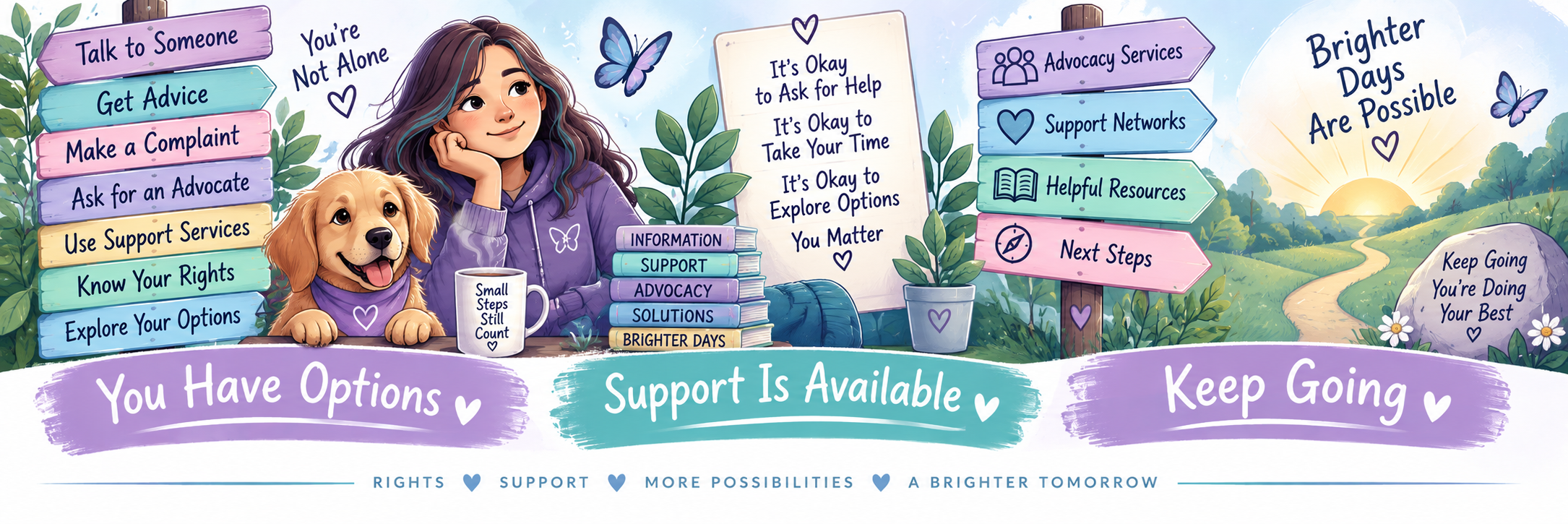
You may have other options. Depending on the situation, these might include asking for the decision or reasons in writing, speaking with another person, involving an advocate, using an organisation's complaint process or finding independent advice.
Escalating an issue does not always mean starting a confrontation. It can simply mean finding the next appropriate person or process that can look at what happened.
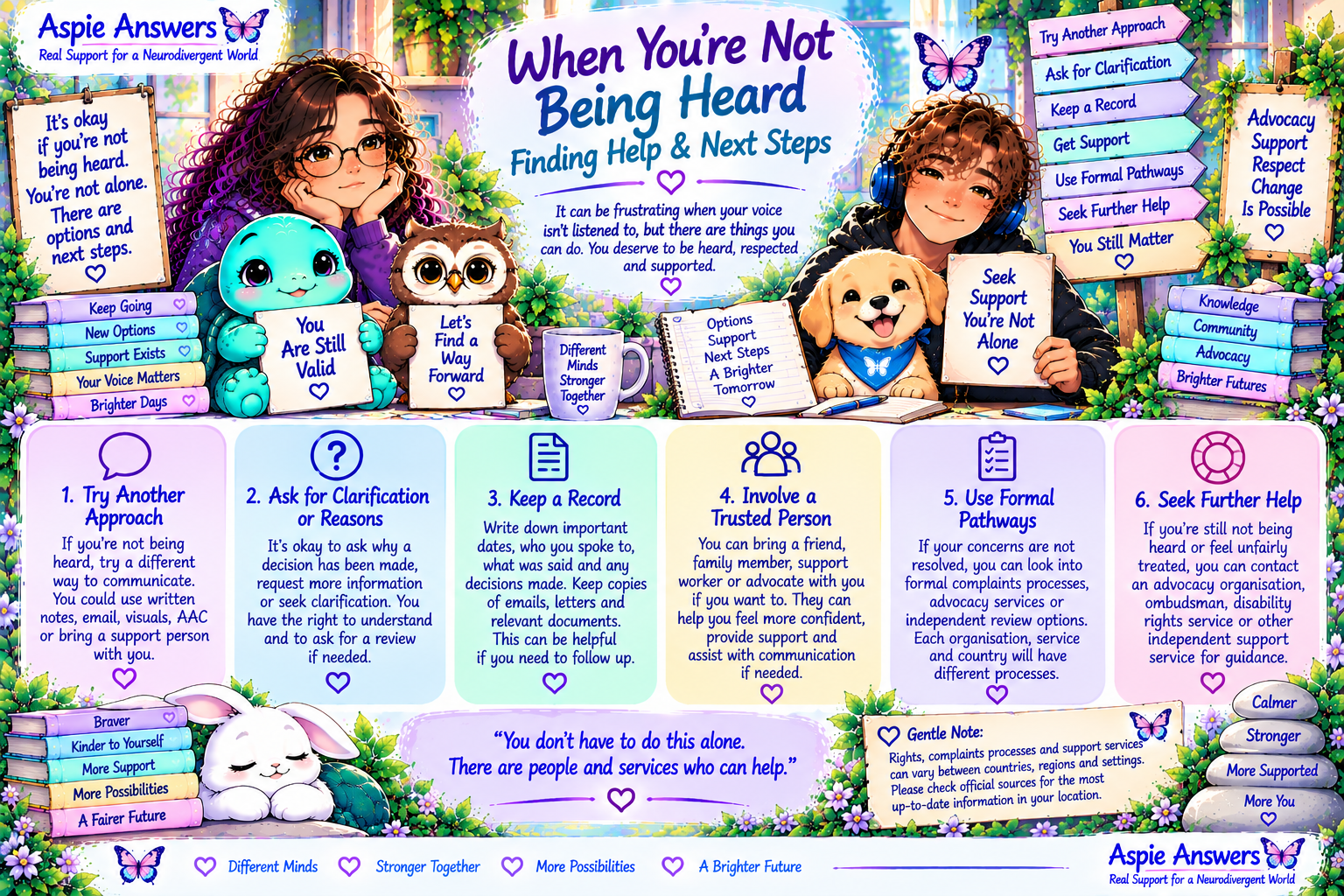
The right next step depends on the situation, where you live and what has happened. Support can come from both people you know and more formal services.
A family member, friend, colleague, teacher, support person or another trusted person may help you prepare or communicate.
An advocate may help you understand options, prepare for conversations or communicate your concerns.
Ask whether there is an accessibility contact, manager, complaints process or another person who can review the issue.
Official agencies, rights organisations and community services may provide information relevant to your situation.
Where useful, keep copies of correspondence, requests, responses and important dates so you do not have to rely only on memory.
You do not necessarily have to solve the whole situation in one conversation or one day.
Parents, whānau, friends, educators, employers, healthcare professionals and support workers can play an important role in advocacy. Good support should, wherever possible, help the person remain involved in decisions that affect them.
Find out what kind of help the person wants rather than assuming.
Allow processing time and avoid rushing to fill silences or answer on someone's behalf.
Support speech, writing, visuals, AAC or other communication methods that work for the person.
Help organise questions, notes, documents or priorities before a meeting if wanted.
Help clarify information without making decisions for the person unnecessarily.
Support the person's preferences, autonomy and involvement wherever possible.
You do not have to become an expert advocate overnight.
Confidence can grow through small experiences: writing down one question, asking for one adjustment, requesting information in a different format, bringing someone to a meeting or learning more about your rights.
Some situations will still be difficult. Needing help does not cancel out self-advocacy. Choosing who supports you, what you want communicated and how you want to participate can itself be part of advocacy.
Rights and self-advocacy connect closely with adjustments, complaint pathways, practical resources, definitions and topic-based guidance. Choose the route that best matches what you need next.
Understanding your rights can give you more information. Self-advocacy can help you use that information. Support can help you navigate the parts that are difficult.
You can take things one step at a time, ask questions, seek support and explore the options available to you.