
Discrimination, Complaints & Problems
When something feels unfair, inaccessible, unsafe or dismissive, knowing what you can do next can make a difficult situation easier to navigate.
This page can help you recognise possible discrimination or unfair treatment, document what happened, raise a concern, explore complaint pathways and find support if the problem is not resolved.
You do not need to know exactly what something is called before asking questions or seeking help.
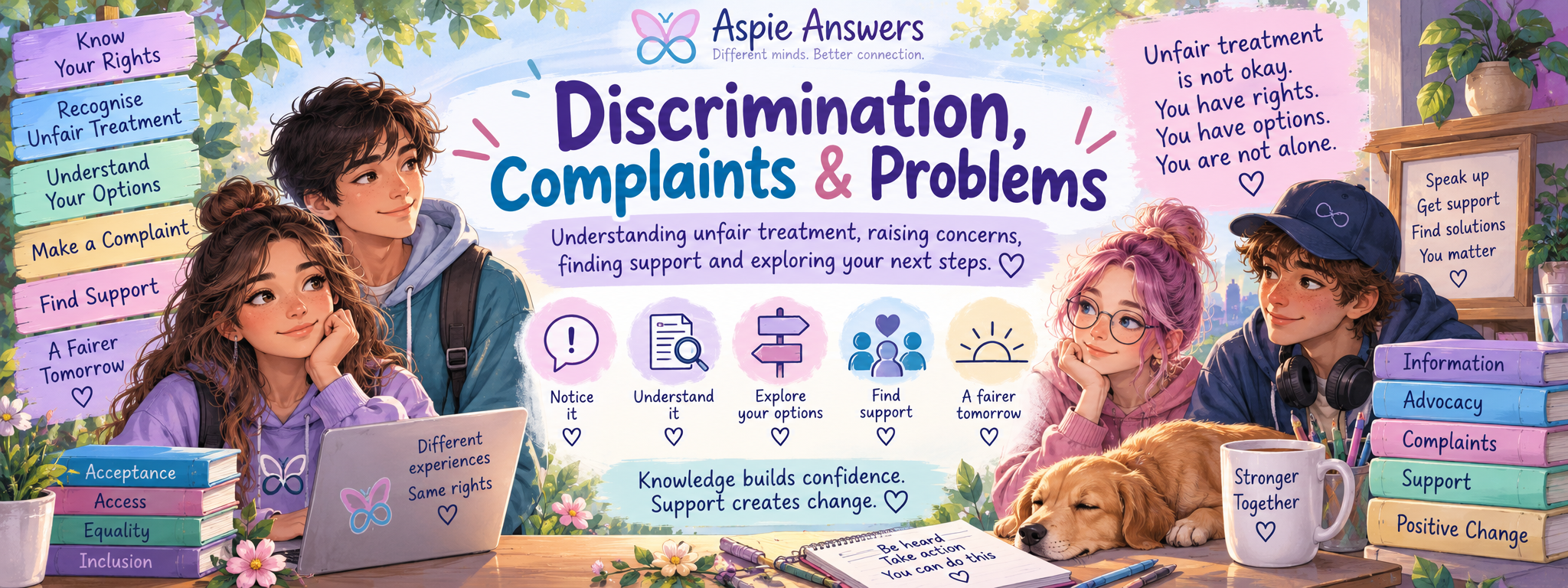
When something does not feel fair
Problems involving access, discrimination or unfair treatment are not always obvious. Some situations are direct and easy to identify. Others may involve repeated barriers, assumptions, inaccessible systems or decisions that have an unfair effect.
It may be obvious
Someone might make discriminatory comments, refuse access, deliberately exclude you or treat you differently because of a disability, neurodivergence or another protected characteristic.
It may be subtle
A policy, environment or process can create barriers even when nobody says directly that they intend to discriminate.
It may take time to recognise
Sometimes you notice a pattern only after several experiences. Writing things down can help you understand what has been happening.
Recognising discrimination & unfair treatment
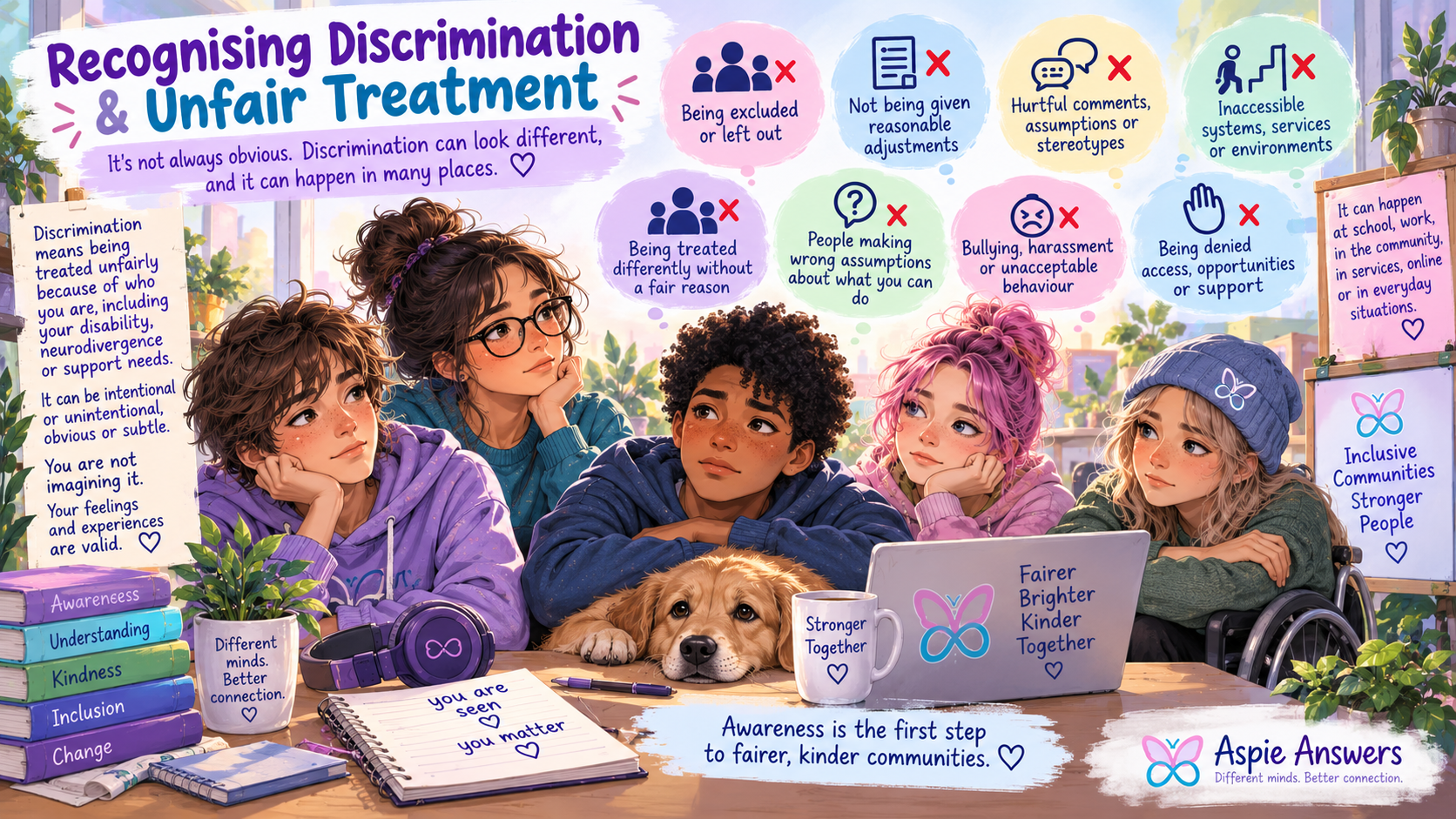
Discrimination and unfair treatment can take different forms depending on the situation. Things worth noticing may include:
Exclusion
- Being left out of opportunities or activities.
- Being prevented from participating because access has not been considered.
- Being treated as though you do not belong.
Unequal treatment
- Different rules being applied unfairly.
- Being denied opportunities available to others.
- Being dismissed or taken less seriously because of assumptions about you.
Harassment, bullying or hostility
- Insults, jokes, intimidation or repeated negative comments.
- Hostile behaviour connected with disability or identity.
- Online abuse, harassment or targeted exclusion.
Accessibility barriers
- Communication formats that you cannot access.
- Reasonable needs or adjustments being ignored.
- Physical, sensory, digital or procedural barriers preventing participation.
Something can be upsetting, unfair or harmful even when it does not meet the legal definition of discrimination. You can still seek support, raise concerns and explore appropriate options.
Documenting what happened
Writing down what happened can help you organise your thoughts, remember details and explain your concerns later. You do not need perfect records — capture what you reasonably can.
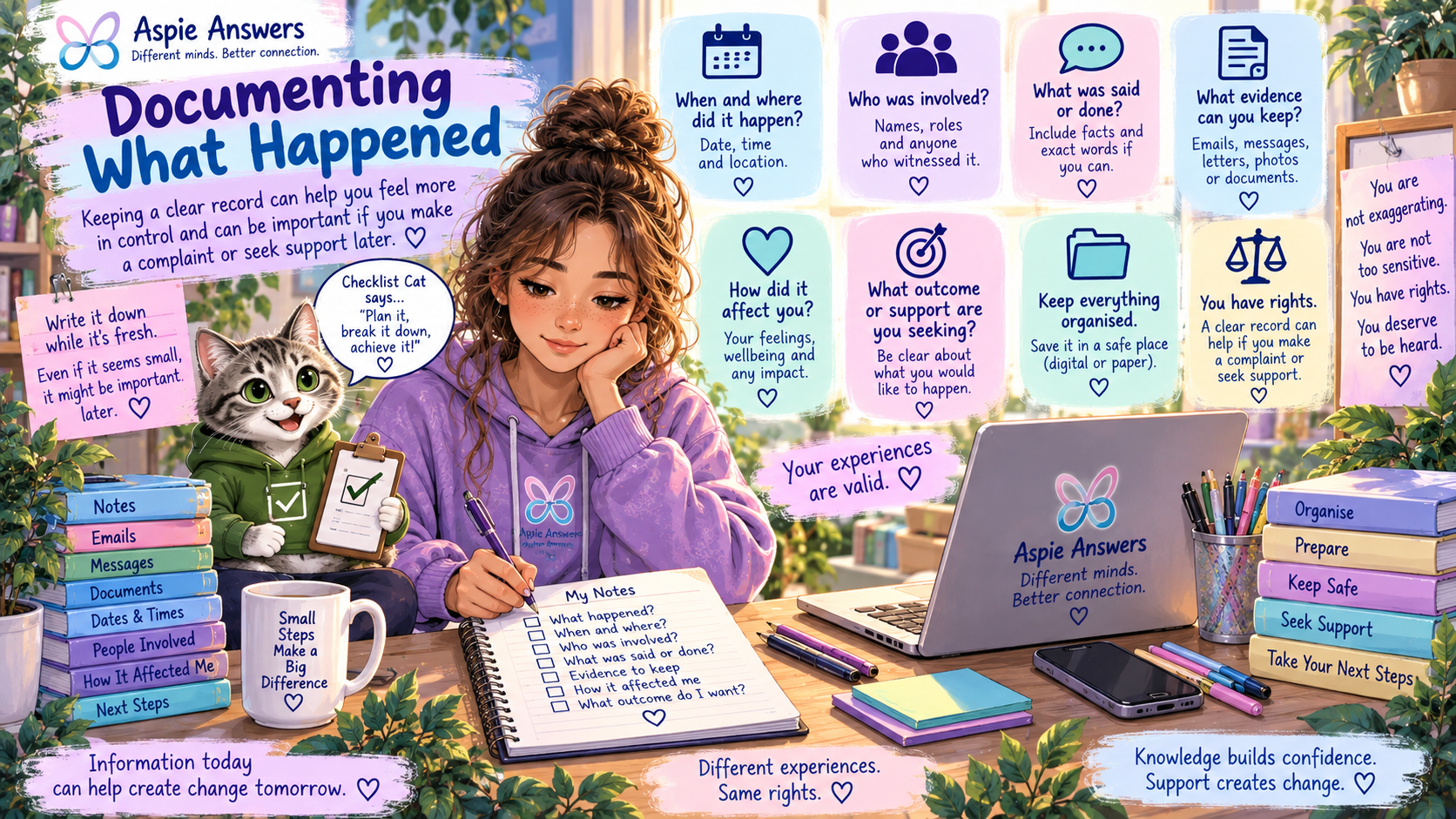
What happened?
Describe the event or decision as clearly as possible, using your own words.
When and where?
Record dates, approximate times, locations, meetings, phone calls or online interactions.
Who was involved?
Note the people or organisations involved and anyone who witnessed what happened.
What evidence exists?
Keep relevant emails, letters, screenshots, forms, decisions, policies or meeting notes.
What was the impact?
Explain how the situation affected your access, wellbeing, participation, employment, education or everyday life.
What would help?
Think about the outcome you want — for example an explanation, apology, adjustment, reconsideration, correction or another change.
Making a complaint & raising a concern
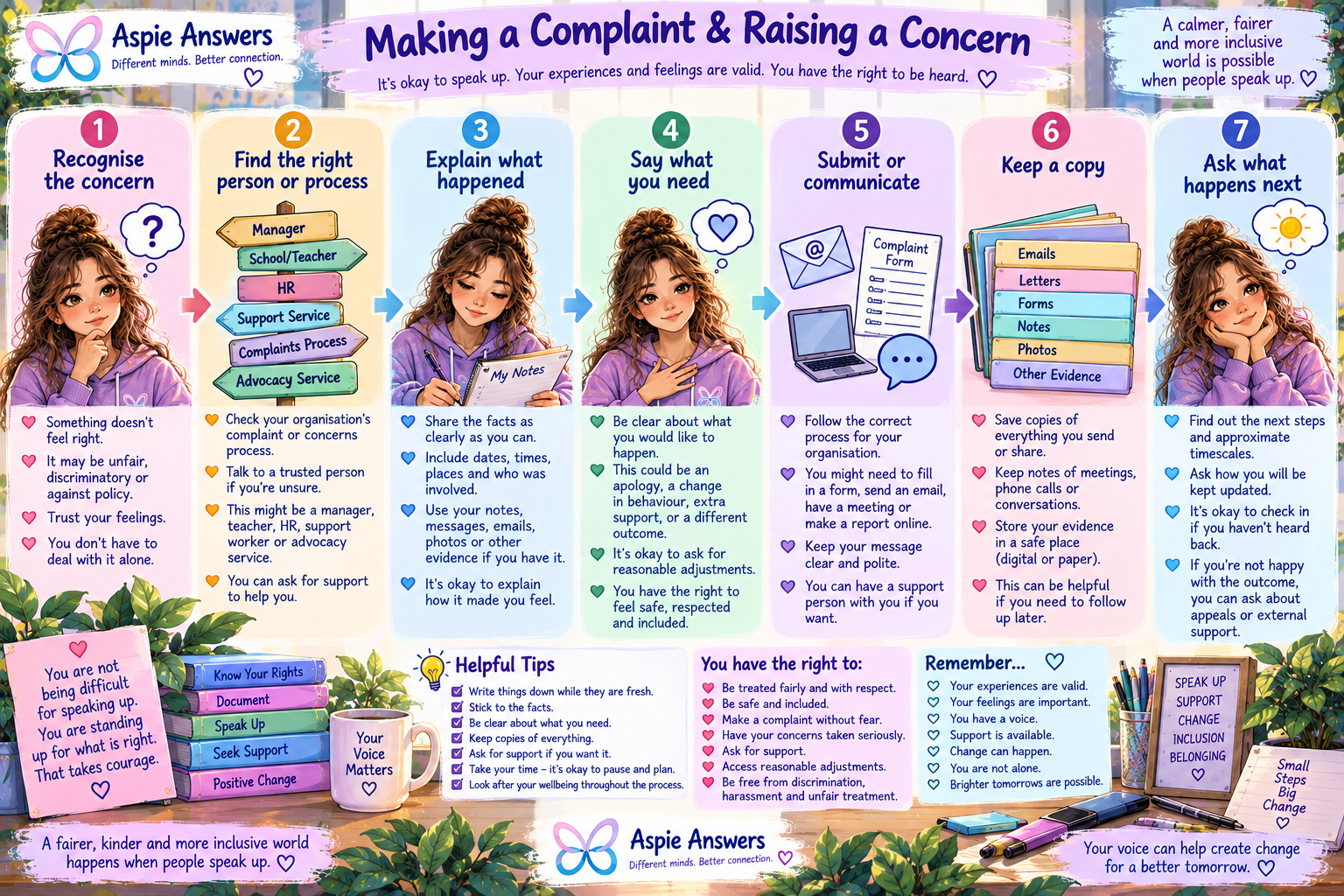
A complaint does not always need to begin as a formal process. Depending on the situation, you may start by speaking with the person or organisation involved, asking for clarification or raising the concern with somebody responsible for resolving problems.
Identify what feels wrong, unfair, inaccessible or unresolved.
Look for a manager, teacher, complaints team, HR contact, support service or published complaints procedure.
Use clear facts, relevant dates and supporting information.
Say what outcome, change, response or support you are seeking.
This might happen in writing, online, by phone or during a meeting.
Save what you sent and make brief notes of important conversations.
Check the expected process, contact person and approximate timeframe.
If speaking in a meeting is difficult, you may prefer written communication, notes prepared beforehand, a support person, extra processing time or another accessible communication method.
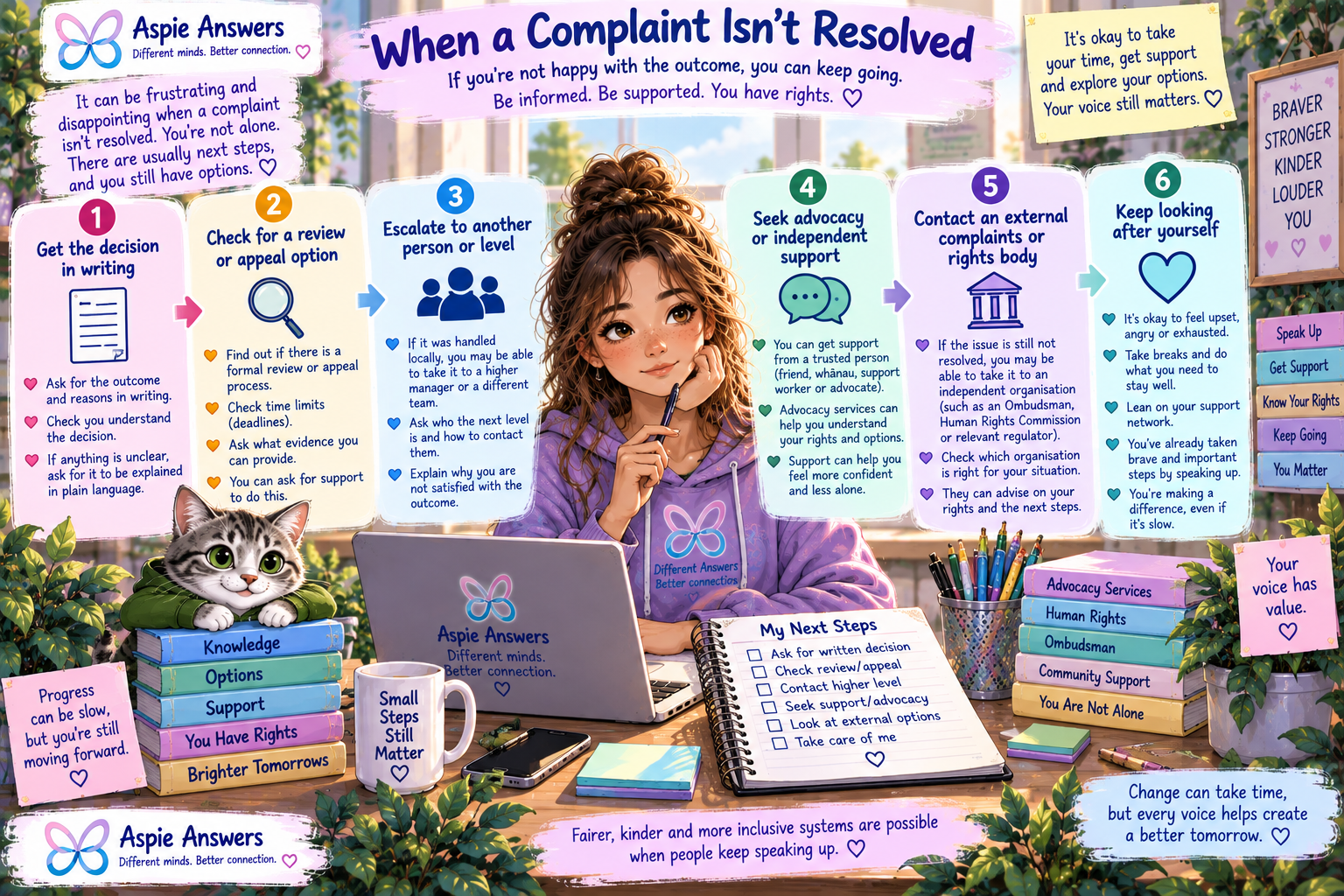
When a complaint is not resolved
Sometimes the first response does not resolve the issue. That does not necessarily mean you have reached the end of your options.
Ask for the outcome in writing
A written response can make the decision and reasons easier to understand and keep for your records.
Check review or appeal options
Look at the organisation's process and note any relevant deadlines or review stages.
Escalate appropriately
There may be another manager, complaints team, governing body or review level available.
Seek advocacy
An advocate or support person may help you understand options, prepare information or communicate your concerns.
Consider external help
Depending on the issue and location, an independent complaints, rights, regulatory or specialist body may be able to help.
Protect your wellbeing
Complaint processes can take energy. Break tasks into manageable steps and use support where it is available.
Finding support & advocacy
Support can look different for different people. You may want emotional support, practical help, advocacy, specialist information or somebody simply to help you organise the next step.
Trusted people & whānau
A friend, partner, family member, whānau member or trusted person may help you talk things through or attend a meeting with you.
Advocates & support workers
They may help explain processes, prepare information, communicate concerns or identify possible options.
Community & peer support
Disability, neurodivergent and community organisations may offer information, lived-experience perspectives and practical support.
Professional or specialist help
Some situations may benefit from specialist advocacy, employment advice, legal information, counselling or another professional service.

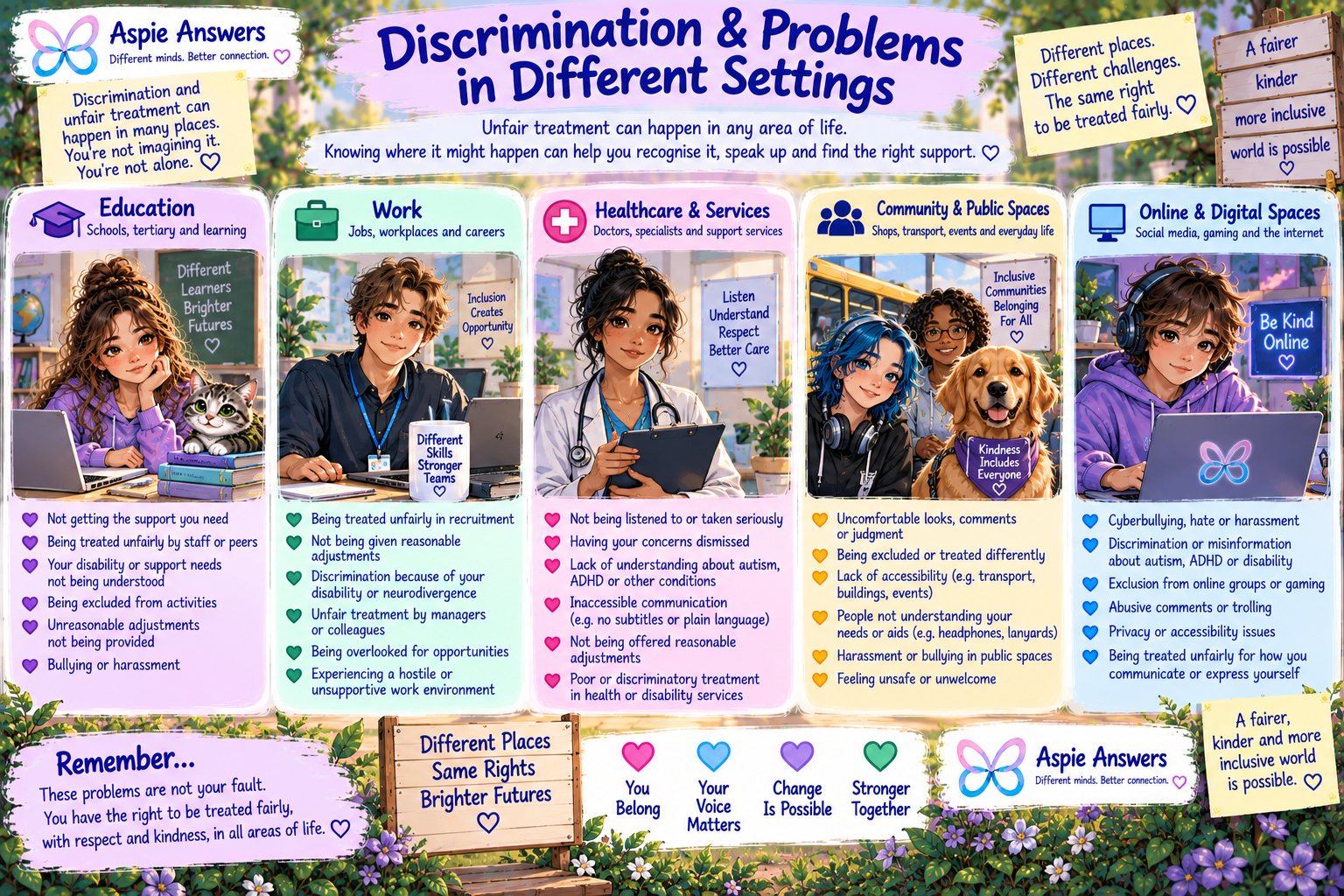
Discrimination & problems in different settings
Unfair treatment and accessibility problems can arise across many parts of life. The right process or source of help may depend on where the problem happened.
Education
Problems may involve learning access, adjustments, exclusion, bullying, participation or understanding disability and neurodivergence.
Work
Concerns may arise in recruitment, workplace treatment, accommodations, harassment, performance processes or access to opportunities.
Healthcare & services
Issues may include inaccessible communication, assumptions, concerns being dismissed or barriers to receiving appropriate support.
Community & public spaces
Access problems can involve transport, shops, events, buildings, public services or community participation.
Online & digital spaces
Digital barriers may involve inaccessible websites, harassment, privacy, communication or exclusion from online participation.
More than one setting
Some issues overlap. A person may need more than one pathway, service or type of support.
Finding the right complaints pathway in New Zealand
Different organisations deal with different kinds of complaints. These official New Zealand services are useful starting points when their area matches your situation.
Rights, legal definitions, complaint processes, time limits and enforcement options vary between countries and sometimes between states, provinces or regions. Always check current official guidance for the place where the issue occurred.
Aspie Answers provides general educational information and practical guidance. It is not a substitute for individual legal advice.
A simple complaint preparation checklist
If your brain is already overloaded, you do not need to tackle everything at once. Start with whichever step feels manageable.
Before raising the concern
- Write down what happened.
- Gather the most relevant documents.
- Check the organisation's complaints process if available.
- Decide what outcome or response you are seeking.
When communicating
- Keep your explanation as clear as you reasonably can.
- Ask for accessible communication if needed.
- Take or request a support person if appropriate.
- Keep copies of important communications.
Afterwards
- Record important dates or conversations.
- Ask what will happen next.
- Note relevant response or appeal deadlines.
- Seek another level of help if the issue remains unresolved.
Remember your energy
- Break the process into smaller tasks.
- Ask someone to help organise paperwork.
- Pause when you need to.
- Use advocacy or support rather than carrying everything alone.
Tools, resources & further information
The Aspie Answers Accessibility & Rights Library brings together information about accessibility, rights, discrimination, complaints, advocacy and related pathways.
Your voice, needs and experiences matter
Raising a problem can take courage and energy. You do not need to know every answer before you begin.
Learn what you can, keep useful information, ask for support, and take the next step that makes sense for your situation.
A fairer and more accessible world grows when barriers are recognised, concerns are taken seriously and people have meaningful ways to be heard.
Aspie Answers • Different minds. Better connection.