
Volunteering & Community Work
Volunteering and community work can offer meaningful ways to contribute, connect with others, explore interests, develop skills and gain experience. There is no single right way to volunteer. The best opportunity is one that respects your interests, capacity, support needs, energy and circumstances.

Explore This Page
Use the links below or search this page for a word such as skills, community, support, confidence or experience.
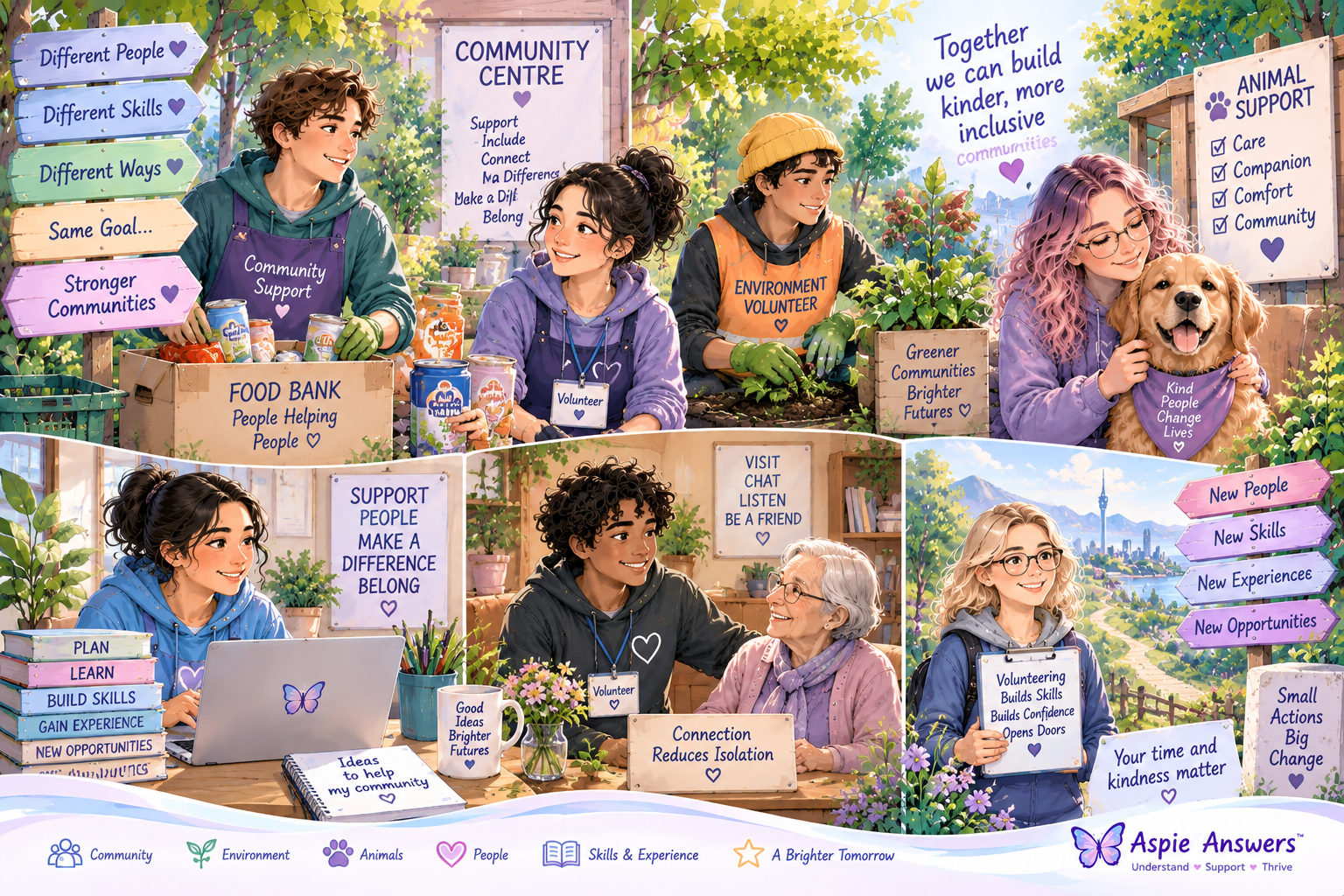
Volunteering Can Look Different for Everyone
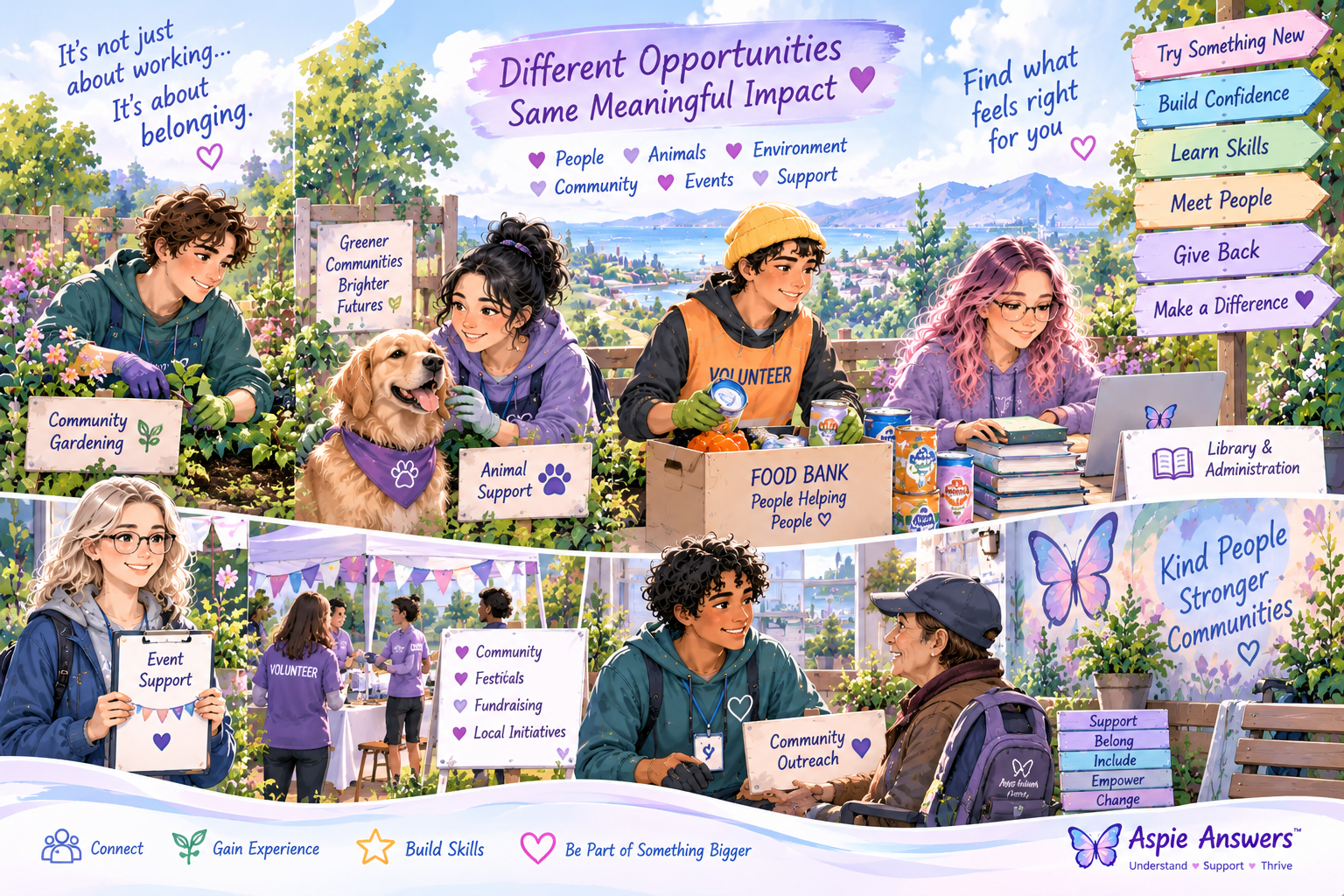
Volunteering does not have to mean committing to a large organisation every week. It can be regular or occasional, in person or online, independent or supported, practical or creative.
- Helping at community events or local organisations.
- Supporting environmental, animal or conservation projects.
- Sharing a skill, interest or area of knowledge.
- Helping online, remotely or behind the scenes.
- Mentoring, tutoring, advocacy or peer support.
- Contributing to clubs, groups, charities or community projects.
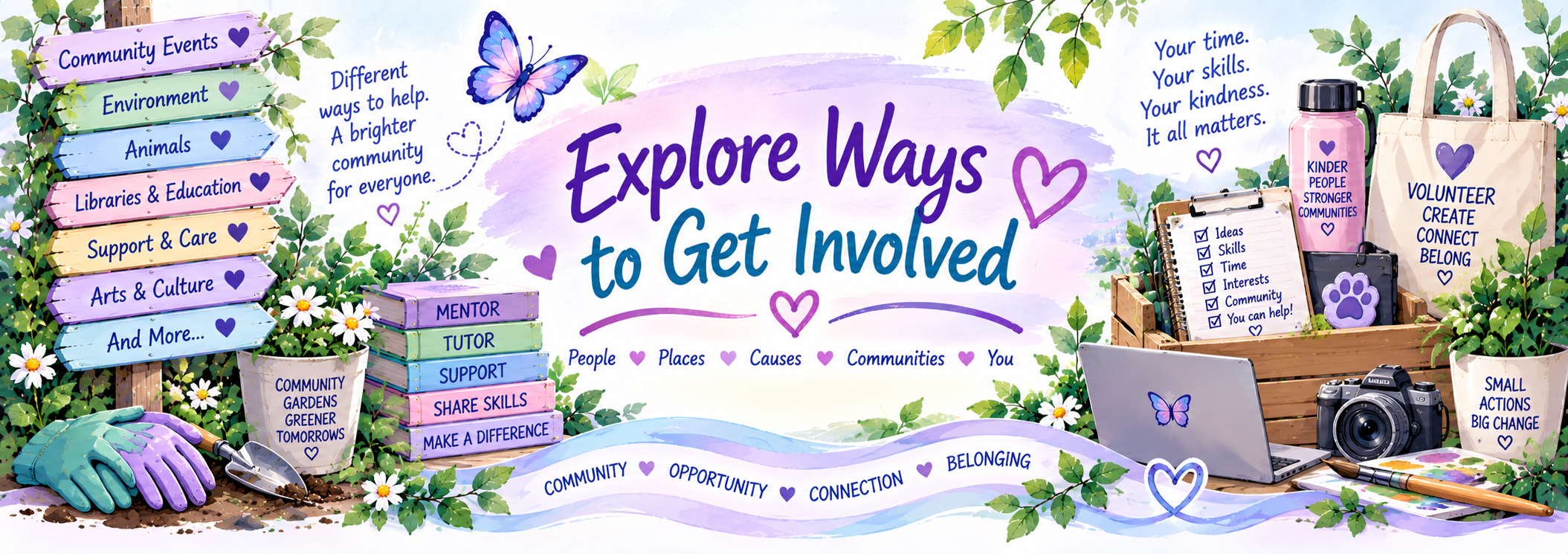
Different Types of Volunteering
Different settings use different strengths. There is no single type of volunteering that suits everyone.
Environment
Community gardens, conservation, clean-ups, restoration and sustainability.
Animals
Animal welfare, shelters, conservation and practical animal-care activities.
Learning & Education
Libraries, tutoring, literacy, mentoring and sharing knowledge.
Arts & Culture
Museums, heritage, community arts, events and creative projects.
Community Support
Charities, neighbourhood projects, community groups and practical support.
Digital & Remote
Research, administration, websites, writing, design and online support.
Events
Community festivals, registrations, set-up, fundraising and event support.
Peer & Advocacy
Mentoring, lived-experience work, advisory roles and community representation.
Choose an Opportunity That Works With You
A cause may matter deeply to you while a particular role or environment still does not suit you. It is okay to consider the whole experience.
Interests & Meaning
What causes, activities, subjects or communities matter to you?
Environment
Consider noise, lighting, crowds, travel, movement and predictability.
Communication
Think about meetings, phones, teamwork, instructions and social expectations.
Energy & Capacity
Consider hours, recovery time, routines and what is realistically sustainable.
It Is Okay to Ask Questions First
Understanding a role beforehand can make it easier to decide whether it is manageable and genuinely suitable.
Time
How often are volunteers expected to attend and how long is each shift?
Tasks
What will you actually be doing and are responsibilities clearly explained?
People
Will you work alone, with a team, with the public or with a supervisor?
Environment
What is the physical and sensory environment likely to be like?
Support
Who can you ask for clarification, adjustments or additional support?
Flexibility
Can you try the role, change duties or stop if it is not a good fit?
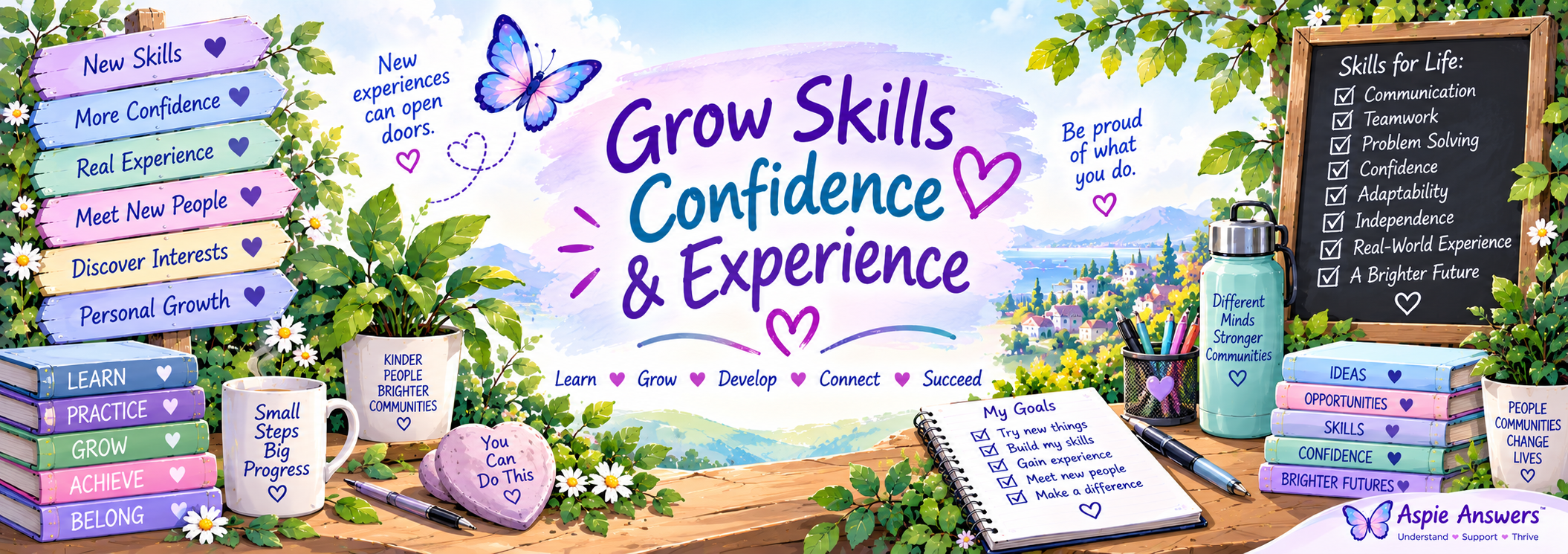
What You Learn Through Volunteering Matters
Volunteering can build skills through real experiences, but its value is not limited to future employment.
Communication
Listening, asking questions, explaining and written communication.
Problem-Solving
Finding solutions, adapting and responding to unexpected situations.
Organisation
Planning, routines, task management and following processes.
Practical Skills
Equipment, technology, tools and role-specific practical knowledge.
Teamwork
Cooperating, sharing responsibilities and contributing to shared goals.
Digital Skills
Administration, research, websites, social media and digital tools.
Confidence
Trying new things and recognising your developing strengths.
Experience
Discovering which roles, environments and responsibilities suit you.
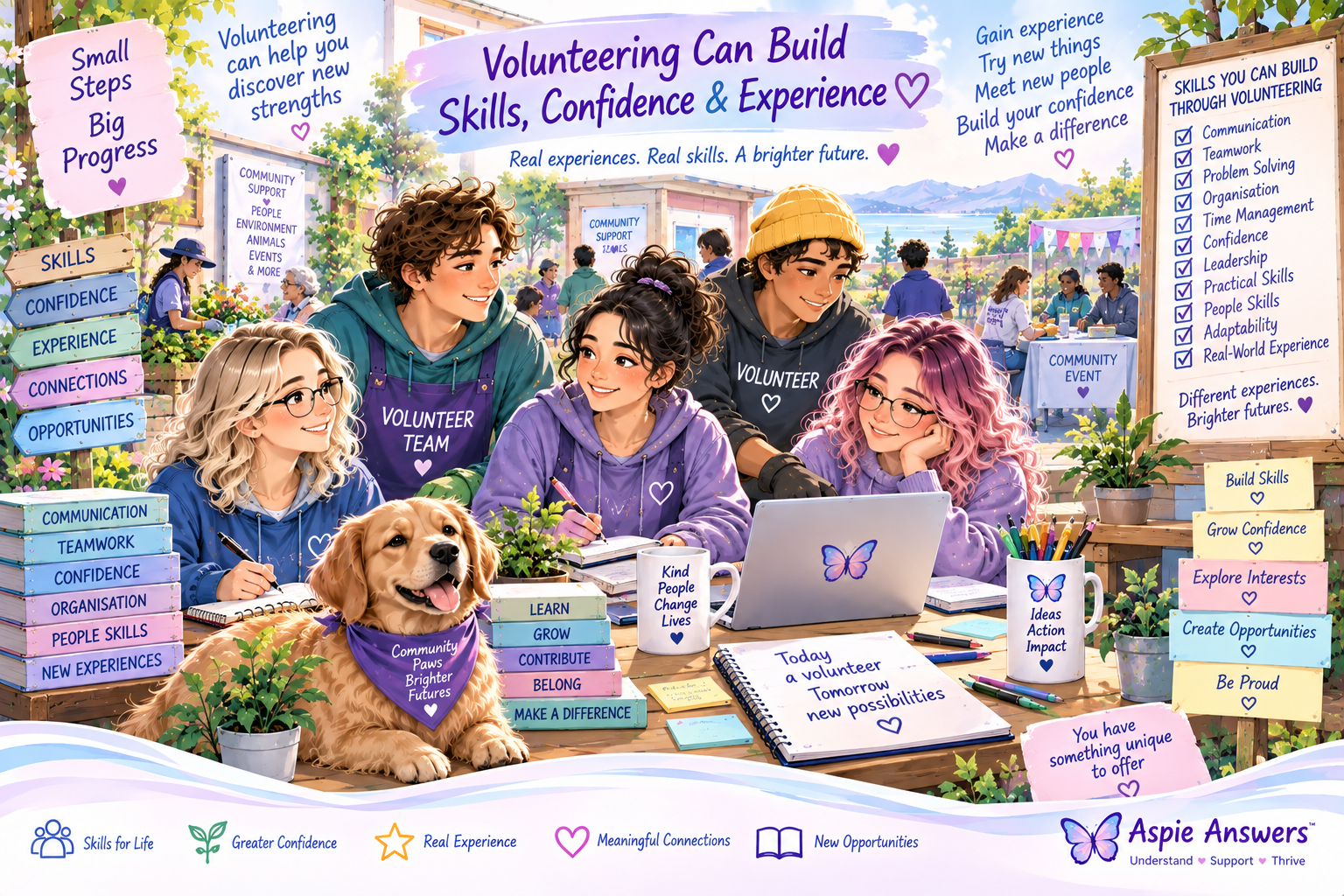
Volunteer Experience Can Count
Skills gained through volunteering can sometimes support future applications, study, training or employment.
- Keep a record of activities and responsibilities.
- Write down new skills as you notice them.
- Record projects or achievements you are proud of.
- Ask whether references are available when appropriate.
- Notice which environments and tasks work particularly well for you.
Your Support Needs Still Matter When You Volunteer
Being a volunteer does not mean you have to ignore accessibility, communication, sensory or support needs.
Executive Function
Clear tasks, written instructions, reminders and predictable routines.
Sensory Environment
Noise, lighting, crowds, smells, temperature and quieter spaces may matter.
Communication
Written information, direct language and processing time may help.
Pacing & Energy
Shorter shifts, breaks and gradual starts can support sustainability.
Predictability
Knowing schedules, tasks and changes in advance can make preparation easier.
Support
Ask whether orientation, mentoring, a buddy or another support is available.
Helping Others Should Not Mean Ignoring Yourself
Your time, wellbeing and boundaries still matter when you volunteer.
- Know who is responsible for supervising or supporting you.
- Ask what duties are and are not part of your role.
- Understand expected hours and absence procedures.
- Ask about safety procedures and required training.
- Check whether expenses or reimbursements apply.
- Speak up if expectations change significantly.
You Can Say No
Supporting a cause does not require saying yes to every request. You can have limits around time, responsibilities, communication, physical demands and emotional load.
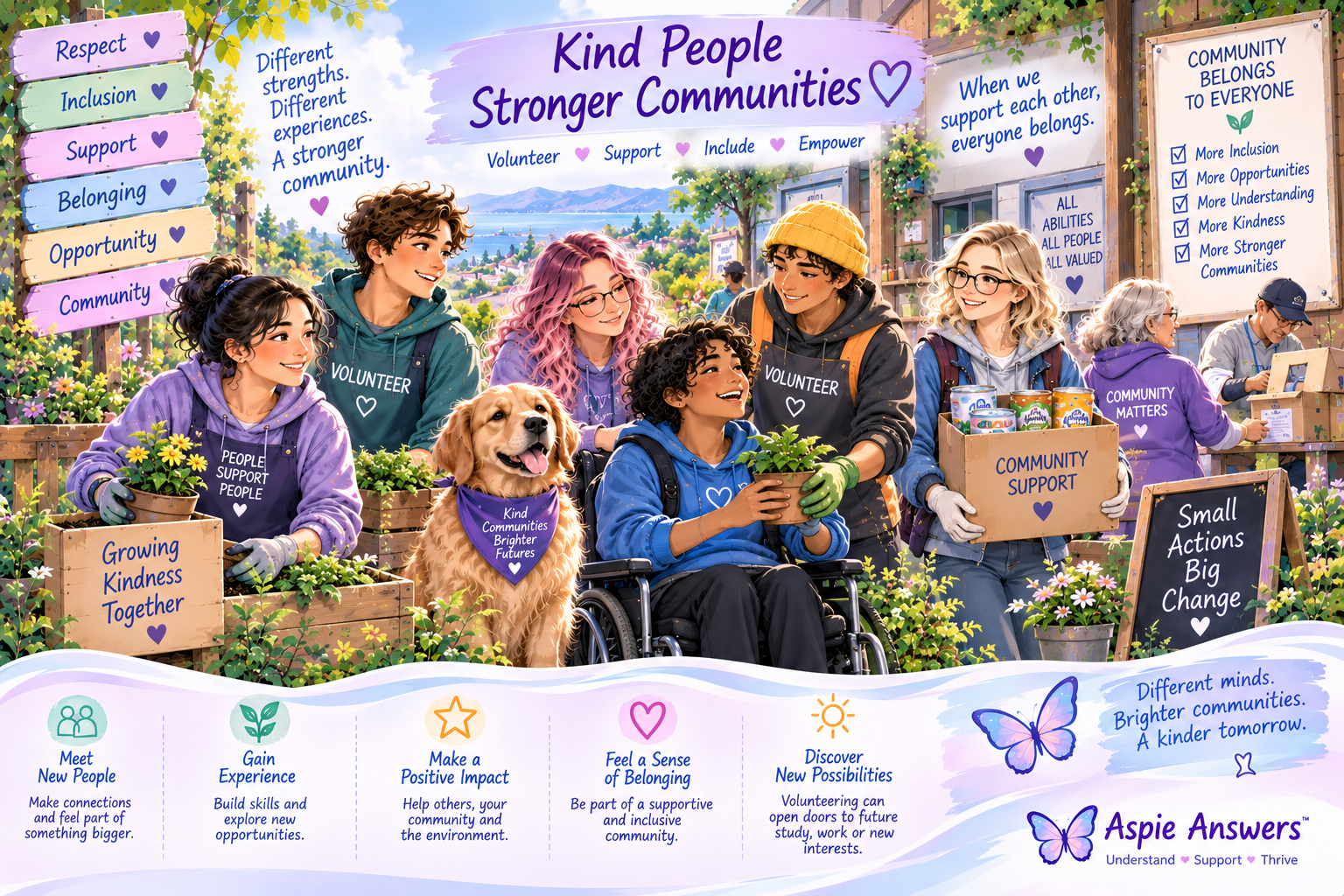
Contribution Can Create Connection
For some people, volunteering creates opportunities to meet others around a shared interest or purpose. A shared activity can also make social interaction feel more structured.
- Meet people who care about similar causes or interests.
- Take part in an activity with a shared purpose.
- Become more familiar with your local community.
- Build connections gradually rather than under pressure.
- Contribute knowledge, experience and perspectives that matter.
Go Deeper When You Are Ready
These are useful deeper topic areas for this part of the hub. We can create standalone pages only where they genuinely add enough value.
Why Volunteer?
Meaning, interests, contribution, connection and personal goals.
Detailed topic plannedFinding Volunteer Roles
Searching by cause, activity, environment, support and availability.
Detailed topic plannedBuilding Confidence
Gradual starts, familiarity, strengths and trying new experiences.
Detailed topic plannedGaining Experience
Skills, projects, responsibilities, references and useful learning.
Detailed topic plannedCommunity Participation
Belonging, shared interests, local participation and contribution.
Detailed topic plannedSupported Volunteering
Accessible roles, communication, mentoring, adjustments and support.
Detailed topic plannedMoving Into Employment
Where wanted, volunteering may support training, study or future employment.
Detailed topic planned
Finding Volunteer Opportunities in New Zealand
Volunteer opportunities may be offered through charities, community organisations, councils, schools, environmental projects, clubs and other local services.
Start Locally
Community centres, libraries, councils and local groups may know about opportunities.
Search by Interest
Searching by cause or activity may uncover opportunities that better match you.
Contact Organisations
Ask organisations directly about roles, requirements and support arrangements.
Turn Ideas Into Practical Next Steps
This resource area can grow alongside the Volunteering & Community Work section as new tools and collections are developed.
Volunteering Planning Tools
Opportunity comparisons, questions to ask, role planning and reflection tools.
Work & Employment Resources
Applications, interviews, workplace routines, communication and career tools.
Resource Collections
Related resources can be grouped into useful collections as the library grows.
Explore More Work & Employment Pathways
Volunteering connects with many other parts of a working life. Choose another pathway whenever it feels useful.
Finding Work
Explore job searching, applications, CVs, interviews, strengths and preparation for employment.
Explore Finding Work →Workplace Success
Explore communication, organisation, executive function, productivity, workplace wellbeing and practical support.
Explore Workplace Success →Working From Home
Explore workspace, routines, communication, focus, energy, sensory needs and work-life boundaries.
Explore Working From Home →Career Planning & Development
Explore strengths, goals, learning, training, career development and practical next steps.
Explore Career Planning →Self-Employment & Small Business
Explore freelancing, business ideas, planning, organisation and sustainable self-employment.
Explore Self-Employment →Workplace Rights & Employment Support
Explore workplace support, reasonable adjustments, advocacy, respectful treatment and where to seek help.
Explore Rights & Support →Industry & Career Pathways
Explore industries, career routes, training, qualifications, skills and different ways into work.
Explore Career Pathways →Work & Employment Hub
Return to the main hub to see the complete Work & Employment area, resources and starting points.
Return to the Hub →You Do Not Have to Change the Whole World
Community contribution can be large or small, regular or occasional, visible or behind the scenes. What matters is finding a way to participate that has meaning for you and remains realistic for your life, wellbeing and capacity.