🌐 Shared human-rights principles
International disability-rights frameworks support principles including dignity, equality, accessibility, participation, autonomy and inclusion.

Explore disability rights, accessibility, advocacy and support pathways across Oceania, including Aotearoa New Zealand, Australia and the wider Pacific.
Oceania shares important human-rights principles, but countries and territories can have very different laws, terminology, disability services, accessibility standards, eligibility rules and complaint pathways.
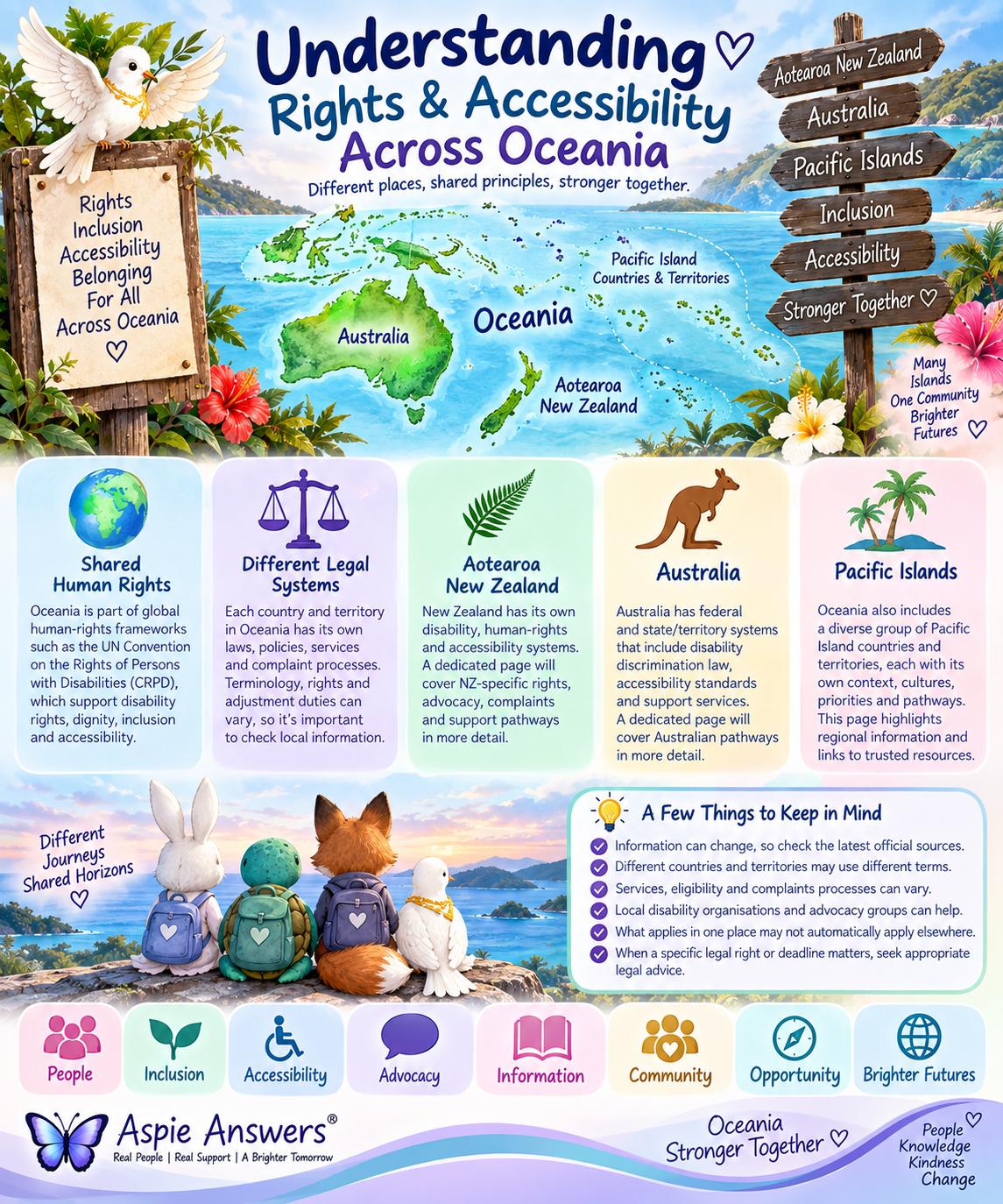
Oceania includes Aotearoa New Zealand, Australia and many Pacific Island countries and territories. It contains diverse communities, cultures, languages, governments, legal systems and disability-support structures.
International disability-rights frameworks support principles including dignity, equality, accessibility, participation, autonomy and inclusion.
Disability law, discrimination protections, complaint bodies, eligibility rules and formal processes vary between places.
Disabled people and organisations of persons with disabilities bring essential lived experience and local knowledge to disability-rights work.
Distance, transport, infrastructure, digital connectivity and island geography can affect access to services and participation.
Start with where you live or where the issue happened. From there, use country-specific or territory-specific rights information rather than assuming one Oceania system applies everywhere.
Explore New Zealand rights, disability services, accessibility, advocacy, reasonable accommodations and adjustments, discrimination and complaints pathways.
New Zealand Rights & Accessibility →Explore Australian federal disability rights alongside state and territory accessibility, discrimination, complaints and support systems.
Australia Rights & Accessibility →Explore Pacific disability rights, inclusion, community leadership and regional pathways while recognising that countries and territories have different systems.
Explore Pacific Islands ↓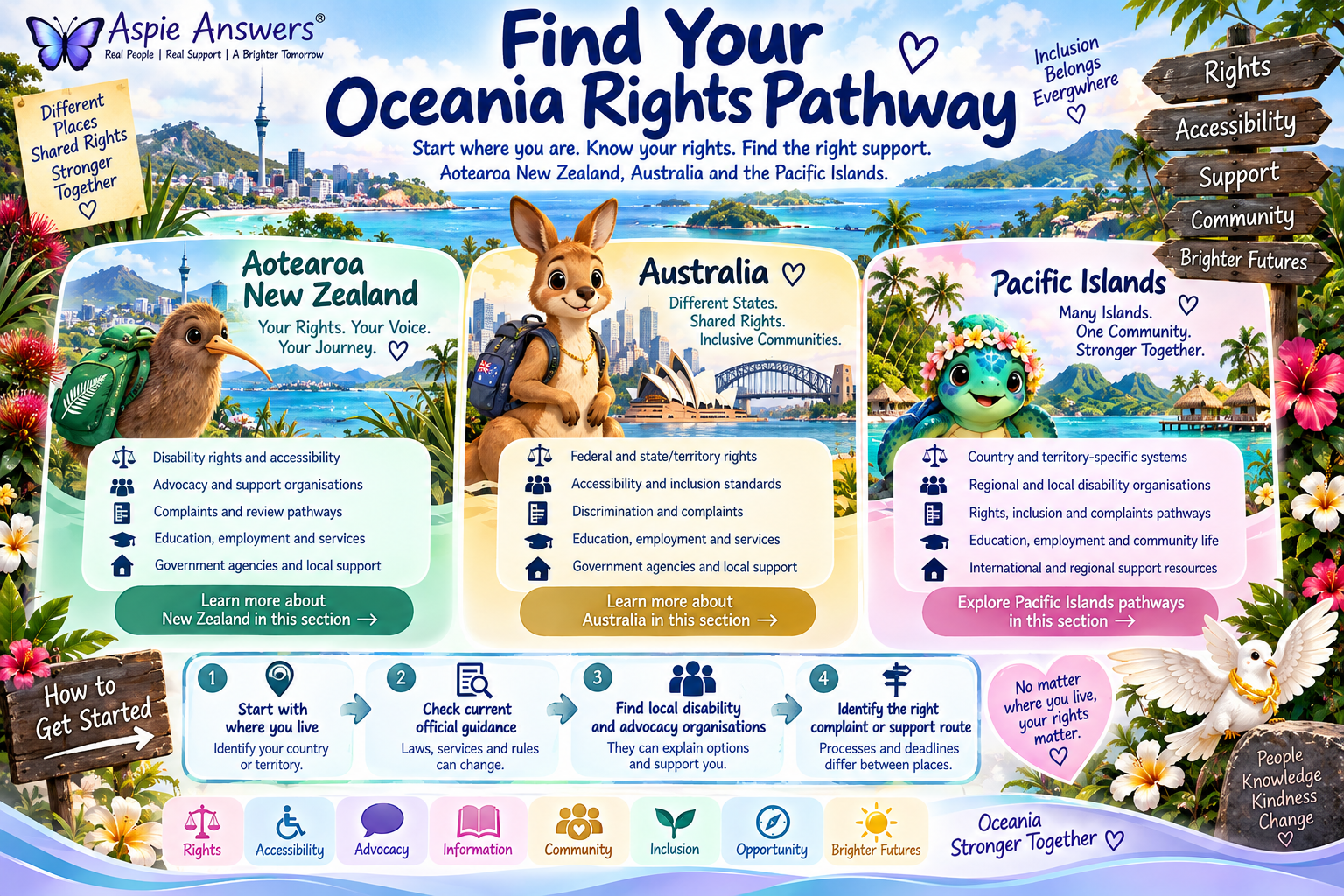
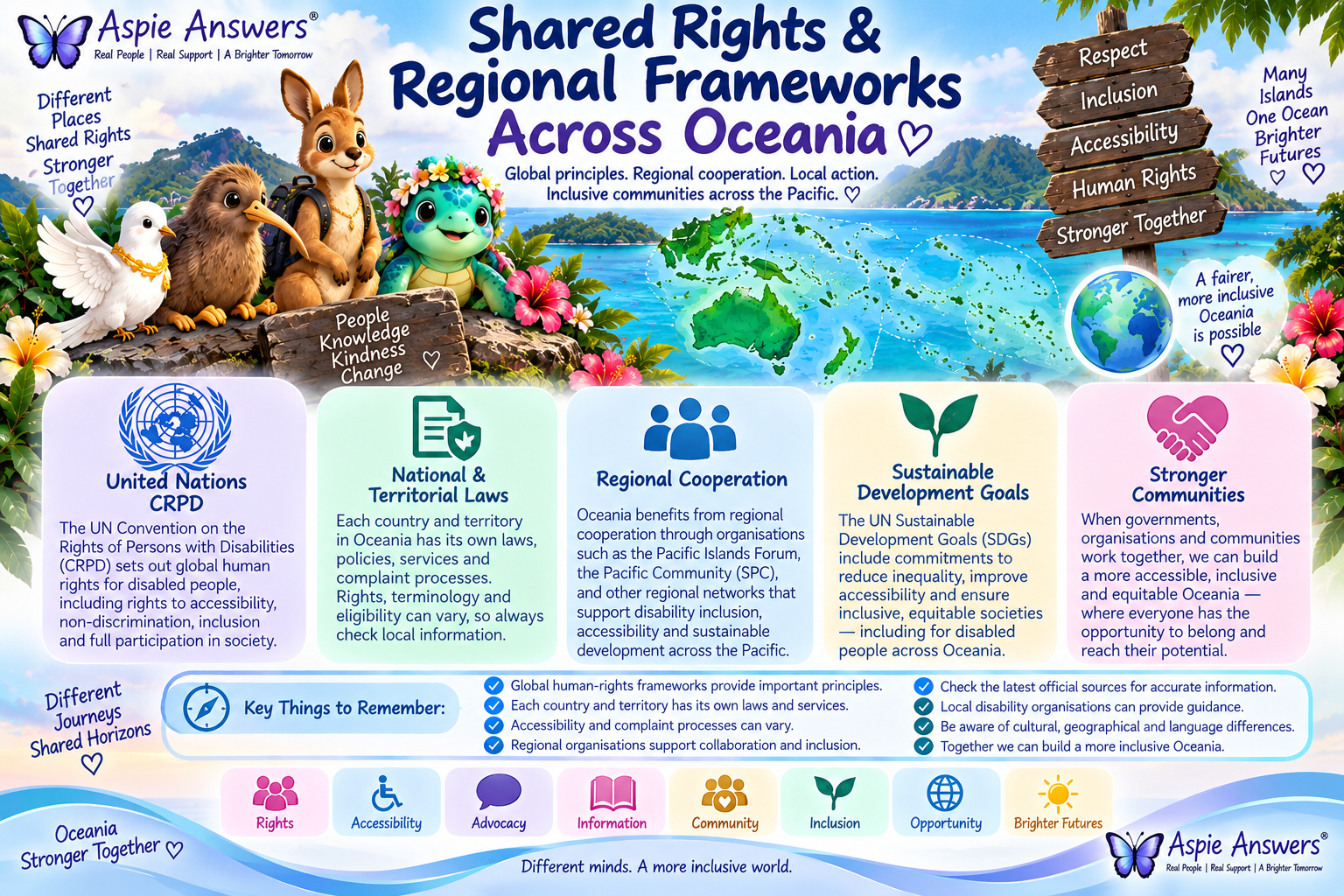
The Convention on the Rights of Persons with Disabilities provides an international human-rights foundation for disability equality, dignity, accessibility and participation.
UN ESCAP supports disability-inclusive development across Asia and the Pacific. The current regional disability decade covers 2023–2032.
Regional organisations of persons with disabilities connect disability advocacy, community leadership and lived experience across Pacific countries and territories.
Regional and international frameworks do not replace national or territorial laws, services and complaint processes.
Aotearoa New Zealand has its own disability-rights, anti-discrimination, employment, education, health and disability-service systems.
New Zealand has national human-rights protections as well as rights and responsibilities within specific areas of life.
People using health and disability services have rights relating to dignity, information, choice, support and complaints.
The right organisation depends on the problem and may include human-rights, disability-service, health, employment, education or Ombudsman pathways.
Local terminology, services, agencies and legislation matter. Overseas guidance should not substitute for current New Zealand information.
Australia combines national disability-discrimination protections with state and territory laws, agencies, services and complaint pathways.
The Disability Discrimination Act 1992 provides federal protection from disability discrimination in many areas of public life.
State and territory laws and complaint systems may also apply depending on where someone lives and what happened.
Accessibility and adjustment responsibilities can arise in education, work, services and other areas.
A matter may involve a federal or state/territory body, so jurisdiction should be checked before making a complaint.
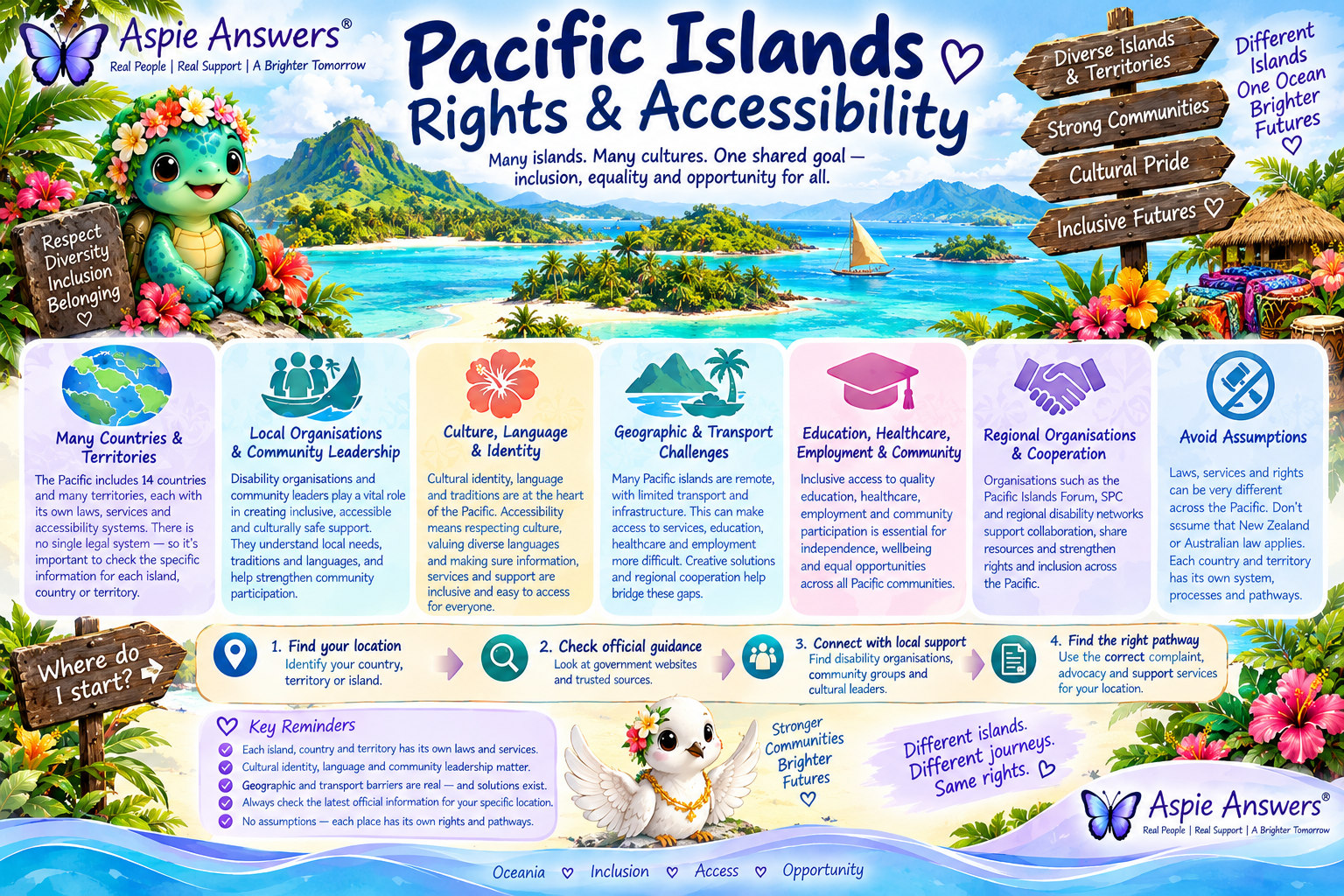
The wider Pacific includes many countries and territories with their own cultures, languages, governments, laws, disability organisations, services and priorities.
There is no single Pacific legal or disability-service system that applies across every island country and territory.
Inclusion should respect local languages, identities, family structures, community relationships and cultural leadership.
Remoteness, transport, infrastructure and digital connectivity can create significant access barriers.
Local disability organisations and OPDs may be among the strongest sources of practical local knowledge.
Pacific organisations can support advocacy, knowledge-sharing, capacity-building and disability inclusion across the region.
Australian or New Zealand rights information should never automatically be assumed to apply elsewhere in the Pacific.
Accessible participation can involve physical, sensory, communication, cognitive, digital and practical access.
These are broad starting points for checking current regional and country-specific information. Use the dedicated New Zealand and Australia pathways for more focused guidance, and check local official sources for Pacific countries and territories.
Hope reminds us that different countries and islands may have different systems, but every person still deserves dignity, respect, inclusion and the opportunity to belong.
Progress across Oceania may happen in different ways and at different speeds. Listening to disabled people, sharing knowledge and strengthening local communities can help move accessibility and inclusion forward.
Different islands. Different journeys. Shared hope. Everyone belongs.
Oceania is the regional doorway. Continue into the dedicated Aotearoa New Zealand and Australia pathways for more focused rights, accessibility, advocacy and complaint information.
Regional and country rights connect with reasonable adjustments, discrimination, self-advocacy, digital accessibility, complaints, accessible communication and practical support.
The Accessibility & Rights Library helps bring these pathways together without repeating the same information on every page.
Explore the Accessibility & Rights Library Accessibility & Rights Downloads & Resources Regional / Country Rights Pathways