For yourself
Explore learning profiles, strengths, support needs, practical tools and connected pathways at your own pace.

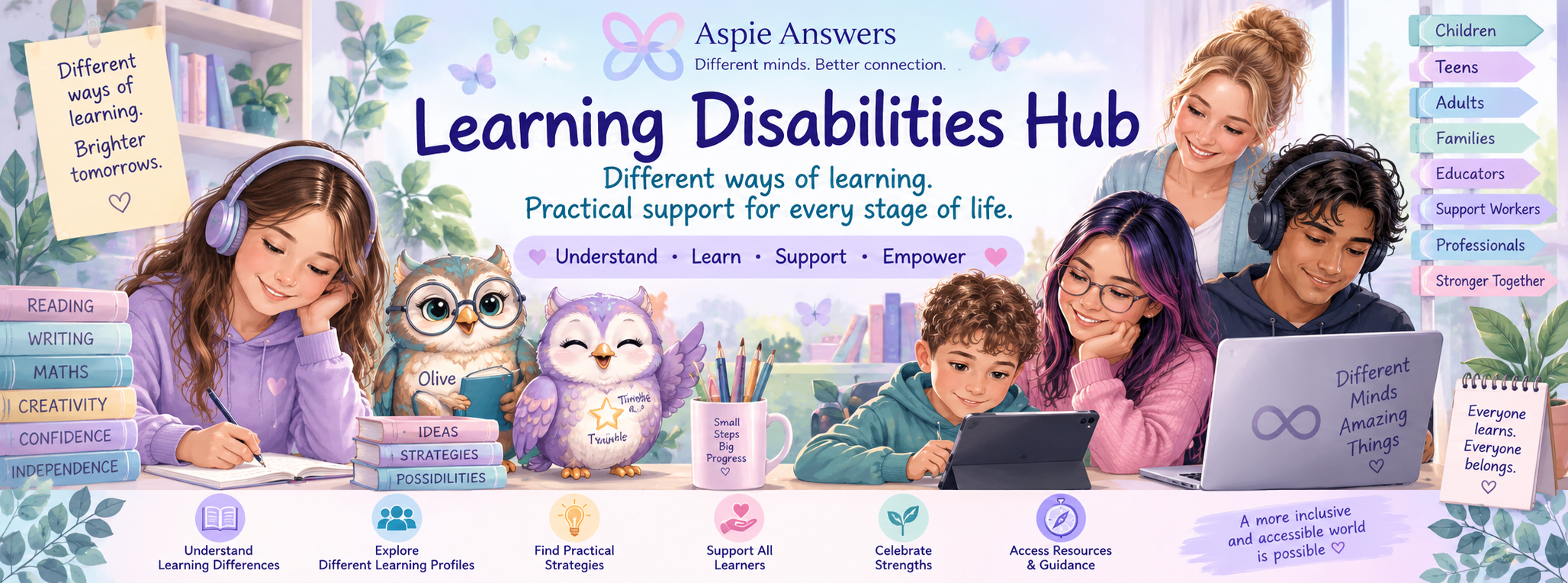
Understanding · strengths · support · lifelong learning
A strengths-aware starting point for understanding different learning profiles, recognising support needs and finding practical pathways across education, everyday life, work and adulthood.
Who this page is for
Explore learning profiles, strengths, support needs, practical tools and connected pathways at your own pace.
Understand everyday impacts, supportive strategies and ways to build confidence without taking over.
Find practical ways to reduce barriers, make learning clearer and support participation.
Use this hub as an orientation point into learning, accessibility, education, support and lifelong pathways.
What you will find here
Start with the basics, explore different learning profiles, look at support across life stages, and move into deeper education, work, everyday-help, support and resource pathways when you are ready.
Getting oriented
Learning disabilities and learning differences can affect how information is read, written, remembered, organised, processed or demonstrated. Terminology varies between countries and communities, so this hub focuses on clear explanations and practical support.
Learn what learning disabilities can involve, what they do not mean, and why individual experiences differ.
Explore reading, writing, maths, coordination, processing and other learning patterns without assuming every learner is the same.
Look at adjustments, accessible teaching, self-advocacy, organisation and everyday tools that reduce unnecessary barriers.
A broader view
A learning disability can affect specific skills while leaving many other abilities unchanged. Strengths, creativity, knowledge, persistence and practical problem-solving can exist alongside significant support needs.
Patterns can guide understanding without turning a diagnosis or label into a complete description of the person.
Notice what helps the person engage, understand information and show what they know.
Use respectful language and follow individual preferences wherever possible.
Learning differences may sit alongside autism, ADHD, sensory differences, executive-function needs or other disabilities.
Learning profiles
These are useful starting points rather than rigid boxes. A person may relate to more than one profile, and the effect on everyday life can vary considerably.
Reading, spelling, written language and language-processing differences.
Number sense, mathematical concepts, sequencing and calculation differences.
Movement, planning, coordination, handwriting and some everyday task differences.
Spatial, visual, organisational and non-verbal information-processing differences.
Differences in how auditory or visual information may be received, organised or interpreted.
Writing, handwriting, spelling, organisation and expressing ideas on the page.

Strengths & access
Support should not focus only on what is difficult. Learners may bring creativity, persistence, curiosity, visual thinking, practical problem-solving, humour, specialist interests and many other strengths.
Helpful adjustments may include extra processing time, accessible formats, assistive technology, explicit instruction, visual supports, reduced cognitive load, predictable routines or support with organisation.
The most useful support starts by asking what actually helps.
Across the lifespan
Learning disabilities do not stop at the classroom door. Their effects can continue through tertiary study, training, work, independent living and everyday administration.
Early understanding, supportive classrooms, confidence and strengths-aware learning.
Study strategies, assessments, transitions, organisation and growing self-advocacy.
Further education, employment, forms, planning, accommodations and rediscovering learning strengths.
Moving between school, tertiary study, training, work and greater independence.
Home & relationships
Practical support works best when it builds confidence, preserves autonomy and changes as the learner grows.
Learning differences may affect homework, appointments, forms, money, planning, instructions, travel and routines.
Open Everyday Help →Inclusive practice
Accessible teaching gives learners more than one way to understand, participate and demonstrate knowledge.
Use explicit instructions, accessible materials and multiple ways to participate.
Consider processing time, assistive technology, reduced copying, visual supports and accessible assessment.
Listen to the learner and build support around actual needs rather than assumptions.
Understanding your own learning profile can make it easier to explain what helps, request adjustments and recognise strengths.
Learning support also connects with accessibility in education, employment and community life. Adjustments should reduce barriers and make participation more workable.
Explore Support & Directories →Respectful understanding
A learning disability does not tell you how intelligent, creative or capable someone is.
Someone may need a different format, pace or method rather than lower expectations.
Labels may guide understanding, but strengths, needs and lived experiences remain individual.
Indexes, definitions & practical tools
Use the wider Aspie Answers libraries for practical tools now, while the Learning Disabilities Topics A–Z and dedicated glossary are refreshed into their full current versions.
Find learning profiles, support topics and connected information alphabetically.
Use clearer explanations of learning, disability, accessibility and support terminology.
Open Glossaries & Definitions →Browse planners, worksheets, checklists and practical tools across the wider resource library.
Browse Resources & Downloads →Move into deeper learning, reference and knowledge pathways across Aspie Answers.
Open the Knowledge & Learning Library →Connected pathways
Use the broader bridge when you are not yet sure which learning pathway, terminology or support area fits best.
Open the Learning Differences Bridge →Explore wider neurodivergent experiences, overlaps and connected support pathways.
Open Neurodivergence →Move into school, tertiary study, teaching, accommodations and formal learning environments.
Open the Education Hub →Find workplace support, adjustments, job-seeking tools and employment pathways.
Open Work & Employment →Use practical support for routines, planning, forms, organisation and daily living.
Open Everyday Help →Move toward organisations, services and broader support pathways when more help is needed.
Open Support & Directories →Find practical printable and digital supports across the Aspie Answers resource system.
Browse the Resource Library →Terms such as learning disability, learning difficulty and specific learning difference can mean different things in different countries and services. Aspie Answers uses plain explanations and strengths-aware support while recognising that formal assessment, eligibility and terminology may vary.
Questions
No. Specific learning difficulties can affect particular skills while a person's overall abilities, knowledge and strengths may be very different.
Yes. Support needs can continue through further education, employment, forms, organisation, independent living and other everyday tasks.
Yes. Learning profiles can overlap with one another and may also coexist with autism, ADHD, sensory differences, executive-function needs or other disabilities.
The Resources & Downloads Library and Everyday Help are useful starting points for planners, checklists, organisation tools and other practical supports.
Aspie Answers provides general educational and practical support information. Terms such as learning disability, learning difficulty and specific learning difference can be used differently across countries, services and communities. Formal assessment, eligibility, diagnosis and accommodation decisions should be made through the relevant qualified professional, education provider, disability service or workplace process.
Understanding how someone learns can make it easier to reduce barriers, choose better tools and create environments where strengths and support needs can both be recognised.