
Practical support that starts with the person
Autism can influence communication, sensory processing, routines, energy, emotional regulation, learning, relationships, executive function and everyday life.
Support is most useful when it responds to the individual rather than expecting every autistic person to use the same strategy. The aim is not to make someone appear less autistic, but to reduce unnecessary barriers, increase access and support wellbeing, autonomy and participation.
This Autism Support hub brings together practical ideas, sensory support, communication guidance, daily-living strategies, learning and workplace considerations, tools and wider Aspie Answers pathways.
Use the sections that feel helpful for you
This page may mention sensory overwhelm, masking, shutdowns, meltdowns, burnout, communication differences, emotional regulation, school stress, workplace stress and other difficult experiences.
Take your time, pause when needed, and skip any section that does not feel useful today. This page provides general support information and does not replace individual medical, therapeutic, educational or professional advice.
Choose the area that matches what you need
You do not have to work through this page in order. These shortcuts take you directly to the main support areas.
Find an Autism Support topic
Search the practical support cards below. Try words such as sensory, burnout, communication, routines, work or calm.
Showing all support topics.

Small adjustments can make everyday life more accessible
Support does not always need to be complicated. Sometimes a quieter environment, clearer information, extra processing time, a visual plan, a sensory break or permission to recover can make a significant difference.
Support works better when we understand the person
Autism can influence many different parts of everyday experience. Understanding the context behind a need or reaction can make support more respectful and effective.
What Autism Can Affect
Communication, sensory processing, routines, emotions, learning, relationships, transitions, energy and everyday life can all be experienced differently.
Individual Strengths
Some autistic people may experience strengths such as deep focus, creativity, specialised interests, persistence, pattern recognition or attention to detail.
Looking Beyond Stereotypes
Autism is not bad behaviour, rudeness, lack of effort or something a person simply grows out of. Experiences and support needs are individual.
Make the environment work better for the person
Sensory differences can affect concentration, communication, comfort, energy and participation. Useful support starts by noticing what is overwhelming, missing or difficult to filter.
Sensory Overload
Noise, lighting, smells, touch, crowds or busy environments may become too intense. Quieter spaces and reduced demands can help.
Helpful Sensory Input
Movement, pressure, textures, fidgeting, sound or other safe sensory input may support focus, regulation or comfort.
Sensory Planning
Break plans, headphones, calm kits, lighting changes, comfortable clothing and predictable sensory routines can reduce unnecessary strain.
Respond to overwhelm with support, not punishment
Regulation can become harder when sensory, emotional, communication or executive-function demands build up. Recovery often needs reduced pressure and time.
Shutdowns & Meltdowns
Reduce demands, increase safety and allow recovery. During severe overwhelm, reasoning or extra instructions may add more pressure.
Burnout & Masking
Masking and sustained demands can use significant energy. Rest, reduced expectations and recovery time may be essential.
Regulation & Grounding
Grounding, sensory breaks, familiar routines, quiet spaces or body check-ins can be useful when they suit the individual.
Regulation is easier when needs are recognised early
Signs of overload may appear before a person reaches shutdown, meltdown or complete exhaustion.
Building regular breaks, sensory support, recovery time and clearer expectations into daily life can sometimes reduce the need to wait until everything becomes too much.
Accessible communication can reduce unnecessary stress
Communication differences do not mean a person has nothing to say. Respectful support may involve changing how information is shared and allowing more time or different communication methods.
Communication Differences
Direct language, written information, processing time, AAC, non-speaking communication, scripts and visual supports may all improve access.
Social Energy & Boundaries
Social interaction can use significant energy. Time alone, boundaries, smaller groups and recovery periods may help.
Relationships & Connection
Friendships, family and dating can be easier when differences in communication, sensory needs, boundaries and energy are understood.
Everyday support should reduce friction, not add more pressure
Planning, transitions, chores, meals, hygiene and self-care can require significant executive-function and sensory energy.
Routines & Transitions
Visual routines, transition warnings, flexible schedules and clear expectations can make change easier to prepare for.
Planning & Task Support
Breaking tasks into steps, reminders, timers, visual prompts and reducing unnecessary decisions can support everyday independence.
Home & Self-Care
Sensory-friendly routines, simplified chores, easier meal options, rest and flexible approaches can make self-care more manageable.
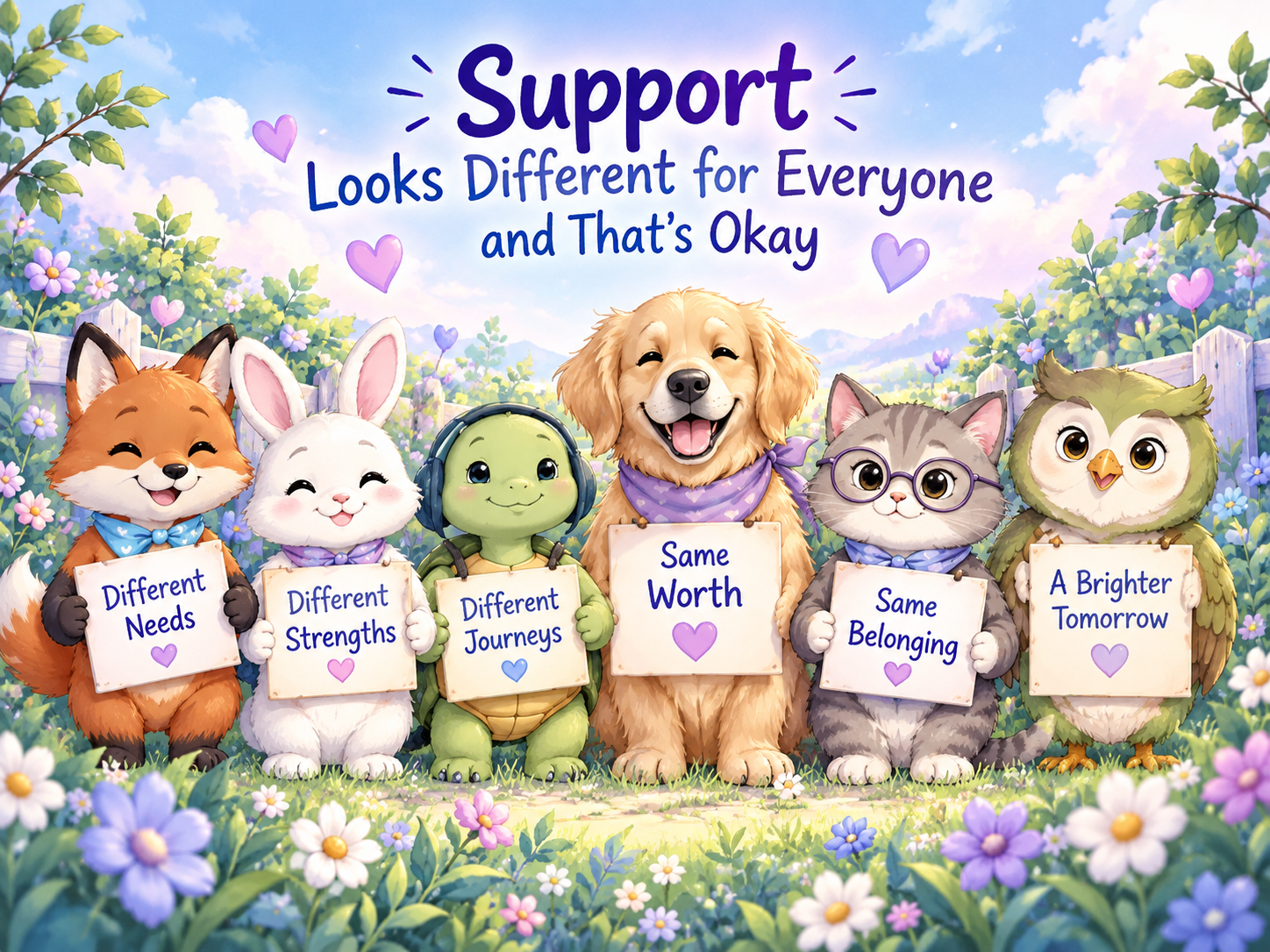
Needing support does not reduce independence or value
Independence does not have to mean doing everything without help. Useful tools, accommodations, routines, reminders and support people can increase choice and participation.
The goal is access and autonomy — not proving that support is no longer needed.

Support should travel with the person into real environments
Autism support is relevant across classrooms, study, training and employment — not only in specialist settings.
For Students
Clear instructions, predictable routines, sensory breaks, processing time and accessible communication can support learning.
For Adults at Work
Workplace support may include communication adjustments, clearer expectations, sensory considerations, flexible planning and reasonable accommodations.
For Teachers & Supporters
Predictable structure, respectful language, visual support, sensory access and collaboration with the autistic person can improve participation.
Practical tools can reduce the amount you have to hold in your head
Visual supports, checklists, planning tools and regulation resources can help externalise steps, prepare for changes and make support easier to use in everyday situations.
Autism-Friendly Printables
Visual supports, sensory check-ins, routines, reflection pages and planning templates can support everyday structure.
Support Guides
Longer guides can bring together practical information around autism, sensory needs, daily living, communication and wellbeing.
Calm & Regulation Tools
Grounding prompts, sensory plans, calm cards and regulation tools can help create a personalised support toolkit.
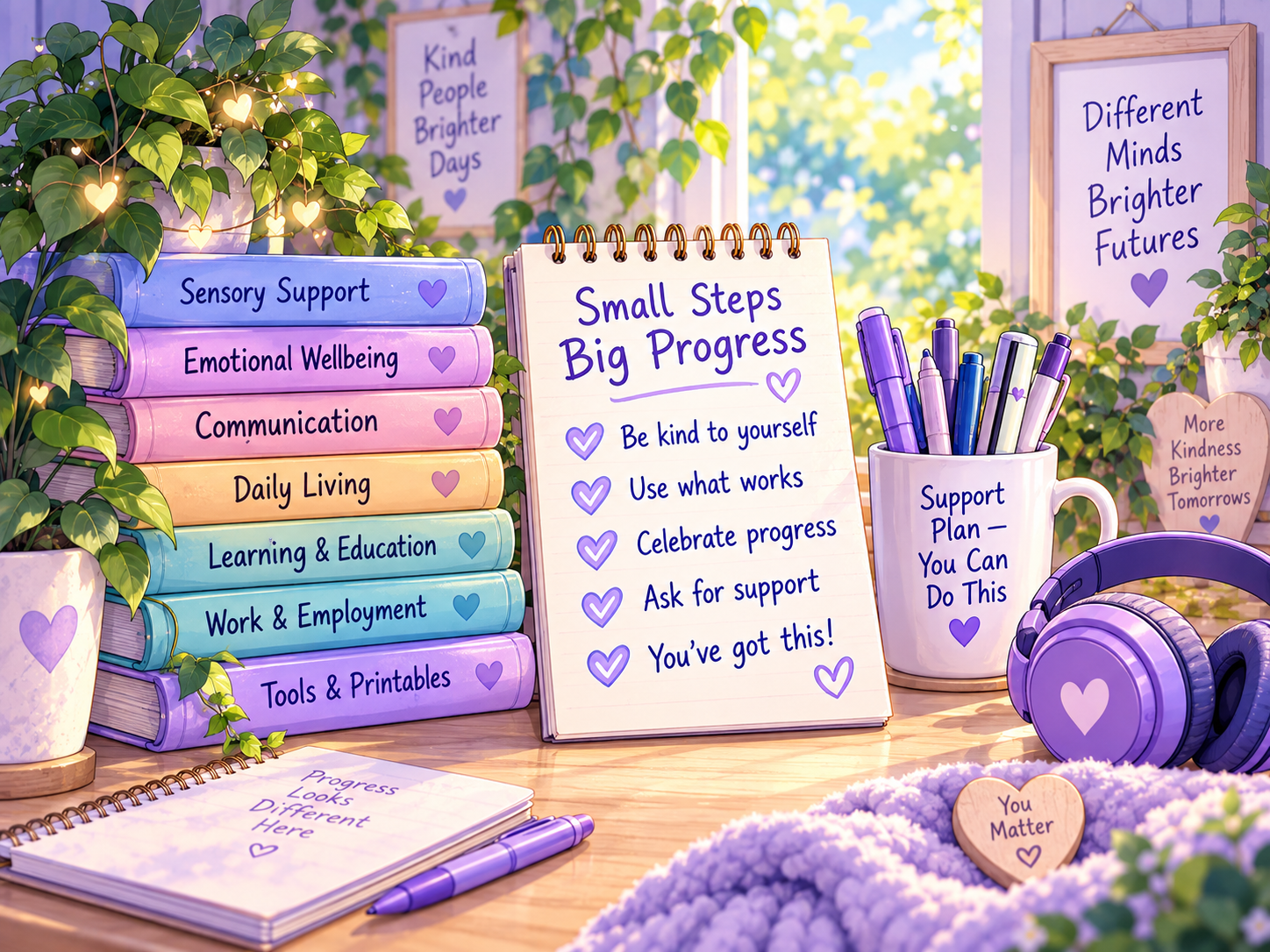
Support does not have to solve everything at once
One helpful routine, one sensory adjustment, one clearer way to communicate or one lower-pressure strategy can still matter.
Build support gradually around the person and the situations that are actually creating difficulty.

Continue into the area that fits what you need
Autism support connects with several wider Aspie Answers hubs. These routes let you continue without trying to fit every support topic onto one page.
Support should fit the person
Autistic people deserve understanding, flexibility, accessible environments and support that respects who they are.
Different communication, sensory needs, routines, learning styles, energy levels and support needs are not failures. The aim is to make everyday life more accessible while protecting autonomy and dignity.
Different minds. Better connection.