Addiction-Affected Families
Gentle, practical pathways for partners, children, parents, siblings, friends, carers and whānau affected by someone else’s addiction. You deserve support too.
💜 A gentle notice
This page offers supportive information and links for people affected by a loved one’s alcohol or other drug use, and related family concerns. Some services also support other addictive behaviours. You can read one section at a time, and you do not need to share your story to explore help. Information here does not replace urgent medical care, safeguarding, specialist treatment or individual professional advice.
If something is unsafe or urgent
If someone is unconscious, has trouble breathing, is having a seizure, may be experiencing an overdose or severe withdrawal, or anyone is in immediate danger, contact the local emergency service now. If there is violence or an unsafe home situation, prioritise personal and child safety. This website is information and navigation, not an emergency service.
Emergency calls: New Zealand 111 · Australia 000 · United Kingdom 999 / 112. Elsewhere, check the emergency number for your current location.
Support for the whole family and whānau
Addiction can affect relationships, routines, finances, safety and emotional wellbeing. The experience is different for every family. Choose the pathway that feels most useful today.

Emotional wellbeing
Worry, grief, guilt, anger and exhaustion can affect anyone close to somebody experiencing addiction. Your feelings deserve care, even if the other person is not ready for change.
- Speak with a person you trust or a support service.
- Choose one manageable step for today.
- Ask for support for yourself, not only for your loved one.

Children & young people
Children and teenagers may feel confused, frightened or responsible for what happens at home. They need clear, age-appropriate explanations and adults who take their concerns seriously.
- Tell a safe adult if home feels frightening or unpredictable.
- Children are not responsible for fixing an adult’s addiction.
- Ask about school, youth, child-protection or family services.

Safety & urgent concerns
Alcohol or drug-related medical emergencies and unsafe situations require their own urgent response. Addiction does not automatically mean violence, but violence or threats must never be minimised.
- Call emergency services for overdose or serious medical danger.
- For abuse or coercion, contact local family-violence support.
- Keep essential contacts and a safer place to go if needed.

Families, partners & whānau
Partners, parents, siblings, grandparents, friends and caregivers may all need different forms of advice, connection and practical help.
- Talk about needs without blame when it is safe.
- Ask what confidential support is available for relatives.
- Respect culture, language, family structure and individual choice.

Boundaries & self-care
Caring for someone does not mean taking responsibility for everything they do. Gentle boundaries and rest can help protect your wellbeing.
- Decide what is safe, realistic and within your control.
- Avoid discussing difficult issues when someone is intoxicated.
- Make time for sleep, food, breaks and your own supporters.

Inclusive, culturally safe support
Families may need disability access, low-sensory settings, interpretation, culturally grounded care or Rainbow-affirming services. It is reasonable to ask for adjustments.
- Request text, chat, an interpreter or extra processing time.
- Ask about Māori, Pasifika or other cultural support pathways.
- Look for services respectful of LGBTQIA+ people and neurodiversity.
Peer & professional support
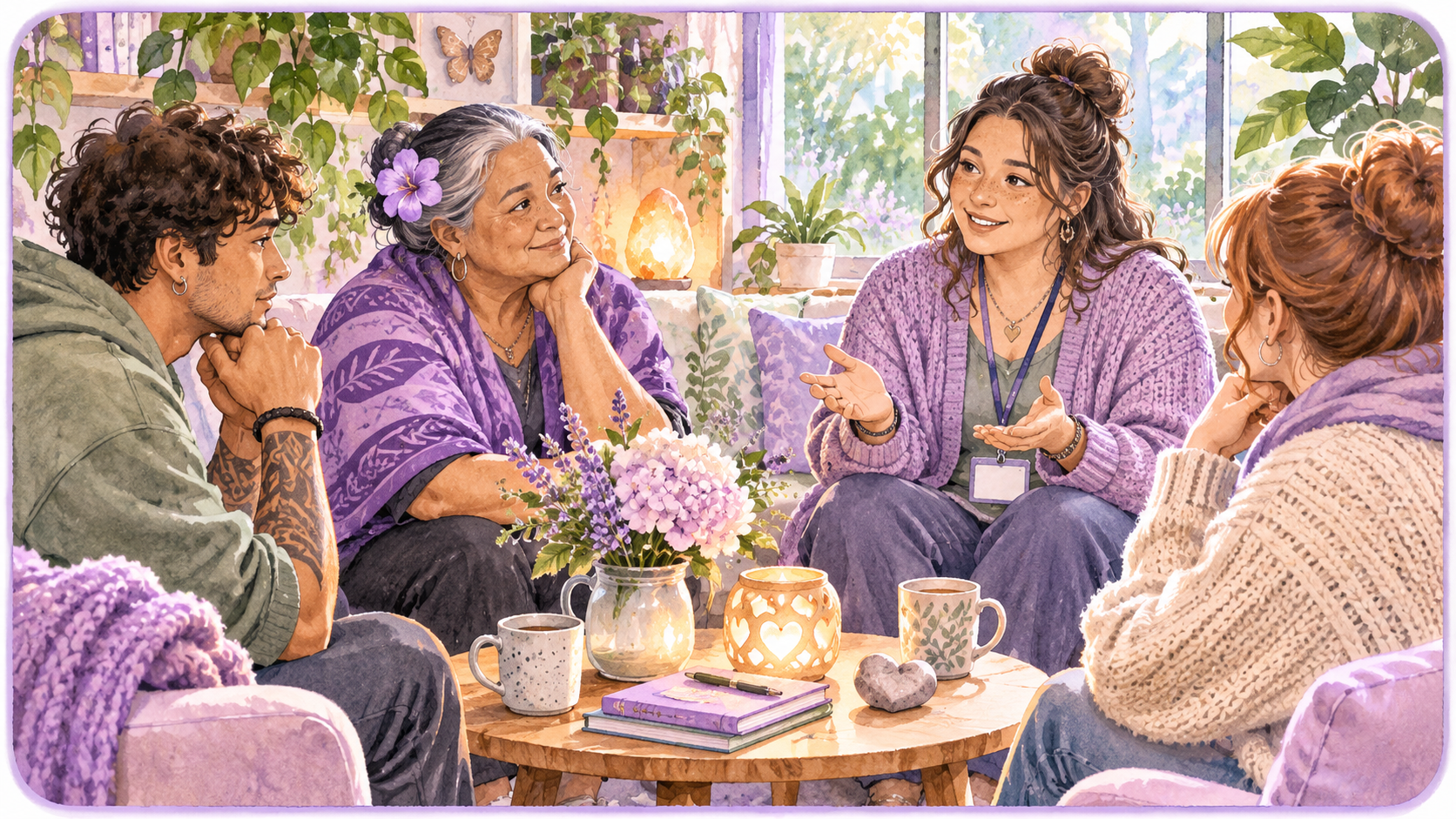
Specialist counselling, family programmes and peer meetings may provide practical strategies and understanding. Different providers have different eligibility and availability.
- Check whether a group is for family members or the person using substances.
- Choose online or in-person options where available.
- Try another service if the first is not a good fit.

Worldwide pathways
Emergency numbers, addiction services and family support vary between countries. Use the country and region pathways below, and confirm service coverage before contacting them.
- Start with your country or region.
- Use international meeting directories when appropriate.
- For an immediate emergency, use local emergency services.

Three gentle steps when you are not sure where to begin
You are allowed to take care of your own wellbeing even when someone you love is struggling.
Is your first need immediate safety, someone to talk to, practical advice, or support for a child?
A family support service, healthcare professional, school counsellor or trusted person can help you plan.
Save a number, send one message, ask for an appointment, or make a simple safety plan.
For children and teenagers
If someone’s drinking, drug use or behaviour at home is frightening, confusing or making it hard to feel safe, you deserve a trusted adult who will listen.
- It is not your job to manage someone else’s addiction.
- Consider a trusted teacher, school counsellor, family member, youth worker or child helpline.
- If you are in immediate danger, use emergency or local child-safety services.
For partners, parents and carers
Worrying about a loved one can be exhausting. Support can help you understand your choices without pressure to accept unsafe situations or take responsibility for someone else’s decisions.
- Ask about confidential support available for you.
- Set boundaries around your safety, money, care responsibilities and rest.
- When appropriate, seek professional advice about safeguarding and treatment choices.

Find family support and information
Search the organisations and navigation pathways shown below. This finder filters the resources on this page; it is not a live emergency-service directory, and it does not search all GeoDirectory listings.
Showing all 12 resources.
Family Drug Support Aotearoa
NZ-based counselling and support programmes for people affected by a loved one’s alcohol or other drug use; includes family and youth pathways.
Health New Zealand — Help for whānau and friends
Official information on alcohol and other drug advice, specialist helplines and treatment navigation, including Māori and Pasifika pathways. General Alcohol Drug Helpline: 0800 787 797.
Shine — Family violence helpline
Confidential support, advice and referrals for people experiencing family violence or concerned about someone else. 0508 744 633, 24/7. Not an emergency dispatch service.
Oranga Tamariki — Child safety information
For concerns about a child’s safety or wellbeing in New Zealand, contact 0508 FAMILY (0508 326 459); call 111 for immediate danger.
Family Drug Support Australia
Support, resources and groups for families and friends affected by alcohol or other drugs. Australian 24/7 support line: 1300 368 186.
Kids Helpline Australia
Confidential counselling and online support for children and young people in Australia; use its website to check age eligibility and communication options.
Adfam — Support for families
UK information and advice for people affected by a loved one’s drug or alcohol use, including coping, safety and relationships.
SMART Recovery Family & Friends
Skills-based online and in-person peer meetings and worksheets for people supporting someone experiencing addiction or problematic behaviours. Check meeting locations and times.
Al-Anon / Alateen meeting finder
Al-Anon supports people affected by someone else’s drinking; Alateen provides a teen-focused pathway. Worldwide contacts and electronic meetings are listed.
Find a Helpline
A starting point for searching local emotional-support and crisis helplines by country. Check each service’s purpose, coverage and hours.
Aspie Answers — Oceania Crisis Support
Regional starting point for New Zealand, Australia and Pacific-region crisis pathways; use the linked country-specific resources for the next step.
Aspie Answers — Crisis Support by Location
Choose the country or region where help is needed. Regional pages are navigation tools, not emergency dispatch services.
No results match those filters. Try clearing a filter or use the worldwide crisis directory for another starting point.
Please confirm eligibility, opening hours, languages and local availability directly with each organisation. A peer meeting, information page or general helpline may not provide emergency intervention.
Support that respects your communication and identity
It is okay to ask for adjustments
You might prefer text or webchat, written steps, an interpreter, a quiet appointment, extra time to process information or a trusted person beside you.
Your culture and family structure matter
Māori, Pasifika, Rainbow, disabled and neurodivergent people deserve services that respect their identity, consent, privacy and access needs. If a provider is not suitable, ask for a referral to a better-fitting option.